
JERUSALEM – Israel is accelerating settlement construction, infrastructure expansion and land registration measures in what Palestinian officials describe as a coordinated effort to impose full sovereignty over Jerusalem and fundamentally alter its demographic balance.
Marouf Rifai, media adviser to the Palestinian Jerusalem Governorate, warned that Israel had launched what he called a “decisive year” in Jerusalem beginning in early 2025, fast-tracking settlement projects and strategic plans aimed at consolidating long-term control over the contested city.
Speaking at the governorate’s headquarters in al-Ram, north of Jerusalem, Rifai said Israel had begun implementing long-prepared settlement initiatives following the Gaza war, chief among them the so-called “Jerusalem 2050” masterplan. The plan, first reported in Hebrew media in 2017, envisions expanding Jerusalem’s municipal boundaries and dramatically increasing the Jewish population across both East and West Jerusalem.
According to Rifai, the plan aims to raise the Israeli population in the wider Jerusalem area to five million while reducing the Arab population share to below 10 percent, a shift that would permanently transform the city’s demographic and political character.
The project includes the construction of a new international airport, expansion of rail networks and the development of industrial zones, commercial centres and hotels designed to integrate settlement blocs more closely into Israel’s economic infrastructure.
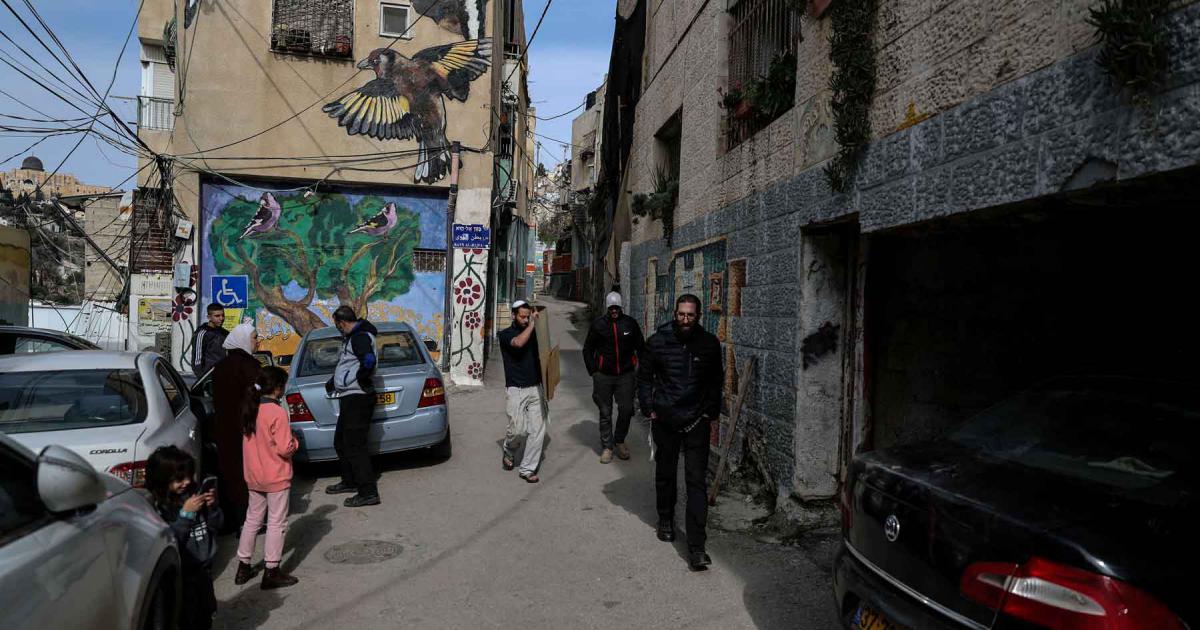
At present, around 250,000 Israeli settlers live in East Jerusalem, which Palestinians view as the capital of their future state. Palestinian officials say settlers, often backed by Israeli authorities and military forces, are involved in daily confrontations with Palestinian residents, including forced evictions and home demolitions intended to make way for settlement expansion.
The United Nations considers Israeli settlements in occupied Palestinian territory illegal under international law and has repeatedly called for a halt to settlement activity, warning that continued expansion undermines the viability of a two-state solution.
Major settlement expansion plans
Among the projects highlighted by Rifai is the planned expansion of the Maale Adumim settlement east of Jerusalem, including the addition of 3,412 housing units. Israeli authorities have also begun implementing the controversial E1 plan, which involves building roads and settlements linking Jerusalem to Maale Adumim and surrounding settlement blocs.
Palestinian officials say the E1 corridor is particularly significant because it would effectively sever territorial continuity between the northern and southern West Bank, further fragmenting Palestinian communities and complicating prospects for a viable Palestinian state.
In addition, Israel has approved around 4,000 new settlement units in Umm Tuba, south of Jerusalem, and is moving forward with plans to formally incorporate major settlement blocs into Jerusalem’s municipal structure.
These blocs include Gush Etzion, home to approximately 43,000 settlers south of the city; Maale Adumim, with around 62,000 settlers to the east; Givat Ze’ev, northwest of Jerusalem, with roughly 24,000 residents; and Kochav Yaakov northeast of the city, housing around 20,000 settlers.
Rifai said incorporating these blocs and granting their residents Jerusalem residency status was intended to “manipulate the demographic composition and increase the proportion of Jews at the expense of Palestinians.”
Airport settlement project and strategic road network
One of the most sensitive projects involves land at the former Jerusalem International Airport, also known as Qalandia Airport, where Israel plans to construct 9,000 settlement units in the first phase and 11,000 in a second phase. Palestinian officials say the project would further isolate Jerusalem from its northern Palestinian hinterland.
Additional plans include 2,780 settlement units in Jaba, alongside a network of roads designed to connect settlements and create what Rifai described as a “settlement ring” encircling Jerusalem and severing its geographic connection to the rest of the West Bank.
Israel has also begun construction of Route 45 north of Jerusalem, linking settlements near Ramallah and Jerusalem through tunnels and bypass roads. The project involves the confiscation of approximately 280 dunums of Palestinian land from the towns of Mikhmas, Jaba and al-Ram, at an estimated cost of 400 million shekels ($150 million).
Palestinian officials say the road will serve both residential settlements and industrial zones, allowing Israeli goods to reach ports and airports within minutes while further restricting Palestinian movement.
Land registration and property risks
A key component of Israel’s strategy, according to Palestinian officials and Israeli rights group Ir Amim, is the systematic registration of land in Jerusalem under the Israeli land registry system, known as the “Tabu.”
Ir Amim said Israel had adopted a new decision to complete land registration across Jerusalem by 2029, a move the organisation warned would effectively entrench Israeli legal and administrative control over East Jerusalem.
Rifai said similar registration efforts between 2018 and 2023 covered around 2,300 dunums of land, but Palestinians were able to prove ownership of only around one percent. Approximately 85 percent was classified as state land or absentee property, placing it under Israeli control.
He attributed the difficulty to fragmented ownership records and Israel’s reliance on historical documents dating back to the Ottoman era, while disregarding British and Jordanian land registries.
Settlement activity inside Palestinian neighbourhoods
Settlement expansion is also accelerating within Palestinian neighbourhoods themselves. Plans include the construction of 1,400 settlement units on land previously used by the UN agency for Palestinian refugees (UNRWA), and 316 housing units in Sheikh Jarrah, a neighbourhood that has become a symbol of Palestinian displacement.
Israeli media reported in February 2025 that authorities were advancing plans to build a settlement complex in Sheikh Jarrah that would require the eviction of dozens of Palestinian families.
Demolition orders and eviction notices have also increased in Silwan, a densely populated Palestinian neighbourhood located just 300 metres from Al-Aqsa Mosque, one of Islam’s holiest sites.
Wider isolation and political implications
These developments are accompanied by tightened Israeli security measures around Palestinian towns near Jerusalem, including Anata, Hizma, Jaba and al-Ram, where Israeli-controlled gates can restrict access at short notice.
Palestinian officials say these measures form part of a broader effort to isolate Jerusalem from the rest of the West Bank and consolidate Israeli control over key strategic areas.
Rifai warned that the combined effect of settlement expansion, land registration, infrastructure development and administrative measures amounted to an “integrated plan to isolate Jerusalem, intensify settlement activity and force Palestinians to leave the city”.
Palestinians regard East Jerusalem as the capital of their future state, based on international resolutions that do not recognise Israel’s occupation of the city in 1967 or its subsequent annexation.
Since the outbreak of the Gaza war in October 2023, Palestinian officials say settlement activity, demolitions and violence in Jerusalem and the wider West Bank have intensified sharply, raising fears that Israel may seek to formalise its control over large parts of the territory.
Such a move, Palestinian leaders warn, would effectively end any realistic prospect of implementing the two-state solution long endorsed by the United Nations and much of the international community.