
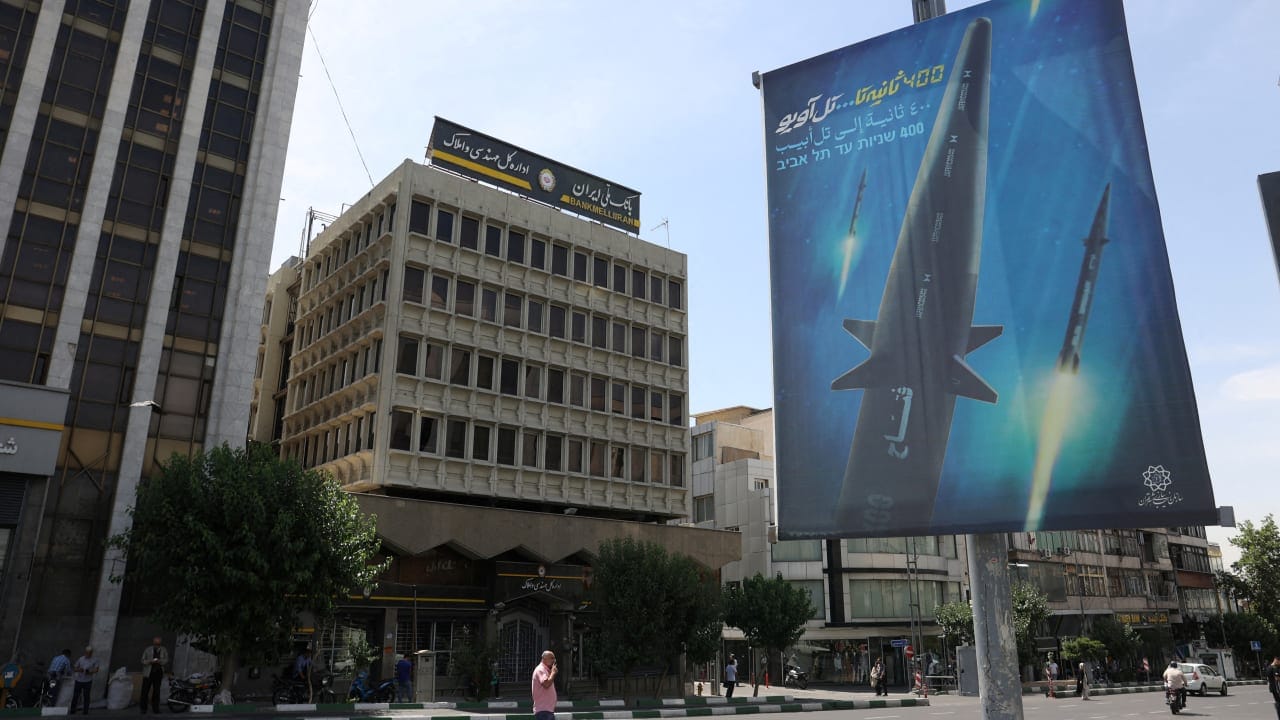
Iran is unlikely to relinquish its ballistic missile arsenal because the Islamic Republic views it as the last credible pillar of deterrence and a hedge against what it sees as unreliable US guarantees, Dr. Raz Zimmt, head of the Iran Program at the Institute for National Security Studies (INSS), told 103FM on Monday.
Zimmt said Iran is not seeking a military confrontation with the United States, but the key question is what Tehran is willing to concede to avoid one. He argued that Iran’s leadership has clear red lines, and missiles sit at the center of them.
From Supreme Leader Ali Khamenei’s perspective, Zimmt said, the missile program is the primary tool left to deter Iran’s enemies, and he does not trust US assurances.
If Iran were to make major concessions not only on the nuclear file but also on missiles, he said, Khamenei believes Washington could exploit Iran’s vulnerability within weeks or months.
Zimmt added that in Khamenei’s calculus, even the risk of a military strike is less significant than the risk of dismantling missile capabilities. He assessed that Iranian decision makers believe that even a significant US attack could end without toppling the regime.
“I am not convinced that Khamenei believes the Americans are truly capable of bringing down the regime,” Zimmt said.

He added that Tehran is more concerned about strikes on command centers and regime symbols, and potentially on Khamenei personally, though he suggested the supreme leader may believe the regime could still survive a serious blow.
Zimmt described Iran’s missile array as a direct threat to Israel. For years, he said, Israeli strategic thinking focused primarily on Iran’s nuclear program, while missiles were often treated mainly as delivery platforms for a nuclear warhead.
Recent events, he said, again underscored how ballistic missiles can independently threaten Israel’s security and cause significant damage. He added that Israel and the United States have managed to push Iran further from nuclear capabilities, even if they have not eliminated them entirely.
As a result, Zimmt said, missiles are currently the more immediate threat in the short term. Over the longer term, he said, the nuclear issue still requires major attention, but for now Iran’s nuclear progress appears limited.
Iran’s learning curve and domestic crackdown
Zimmt said Iran demonstrated an ability to adapt quickly, drawing lessons early in the campaign and adjusting tactics. He pointed to attempts to target civilian areas and missile launches intended to increase the chance of penetrating air defenses.
Since the war, he said, Iran has continued improving its missile capabilities both in quantity and quality. While the nuclear file remains important, Zimmt said Iran is not currently enriching uranium, and there are no indications at present that Tehran intends to renew a weapons production program.
On Iranian society, Zimmt said the public remains traumatized, still coping with the aftermath of brutal protest suppression.
He said it is difficult to generalize about a country of roughly 93 million people, with some seeking a return to normal life even under the regime, and others hoping a US strike could shake its foundations.
Addressing internet disruptions, Zimmt said access has largely returned but significant blocks remain. He added that arrests are continuing, including detentions of senior reformist figures, reflecting what he described as a long-standing regime strategy of restricting civil liberties to prevent challenges to its rule.