
Skip next section Third Ukrainian indicted in Germany over Russia-linked parcel plot
02/09/2026February 9, 2026Third Ukrainian indicted in Germany over Russia-linked parcel plot
A Ukrainian national has been indicted in connection with a plot to detonate parcel packages in Europe, with Russian intelligence linked to the plan, German prosecutors said.
The suspect, named as Yehven B. in accordance with Germany’s privacy laws, had been arrested in Switzerland in May and extradited to Germany in December.
Yehven B. and two other suspects, Daniil B. and Vladyslav T., carried out an order by Russia intelligence intermediaries in Mariupol to send packages with GPS trackers from the German city of Cologne, with their destination being Ukraine.
Russia has previously denied any involvement in the plan.
Accusations of sabotage attacks by Russia have repeatedly been made by various European countries.
https://p.dw.com/p/58Mgc
Skip next section Munich Security Index warns of ‘wrecking-ball politics’
02/09/2026February 9, 2026Munich Security Index warns of ‘wrecking-ball politics’
Western democracies are seeing rising support for disruptive politics that favor tearing down institutions over reform, according to a new security survey.
The Munich Security Conference report blames US policy shifts under US President Donald Trump for accelerating strains on the postwar order.
Read more about the report here.
https://p.dw.com/p/58MbA
Skip next section Trial restarts over girl allegedly hidden for years
02/09/2026February 9, 2026Trial restarts over girl allegedly hidden for years
A criminal trial against a mother accused of hiding her young daughter for nearly her entire life has restarted in western Germany.
The case at a regional court in the town of Siegen resumed after earlier hearings were postponed, including when the girl’s grandfather failed to appear.
Prosecutors say the 49-year-old kept the child completely isolated for seven years in the grandparents’ house in nearby Attendorn, some 65 kilometres east of Cologne (about 40 miles), in September 2022. The prosecution says the girl suffered considerable psychological harm as a result of being denied contact with others and not attending kindergarten or school.
She was freed by police and welfare officials in 2022, when she was 8, and taken to a foster family.
The girl’s mother faces charges that include abuse of a dependent and unlawful imprisonment. The maternal grandparents are also on trial, accused of aiding and abetting. All three were in the courtroom on Monday.
The motives for the actions remain unclear.
https://p.dw.com/p/58MIy
Skip next section German carnival season to generate about €2 billion, says study
02/09/2026February 9, 2026German carnival season to generate about €2 billion, says study
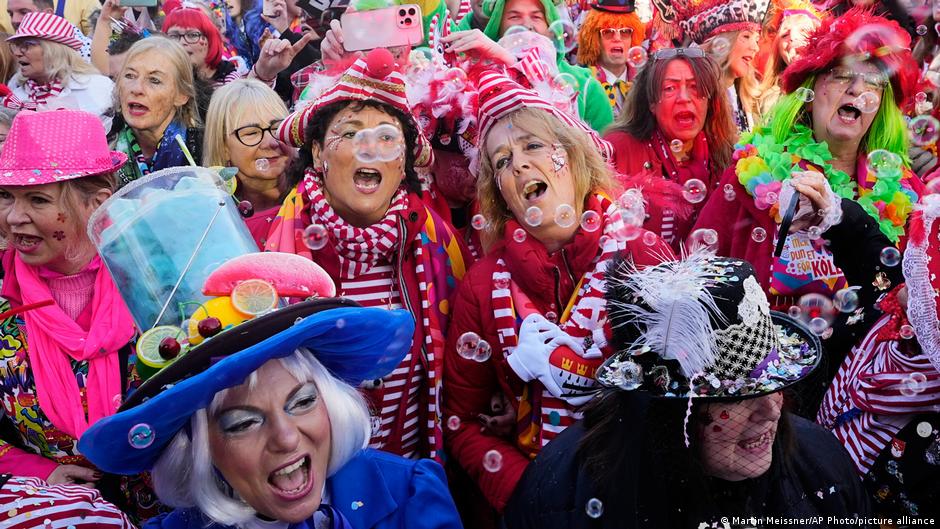
Cologne is a renowned German carnival city [FILE: November 2025]Image: Martin Meissner/AP Photo/picture alliance
The carnival period in Germany is expected to generate some €2 billion ($2.4 billion) in revenue, according to a forecast by the German Economic Institute (IW).
Carnival is characterised by excess — particularly when it comes to alcohol — ahead of Lent, the 40 days of fasting that traditionally precede Easter. The festivities are particularly popular in the western Rhineland region, with Rose Monday being the culmination.
Restaurants and bars will be the biggest winners, with hospitality accounting for the largest share, some €900 million in total.
Retail sales of sweets, costumes and other carnival items are projected at roughly €400 million. Meanwhile, the transport sector can also look forward to a €290 million boost and hotels a further €162 million.
Cologne is expected to be the biggest beneficiary among German cities that celebrate carnival. About €850 milion worth of revenue should be generated there alone — more than 40% of the nationwide turnover.
Carnival visitors in that city face sharply higher hotel prices, with overnight stays during peak days costing nearly €90 more on average than at comparable times, a rise of about 66%.
Overall revenue is projected to be about €100 million lower than last year, when the Carnival season lasted 115 days — 15 days longer than this year. The unusually short length is down to Easter, which determines when carnival falls, falling early this year. The season always begins at 11 a.m. on November 11 of the preceding year.
https://p.dw.com/p/58MNW
Skip next section Welcome to our coverage02/09/2026February 9, 2026Welcome to our coverage
Guten Tag from the DW newsroom here in Bonn as we bring you the latest about Germany.
You join us just ahead of the business end of carnival season, which is a really big deal here in the Rhineland.
The extended period of sometimes drunken revelry starts in November, but really fires up just ahead of Lent in the run-up to Easter. It culminates in huge processions in the major carnival centers of Cologne, Düsseldorf, Mainz, and Bonn next Monday.
A forecast by the German Economic Institute says that, despite a shorter-than-usual season this year, carnival will still deliver a welcome €2 billion ($2.4 billion) boost to the German economy.
Stay with us for this and other Germany-related headlines from Monday, February 9.
https://p.dw.com/p/58MLH