
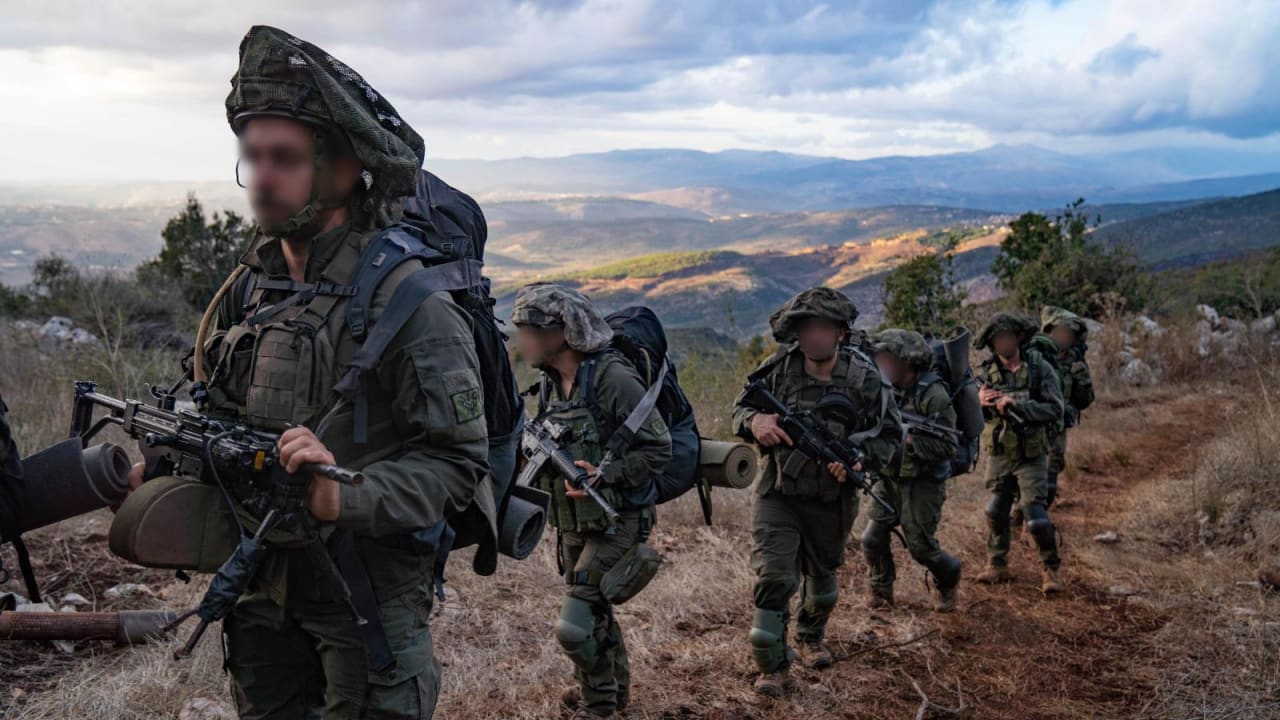
On February 9, the IDF said that “following intelligence indications gathered in recent weeks, IDF soldiers conducted a targeted raid on a structure in the Mount Dov area and apprehended a senior terrorist from the Jamaa Islamiya terrorist organization.” This is an important development and sheds light on the continued importance of the Mount Dov area in northern Israel.
The area, known as Har Dov in Hebrew and also called Shebaa Farms, sits on the northern border of Israel, between Metula and the Golan Heights, near Mount Hermon. Prior to the 1967 Six Day War, the area was administered by Syria but is claimed by Lebanon.
History of the site
Israel took control of Mount Dov during the conquest of the Golan Heights in 1967. The area is around 22 square kilometers. It is a sliver of mountainous land along the border, west of the Druze town Majdal Shams and north of the Israeli kibbutzim Dan and Dafna, both founded in 1939.
When Israel left Lebanon in 2000, the area entered more of a spotlight as Lebanese Hezbollah claimed it was part of Lebanon. As such, Hezbollah insisted that one reason it needed to keeps its arms was to “resist” Israel in order to get back Shebaa Farms. This created a threat where none had existed before.
Over the years, Hezbollah has sought to exploit the situation along the border to create provocations in the area of Mount Dov. This has been enabled by the fact that the border was not well demarcated.
Mount Dov is also situated just above the village of Ghajar. This is an Alawite village that is divided by the border’s so-called Blue Line. After the Second Lebanon War with Hezbollah in 2006, Israel took control of the village and it became another point of contention. The area is also technically part of Syria but claimed by Lebanon.
Before and after October 7
Prior to the recent Israel-Hamas War, two different trends developed in this area. One was that Ghajar was opened to tourism, with several restaurants serving visitors, and the pretty village appeared peaceful and inviting.
Above Ghajar in the Mount Dov area, Hezbollah created provocations prior to October 7, 2023. It sought to set up a tent in the disputed area as a step to laying claim to it. It also erected flags and signs along the border, and from Metula, one could see Hezbollah flags and signs on the other side.
Anyone hiking Nahal Ayun, for instance, could see the Hezbollah presence along the border. Hezbollah’s tents became a point of contention but Israel was afraid to dismantle them. Articles discussed the tents for months in 2023. When the war broke out on October 7 and Hezbollah began its attacks on Israel on October 8, Israel was afforded the opportunity to finally confront the tents and Hezbollah meddling near Mount Dov.
The war on Hezbollah increased in September 2024 and by November Hezbollah was defeated and there was a ceasefire with Lebanon. Another development in 2024 was that Israel created a new Brigade called the Mountain Brigade.
The goal of the new unit was to control the area along the border between Mount Dov and Mount Hermon. It operates under the 210th Division, which defends the Golan. This bolstered the 210th and reduced pressure on the 91st Division which defends Galilee from Rosh Hanikra to Metulla.

The 810th Mountain Brigade has done important work over the past year and a half. The IDF noted in November 2025 that “since the ceasefire understandings between Israel and Lebanon came into effect (November 27, 2024), troops of the Northern Command and the 91st Division have been operating in Lebanon to prevent the Hezbollah terrorist organization from rebuilding. In addition, troops from the 810th Brigade under the command of the 210th Division are operating in the ‘Har Dov’ area in Lebanon, alongside their activity in Syria.”
On January 9, the IDF noted that “the Alpinist (reservist) Unit completed their annual series of unique training exercises designed to prepare the unit’s troops for operational activity in the extreme weather conditions of the Mount Hermon Summit in Syria. As part of the training exercises, the unit’s troops practiced operating in complex, mountainous terrain, using the unit’s specialized equipment for activity in extreme weather and snow conditions.”
It continued: “In recent days, the unit’s troops joined the 810th Brigade for a defensive mission on the Mount Hermon Summit, in parallel with their defensive activity in the Golan Heights arena, in order to enable the safe opening of the Mount Hermon site to visitors.”
This illustrates the importance of this brigade and of the area between the Hermon and Mount Dov.
On February 9, the IDF added details about the operation to stop a terrorist threat near Mount Dov: “The terrorist was apprehended and then transferred for further questioning in Israeli territory. Additionally, weapons were located in the same structure in which the terrorist was apprehended. Throughout the war, the Jamaa Islamiya terrorist organization advanced terror attacks against the State of Israel and its civilians in the North.”
The incident near Mount Dov also came after Lebanon’s Prime Minister Nawaf Salam visited southern Lebanon and claimed the country wanted to increase its control over the area.
Despite Salam’s desire to return it to state control, Israel continues to carry out strikes targeting Hezbollah. This indicates that Hezbollah has not disarmed or relented in its attempts to continue to be a threat to the Jewish state.