
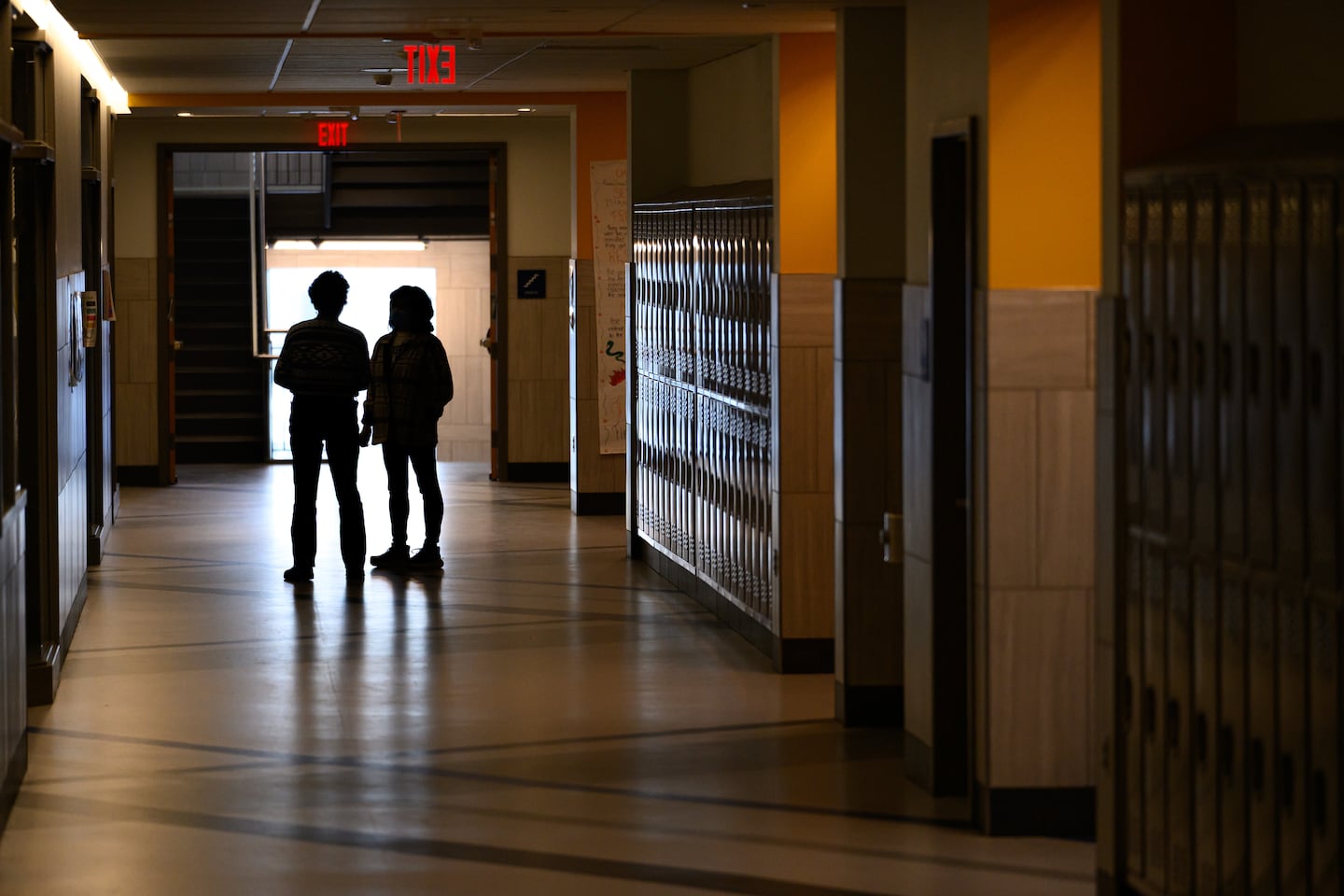
Massachusetts schools, with one psychologist for every 686 kids, have fewer health care professionals than the ratio of one for every 500 students recommended by the National Association of School Psychologists.
The four-year pilot kicked off at a critical time, as the trauma of facing an unprecedented global pandemic, the growing pressures to perform on social media, and the shortage of health care professionals in schools combined to fuel an ongoing mental health crisis among children across the nation, according to the National Alliance on Mental Illness. The pilot program focused on districts with more low-income and English-language-learner students, who are less likely to have access to mental health services at school or through private insurance.
The grant funding from three philanthropic foundations was only intended to get the program started. Now with the grants expiring, schools are trying to replace the funds amid tighter local, state, and federal budgets for education.
Providing mental health services in schools “is the most powerful way that we can actually help kids and families because that’s where the majority of kids spend their time,” said Joan Mikula, former Massachusetts commissioner for mental health.
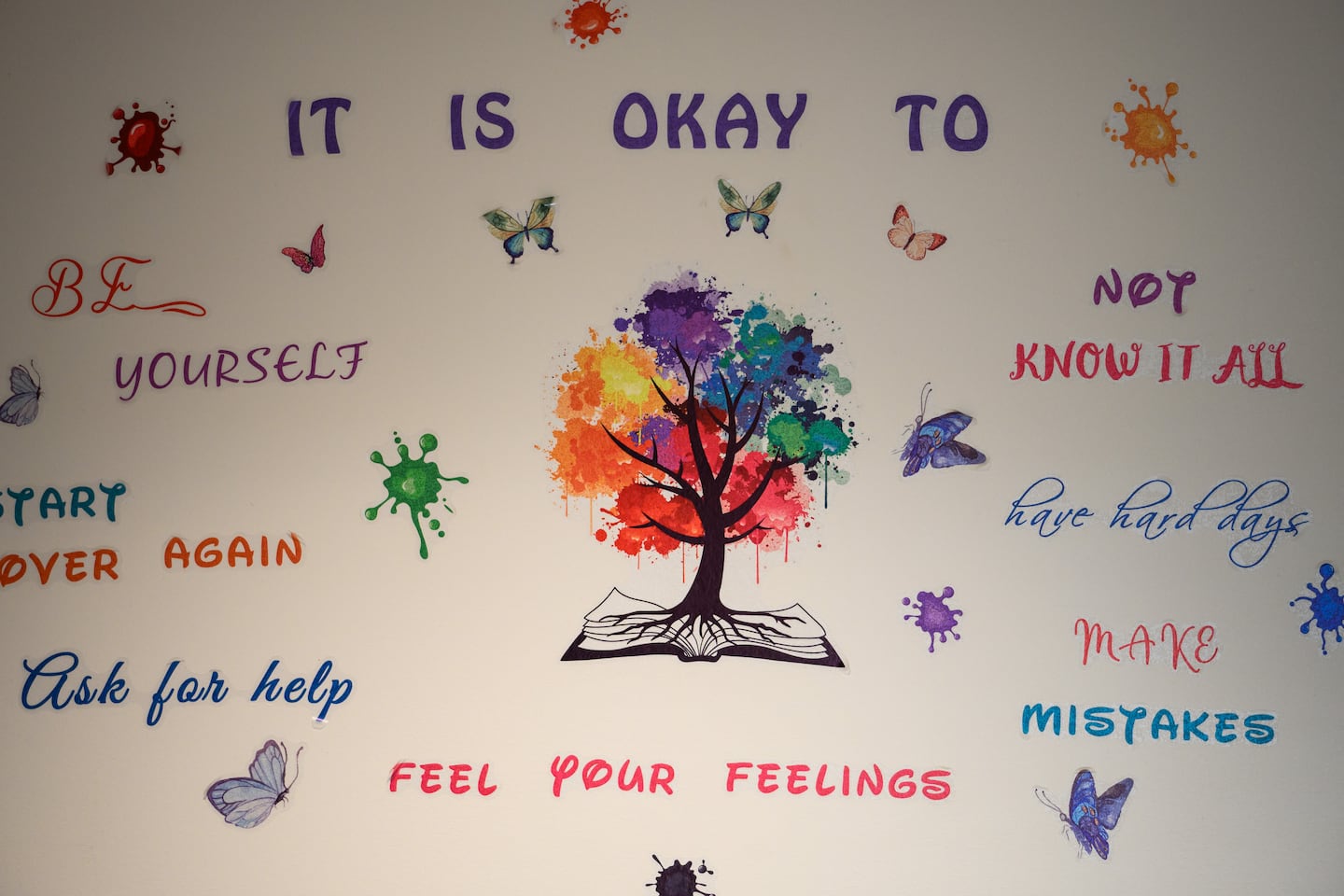 A decal with affirmations decorated a wall near the entrance of a mental health clinic in Somerville High School on Jan. 21.Andrew Burke-Stevenson/for The Boston Globe
Before the pilot program, principal Keith Asher at the Washington Elementary in Springfield said he would call 911 and request an ambulance as often as once a week for students who had lost control of their emotions and thrown chairs or other objects.
But with more in-school staff who could help kids having a break down, “we maybe had two or three ambulance calls for the entire school year,” Asher said.
At Somerville High School, health care provider Cambridge Health Alliance was already running a clinic in the school when the grant program paid for an extra clinician, a social worker, and a bilingual specialist to speak with parents.
The additional assistance helped reduce the school’s suspensions by half over the last year, from 61 in 2024 to 31 last year, administrators said.
Vanessa Nason, the social worker at Somerville High paid for by the grant, said she uncovered how teenage social pressures were bogging down one highly spirited student who was suddenly skipping class and getting poor grades.
Nason’s evaluation helped determine that the teen needed more than just on-site therapy and got the teen’s mother to agree to ongoing help at an outside clinic.
The grants also paid for at least one bilingual professional at each school to help parents connect with their children’s care. The bilingual professionals were able to give parents insight into what their children needed, help them interact with school administrators, and show them how to navigate insurance for outside clinic care.
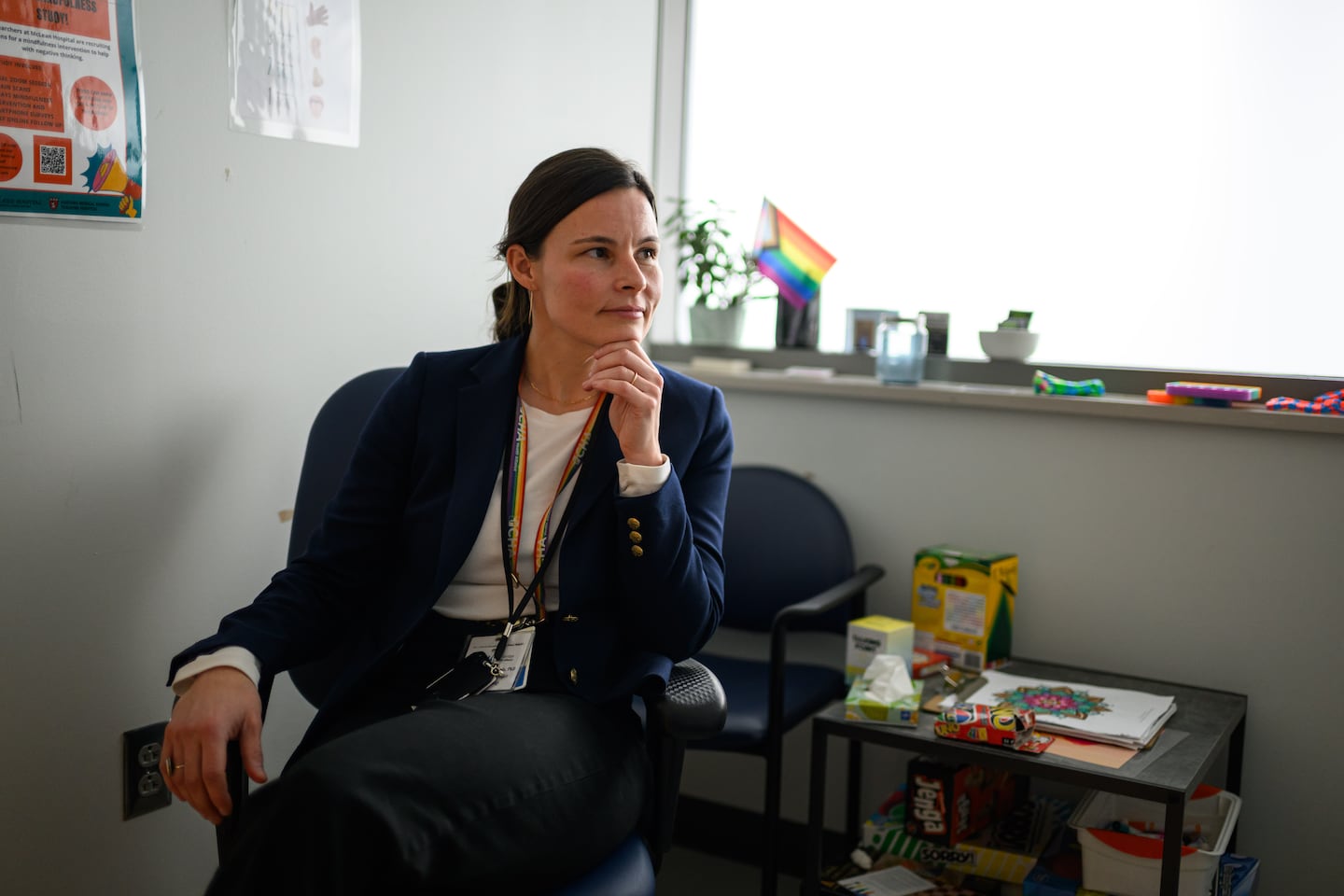 Ellie Richards, a psychologist at Cambridge Health Alliance and the clinical team lead with the grant, posed for a portrait in a behavioral health office at a mental health clinic in Somerville High School Jan. 21.Andrew Burke-Stevenson/for The Boston Globe
“I speak Spanish and English and I am a parent,” said Claudia Ortiz, the grant-funded family support specialist working at Somerville High. “So it helps because when I explain something to a parent, it’s on equal terms, in a better way than they would hear it from the school.”
The pilot program in Somerville High and the other 22 schools had guaranteed backing only for four years from three philanthropic funds, the Mass General Brigham Community Benefit Fund, the Charles F. and Beatrice D. Adams Charitable Trust, and the American Endowment Foundation Anonymous Donor Advised Fund.
Private funders typically support such new or experimental initiatives to get them off the ground. If the programs prove valuable, the nonprofits expect local, state, and federal funding streams to take over.
The mental health services pilot proved extremely valuable, administrators said. Replacing the grant funding has been challenging at a time when municipal and state budgets are tight and the Trump administration has been slashing student mental health aid.
At Springfield’s Washington Elementary, Asher allocated $137,000 to keep the clinician originally funded by the grant on the school payroll full time. Administrators at some of the other schools said they did not have available funds in their budgets to replace the grants.
Danna Mauch, president of the Massachusetts Association for Mental Health, said she and her team have been working to find ways to sustain the program through a patchwork of third-party insurance, private grants, and state funds.
School clinics could work with health care providers to bill services to insurance coverage, some experts said, even though that approach would not cover all of the resources funded by the grants, such as social workers and bilingual specialists.
 A person sat in a common area at Somerville High School Jan. 21.Andrew Burke-Stevenson/for The Boston Globe
“We may run into barriers, but I think most of us in the mental health field with kids believe that we can all sit at the table and work out the kinks because this is worth working out,” said Pam Sager, executive director of the Parent Professional Advocacy League, a non-profit mental health advocacy group.
Many students, however, either do not have insurance or mental health services are not covered by their policies. “Not everybody has insurance company coverage and, because of some federal changes, more families might have coverage problems,” Mauch said.
Up to 350,000 people in Massachusetts are at risk of losing their Medicaid coverage over the next decade, according to a study published by the Center on Budget and Policy Priorities last year.
Advocates of the free mental health services in schools program said they would also seek support at the state level, where at least five sources of funding have $11 million available for mental health support in schools, according to the state Department of Education.
At the federal level, Massachusetts received nearly $20 million this year. But advocates said they could not count on future federal dollars. The Trump administration tried to cancel some programs last year, only to restore the funding amid a public outcry and legal challenges.
Earlier this year, the administration threatened to cut hundreds of federal health grants only to backtrack and reinstate the money. And, last April, President Trump announced he would cancel funds secured by the Biden administration’s Bipartisan Safer Communities Act, which set aside $1 billion to increase the number of mental health providers in schools. A federal judge restored the funds in December.
Those who run the program at the Massachusetts Association for Mental Health said the in-school support is too valuable to lose.
“Our clinicians said that a lot of the students they reached never had access to the behavioral health system before,“ said Jessica Larochelle, the association’s director for public policy and government relations. ”So it’s critical that we find a way to keep this going.“
Mariana Simões can be reached at mariana.simoes@globe.com. Follow her on X @MariRebuaSimoes.