
Binge Seinfeld on Netflix right now and try to argue that it’s not still the heavyweight champion of the sitcom world. It’s been nearly thirty years since Seinfeld’s highly divisive, and deeply misunderstood, series finale. Every situation comedy that has come since operates in Seinfeld’s long shadow, and streaming the show today proves why.
Seinfeld plays like it was designed to be binged. In fact, it does so better than many shows today that actually are intended to be watched all in one shot.
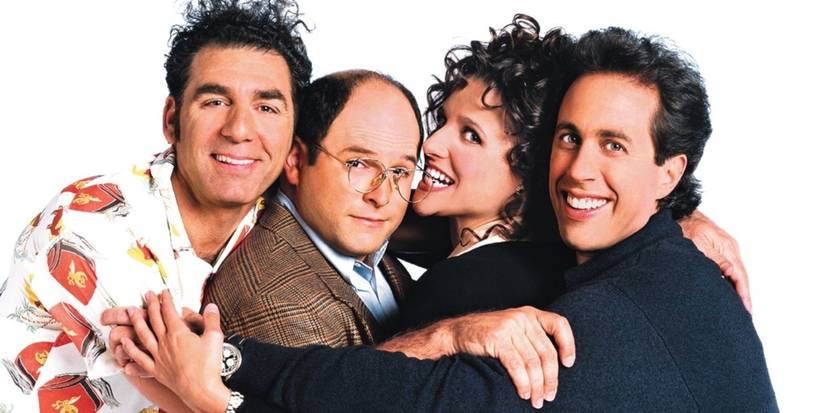
A promo shot of the Seinfeld cast
Seinfeld broke new ground in terms of callbacks and comedic continuity, setting a precedent for the next generation of successful sitcoms and beyond.
A Binge-Worthy Series Way Ahead Of Its Time

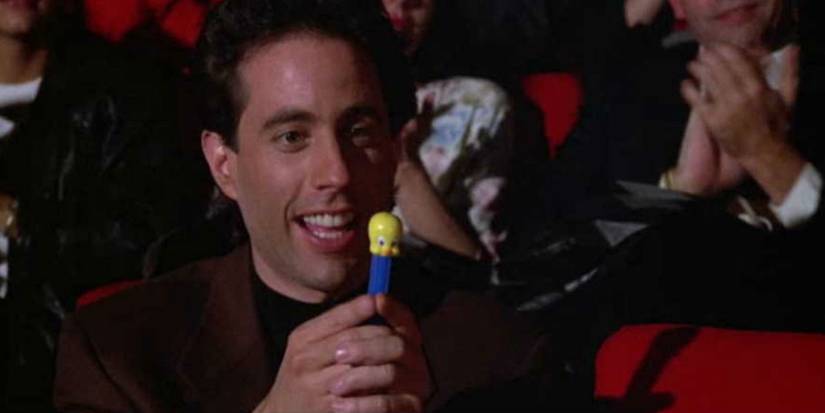
Jerry on stage in Seinfeld
True to its nature as the brainchild of contrarians, Seinfeld is a gloriously contradictory show. Over its nine-season run, Seinfeld constantly reinvented itself, while also staying remarkably consistent episode-to-episode. It walks a tightrope act between observing the mundane and exposing the absurd. It might have been a show about nothing, but viewers had to be prepared for anything to happen.
Like a great work of science fiction, Seinfeld operates by its own internal principles, its own proprietary logic.
By its pivotal third and fourth seasons, Seinfeld became the dominant comedy on TV. It did so by embracing tragedy as part of its formula for hilarity. And most notably, there has never been a show like Seinfeld that has been simultaneously as obsessed with reality as it is utterly detached from it.
Seinfeld is a perfect, fully-realized sitcom world, one that exists in three dimensions beyond the confines of Jerry’s apartment, or the Monk’s Cafe set. Like a great work of science fiction, Seinfeld operates by its own internal principles, its own proprietary logic. That is what makes the show so immersive, and so endlessly rewatchable.
Seinfeld Evolved From A Straightforward Pitch Into The Most Complex Comedy On TV
How A Show About A Comedian Transcended To Become A Comedy About Everything
The original premise for Seinfeld was simple: follow a stand-up comedian through his daily life as he accrues material for his act. It’s a great premise for a show, but it’s also one Seinfeld quickly outgrew. By Season 2, the show became about the mishaps and misdeeds of a group of eccentric New Yorkers.
Early on, Seinfeld developed its rapid-fire pace, another vital part of what makes it such bingeable television. Seinfeld episodes run the standard network length of approximately 22 minutes, meaning you can knock out six, or even nine episodes in a single sitting if you’re really committed. Yet so much happens in each episode that you’ll feel like you watched twice as many.
The closest equivalent to this isn’t any other sitcom, it’s innovative HBO dramas like The Sopranos and The Wire. There is a certain density to Seinfeld episodes. A certain lived-in, extant quality that only a few other sitcoms, from M*A*S*H*, to Cheers, to It’s Always Sunny, are near the same level of.
Seinfeld’s Self-Awareness Was Essential To Its Humor, As Proven By The Show’s Brilliant 4th Season
Seinfeld Achieved True Greatness By Becoming Self-Parody
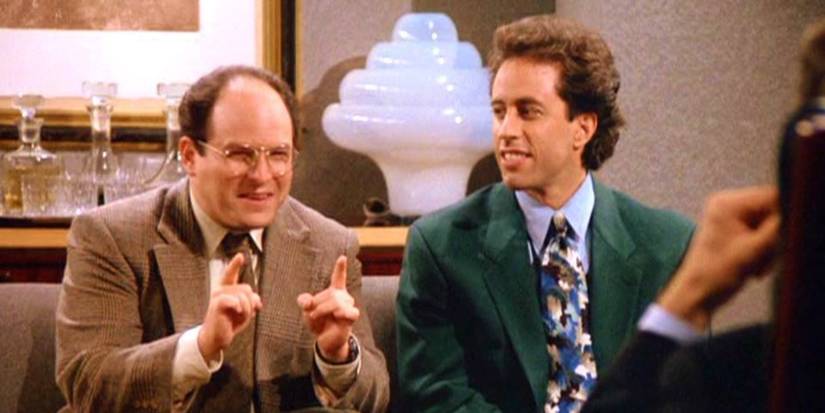
George and Jerry pitching their TV show on Seinfeld
Seinfeld’s penchant for self-referential humor and repetition of plotlines, bits of dialogue, and situations across episodes, developed as Seasons 2 and 3 progressed. The show took a great leap forward with Season 4, which featured a season-length plotline that parodied the show’s own origin story. Crucially, the more self-aware the show became, the more its episodic formula became refined.
That led directly to Seinfeld’s other legendary season-length arc: George’s engagement to Susan, and Susan’s eventual shocking demise, in Season 7. Originally introduced in Season 4, Susan was brought back as a romantic foil for George, but when actress Heidi Swedberg failed to click with the main cast, outgoing showrunner Larry David concocted her infamous exit.
Early, Middle, And Late Seinfeld All Changed The Game For Modern Sitcoms Moving Forward
The Show’s Three Eras Each Exert And Outsized Influence On Subsequent TV Comedies
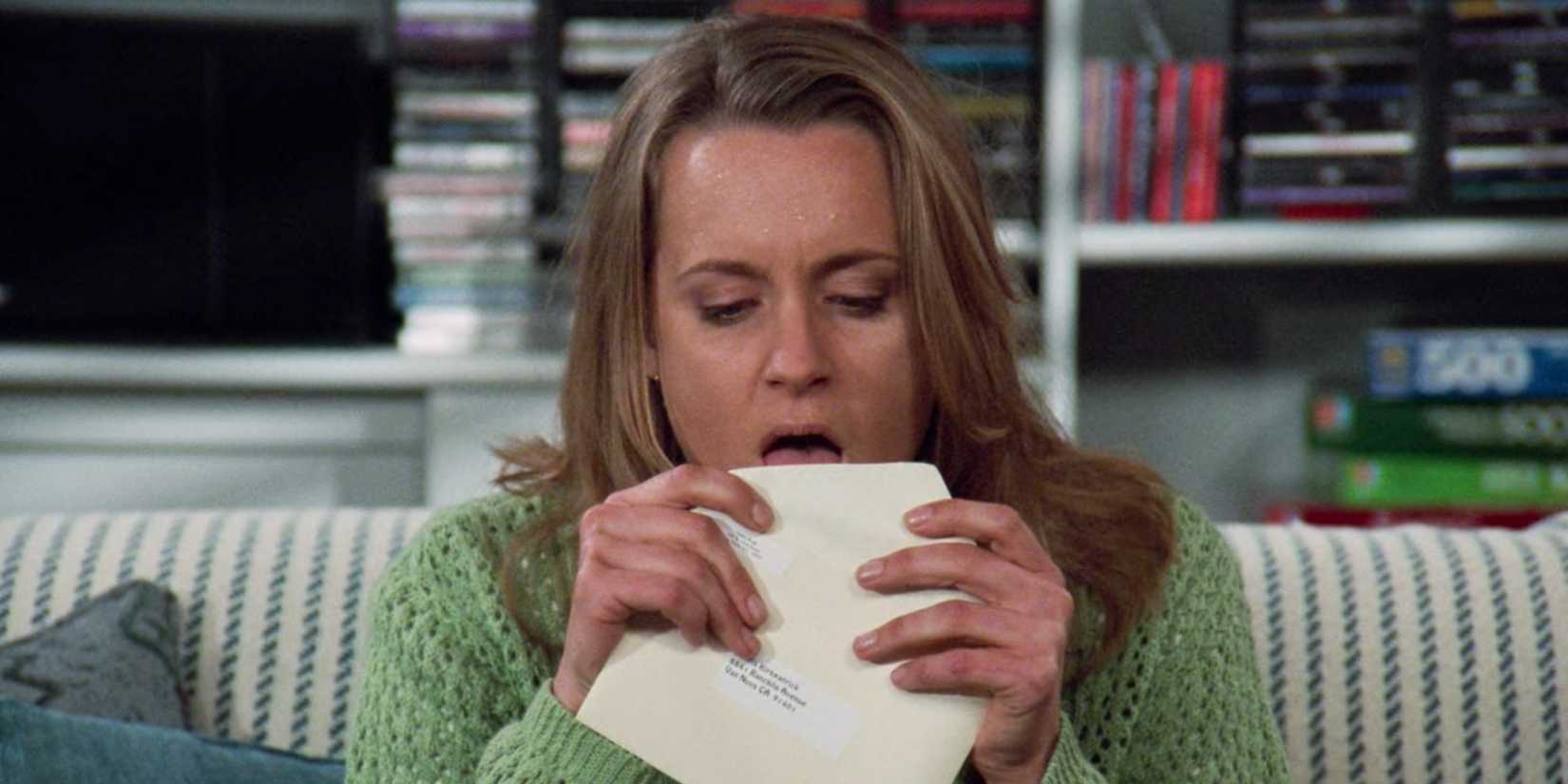
Susan licking an envelope in Seinfeld season 7.
In its post-Larry David final two seasons, Seinfeld became exponentially more absurd. Binge-watching the show highlights its three distinct eras, and how each of them changed the game for sitcoms in its own distinct way. In a way, Susan’s death was the pinnacle of the show’s penchant for gallows humor. With David gone, Late Era Seinfeld embraced its silly side.
As such, Seinfeld is an ultimate example of the kind of TV series that will have you finishing the finale and itching to jump right back into the pilot and start all over again. Because where the show ends and where it begins feel very different, even if they brilliantly open and close with the same lines of dialogue.
Seinfeld’s Misunderstood Finale Was The Perfect Bow On The GOAT Sitcom
The Series Couldn’t Have Ended Any Better
Even though, as per the ethos of the show, Seinfeld’s characters learn nothing, and fail to grow as people, the show itself has a discernible character arc from Season 1 through Season 9. It evolved consistently, learning equally from its mistakes and successes, in a manner very much at odds with Jerry, George, Kramer, and Elaine.
Seinfeld’s last episode, “The Finale,” is unfairly maligned. It is the perfect send-off for the series, one that pays off nine years of storylines with a parade of callbacks, and then punishes its irascible protagonists for something completely dumb, after they’ve gotten away with practically everything, including arguably murder, up to that point.
And still the Seinfeld gang learn nothing, which is the true genius of “The Finale.” In retrospect, Seinfeld is an artifact of its time, but it is also utterly timeless. It was so avant-garde that 30+ years later it feels contemporary. And its influence extents to every great series that has aired since, from Friends, to Arrested Development, and again, to Always Sunny.
Seinfeld achieved perfection as weekly episodic television, but in the streaming era it is just as much of a force to be reckoned with. It is undeniably the GOAT sitcom. Seinfeld didn’t just reinvent the genre, it invented its own version of it, and played by its own rules, in a way that no other show before or since could rival.