
9 February 2026, 17:07
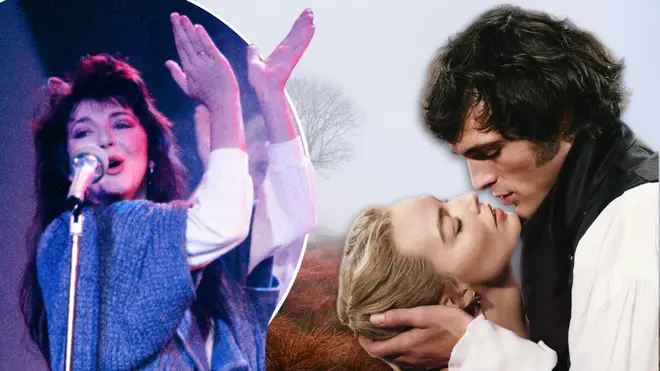
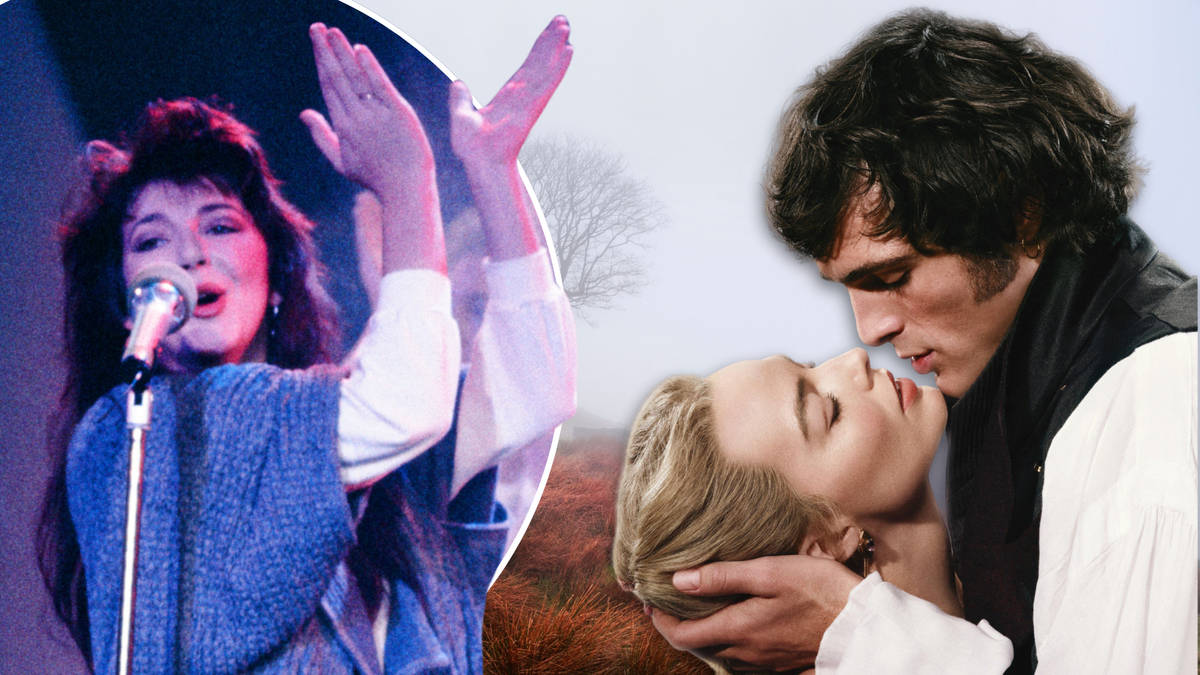
Kate Bush, Margot Robbie and Jacob Elordi.
Picture:
Getty Images/Alamy

In Hayworth House, 1833, Patrick Brontë gifted a piano to his three children – a decision that would soon change the world of music forever…
Wuthering Heights is a landmark novel that has enjoyed centuries of acclaim and success. While the story of an all-consuming love is timeless, the music that follows is as expansive as the Yorkshire moors.
As the latest adaptation of Emily Brontë’s novel arrives in cinemas this week, we take a musical deep-dive into the strange and alluring history of the world’s greatest love story.
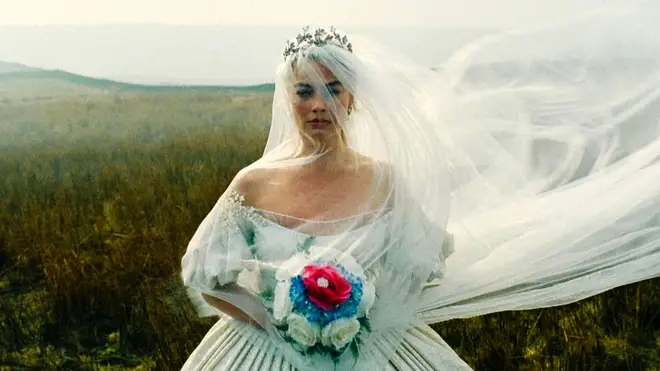
Wuthering Heights (2026) directed by Emerald Fennell.
Picture:
Alamy
Emily Brontë and Beethoven
Despite all three of the Brontë sisters achieving success in the literary world, it was Emily who was the virtuoso. She spent most of her life at Hayworth House where she became skilled in many disciplines and found serious acclaim as a brilliant pianist. After her father recognised her talents he sent her to study at Hegner Pensionnat in Brussels where she would tutor fellow students.
She was known to play Beethoven sonatas with precision, and the Romantic themes of the German composer’s music inspired Brontë to explore similar ideas in her gothic romance. Emily sought to provoke reactions from the readers, aiming to transgress traditional fiction.
Upon release, critics described Wuthering Heights as ‘irredeemably monstrous’ echoing similar reactions to Beethoven’s Symphony No.2, which was described as ‘a gross enormity’.
Read more: 10 historical figures you didn’t know were classically trained musicians
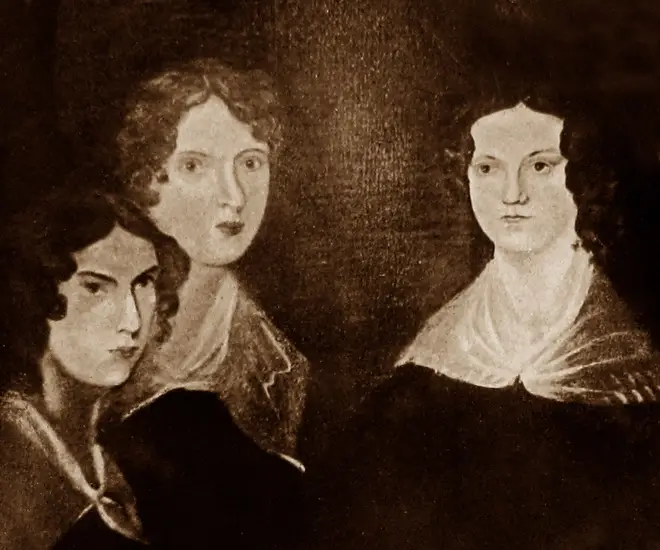
Anne, Emily, and Charlotte Bronte.
Picture:
Alamy
The lost film score
In 1920, A.V. Bramble brought Wuthering Heights to the big screen for the very first time. It is unfortunate that the movie, along with the score, is considered lost.
Filmed at Hayworth House in West Yorkshire, it follows the novel’s storyline closely, including the second generation storyline which is omitted in most versions.
However, due to the highly degradable nature of the film itself, there are no surviving copies. All that remains is the script which was recovered in 2014 by the Brontë Parsonage for a five-figure sum. As this was a silent film it would have been accompanied by live musicians, either a singular piano or chamber group, but there is no sign of any sheet music written for the film.
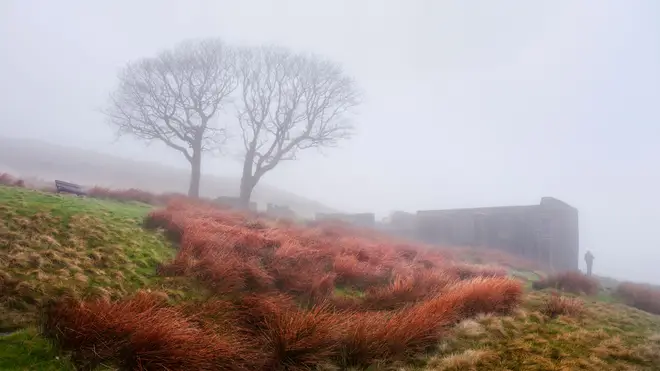
Top Withens ruins in the mist, near Haworth, West Yorkshire, UK.
Picture:
Alamy
Alfred Newman’s 1939 film score
In 1939, prolific film composer Alfred Newman scored the first talking-picture adaptation of Wuthering Heights starring Laurence Olivier. The American-born composer had already composed music for multiple movies and was looking at new ways to reinvent Hollywood’s golden age of music.
Newman focused more on creating music to reflect the dramatic themes of the novel rather than the characters. The ‘love theme’, which is commonly mistaken as ‘Cathy’s theme’, is only used when Heathcliff and Cathy are on screen together. Newman was arguably influenced by his time conducting Broadway musicals to approach the score this way.
He unfortunately lost out on the Academy Award to The Wizard of Oz.
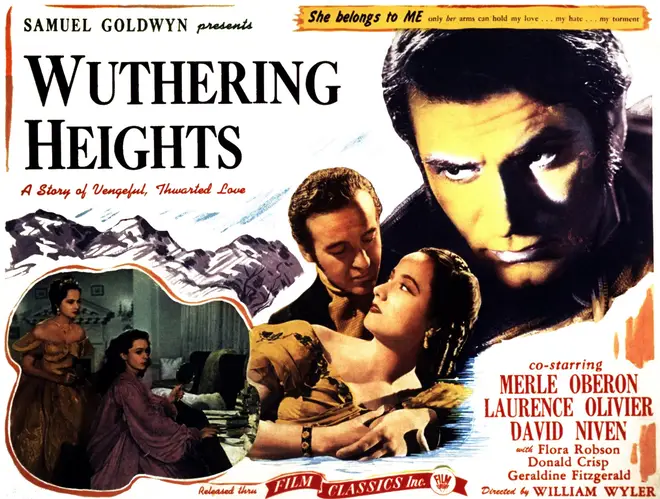
Wuthering Heights starring Merle Oberon, Laurence Olivier.
Picture:
Alamy
Bernard Herrmann’s opera, that never was…
Bernard Herrmann was inspired to write his sole opera for Wuthering Heights when composing the score for Jane Eyre – penned by Emily’s sister, Charlotte. The project stalled for many years, and was picked up again after a visit to the Brontë home. The libretto, written by Lucille Fletcher, Herrmann’s wife, was based on the novel and some of Brontë’s poems.
It took until 1951 for the opera to be completed, by which point Herrmann and Fletcher had divorced.
There were many attempts to produce the show, but Herrmann wouldn’t compromise on creative differences. Many financiers found the themes too provocative and wished for a more uplifting ending.
Herrmann, who died in 1975, wouldn’t live to see his opera performed. In 2011, to mark the centenary of his birth, it finally received its first theatrical performance.
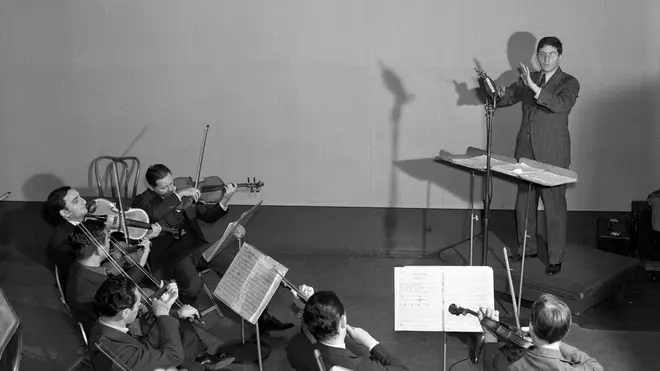
Bernard Herrmann, conductor with the Columbia Studio Orchestra.
Picture:
Getty
Kate Bush’s breakout song
Kate Bush, one of the most influential musicians of the past century, was watching the 1967 TV adaptation of Wuthering Heights one day, and was deeply moved by the story. She subsequently read the novel only to discover that she shared a birthday with Emily Brontë.
For a debut single, ‘Wuthering Heights’ is bold and creative. The lyrics are written from the perspective of lead character Cathy’s ghost, pulling dialogue from the novel. Both time and key signatures are malleable, appearing to start in the key of A major before slipping into the relative minor, and winding up in an explosive modulation into D flat major for the whimsical, dazzlingly high chorus.
Written in a few hours and recorded in one take, the single garnered critical and commercial success. Fans now celebrate ‘The Most Wuthering Heights Day Ever’ on 27 July by coming together and dancing to the song.
Read more: The harmonic sequence that gives Kate Bush’s ‘Running Up That Hill’ its emotional power
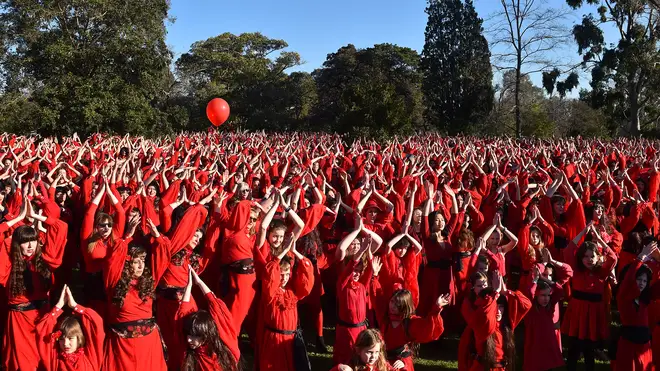
Kate Bush fans perform a dance during a celebration to mark ‘The Most Wuthering Heights Day Ever.
Picture:
Getty
The Cliff Richard musical
There had been many attempts to adapt Wuthering Heights for the stage, but none as successful, and strange, as Cliff Richard’s Heathcliff. In 1996, Richard starred in a musical that attempted to expand on plot elements regarding the main character Heathcliff.
After expressing a desire to play the main character, Richard assembled a team of musical stars to work on the project. Tim Rice, frequent collaborator of Andrew Lloyd Webber, wrote the lyrics and Grease’s Olivia Newton-John featured on five duets for the studio album.
Despite not being received well by critics, Richard’s fans supported the project. The opening takings were £8.5 million, a record-breaking figure for the time.
Read more: 10 best musicals by Andrew Lloyd Webber – ranked
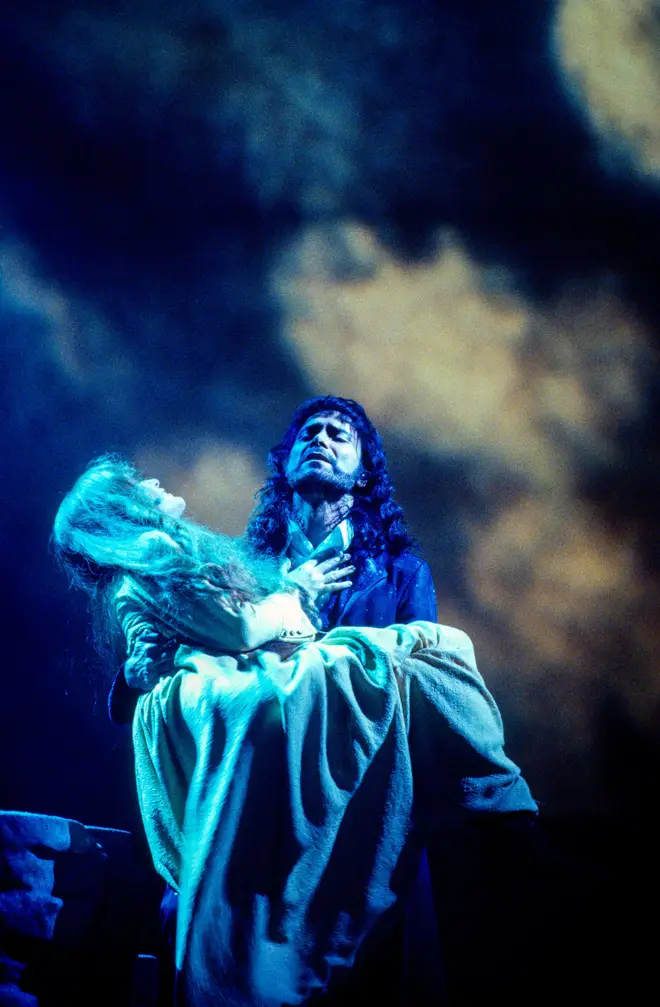
Helen Hobson (Cathy), Cliff Richard (Heathcliff) in HEATHCLIFF.
Picture:
Alamy
Schönberg’s ballet
Broadway fans will recognise the name Claude-Michel Schönberg as the renowned composer of Les Misérables. In 2002 he composed the score for the critically acclaimed ballet adaptation of Wuthering Heights.
The ballet debuted to critical acclaim and is regarded as one of the greatest adaptations of Brontë’s work. David Nixon choreographed the Northern Ballet production and focused on exploring the dramatic and destructive love between the main characters.
The story focuses on the first half of the novel and explores the gothic themes through its intense dances and minimal sets.
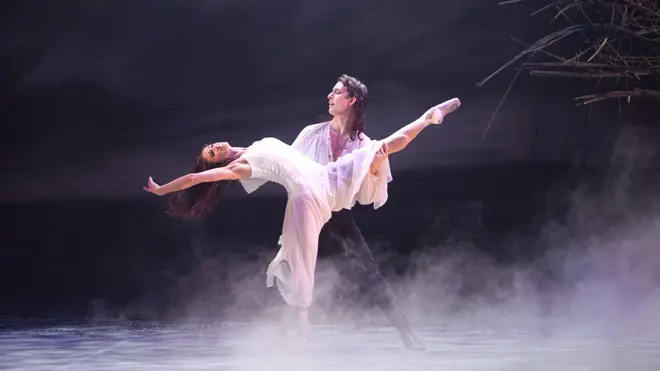
Northern Ballet, Wuthering Heights, Lyceum Theatre Sheffield 2015.
Picture:
Alamy
Brontë goes Brat…
In 2026, director Emerald Fennell continues the long legacy of adaptations of Wuthering Heights with a new movie adaptation starring Margot Robbie and Jacob Elordi, and scored by her frequent collaborator, composer Anthony Willis.
However, after being impressed by the movie, pop superstar Charli XCX wrote and recorded an album to feature in the movie. This marks a departure in sound for Charli, as the music features haunting cellos mixed with her usual blend of synths and autotune. Off the back of her mega-hit album brat, she was looking to push the boundaries of her art and said she was attracted to the ‘tortured romantic’ themes.
As the latest musician to be compelled by the novel, Charli XCX shares a similar artistry to Emily Brontë. Inspired by the dark and uncomfortable themes explored in previous artists’ work, both felt compelled to transgress popular clichés.
Fun fact: the poster for this latest adaptation features the same font as the original 1920s silent film – a full circle moment for this strange musical story.
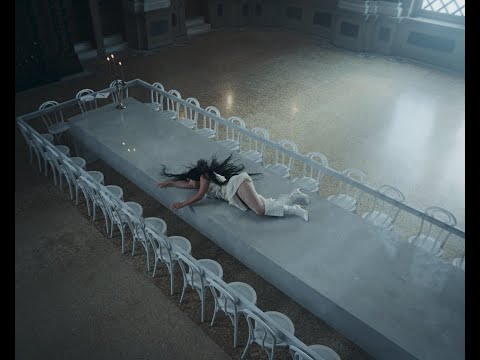
Charli xcx – Chains of Love (Official Video)
Wuthering Heights – now a film, a TV series, an opera, a ballet, a pop song, and a musical. Now, who’s going to create the video game…
‘Wuthering Heights’ is in cinemas 13 February.