
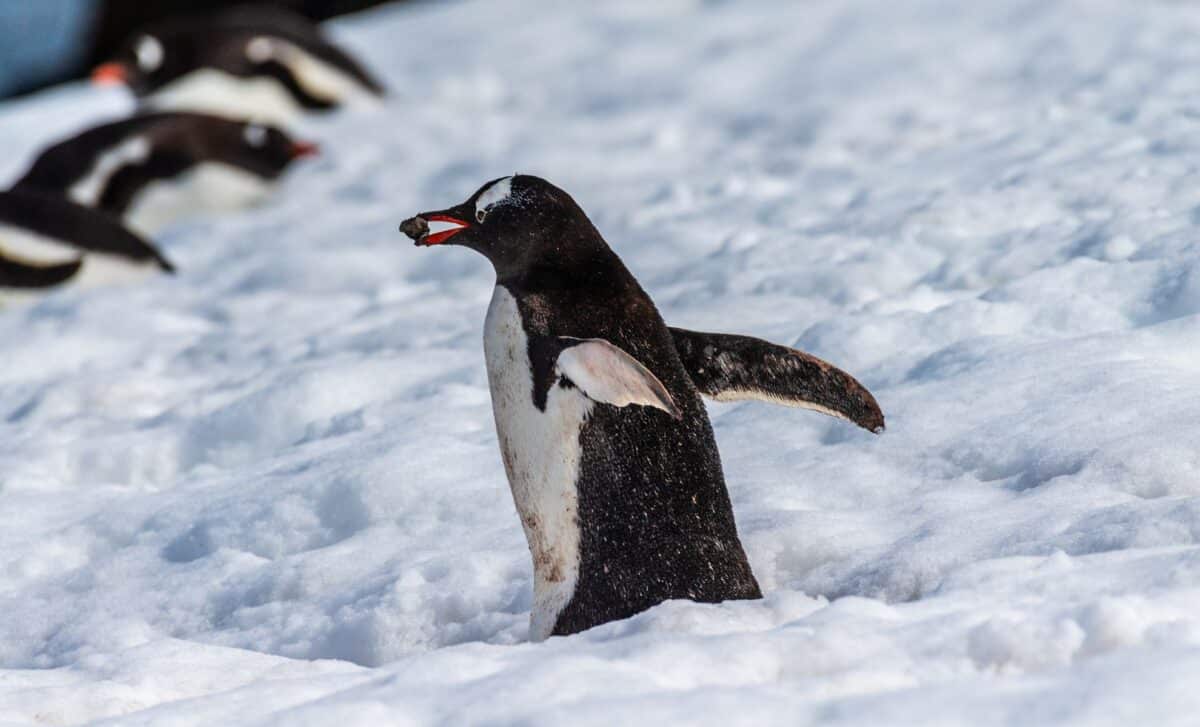
For the first time in centuries, pumas are back in Patagonia, and they’re hunting a new prey: the Magellanic penguins. Scientists studying this interaction have found that pumas have killed more than 7,000 adult penguins in just four years. While this is a dramatic figure, the penguins are not at risk of extinction just yet, though their survival could depend more on reproduction rates and juvenile survival than puma predation.
The return of the puma to the Patagonian coast is part of a larger recovery story in Argentina. After decades of absence, these big cats are reclaiming their historic range, which includes areas once populated by Magellanic penguins. Penguins had flourished on the mainland, having evolved in the absence of land predators, but now they face a new threat. For the first time in modern history, pumas are attacking them.
Puma-Penguin Predation: A New Dynamic
When cattle ranching ended in southern Argentina in the 1990s, pumas slowly returned to the region, finding their way to places like Monte León National Park (MLNP). Here, they encountered a thriving colony of Magellanic penguins that had migrated from islands to the mainland. Without natural predators, the penguins were easy prey for the pumas. Researchers from the University of Oxford, in collaboration with local scientists, began tracking the interactions between the two species, uncovering startling numbers of dead penguins.
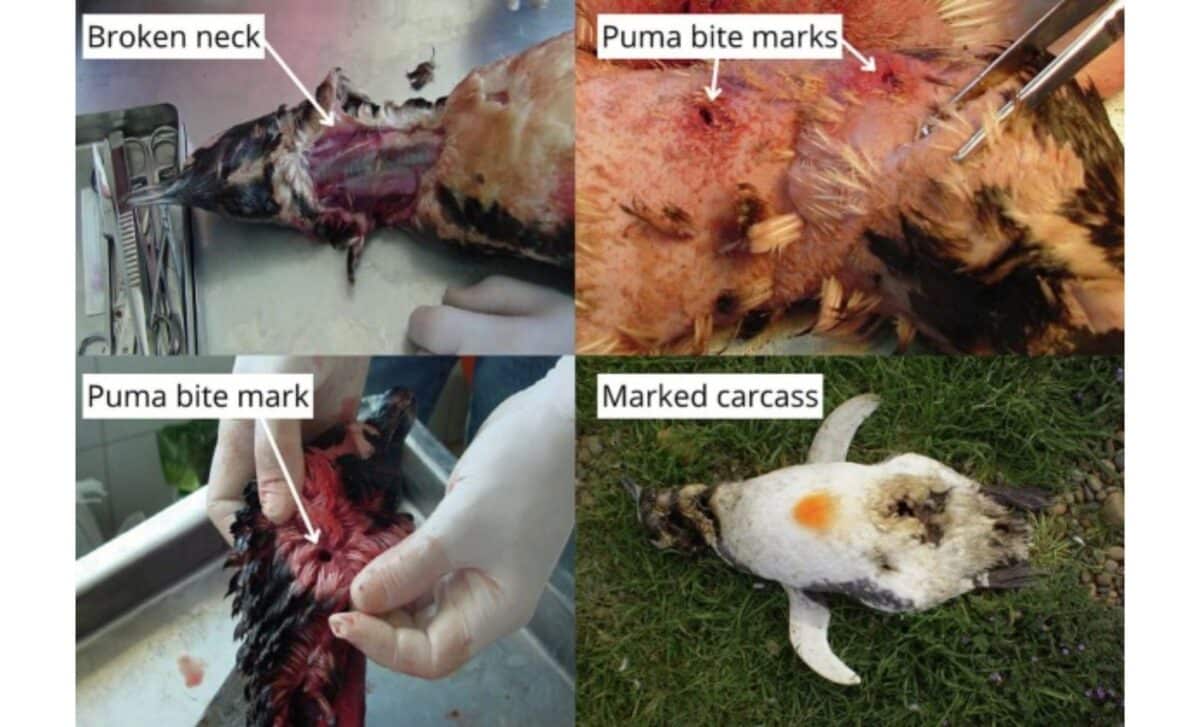 Magellanic penguin carcasses with bite marks and broken necks, indicating puma attacks, were marked when counted. ©Frere et al. (2010)
Between 2007 and 2010, more than 7,000 adult penguins were killed by pumas in the park. According to the study, this represents around 7.6% of the adult penguin population. Interestingly, many of the penguins were not fully eaten, a behavior known as “surplus killing”, where predators kill more than they can consume, often due to the ease of hunting and the abundance of vulnerable prey. This phenomenon is seen in other species, like domestic cats, when the prey is abundant and easy to catch.
The Role of Reproduction and Juvenile Survival
While puma predation has had a noticeable impact on the penguin population, researchers believe it is not the primary threat to their long-term survival. According to population models, the penguins’ fate is more closely tied to their ability to reproduce and the survival rates of their young. If breeding success remains high and juvenile survival is steady, the colony may continue to thrive despite the loss of adults to pumas. However, if reproduction rates decline or a significant portion of the young penguins fail to reach adulthood, the population could decline rapidly.
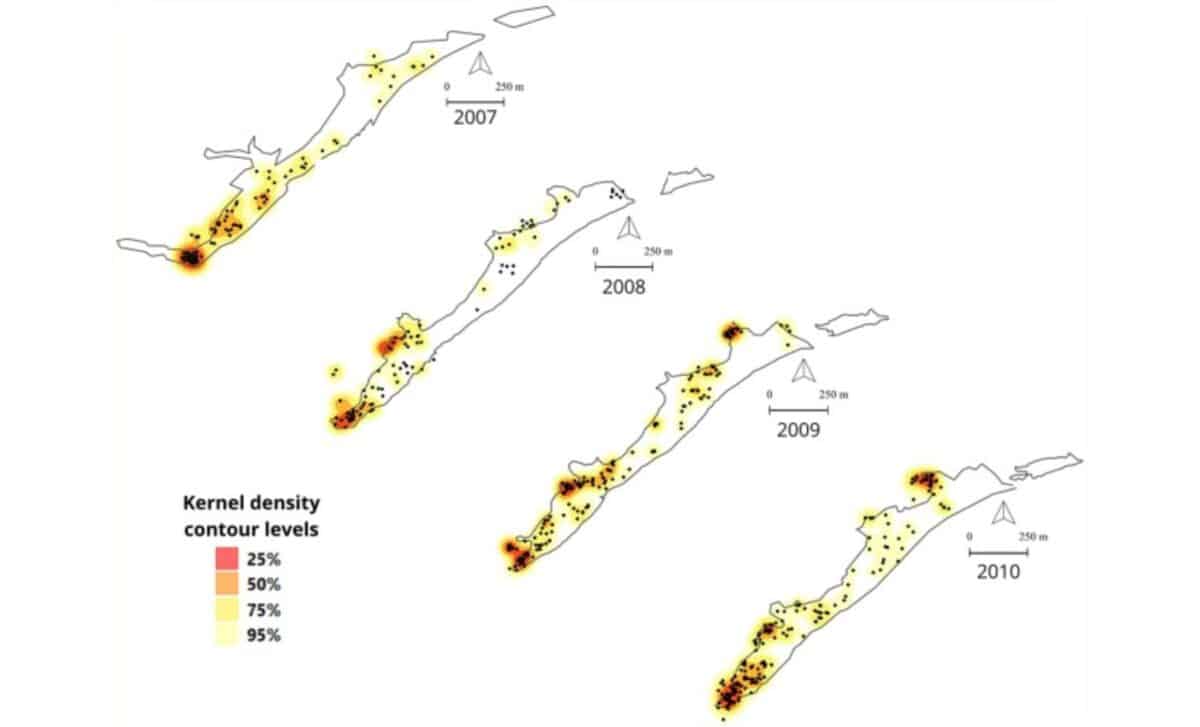 Hotspots of carcass locations across the colony were identified using Kernel density estimations, with contours at 25%, 50%, 75%, and 95% levels for each season. ©ScienceDirect
The study reveals that the combination of low reproductive success and poor juvenile survival could lead to extinction in certain hypothetical scenarios. In these cases, even the additional mortality caused by pumas would worsen the penguins’ chances of survival. It’s clear that while pumas contribute to the pressure on penguin numbers, other ecological factors must also be carefully monitored.
The Growing Threat of Terrestrial Predators
This new threat to Magellanic penguins is not isolated to Patagonia. As more land predators reclaim areas they once abandoned, other seabird colonies around the world are facing similar challenges. In Patagonia, the introduction of pumas to the mainland has highlighted the vulnerability of coastal birds to terrestrial predators. In the United States, for example, feral hogs are now major predators of sea turtle eggs along the Georgia coast, and coyotes are expanding their range to coastal islands in eastern North America.
The return of pumas is also part of a broader conservation dilemma, as the recovery of native predators can sometimes come at the expense of other endangered species. In Patagonia, the question of whether to prioritize the protection of pumas or penguins is becoming increasingly urgent. According to researchers, continued monitoring of both species is crucial to prevent further ecological damage. Effective management will require a balance between protecting recovering predators and ensuring the survival of vulnerable species like the Magellanic penguin.