
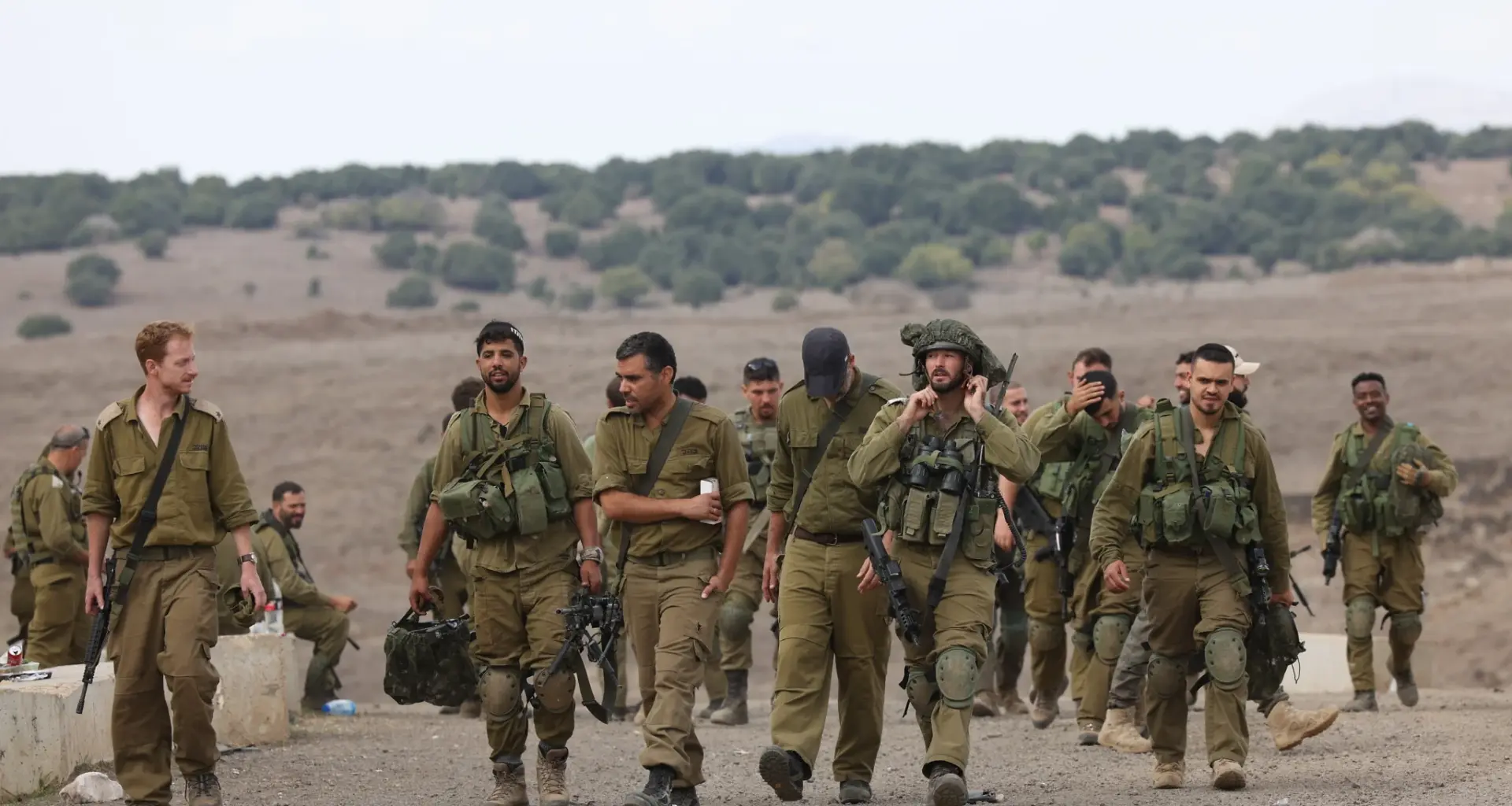
The Defense Ministry is currently grappling with a shortage of therapists for IDF combatants suffering from post-traumatic stress following the war in Gaza, the ministry told lawmakers on Monday.
Addressing the Knesset Health Committee, Ronit Sandrovich, the head of the ministry’s Social Services Responses Division, stated that there is only one caseworker available per 850 veterans suffering from PTSD.
“We owe our psychological casualties, the post-trauma victims. The State of Israel sent them into battle, or was responsible for them in moments of horror, and now it is our duty to stand by them in the rehabilitation process,” committee chairwoman Limor Son Har-Melech said, adding that her panel will “ensure that their rehabilitation is at the top of the healthcare system’s priorities.”
Some 58 percent of those treated at Defense Ministry rehabilitation centers since October 7 are suffering from post-traumatic stress disorder and other mental health conditions.
A report published by the Knesset Research and Information Center last October found that between January 2024 and July 2025, 279 Israel Defense Forces soldiers attempted to take their own lives.
Get The Times of Israel’s Daily Edition
by email and never miss our top stories
By signing up, you agree to the terms
According to the report, combat soldiers made up 78 percent of all suicide cases in Israel in 2024, a sharp rise from previous years: The rate hovered between 42% and 45% from 2017 to 2022, and stood at just 17% in 2023.
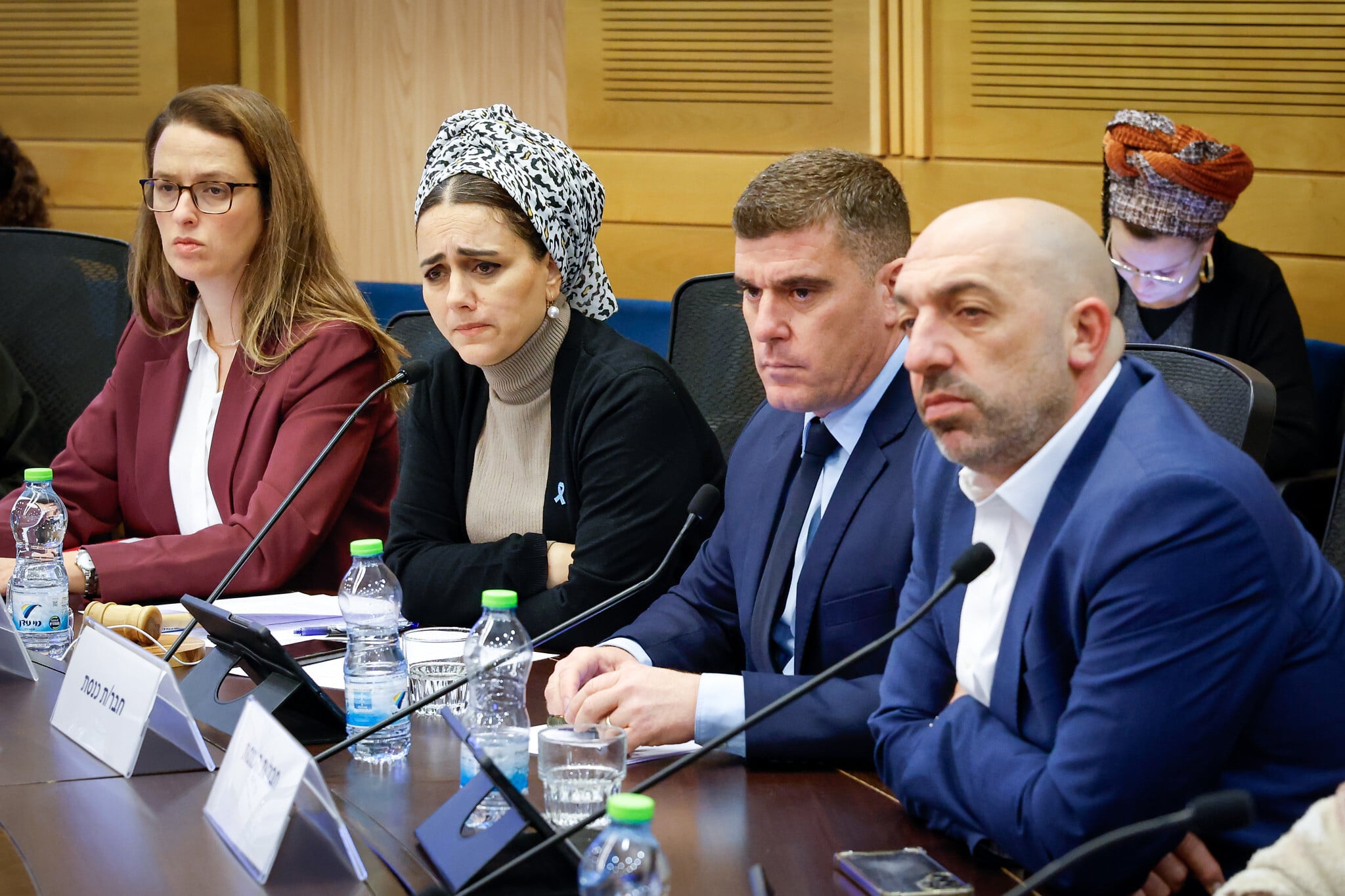
MK Limor Son Har-Melech (Otzma Yehudit) chairs a meeting of the Knesset Health Committee, February 9, 2026. (Noam Moskowitz, Office of the Knesset Spokesperson)
The Knesset report found that only 17% of the soldiers who died by suicide over the past two years had met with a mental health officer in the two months prior to their deaths.
Most recent suicides among Israeli soldiers were driven by psychological trauma from the ongoing war in Gaza, including prolonged deployments in combat zones, witnessing harrowing scenes and the loss of friends, according to the findings of internal military investigations.
While the IDF has said that it was drawing systemic conclusions and stepping up its mental health measures, some reservists have accused the government of failing to do enough to solve the problem.
Addressing the Knesset Health Committee, trauma victim Avichai Levi said the public had forgotten him and his comrades.
“We went out to die, and we came back dead. Do some soul-searching,” he said.
Levi added that he had lost NIS 4,000 in benefits ($1,300) due to his condition because his wife is employed, prompting Sandrovich to state that she would look into the matter.
Micha Katz, one of the leaders of a long-running combat trauma victims protest outside the Knesset, called for the development of a family-based rehabilitation framework and work to reintegrate and empower PTSD-sufferers, while veteran Shmuel Harel dismissed an official app for post-trauma sufferers as judgmental and condescending.
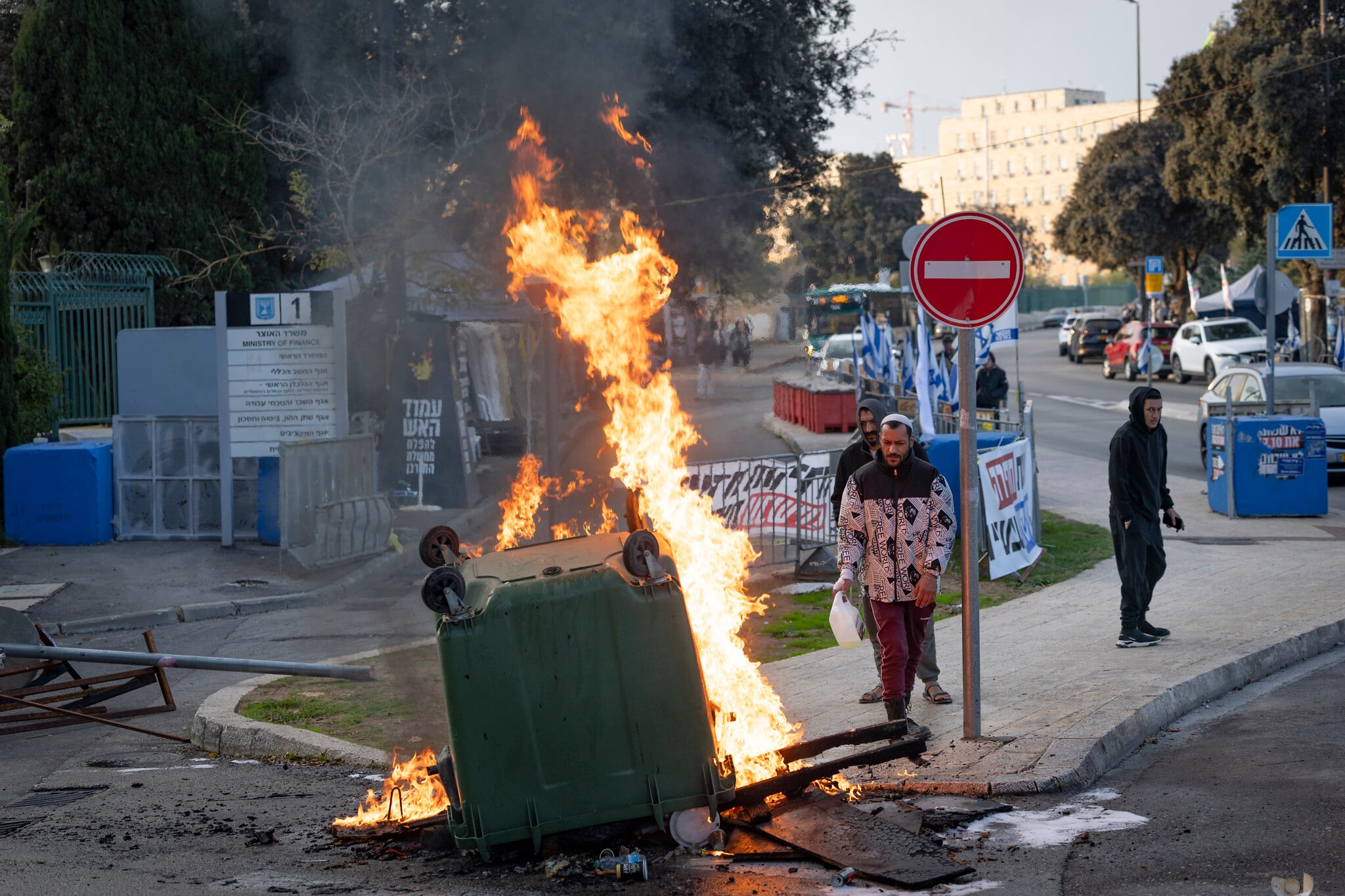
Israeli soldiers with PTSD, demanding better rights and conditions, block a road and burn a rubbish bin outside the Knesset, December 23, 2025. (Chaim Goldberg/Flash90)
According to a survey presented by Harel, 51% of the families of traumatized soldiers are unaware of their rights and therefore unable to receive the proper support and benefits.
A representative of Sabar Health Home Hospitalization told lawmakers that since the beginning of the war, the Defense Ministry’s Rehabilitation Department “issued a tender to expand mental health services.”
“Within this framework, hospitalization alternatives were developed for mental-health patients with a background of PTSD who have difficulty staying in stabilization homes or wards. Home-based hospitalization is carried out by a multidisciplinary team specializing in mental health that comes to the patient’s home. This response allows the patient and family members to remain in a familiar environment, strengthens the sense of belonging, and increases cooperation,” and has a “high success rate,” she said.
During a hearing on preventing suicide among soldiers and veterans in the Knesset Labor and Welfare Committee last September, combat veterans poured bags of medications onto the table, loudly warning that there would be more suicides if things did not change.
The same afternoon, Itzik Saidyan, an IDF veteran who self-immolated outside a Defense Ministry office for injured soldiers four years ago, slammed the government for failing to deal with the issue adequately, during a meeting of the Knesset Foreign Affairs and Defense Committee.
“There have been discussions for more than 15 years now about care for combat trauma victims. Another discussion, and another. When will you understand that you must cancel all your other debates and focus solely on this?” he asked, demanding that lawmakers “put an end to this.”
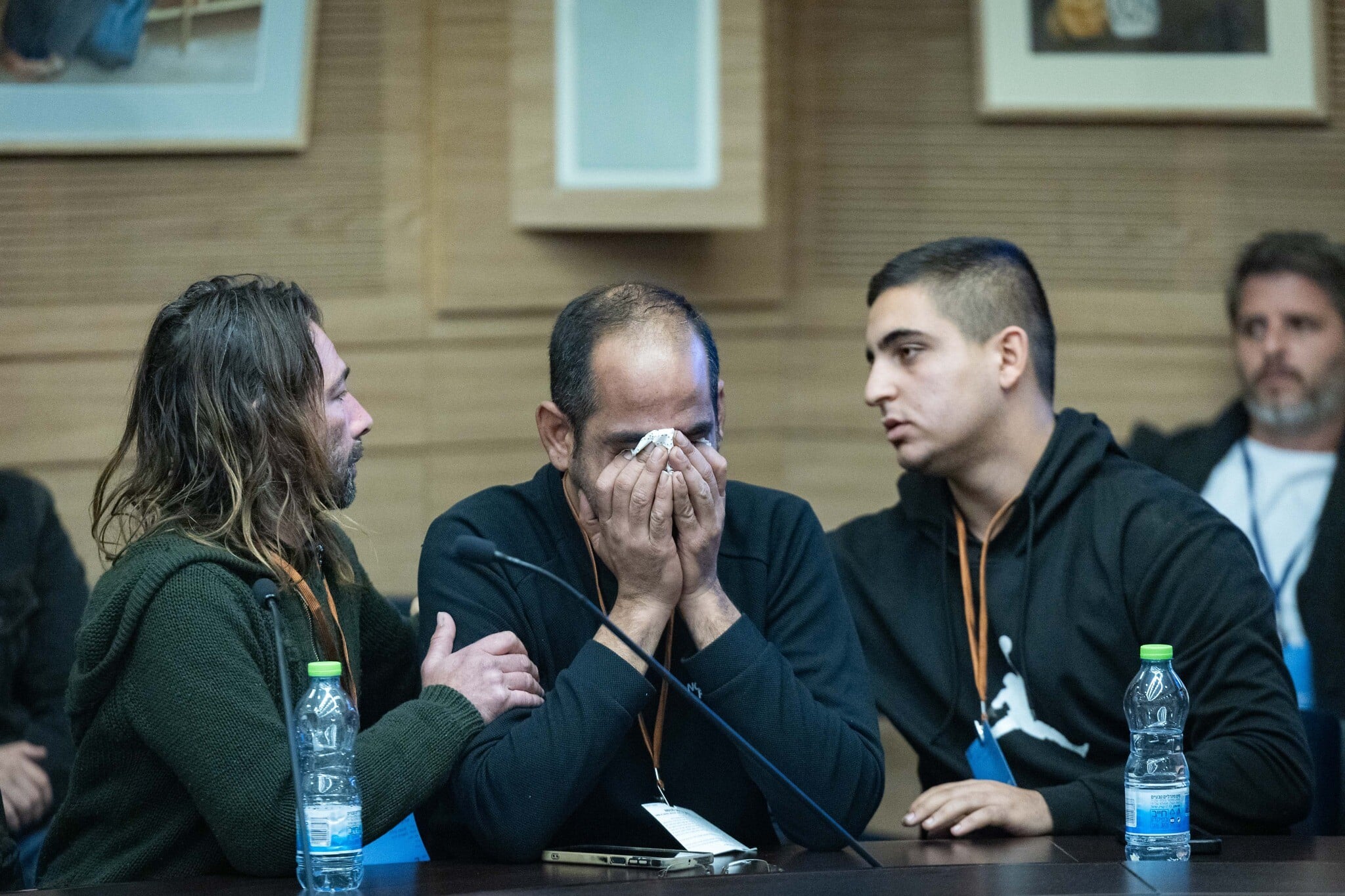
Former soldiers who are suffering from PTSD speak during a special meeting of the Knesset Committee for the Rights of the Child, December 10, 2025. (Yonatan Sindel/Flash90)
Over the summer, the head of the IDF’s Personnel Directorate, Maj. Gen. Dado Bar Kalifa, ordered the establishment of a panel of experts to “examine the response provided to discharged soldiers and reservists who are not on active duty and who ended their lives following their military service.”
Addressing the Health Committee on Monday, the Defense Ministry’s Sandrovich listed various programs that the government is running for veterans suffering from trauma, including carpentry and animal therapy.
Stav Levaton and Emanuel Fabian contributed to this report.
Is accurate Israel coverage important to you?
If so, we have a request.
Every day during the past two years of war and rising global anti-Zionism and antisemitism, our journalists kept you abreast of the most important developments that merit your attention. Millions of people rely on ToI for fact-based coverage of Israel and the Jewish world.
We care about Israel – and we know you do too. So we have an ask for this new year of 2026: express your values by joining The Times of Israel Community, an exclusive group for readers like you who appreciate and financially support our work.
Already a member? Sign in to stop seeing this
You appreciate our journalism

You clearly find our careful reporting valuable, in a time when facts are often distorted and news coverage often lacks context.
Your support is essential to continue our work. We want to continue delivering the professional journalism you value, even as the demands on our newsroom have grown dramatically since October 7.
So today, please consider joining our reader support group, The Times of Israel Community. For as little as $6 a month you’ll become our partners while enjoying The Times of Israel AD-FREE, as well as accessing exclusive content available only to Times of Israel Community members.
Thank you,
David Horovitz, Founding Editor of The Times of Israel