
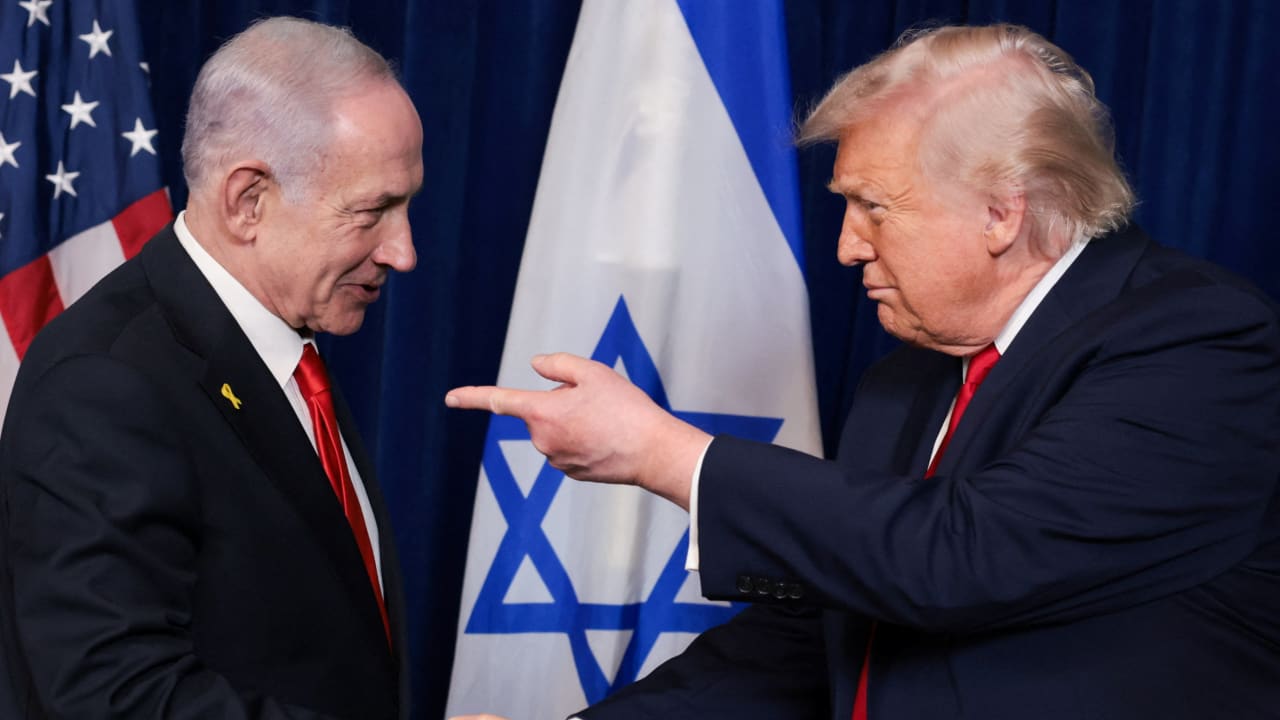
Prime Minister Benjamin Netanyahu will depart on Tuesday for a short visit to the United States. He is slated to meet with US President Donald Trump and senior members of his administration on Wednesday.
Israeli officials describe the meeting as a “strategy-shaping session,” meaning that it will focus not only on the US-Iran negotiations themselves but also on what could happen if the talks were to fail, including discussions of a potential US military strike.
Accompanying the prime minister will be his military secretary, Maj.-Gen. Roman Gofman, and acting director of the National Security Council (NSC) Gil Reich.
US Vice President JD Vance said in Armenia on Monday that there were no redlines at this stage, but that Trump was seeking a broad and comprehensive agreement.
“If there are red lines in the talks with Iran, Trump will be the one to set them,” the vice president said. “He wants a meaningful deal. Reaching an agreement with Iran would benefit everyone.”
Meanwhile, Washington has issued a warning to vessels flying the US flag to stay as far away as possible from Iranian territorial waters while transiting the Strait of Hormuz, out of concern for potential provocations by Tehran.
Concurrently, the Islamic Republic is hardening its positions. Mohammad Eslami, head of the Atomic Energy Organization of Iran (AEOI), said that the country may agree to dilute its stockpile of uranium enriched to 60% in exchange for the full removal of all sanctions.
Additionally, Ali Larijani, Secretary of the Supreme National Security Council of Iran and Supreme Leader Ayatollah Ali Khamenei’s political advisor, is expected to arrive in Oman on Tuesday to continue discussions on a potential deal with the US.
The Jerusalem Post reported on Sunday that the American administration had conveyed to Iran that it expects its Foreign Minister Abbas Araghchi and the Iranian delegation to arrive at the next meeting “with substantive content,” according to two sources familiar with the matter.
Trump envoys Steve Witkoff and Jared Kushner met in Oman with Araghchi and other senior officials on Friday, along with the head of US Central Command (CENTCOM), Adm. Brad Cooper.
While that first meeting was described as “a good meeting,” focusing mainly on how the negotiations would be conducted rather than on the core issues themselves, US officials now expect the Iranians to come to the next meeting prepared with concessions on the nuclear issue and other matters, according to the same two sources.
No additional meeting has yet been scheduled, and the assessment is that one will be set only after the Trump-Netanyahu summit.