
13 Heartbreaking Celebrity Stories You Never Knew
1.
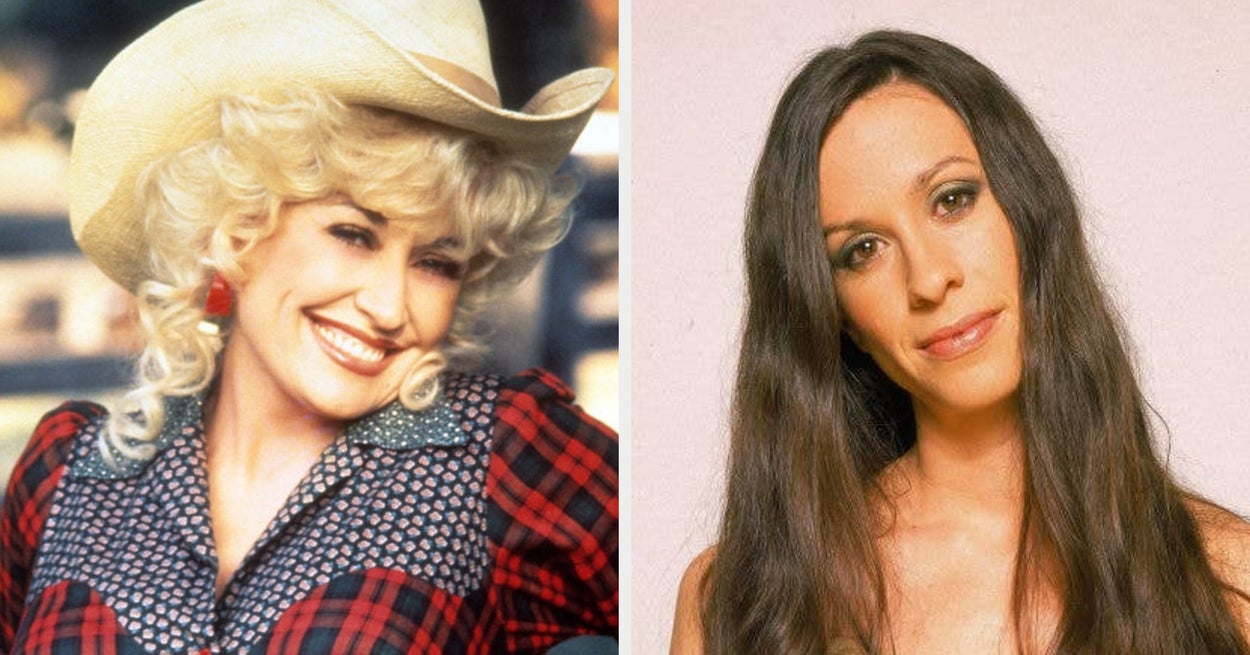
Dolly Parton is famous for her upbeat attitude and positivity, but her life hasn’t been all roses and hit records. One sad example: Dolly struggled with infertility because of endometriosis and had a hysterectomy in the early ’80s that permanently prevented her from having children. Afterward, she suffered from depression and even contemplated suicide. “It was an awful time for me,” she told reporters in 2008.
Dolly said she always thought she’d have children, and while it never happened, she still thinks of herself as a mother. She’s close to her nieces and nephews, and told Today in 2021, “I didn’t have children because I believed that God didn’t mean for me to have kids so everybody’s kids could be mine, so I could do things like Imagination Library.” (The Imagination Library is a nonprofit program she founded that mails free, age-appropriate books every month to children from birth to age five). “I would have been a great mother, I think. I would probably have given up everything else,” she told the Guardian. “I think a big part of my whole success is the fact that I was free to work.”
2.
If you’re old enough (like me) to remember when Keanu Reeves first made a splash, he was known as a class clown turned goofball in movies like Parenthood and Bill and Ted’s Excellent Adventure. In the 21st century, though, he has become more known as the melancholic man of few words in dark action films like the John Wick series. The reason for the change? Well, it likely, in part, has to do with a pair of tragedies he experienced around the turn of the century. In 1999, Reeves and his girlfriend at the time, Jennifer Syme, were expecting a daughter they named Ava Archer Syme-Reeves. Sadly, the baby was stillborn at eight months, a heartbreak Reeves almost never talked about publicly at the time. A little over a year later, in a twist that Hollywood executives would probably veto in a script for being too damn bleak, Syme died in a car accident at just age 28. Reeves was among her pallbearers, and she was buried next to their daughter.
In an interview to promote the third John Wick film, Keanu connected his role as Wick to his own life. “With any character,” he told The Guardian, “the way I think about it is, you have the role on the page, you have the vision of the director, and you have your life experience,” he says. For Keanu, that life experience included his losses. “I thought it was one of the foundations of the role for John Wick. I love his grief.” He added, “Grief and loss, those are things that don’t ever go away. They stay with you… It’s always with you, but like an ebb and flow.”
3.
Alanis Morissette hit it big in the ’90s thanks to the album Jagged Little Pill, which was packed with emotionally charged songs like “You Oughta Know” (which might be the best angry breakup song of all time). But what most fans didn’t know then — and many still don’t — is that much of the emotion in the album came from real trauma she carried silently for years. In the 2021 documentary Jagged, Alanis Morissette revealed she was sexually abused repeatedly as a teenager. Prior to her emerging as a grungy alt-rocker with Jagged Little Pill, Morissette was a teen star in Canada and was constantly approached by men in the music industry much older than her.
Alanis said in the film, “It was a lot of shame around having any kind of victimization of any kind, and it took me years in therapy to even admit that there had been any kind of victimization at my part. I’d always say, ‘I was consenting,’ then I’d be reminded, hey, you were 15. You’re not consenting at 15. Now, I’m like, oh, yeah, they’re all pedophiles. All statutory rape.”
4.
This next one isn’t about just one star, but an entire cast and crew. In the ’80s the Steven Spielberg-produced Poltergeist films were incredibly popular — and scary — but the scariest thing about it likely was that so many cast members died that rumors spread the production was cursed. Just five months after the release of the first film, 22-year-old Dominique Dunne, who played the family’s teenage daughter, was tragically murdered by an abusive boyfriend. Then, only a few months after the release of Poltergeist II, 60-year-old Julian Beck, who played Kane in the film, died. His costar in the film, Will Sampson, 53, died less than 18 months later.
Finally, after filming was completed on Poltergeist III, 12-year-old Heather O’Rourke, who played the family’s youngest daughter, Carol Anne, unexpectedly died of cardiac arrest caused by a bowel defect. Oliver Robbins, who played her character’s brother Robbie, reflected in an interview: “Heather was like a sister to me. We played on the set, we talked about life — as much as you could at 9 years old. She was a wonderful sweet girl, and losing her, we all lost someone very special. She used to come to my house and hang out, talk about movies.” In another interview he added, “I always imagine what she would’ve been like when she grew up. It breaks my heart that that happened.”
5.
John Lennon’s youth was full of tragedy, including the death of his mother after she was hit by a car. But there was another loss that haunted him in life — that of his best friend Stu Sutcliffe, a classmate of his from art school. Stu was a talented artist, and after selling a painting, John convinced him to buy a bass and join the band. Soon, Stu was playing (poorly) with the Beatles in Hamburg, where he met Astrid, and, when the group returned to England, Stu stayed back to live with his new love. Tragically, when John, Paul, and George returned to play more dates in Hamburg in April, 1962, Astrid met them at the airport with incomprehensible news. Stu had died at just 21 of a brain aneurysm.
Stu’s death deeply traumatized John, who reacted with shock, guilt, and long-term unresolved grief. In the years that followed he was prone to angry outbursts and emotional detachment, which many biographers connect to his loss. Shortly after learning the news, he wrote a letter home to his future first wife, Cynthia Powell. It read in part: “I wonder why all the newspapers wrote about Stu – especially the People – and how the hell did they find out? Who could have told them? As I wrote that I suddenly remembered there’s a fellow at the Jacaranda who’s a freelance journalist – it could have been him ‘cause Alan Williams has been helping Mrs. Sutcliffe or something. I haven’t seen Astrid since the day we arrived. I’ve thought of going to see her but it would be so awkward – and knowing others would come as well and it would be even worse. I won’t write any more about it ‘cause it’s not much fun.”
6.
Former First Lady of the United States Laura Bush was the driver in a heartbreaking crash that took a teenager’s life. On the night of November 6, 1963, Laura Welch (her birth name) ran a stop sign while driving her father’s Chevrolet sedan. Her vehicle plowed directly into another car at an intersection, killing Michael Dutton Douglas. Making a sad situation even sadder, Douglas was a close friend of Laura’s with whom she’d spent hours chatting on the phone. According to police reports, Laura was not drinking, was not speeding, and was not charged. The whole thing was ruled a tragic accident. At the time, the crash didn’t make national news — she was just a teenager in a small Texas town. But when Laura became First Lady in 2001, the story resurfaced.
In her 2010 memoir Spoken from the Heart, Laura finally addressed the crash in detail. She wrote, “The whole time, I was praying that the person in the other car was alive. In my mind, I was calling ‘Please God, please God, please God,’ over and over and over again.” She added that the trauma shaped her life, and that “I lost my faith that November, lost it for many, many years.”
7.
Hans Christian Andersen — the writer of fairy tales like The Little Mermaid and The Princess and the Pea — struggled in his life to find love, and most likely died a virgin. Andersen, who was likely bisexual, crushed hard on both men and women, notably Swedish opera singer Jenny Lind and Edvard Collin, the son of a Danish statesman, but his love for them was unrequited. Andersen pursued other men in letters, but none of those relationships were consummated either. One explanation for his difficulties is that he was anxious and flustered about sex (whether due to sexual fear/aversion, guilt/shame, or intense sensitivity).
His diary entries often describe him as trembling and feeling overwhelmed in sexual situations, such as when men suggested they go meet women, and he yelled “No! No!” and ran home. Another entry tells how, at age 61, he finally dared to step inside a brothel, something he always wanted to do, but failed to have sex: “Four girls came up to me; the youngest was no more than eighteen. I asked her to stay — she wore a simple dress. I felt very sorry for her.” He paid the madame five francs, but “didn’t do anything; just looked at the poor child, who was totally ashamed, and was surprised that I only looked at her.”
8.
On The Today Show in 2012, Martin Short found himself on the receiving end of a difficult question from Kathie Lee Gifford. Gifford, however, didn’t realize she was asking anything wrong when she enthusiastically praised Martin’s decades-long marriage to his wife, Nancy Dolman. She gushed about their “beautiful” relationship and even asked how they managed to stay so in love after all those years. So why was this difficult question for Martin?
Sadly, Martin’s wife, Nancy, had passed away two years earlier, in 2010, after a long battle with ovarian cancer. Short, ever the class act, didn’t correct Gifford on-air. Instead, he graciously smiled and nodded along. Backstage, producers quickly realized the mistake. After the commercial break, a clearly embarrassed Gifford apologized and expressed her deepest sympathies to Short.
9.
The Wizard of Oz star Judy Garland brought so much joy to the world, but behind the scenes movie studio MGM exerted near-total control over her body, schedule, and personal life to maintain her appearance as the virginal girl next door. Among the darkest things the studio did was to pressure Garland into multiple secret abortions, including one when she was 19, newly married, and a few years later, following an alleged affair with star Tyrone Power.
At the time, nothing like this could be printed openly. However, in the decades after her death, multiple biographies and memoirs confirmed the abortion rumors via interviews with people close to Garland. When you look back at Judy Garland’s life — one which was full of mental health and physical health issues — it’s easy to see how the studio’s control of her had a terrible effect. MGM didn’t just insist on the abortions; they also gave a young Garland, who struggled with substance abuse in her life, uppers to get through long production days.
10.
This next one you likely know as the tragic circumstances made national news, but it is still so sad and worth mentioning. On June 10, 2016, 22-year-old Christina Grimmie — the talented young singer from The Voice — had just finished a performance in Orlando, Florida, and was holding a meet-and-greet. She was in good spirits as she met fans, signing autographs and taking selfies. The joyful night took a horrific turn, though, when it was 27-year-old Kevin James Loibl’s turn to meet Grimmie. According to a fan behind Loibl: “The one guy in front of us was walking up to meet her. Her arms were open, waiting to greet him with a hug. Then there was a sound of three pops, like balloons. People had brought balloons to the show, and the security guards were popping them, so at first I thought it was that.”
The sounds weren’t balloons — Loibl shot Grimmie three times at point-blank range. Grimmie’s brother tackled the shooter, and the two fought before Loibl broke away and shot himself. Grimmie was rushed to the hospital but pronounced dead less than an hour after offering Loibl that hug. Investigators learned that Loibl was obsessed with Grimmie, spending his free time watching videos of the singer and poring over her social media accounts. He believed they were soulmates, so to make himself more attractive to her, he underwent Lasik eye surgery, got hair plugs, and lost 50 pounds. When he was told it was unlikely they’d ever be together, Loibl became angry and defensive. Somewhere along the way, he decided on this new, horrible course of action.
11.
You likely haven’t heard of Cleveland Indians’ shortstop Ray Chapman — it has been over a century since he played — but he arrived at the Polo Grounds in New York on Aug. 17, 1920 in the midst of one hell of a season, batting .303 with 97 runs scored. It was rumored, though, that Chapman, who was newly married to a pregnant wife, planned to retire when the season ended to focus on his family. Tragically, while facing Yankees’ submarine pitcher Carl Mays, he was hit in the head with a fastball. This was before batters wore helmets, and the ball met Chapman’s head with a sickening thud. The impact was so strong that the ball bounced into play, and Mays threw it to first, believing it must have hit Chapman’s bat. A dazed Chapman stood, asked someone to call his wife, and added: “I’m all right; tell Mays not to worry.” He then collapsed and was rushed to the hospital, where he died the next day.
Following the incident, many felt Mays had hit Chapman on purpose for crowding the plate, and Hall of Famer Ty Cobb even suggested someone should do the same to Mays. Chapman’s death led to some changes in baseball. Beforehand, pitchers were allowed to dirty up the ball with soil, licorice, or tobacco juice. That was forbidden after Chapman’s death, as it reduced the visibility of the baseball and made it harder to see (and thus evade). A minor leaguer died the next season in the same manner, but even so, batting helmets weren’t used widely until the 1950s.
12.
You may already know that Marilyn Monroe experienced chronic depression in her life, but in 1961 — during an especially difficult bout of depression, along with insomnia, barbiturate dependence, and recent surgeries — she was in an emotionally fragile state. So, her friend and psychiatrist Dr. Marianne Kris suggested she check into the Payne Whitney Psychiatric Clinic in New York. Marilyn agreed, believing it would be a place to rest and recuperate, but was horrified to find herself in a far more extreme facility than she imagined. Seeking help, Marilyn wrote a desperate letter to her acting teachers Lee and Paula Strasberg.
Her letter read in part: “Dr. Kris has had me put into New York Hospital – psychiatric division under the care of two idiot doctors – they both should not be my doctors. You haven’t heard from me because I’m locked up with all these poor nutty people. I’m sure to end up a nut if l stay in this nightmare. Please help me Lee… I’m on the dangerous floor — it’s like a cell. Can you imagine cement blocks?” Thankfully, Marilyn soon managed to get a message to her ex-husband, baseball hall of famer Joe DiMaggio, who flew to New York immediately, confronted the hospital administration, and demanded her release. With his intervention, Marilyn was transferred to a more compassionate care center in a less restrictive setting. She later credited DiMaggio with “saving her life.” Still, the experience was an especially dark episode in her life.
13.
English actor and comedian Simon Pegg first experienced depression as a teenager before attending the University of Bristol, and it continued to be an issue in his life until it came to a head while filming 2006’s Mission: Impossible III. Pegg, who self-medicated with alcohol, managed to keep his drinking hidden from the cast and crew. He confessed to the Guardian, “You become very sneaky when you have something like that in your life.” It wasn’t sustainable, though, and he knew it. “When I watch that film back, I can see where I was then, which was fairly lost, and unhappy, and an alcoholic.”
Even the birth of Pegg’s daughter Matilda in 2009 wasn’t able to make him quit, as he hoped it would. A year later though, after hitting rock bottom, and knowing he needed to be there for his daughter, he entered recovery and is still sober today.