
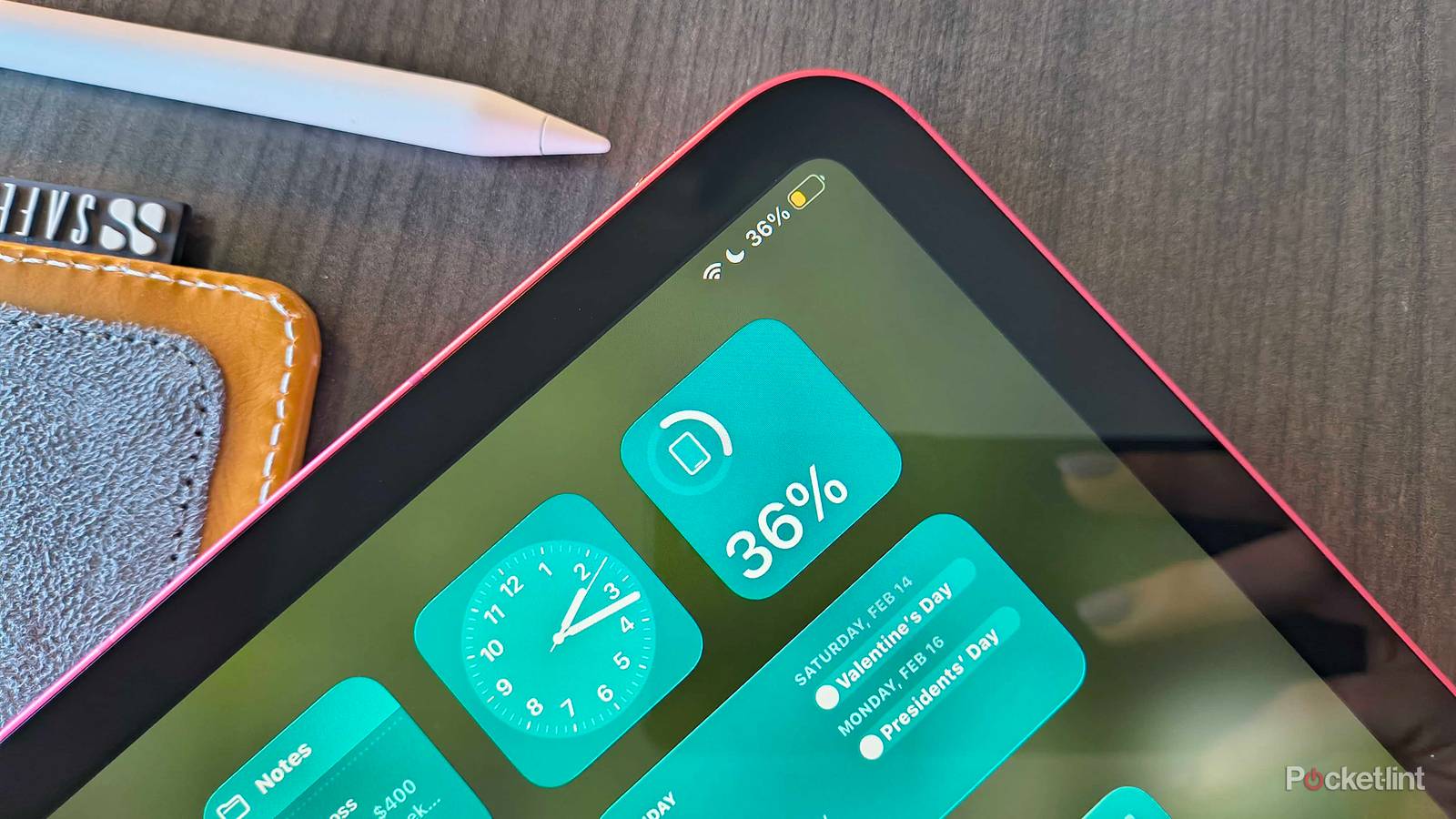
The only thing more annoying than slow charging in 2026 is a fast-draining battery. Fortunately, companies like Apple have prioritized battery life across their product lines, so users can take their devices on the go without worrying about bringing a charger.
But if you’re relying on a device without a means to charge it, battery anxiety tends to always creep in — no matter how many hours it boasts holding. My iPad is the most portable productivity device I own, and I need to make sure it will always last a six-hour working excursion to my favorite coffee shop (which dishearteningly lacks convenient charging outlets).
I dove deep into my settings and Apple’s own recommendations to discover what I could turn off inside my iPad to minimize even the smallest battery trickles — because that’s what these are. When you turn off just one or two, you may not make a real dent in your battery life. But plugging even a few small holes at once could keep your iPad alive for just a couple more minutes. Here are the six things I did to preserve battery life on my iPad A16.
Major things to implement first
Start with the basic battery improvements
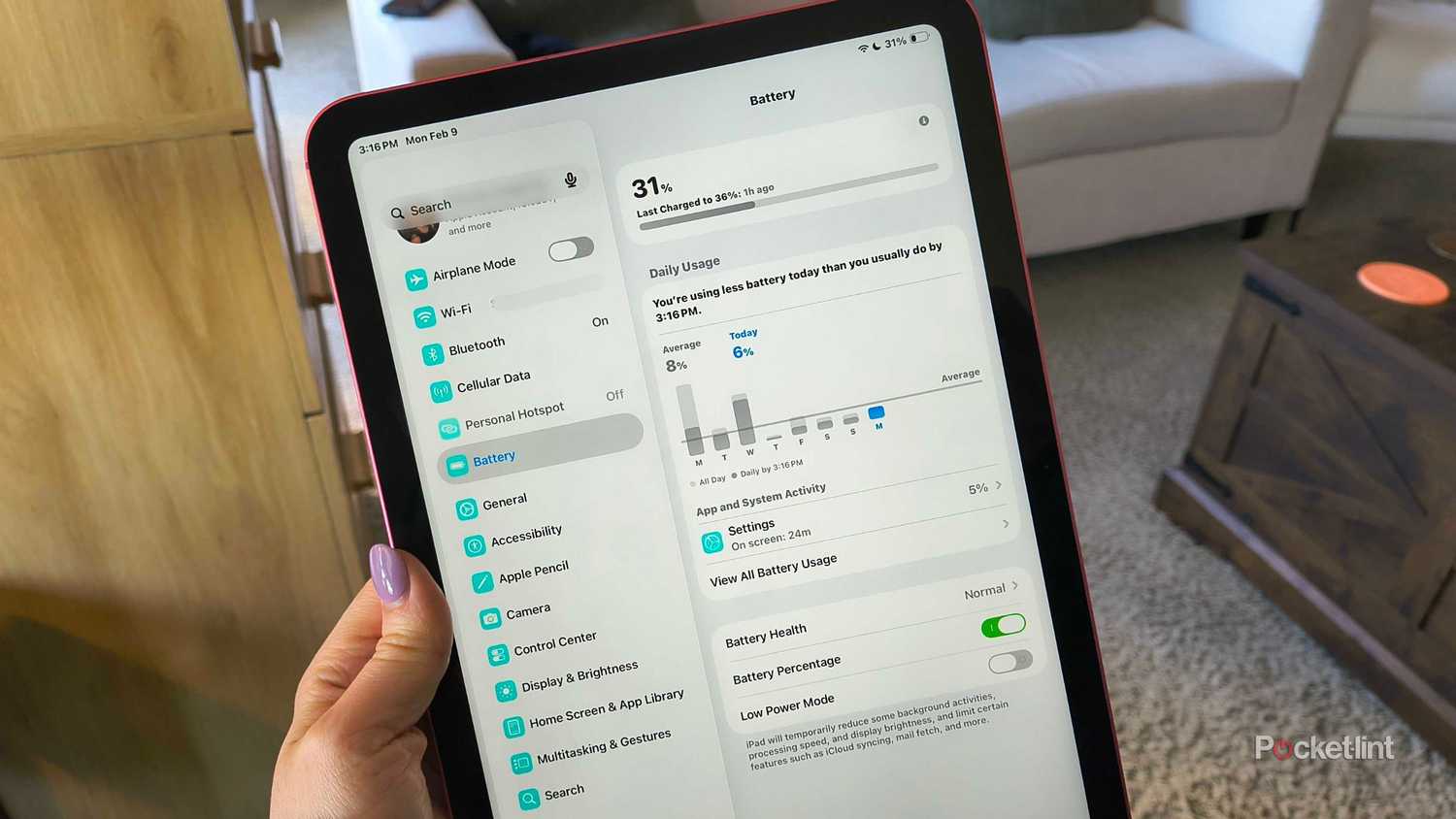
Everything to follow in this list are tiny tweaks that can add up to make a small difference in your iPad’s battery life. However, I want to outline a few bigger battery levers to implement before you fine-tune with the tips to follow:
Turn on 80% Limit (Settings > Battery > Battery Health > toggle on 80% Limit)
Keep your iPad out of extreme temperatures or direct sunlight
Turn on Auto-Lock (Settings > Display & Brightness > Auto-Lock > choose your time)
Keep brightness dim or turn on Auto-Brightness (Settings > Accessibility > Display & Text Size > turn Auto-Brightness on)
Turn on Low Power Mode (via Control Center or within Settings > Battery > toggle on Low Power Mode)
Once you’ve optimized these settings, you can try the tips below for even more battery in the bucket.
Turn off unnecessary Location Services
Not all apps need to know where you are
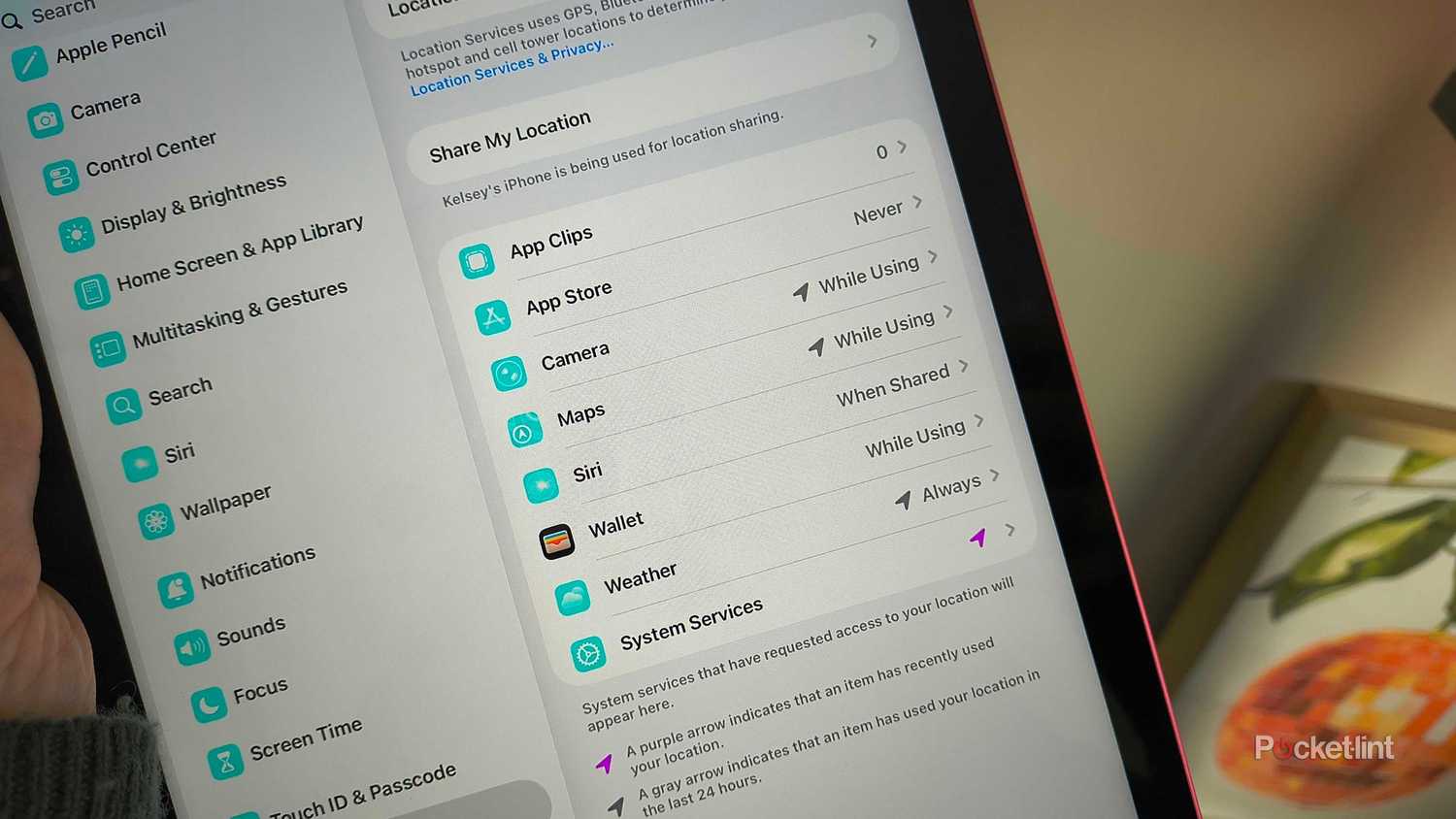
When apps check your location, it can trigger extra work for your iPad. Location Services often utilizes tools like GPS, Wi-Fi sweeps, Bluetooth connections, and generally wakes things up in the background. On some apps — like Maps and Weather — it’s handy or even vital to enable location services to work correctly, but for others, Location Services is completely unnecessary.
If location services are on for those apps, you’d best bet they’ll force your iPad to do the heavy lifting and steal your battery life anyway. I’d recommend going into Settings > Privacy & Security > Location Services and checking each app listed. I changed almost all of my apps (save for Maps and Weather) to either Never or only While Using to minimize that legwork in the background.
Turn off unnecessary System Services
But leave emergency services alone
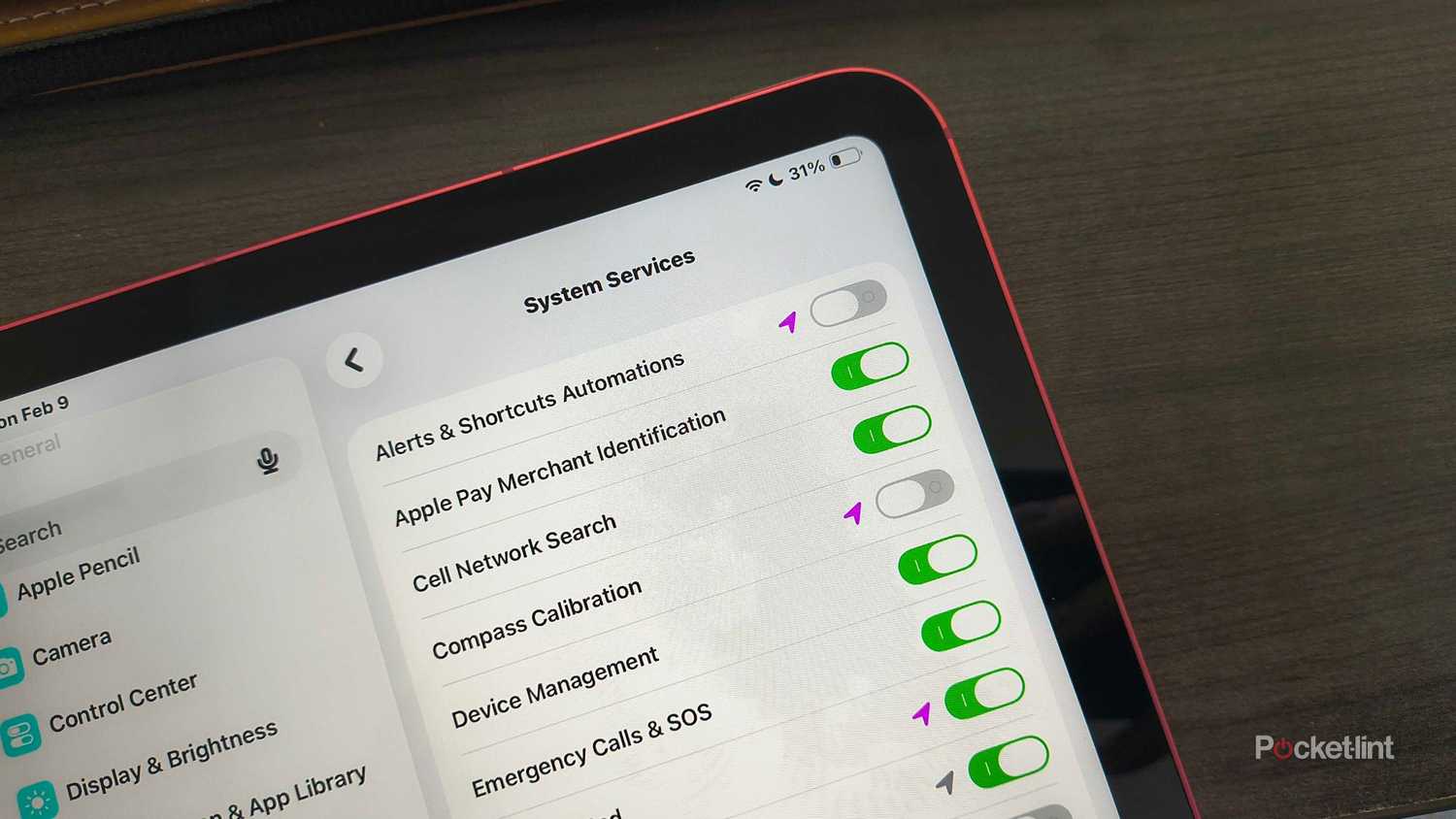
System Services can use Location Services just like your apps, but this time, it’s for built-in Apple features. Think about Find My, time zone settings, and traffic reports within Maps — they use location data to function and make your life a little easier. No one wants to think about switching their time zone when they get off a plane, and System Services fixes that.
However, some System Services rely on Location Services, which add to the pile of background pings your iPad performs on any given day. If there are some services you know you won’t use (like Compass Calibration) or generally don’t want to have your location (like Suggestions and Search) you can turn them off by going to Settings > Privacy & Security > Location Services > System Services.
I recommend leaving on Emergency Calls & SOS for emergency situations and Find My iPad in case your device is lost or stolen.
Switch Mail to Fetch
Push uses more power
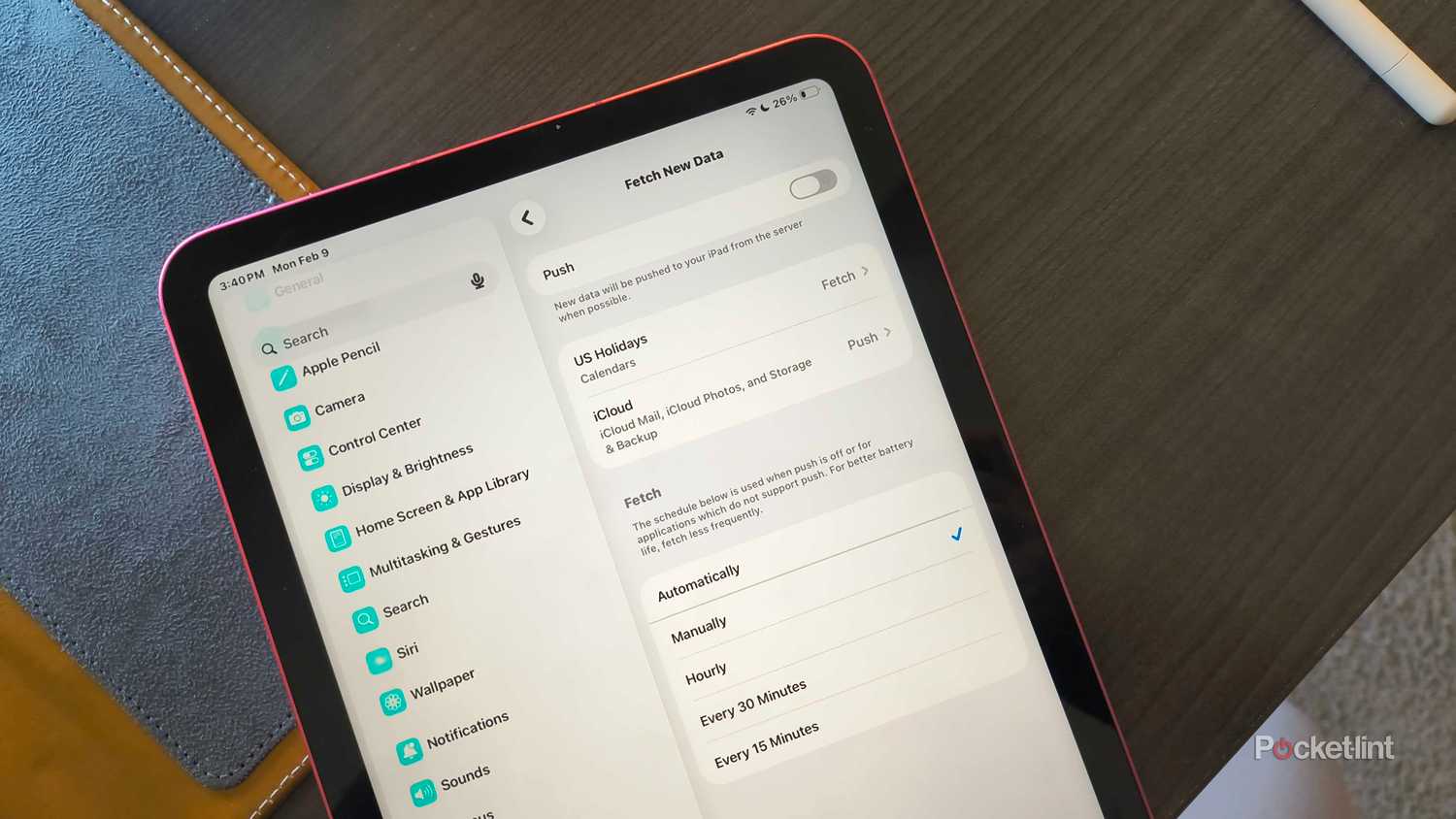
Emails, emails, emails — more than half of them are likely junk. If your iPad isn’t the device you use to constantly read or write emails, you don’t need to see when they come through in real time. When you have Push enabled on your Mail app, your iPad keeps up a background connection and wakes up the Mail app as soon as a new email arrives. All that background activity uses battery.
Switching to Fetch mode may save power. Fetch mode checks for new mail on a schedule or even only when you open the Mail app (full manual mode). In this case, I’d recommend going full manual or choosing a schedule with longer intervals. If you set up Fetch to look for mail every 10 minutes, it cancels out the benefit.
Here’s how to switch from Push to Fetch:
Open Settings.
Select Apps and find Mail.
Click Mail Accounts.
Tap into Fetch New Data.
Toggle Push off.
Under Fetch, select Manually or Hourly for the best battery life.
Under this setting, even Apple itself mentions that fetching less frequently is better for battery life.
Turn off Share iPad analytics
You don’t have to send info to Apple
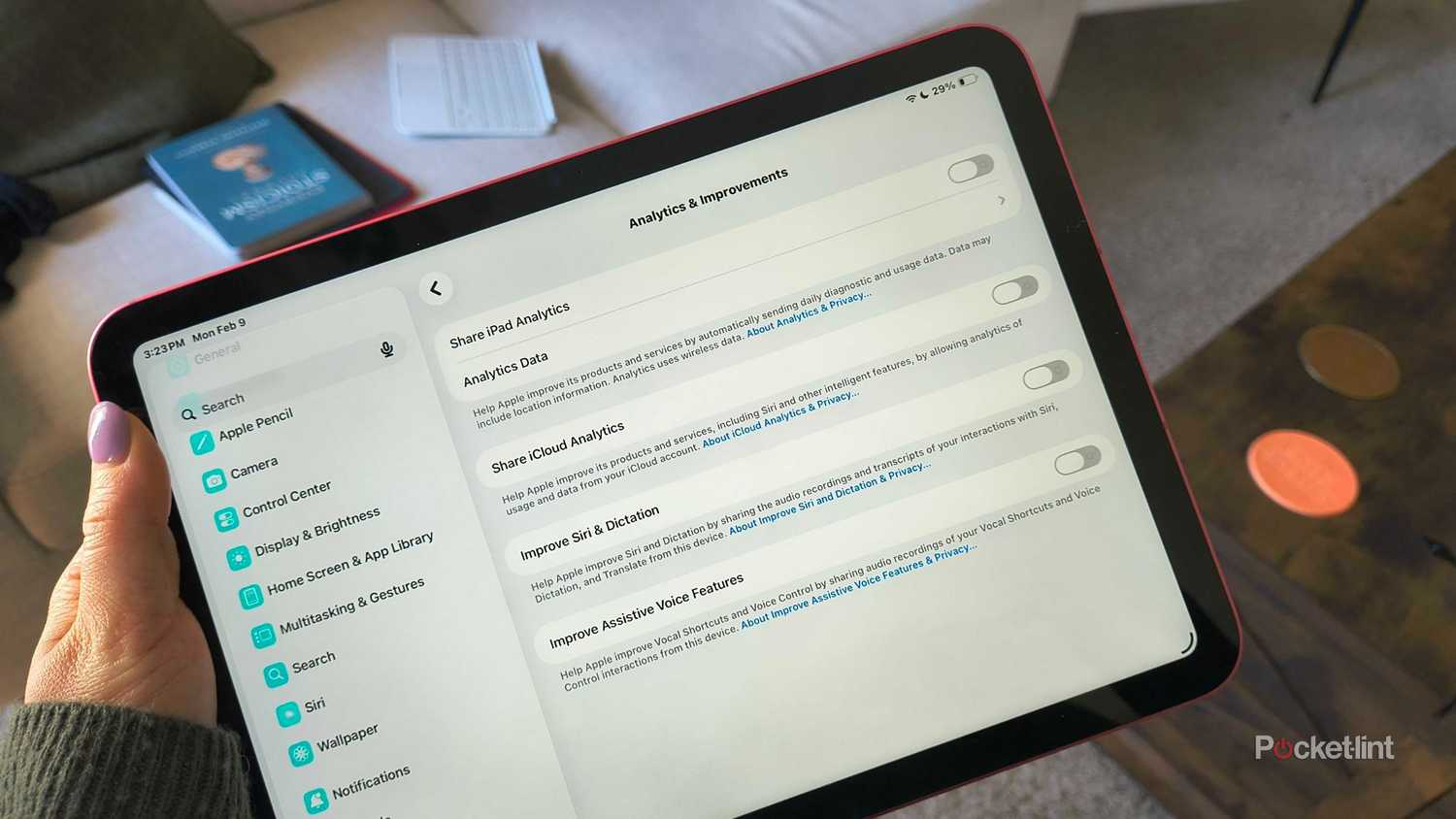
This tip might be more for the privacy professionals, but there’s a setting on your iPad that exists solely to send daily diagnostic and usage data to Apple. It’s to help the company improve its products and services, but the data collection could be stealing a small sip of your battery juice.
Sure, it’s minimal, but it all adds up. Here’s how to turn off Share iPad Analytics:
Open Settings.
Go to Privacy & Security.
Scroll down to Analytics & Improvements.
Turn off Share iPad Analytics.
Turn off Background App Refresh
Even Apple agrees
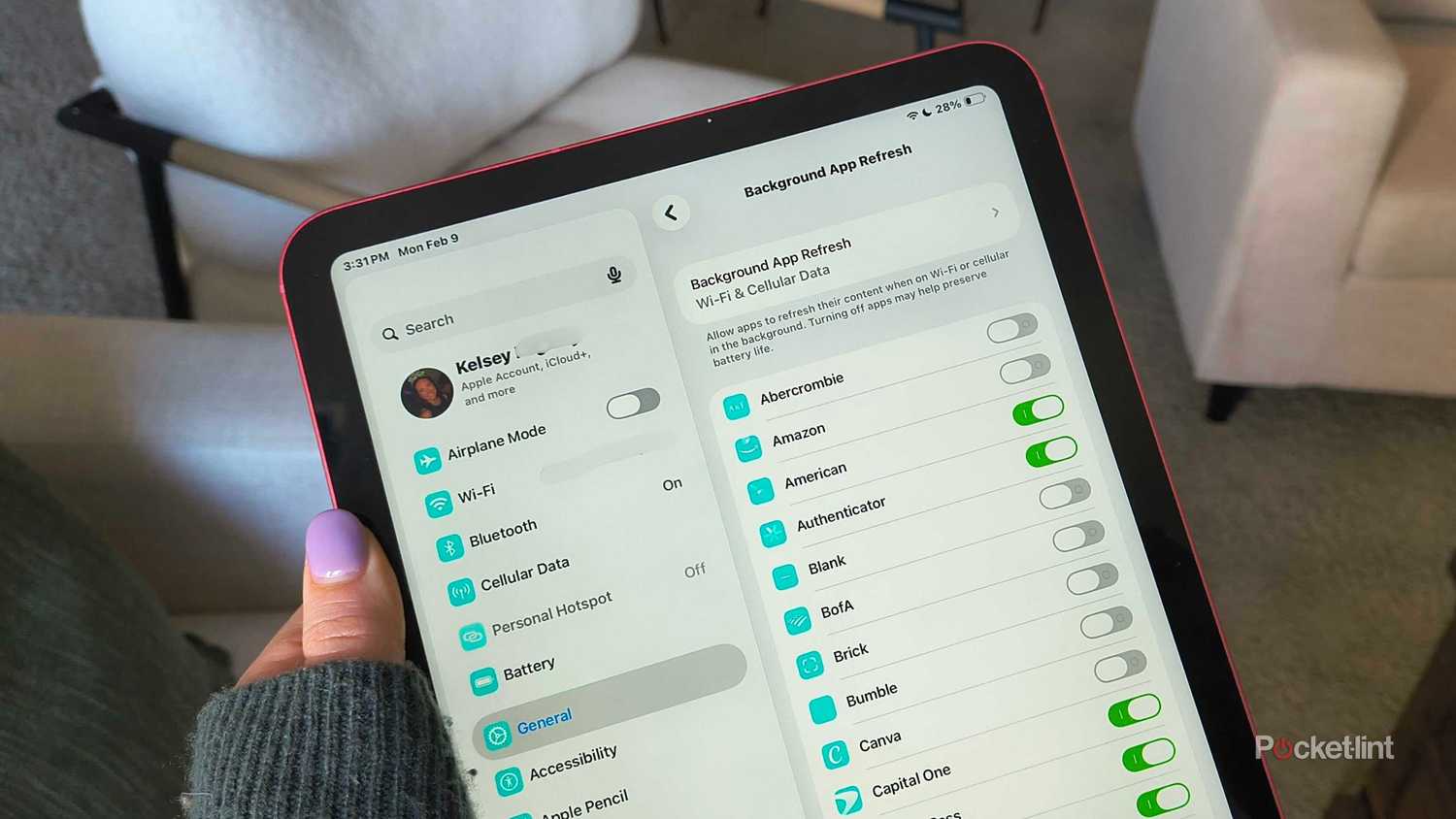
Apple itself explicitly recommends turning off Background App Refresh to preserve battery. Your apps might be updating their content in the background while you’re doing something else, which is casually taking big gulps out of your battery life.
It’s so simple that you would think Apple would make it a default setting, but alas, every app is different. You may want your fitness, communication, and navigation apps to refresh in the background, but definitely not others. I turned off all background refreshes for streaming apps like Netflix and a myriad of others. Here’s how to do it yourself:
Open Settings.
Tap General.
Scroll down to Background App Refresh and tap it.
Go through the list of apps and toggle off the ones you don’t need to refresh.