
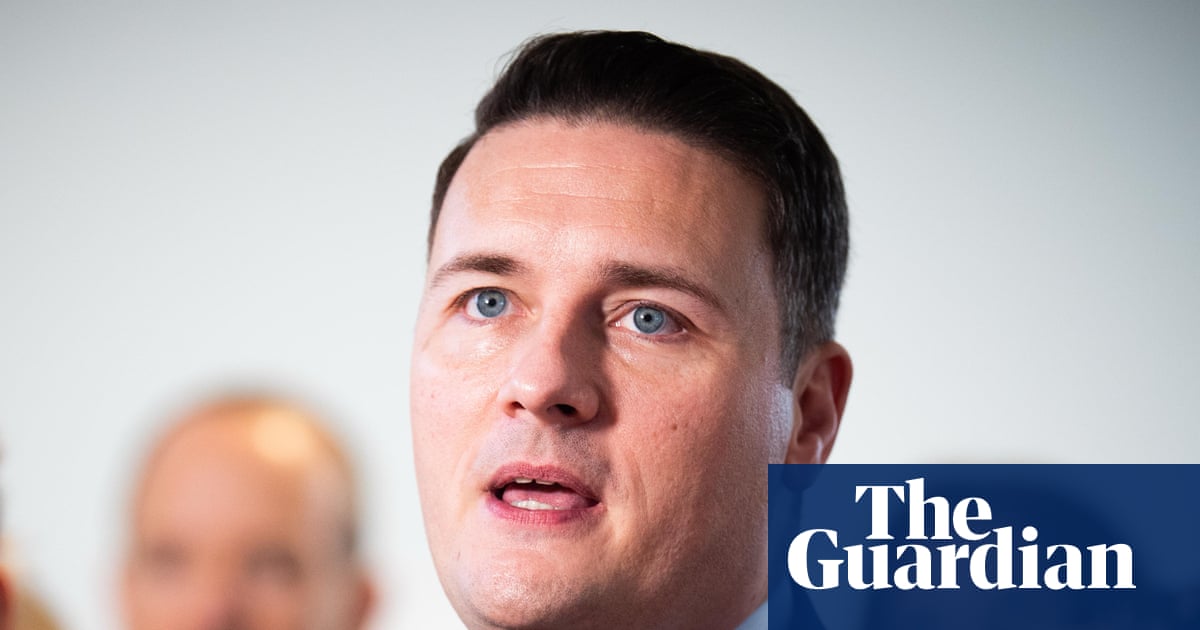
Wes Streeting predicted he would be “toast” at the next general election, according to private WhatsApp messages exchanged with Peter Mandelson and published by the health secretary in an effort to draw a line under his relationship with the disgraced peer.
In the messages, Streeting said the government lacked a growth strategy and questioned No 10’s communications operation – remarks that appeared to form part of an effort to position himself for a potential leadership contest.
The prime minister’s grip on power was pushed to the brink on Monday after Anas Sarwar, Labour’s leader in Scotland, called for him to stand down before the May Scottish parliamentary elections, citing “too many mistakes” by the UK government.
Streeting, regarded as a potential leadership contender should Starmer go, had a close friendship with Mandelson that, after the scandal that erupted last week, threatened to be a significant liability to his ambitions.
Allies of the health secretary said the WhatsApp messages, sent between August 2024 and October last year, showed he had “nothing to hide” about their relationship.
The scandal has already led to the departure of Morgan McSweeney, Starmer’s chief of staff, who advised the prime minister to proceed with Mandelson’s appointment.
Streeting publicly backed the embattled prime minister on Monday, joining the rest of the cabinet in an effort to dampen speculation over Starmer’s precarious position.
But he acknowledged the damage of recent days, saying: “It has not been the best week for the government and that’s not just Keir Starmer; that’s all of us because we’re a team … I want him to come through it and I want him to set out the plan that people can get behind.”
The dozens of WhatsApp messages released by Streeting depict a familiar relationship, close enough for some messages to be suffixed with a kiss and for him to praise the “lovely photos” of Mandelson in a newspaper profile.
Perhaps the most revealing exchanges date from late March last year, after Matthew Doyle quit as Starmer’s communications director in No 10. In one, Streeting agreed with Mandelson’s view that “the government problems do not stem from comms”.
This led to Streeting saying he feared being “toast at the next election” in his Ilford North seat, adding: “There isn’t a clear answer to the question: why Labour?” After Mandelson complained about a lack of economic philosophy, Streeting replied: “No growth strategy at all.”
The longest exchange came last July, when Streeting asked for Mandelson’s views on formally recognising the state of Palestine, saying it would be politically impossible for him to vote against such a move in parliament. Streeting held his seat in 2024 by just 528 votes against a pro-Gaza independent.
“Morally and politically”, Streeting said, the UK needed to join France in going for recognition, writing: “Morally, because Israel is committing war crimes before our eyes …. Politically, a Commons vote will be engineered in September on recognition and we will lose it if we’re not ahead of it.”
Days later, he messaged again to say he was worried about a “summer of angst” over recognition and ministerial resignations.
In September, Streeting was among those to whom Mandelson sent his statement announcing the end of his ambassadorship. The health secretary did not respond.
After publishing the messages, Streeting confirmed he would stand again in Ilford North at the next election, saying that a year on from his messages he was receiving “a lot of support” from constituents who either abstained or backed other main parties last time.
He also suggested that he had been “proved wrong” on the economy, and that since the exchanges the country had experienced some growth, falls in interest rates, and the government on course to hit its inflation targets.
In an article for the Guardian, Streeting said that contrary to reports, “I was not a ‘close friend’ of Peter Mandelson, but I am not going to wash my hands of my actual association with him either”, adding that this was why he had decided to publish the messages.
“We saw each other for dinner on average once a year with others. He offered advice. My partner worked for him 25 years ago and I therefore got to know Mandelson better than some of that generation in politics,” he wrote.
Saying he had no influence over the decision to appoint Mandelson as ambassador to Washington, Streeting said that, like many people in Westminster, “I filtered the news of it entirely through the lens of whether it seemed a sensible way to help our relationship with a critical ally at a crucial moment”.
He added: “We need to be honest about the fact that if women like Jess Phillips had been in that room when the decision was taken, Peter Mandelson would never have been sent to Washington.”