
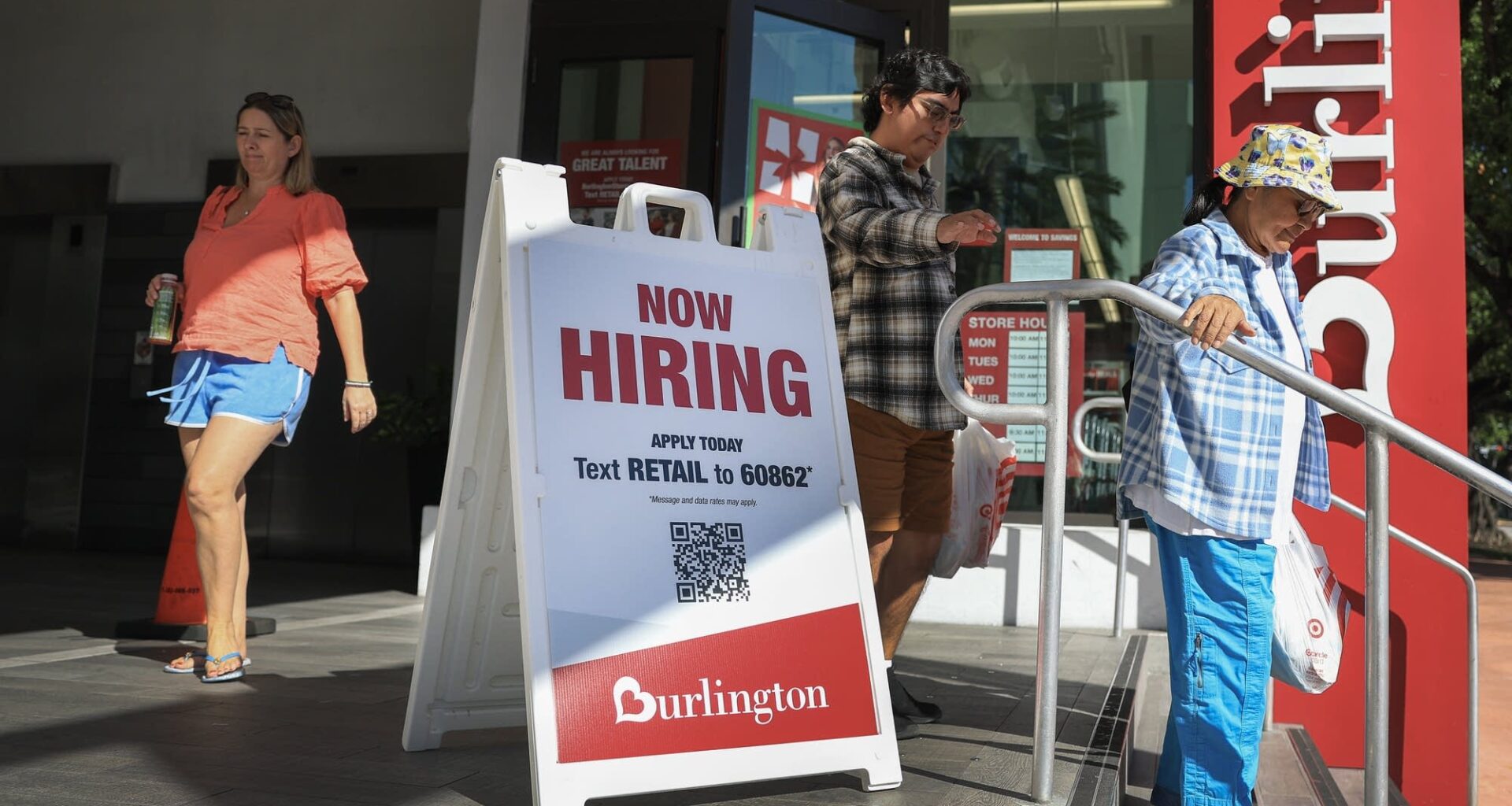
Two big dates on the economic calendar this week will give crucial clues about how the job market, and the consumer market, are doing.
First, the January jobs report — which usually comes out on the first Friday of the month, but didn’t because of last week’s government shutdown — has been delayed to release on Wednesday. Then, the January consumer price index, also delayed, will come out on Friday.
Economists and markets are expecting decent but unremarkable job creation, alongside unemployment holding steady at 4.4%. On the inflation front, the expectation is for some moderation, with prices increasing slightly less than in December 2025.
The economy has been adding an anemic 50,000 jobs per month on average over the last year, just a third of the rate in 2024. And more of the same is expected for January, said Boston College economist Brian Bethune.
“The whole employment market has been sort of put on hold — limited hiring going on by large businesses, actually reductions in employment levels in the small business world,” he said.
The January jobs report will also come with something called “annual benchmark revisions,” which Joe Brusuelas, chief economist at the consulting firm RSM, said are expected to reduce the number of jobs added to the economy last year.
“Meaning, we’re probably going to see a net decline in jobs for the entire year of 2025,” he said.
Brusuelas said there are many reasons why the job market has stagnated, starting with a declining supply of workers for employers to hire.
“We’ve got the long-run demographic issues caused by the retirement of the Boomers,” he said. “Second, very tight immigration policy, which is a choice on the part of the Trump administration.”
Also, Brusuelas said, companies over-hired during the post-pandemic recovery, and now they’re slimming down. Plus, they’ve invested heavily in automation and AI, which is increasing productivity and reducing their need for more workers right now.
Turning to the inflation data to be released on Friday, economists expect a decline in headline consumer price inflation for January, from 2.7% to 2.5%, year over year.
But for consumers in the real economy, Brusuelas said it might not feel like that.
“Most Americans would say there’s a common baseline around rent prices, electricity’s increasing, and food is increasing,” he said. “So for them, that means inflation is probably closer to 3.5 to 4%.”
With wages rising about the same amount, on average, that means most workers — even if they can hold onto their jobs — don’t feel like they’re getting ahead in this economy.
Related Topics