
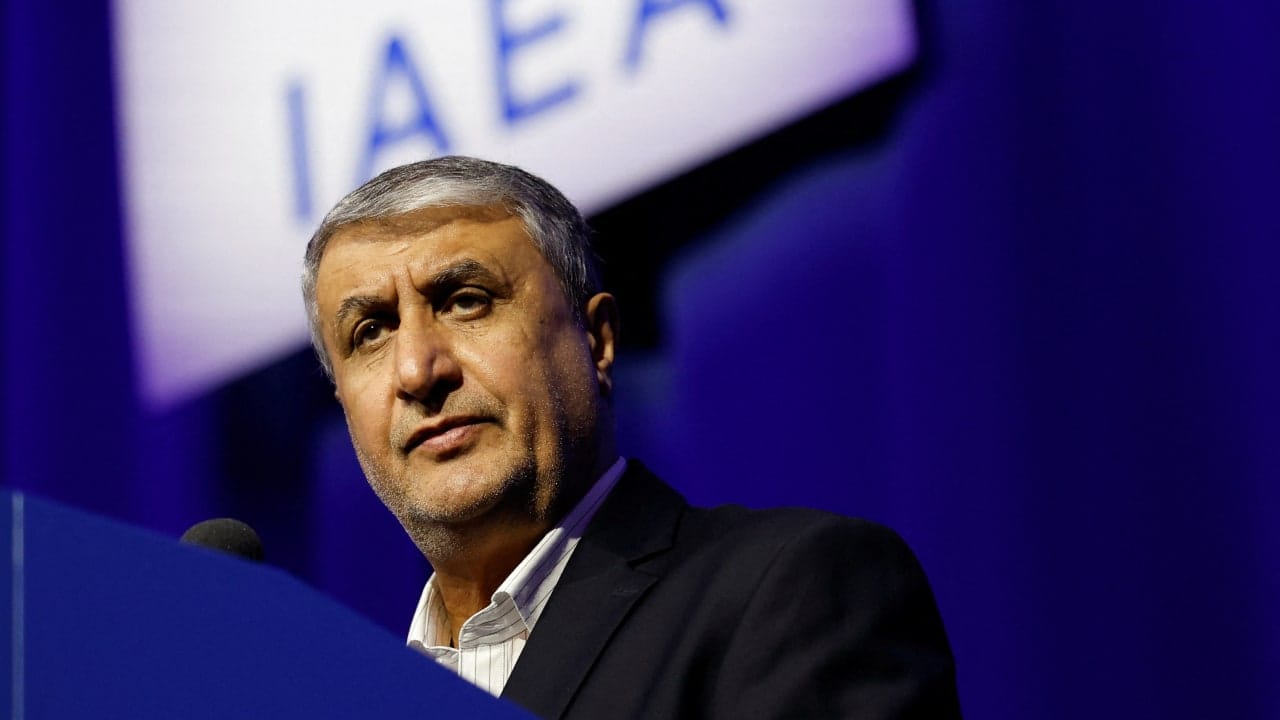
Iran could agree to dilute its stockpile of 60% enriched uranium in exchange for the lifting of all sanctions imposed against its nuclear program, Tehran’s atomic chief Mohammad Eslami said on Monday, according to the state-run Iranian Students’ News Agency.
Eslami, head of the Atomic Energy Organization of Iran, confirmed to reporters in a briefing that Tehran had resumed communications with the International Atomic Energy Agency but lamented that the UN watchdog has an “unfulfilled task” in investigating the June 2025 US strikes on three Iranian nuclear facilities in Fordow, Isfahan, and Natanz.
“Our relations with [the IAEA] are established, but it has an unfulfilled task regarding a military attack on facilities under safeguards supervision that it cannot escape from,” Eslami was quoted by ISNA as saying. “If we are under the supervision of the Agency and have a certificate of accreditation… it cannot remain silent about what happened.”
Furthermore, IAEA inspectors are currently supervising other nuclear facilities across Iran as indirect talks with the United States resumed on Friday in Oman, he said.
“For the centers that were not attacked, inspectors came and visited within the framework of continuous interaction and permission… and after the war, inspections were conducted [in] the centers that were not damaged, and they are currently visiting some other centers.”

In November, the IAEA reiterated that Tehran still has not let inspectors into the nuclear sites bombed in June, adding that accounting for Iran’s enriched uranium stock is “long overdue.”
The IAEA’s own guidelines stipulate that it should verify a country’s stock of highly enriched uranium, such as the material enriched to up to 60% purity in the Islamic Republic, a short step from the roughly 90% of weapons-grade, every month.
The IAEA has been calling on Iran for months to say what happened to the stock and let inspections fully resume quickly. The two sides announced an agreement in Cairo in September that was supposed to pave the way for a full resumption, but progress has been limited, and Tehran later said that the agreement is void.
In a report, the IAEA reiterated that the quantity of highly enriched uranium Iran has produced and accumulated is “a matter of serious concern.” The agency has lost so-called continuity of knowledge of Iran’s enriched uranium stocks, it added, meaning re-establishing a full picture will be long and difficult.
Abbas Araghchi: Complete halt to uranium enrichment ‘absolutely unacceptable’
Earlier this week, Iranian Foreign Minister Abbas Araghchi said a complete halt to uranium enrichment was absolutely unacceptable to the Islamic Republic.
“The discussions should focus on scenarios in which uranium enrichment continues, alongside assurances that the enrichment is solely for peaceful purposes,” he said.
US President Donald Trump has threatened to strike Iran after a US naval buildup in the region, demanding that it renounce uranium enrichment – a possible pathway to nuclear bombs – as well as stop ballistic missile development and support for armed groups around the region.
While Iran had previously rejected American calls to halt uranium enrichment as part of high-stakes negotiations, it did voice willingness to discuss the “level and purity” of enrichment or a regional consortium, according to a regional diplomat briefed by Tehran.
Reuters contributed to this report.