
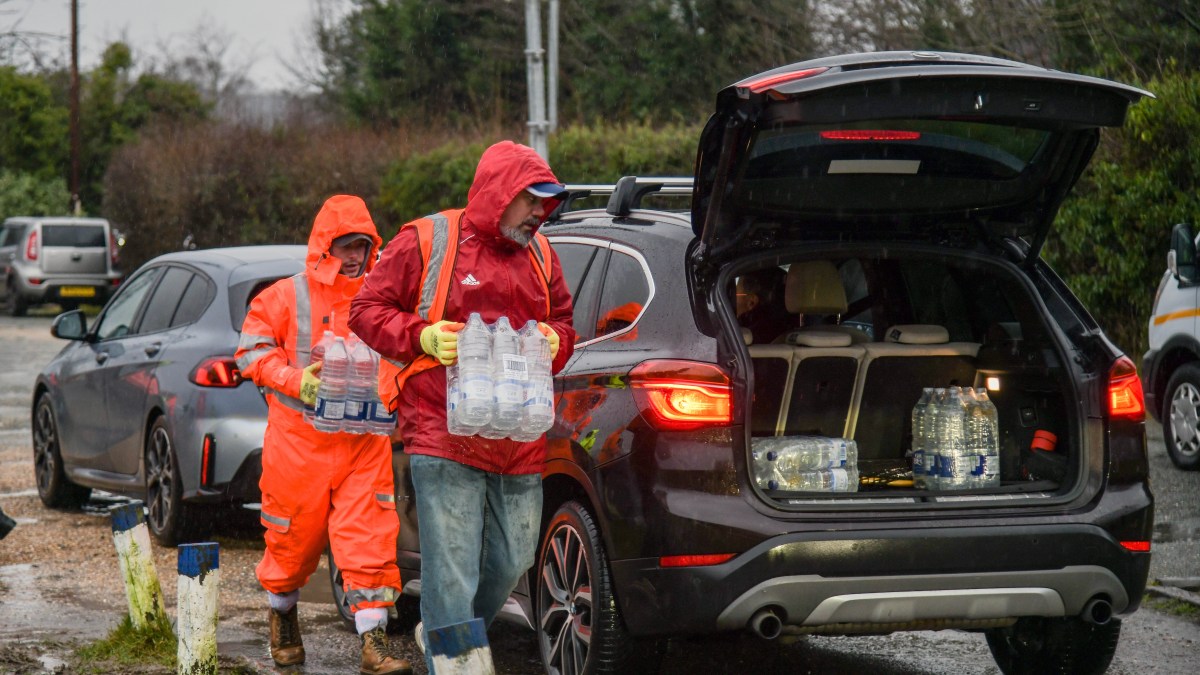
The chief executive of South East Water has admitted that an incident that left tens of thousands of people without water in Kent and Sussex cost the company almost £30 million.
The figure, revealed by David Hinton, at a meeting with frustrated customers, is the first estimate of the financial hit from the 13-day crisis that affected Tunbridge Wells last year.
The troubled company again left thousands of properties without water last month, suggesting that the cost to the firm could be tens of millions of pounds higher.

Thousands of people were left without water for 13 days last year
PETER NICHOLLS/GETTY IMAGES
Hinton, who has been called on to resign by local MPs, came under fire at a meeting with customers last week for “inconsistent and conflicting” updates and poor communication.
• What is South East Water’s boss doing to solve the crisis?
The company admitted that during last year’s incident, which saw schools shut, nurseries closed and dialysis patients relocated to London, the firm moved the estimated time for restoration seven times.
Rob Crumbie, the firm’s head of communications, said that was “not acceptable”.
One customer said: “It seems to me, with regards to communication, you didn’t really have a strategy and you lost the room.”
Organised by the Consumer Council for Water (CCW), the meeting was the first held by water consumer panels established after government reforms brought in last year.
While Crumbie apologised to customers at the meeting, he blamed a “tricky media environment” for making it hard to communicate to residents.
Hinton disputed claims by the chief inspector of the Drinking Water Inspectorate that the problems at one of its water treatment works last year could have been avoided. MPs have recalled Hinton to parliament to discuss why his reasons for the works’ issues were different.
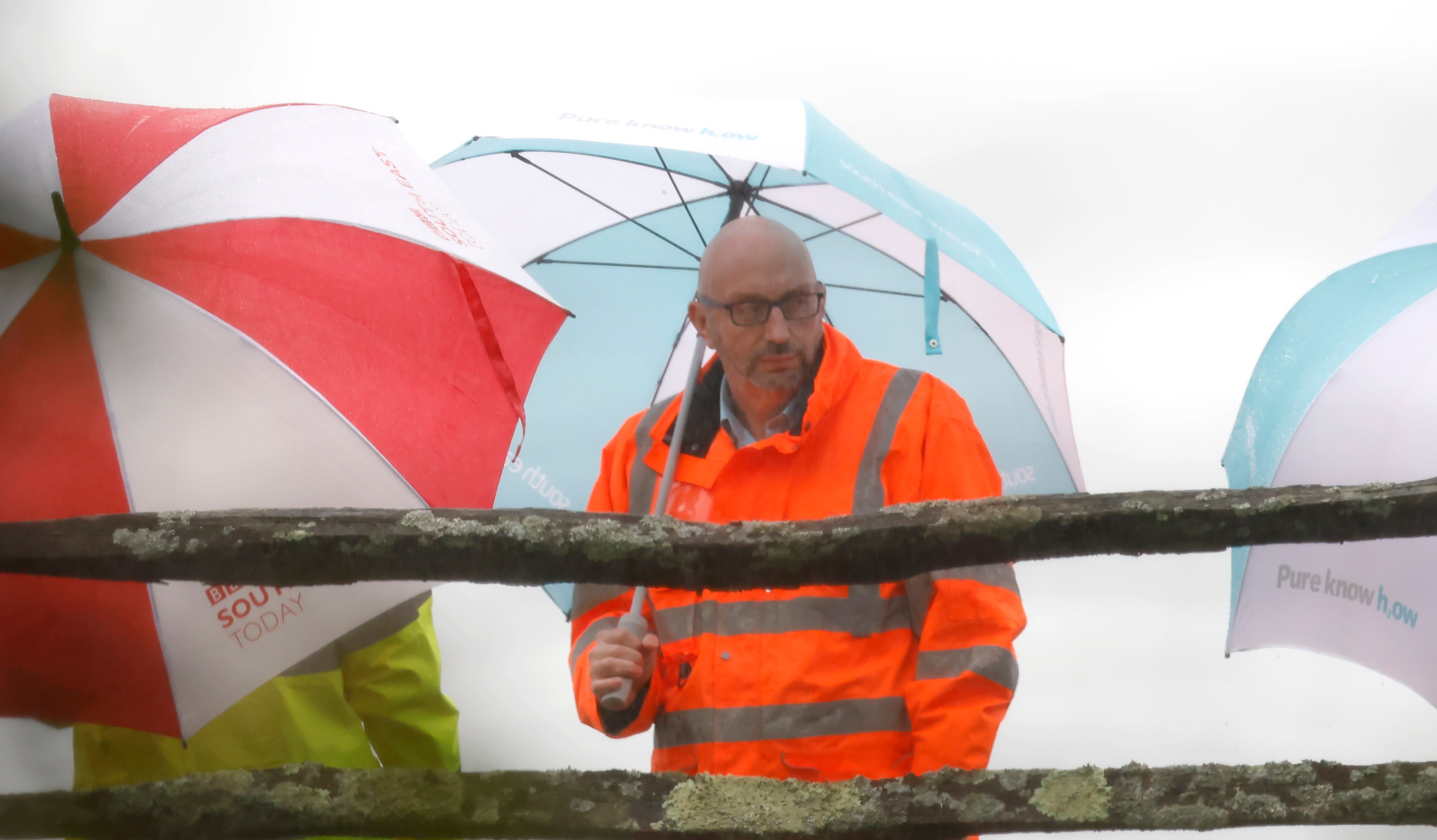
David Hinton, the company’s chief executive
STEVE FINN PHOTOGRAPHY
Hinton said: “Where we were different was only on one thing and that was the foreseeability of this thing happening.” He said the reason a chemical used to remove impurities from the water had stopped working was because the spring-fed pond it drew from had become too cold.
“It’s about £20,000 to put an extra piece of coagulant on the site and this event has cost us nearly £30 million. So if I could have foreseen it, I think we would have spent the £20,000,” he said.
Hinton, who received a bonus of £115,000 last year and has not ruled out taking it again, was told by customers that he should financially suffer because of the recent disruption. “I personally think shareholders and, sorry, bosses should take a hit on this,” one told him.
The chief executive admitted that his firm’s handling of social media was probably naive. “Social media is definitely a learning for us,” he said, referring to how initial statements it made about the coagulant led to misleading claims online.
“It probably is naivety from our point of view, but it grew massive chemical contamination legs, which is not what we wanted to be out there at all, because it wasn’t a contamination thing,” he said.
The company has launched its own review into what went wrong. However, customers at the meeting criticised its independence after staff said it would be run by a non-executive director rather than an external consultant.
South East Water is drawing up an action plan that is due to be published on March 11.
A transcript of last week’s meeting, seen by The Times, shows measures include a “traffic light app” that will show whether bottled water stations have supplies, after executives admitted there had been hour-long gaps without bottles at some sites.
Other pledges include better checks that vulnerable people have received bottle water deliveries, such as staff knocking on doors. “We know we missed some customers because they told us we missed them,” Hinton said.
A spokesperson for South East Water said: “We continue to engage transparently with our local communities, including through well-established consumer bodies, such as CCW. We’re working hard to introduce longer-term fixes for the issues which led to recent outages.
“We are focused on understanding what went wrong and why as part of delivering long-term water resilience.