
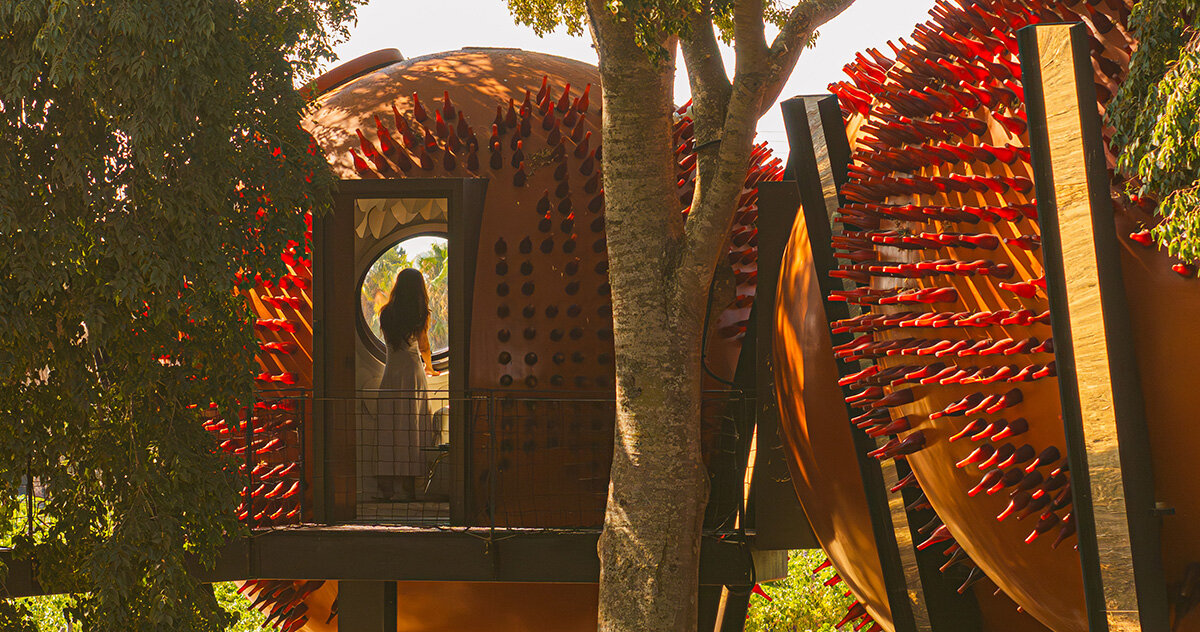
three copper-toned spheres among the trees
Átomos by Rebelo de Andrade sits among the vineyards of Setúbal, Portugal, as a compact cluster of three copper-toned spheres elevated amongst the trees. The project occupies a small footprint within an agricultural landscape characterized by vast vineyards tracing toward the Atlantic.
At sixty square meters, the ensemble reads as a precise intervention rather than a building in the conventional sense. Its scale encourages close observation. From a distance, the rounded cabins appear as burnished forms resting between the trees. Upon approach, the surfaces pick up scratches, seams, and the grain of recycled materials, giving the object a tactile presence that belongs to the site.
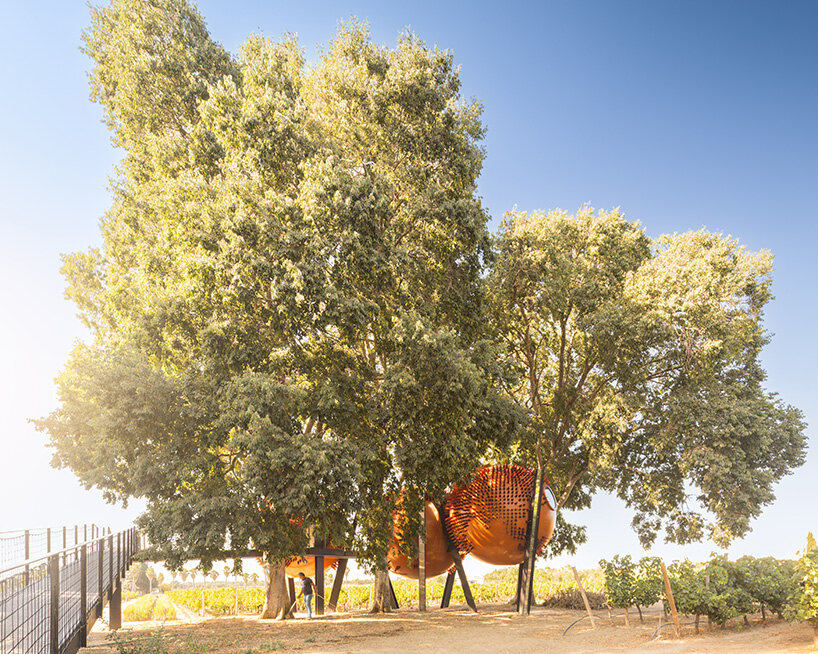
images © Fernando Guerra
rebelo de andrade repurposes glass bottles
Each Átomos sphere is designed by Rebelo de Andrade to carry a copper and orange finish that shifts through the day, moving from muted brown at dawn to a deeper metallic glow under afternoon sun. The exterior skin incorporates fragments of repurposed industrial glass set into the surface to render an abstracted world map. The pattern catches light in small flashes and makes the envelope feel thick and layered.
The geometry remains simple yet deliberate. Three volumes touch and connect through short passages that compress and release the body as one moves between them. Curved walls guide circulation in arcs, edges soften, and door openings feel carved from mass. The experience emphasizes proximity and touch, with materials close at hand and sound softened by the rounded interior shells.
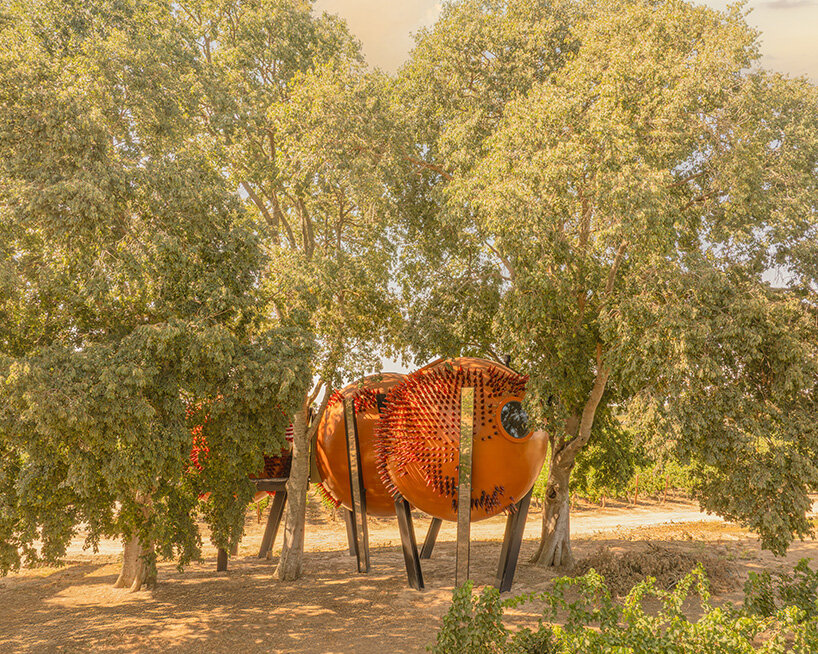
Átomos sits within the vineyard landscape of Setúbal as a compact architectural installation
inside each ‘átomos’ dwelling
Inside, each of Rebelo de Andrade’s Átomos spheres holds a distinct atmosphere. The first acts as a shared room for conversation and gathering. The second provides a quieter workspace for reading or sketching. The third accommodates rest, with seating oriented toward the vines and the distant hills. Light enters through carefully placed apertures that wash the interior surfaces and create pockets of shade.
The placement among the rows of grapes links the project to the cycles of cultivation and harvest that define Setúbal’s wine culture. Paths of compacted earth lead visitors through the field before they reach the structure, making the walk part of the spatial sequence.
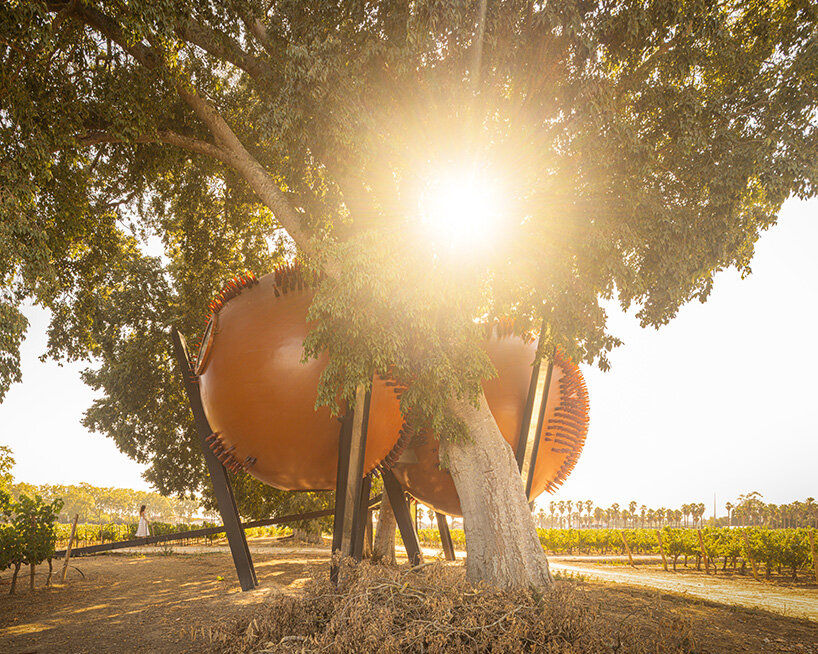
three copper toned spheres rest lightly between rows of vines
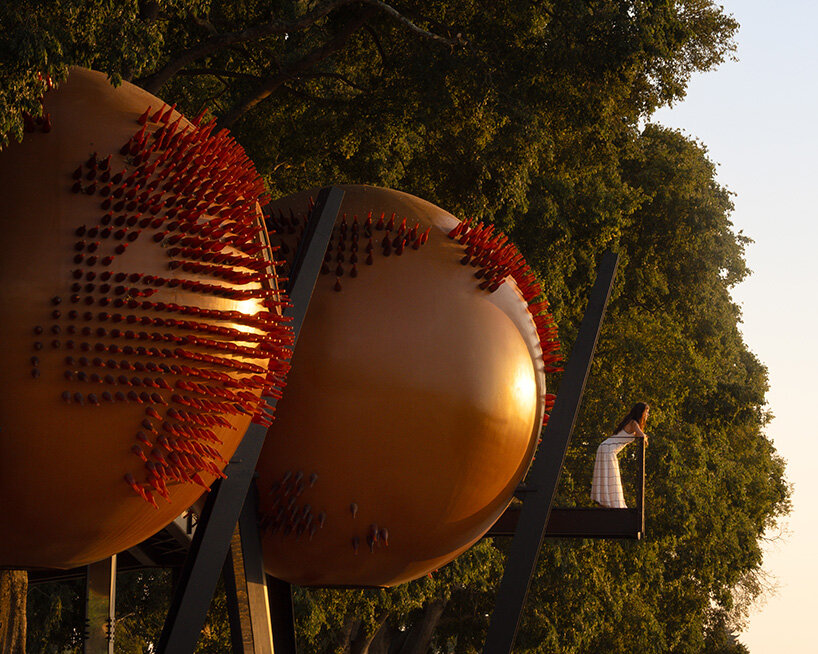
a skin of repurposed industrial glass forms an abstract world map across the surface
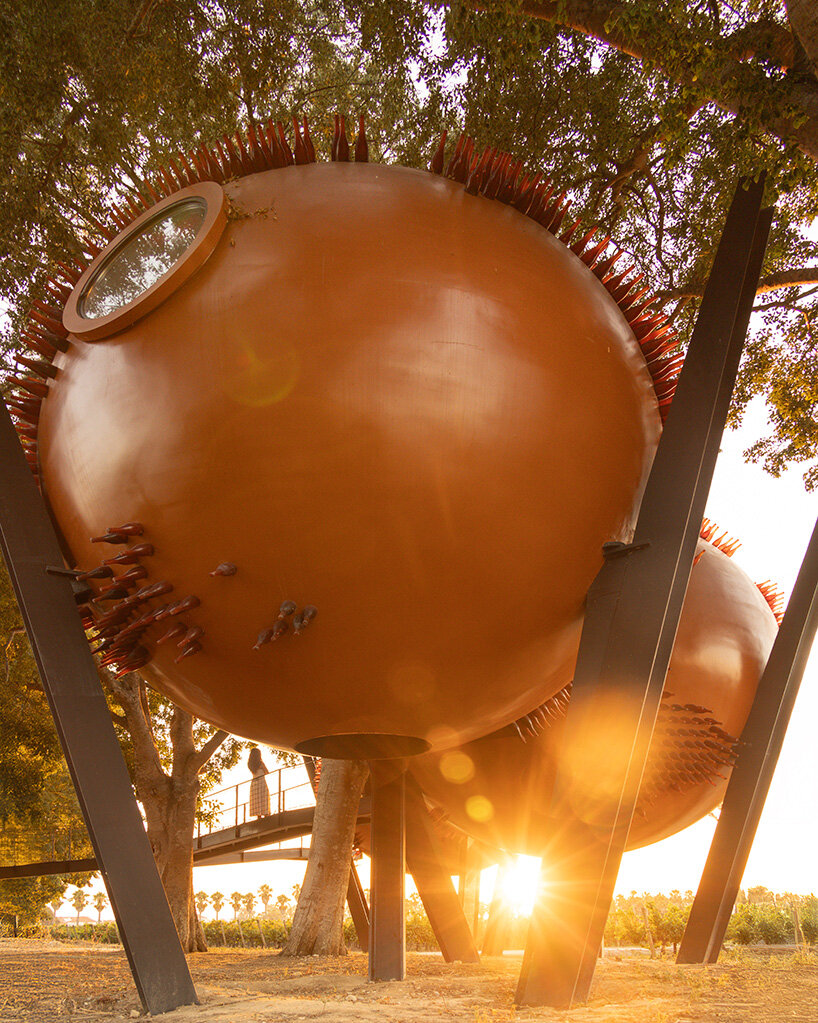
curved footbridges connect the volumes and guide movement in slow arcs