
Prime Minister Benjamin Netanyahu on Monday night shared a post on social media accusing former Shin Bet chief Ronen Bar of falsifying the intelligence agency’s probe into the October 7, 2023, Hamas-led assault and positioning himself as “de facto prime minister” after the attack.
The post was first published on X by former Likud spokesman Erez Tadmor on Friday. Netanyahu, who has been pushing to distance himself from responsibility for the deadliest attack in Israel’s history, reposted it almost verbatim on his X account three days later, with attribution to Tadmor.
In the post, Tadmor claimed that Bar decided Netanyahu was “an illegitimate prime minister who has already dragged Israel into an unnecessary war [the 2014 Gaza war], and therefore — in order to prevent him from making another miscalculation — decided to appoint himself de facto prime minister on the night of the [October 7] massacre.”
He further claimed that “after the decisions he made led to the greatest disaster in the country’s history, Bar realized that the only thing worse than the reckless decisions themselves was that they were made as part of a rebellion against the prime minister — and decided to falsify the Shin Bet investigation.”
“The top brass of the Shin Bet in particular and the top brass of the security establishment in general were infected with an anti-democratic virus,” Tadmor charged in the post shared by Netanyahu, adding that they had acted as though they were required to “protect the state of Israel from the prime minister.”
Get The Times of Israel’s Daily Edition
by email and never miss our top stories
By signing up, you agree to the terms
“After the rebellion they led ended in the most terrible disaster in the history of the state, they added sin to crime and embarked on a campaign of covering up, falsifying, and rewriting history,” Tadmor concluded.
ארז תדמור:
סיכום דיוני שב”כ בליל הטבח מלמד שהשיקול “המקצועי” שהוביל את קבלת ההחלטות של רונן בר בליל האסון היה מניעת “מיס-קלקולציה”.
ברקע מרחף גם מאמרו של ראש חטיבת המחקר עמית סער מ-2019 לפיו מבצע ‘צוק איתן’ היה תוצאה של מיס-קלקולציה שמי שאשם בה הוא בעיקר נתניהו.
המסקנה…
— Benjamin Netanyahu – בנימין נתניהו (@netanyahu) February 9, 2026
Netanyahu’s reposting of Tadmor’s claims of an insurrection by Bar came some eight months after the cabinet voted to to dismiss Bar on the prime minister’s recommendation, prompting a legal battle in the High Court of Justice. Bar resigned a month later, citing personal responsibility for the agency’s failure to prevent the October 7 attack, though he has said that Netanyahu was seeking to oust him for personal and political reasons.
As Israel readies for elections later this year, the premier has ramped up his efforts to distance himself from responsibility for October 7, shifting blame to the security establishment.
On Thursday, he published a 55-page document with select quotations from cabinet meetings in the years leading up to October 7 that painted a picture in which he ostensibly pushed for aggressive policies against Hamas, while his current political rivals and security chiefs urged long-term deals with the terror group and blocked the assassinations of its leaders. The document contained Netanyahu’s answers to State Comptroller Matanyahu Englman’s since-frozen investigation into the attack.
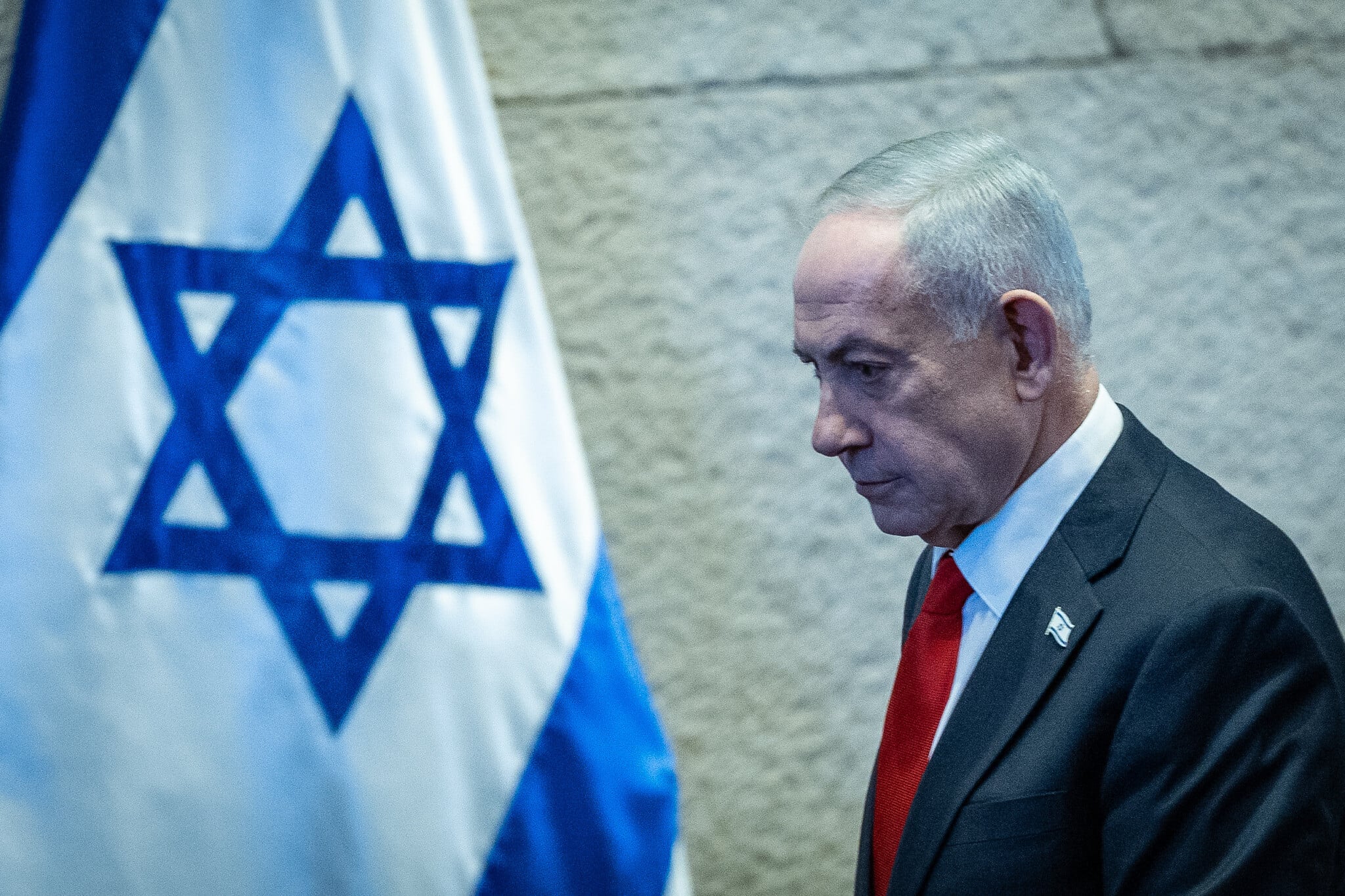
Prime Minister Benjamin Netanyahu attends a plenum session for the Knesset’s 77th birthday on February 2, 2026. (Yonatan Sindel/Flash90)
The release of the document drew sharp condemnation from Netanyahu’s defense minister on October 7, Likud colleague Yoav Gallant, who flatly called the prime minister a liar.
It also drew fierce denunciations from opposition figures, including former prime minister Naftali Bennett, who called the premier “a weak, pitiful, helpless nebbish who just happened to stumble into events.”
“He is not a leader, but someone who is led. He is not a commander, but a subordinate,” Bennett said. The word “nebbish” is a Yiddish pejorative roughly translating to “loser.”
Blue and White leader Benny Gantz called the document a “rewriting of history.”
Netanyahu has served as prime minister since 2009, with the exception of 18 months in 2021-2022. He presided over a policy of encouraging Qatar to send hundreds of millions of dollars into Hamas-run Gaza, which he publicly defended as essential to keep the peace and prevent a humanitarian catastrophe in the coastal enclave.
Report: Netanyahu got Oct. 7 minutes from soldiers
Amid Netanyahu’s efforts to shift blame, the Haaretz newspaper reported Monday that the Prime Minister’s Office recruited reserve soldiers from the IDF’s intelligence unit last year to obtain the minutes of various security meetings held in the run-up to and the aftermath of October 7.
According to the report, the soldiers were recruited in May and June 2024 by Netanyahu’s military secretary, Roman Gofman, without the knowledge of then-IDF chief Herzi Halevi.

From left to right: Defense Minister Yoav Gallant, Prime Minister Benjamin Netanyahu, IDF Chief of Staff Herzi Halevi and Shin Bet security services director Ronen Bar at a special operations room overseeing a mission to release hostages in the Gaza Strip, June 8, 2024. (Shin Bet security service)
According to the report, the reserve soldiers were kept in the dark about the purpose of their task, and questioned whether sorting through the minutes of security meetings was beneficial for the army, but did not raise any concerns with their commanders.
Once the relevant minutes had been obtained, the report said, Gofman shared them with Cabinet Secretary Yossi Fuchs, who then handed them over to Netanyahu, who apparently used them in his 55-page document.
The IDF said in response to the report that the reservists “were assigned to and carried out professional and operational tasks as part of the military secretariat’s routine activities.”
After the report was published, Opposition Leader Yair Lapid accused Netanyahu of falsifying security minutes, calling for police to consider a criminal probe of the premier.
“The Netanyahu document is a forgery of security minutes in an official document issued by the Prime Minister’s Office, in a way that must be intentional,” Lapid declared.
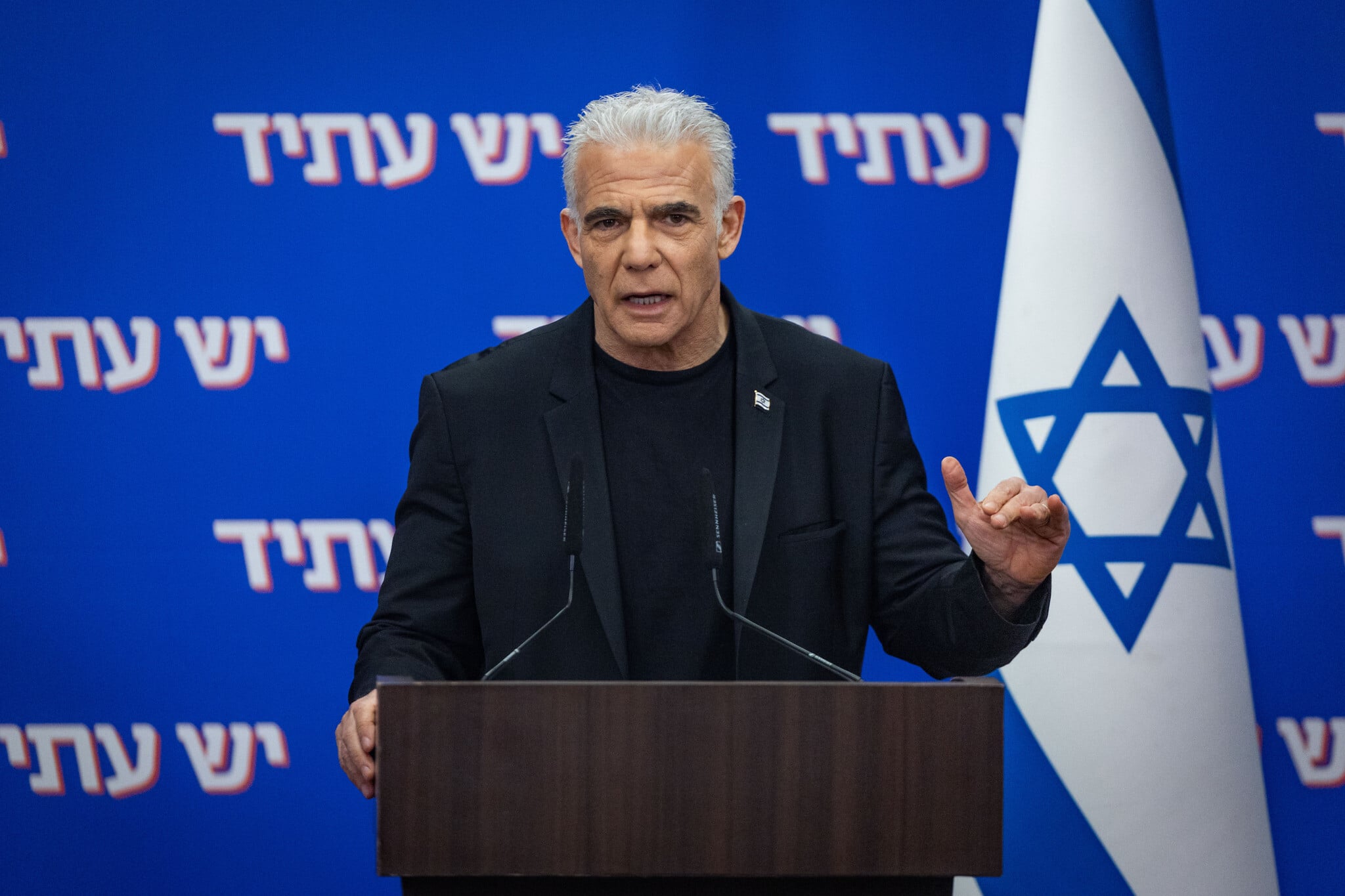
Opposition Leader Yair Lapid leads a meeting of his Yesh Atid faction at the Knesset in Jerusalem, February 9, 2026. (Yonatan Sindel/Flash90)
Netanyahu “made a mistake,” he said. “He opened Pandora’s box, and they are trying to close it again. It will not work for them.”
“The problem is not that Netanyahu is lying. The fact that Netanyahu is lying is not exactly news. This is much more serious. The biased editing of minutes of security discussions is a violation of the Official Secrets Law,” Lapid said.
Those involved in publishing the 55-page document “are involved in a cover-up, fraud, and a conspiracy designed to deceive the state comptroller, the Foreign Affairs and Defense Committee, and the Israeli public,” Lapid alleged. “This is a conspiracy aimed at damaging our ability to learn the lessons of October 7 and to defend ourselves in the future.”
According to Lapid, Netanyahu’s description of a security assessment he held with senior defense and security officials on October 1, 2023, less than a week before the attack, omitted key details, providing only a single misleading paragraph.
“In the summary of the actual discussion,” Lapid claimed, “Netanyahu instructed to move forward with civil arrangements with Hamas — meaning more money for Hamas and increasing the number of laborers entering from Gaza — and to move forward, and this is also a quote: ‘under a directive of quiet.’”
In that meeting, according to Channel 12, the security chiefs recommended that Israel move toward assassinating Hamas leaders. However, Netanyahu conditioned any such operations on conflict breaking out, and even then instructed the defense establishment to focus on the West Bank leadership. Less than a week later, Hamas led its terror invasion of southern Israel, killing some 1,200 people, kidnapping 251 hostages to Gaza, and sparking the war.
Netanyahu and his government have resisted pressure to establish a state commission of inquiry for more than two years since the attack, claiming that, because a state commission is appointed by the judiciary – whose powers it has sought to curb – it would be biased against the government.
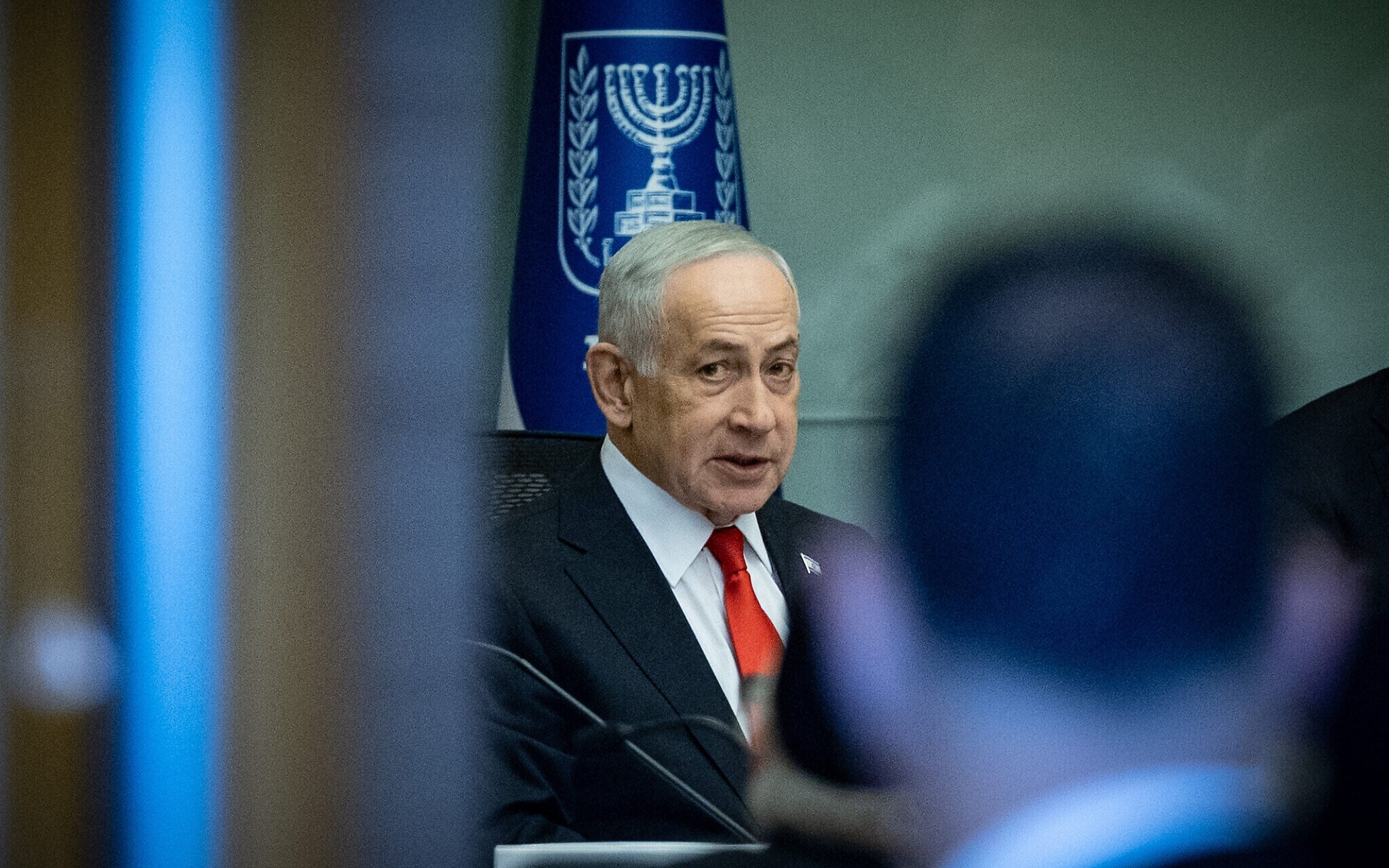
Prime Minister Benjamin Netanyahu takes part in a Foreign Affairs and Defense Committee meeting at the Knesset in Jerusalem on February 5, 2026. (Yonatan Sindel/Flash90)
Opposition figures, government watchdog groups, protest organizations and the families of several former hostages have argued that a state commission is the only tool available to investigate the catastrophe in a politically independent and comprehensive manner.
Instead of forming a state commission, the government is advancing a bill that would create what the government calls a “national-state commission of inquiry,” where Netanyahu and his coalition — due to the opposition boycotting the proceedings, as expected — would get to handpick the commission’s members.