
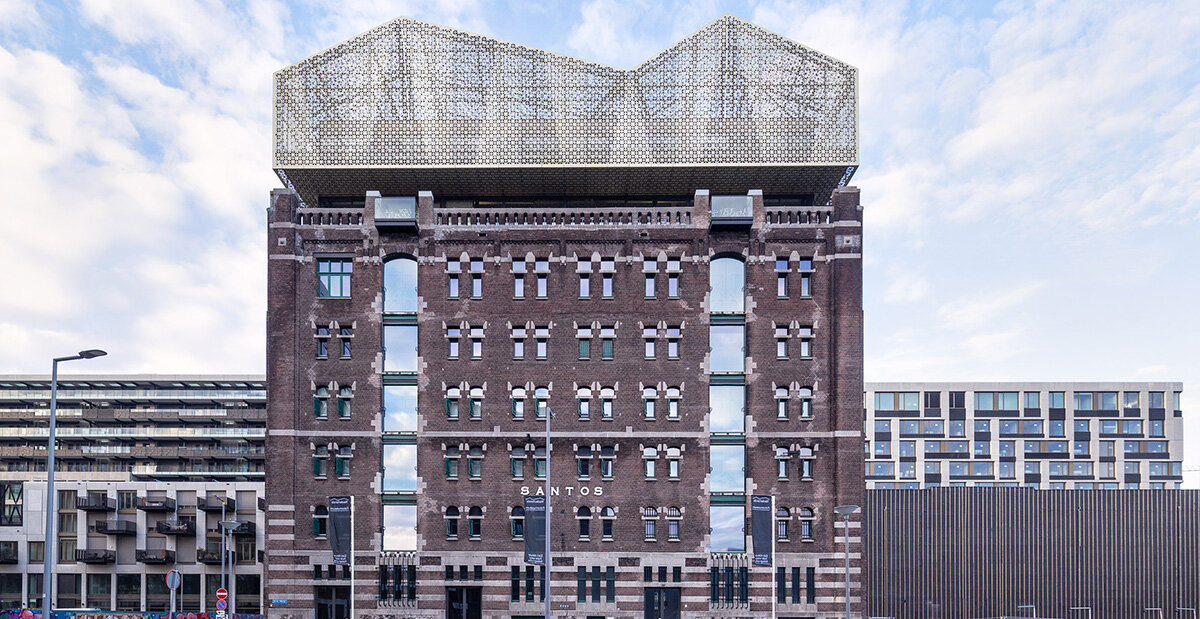
danica o. kus photographs the renewed nederlands fotomuseum
Photographer Danica O. Kus documents the recently opened Nederlands Fotomuseum in Rotterdam’s Rijnhaven district, now occupying a nine-story, early 20th-century coffee warehouse, originally built between 1901 and 1902 to store beans arriving from the Brazilian port city of Santos (find designboom’s previous coverage here). Her images dwell on the tension between weight and lightness, capturing thick masonry walls and ornamental facades counterbalanced by exhibition spaces. The robust structure of the former warehouse is not erased but reframed, allowing photography to unfold within a calm environment. Climate-regulated galleries, cold storage facilities, and newly visible conservation areas signal the technical upgrade of the building, yet Kus’ lens keeps attention on how visitors encounter the work.
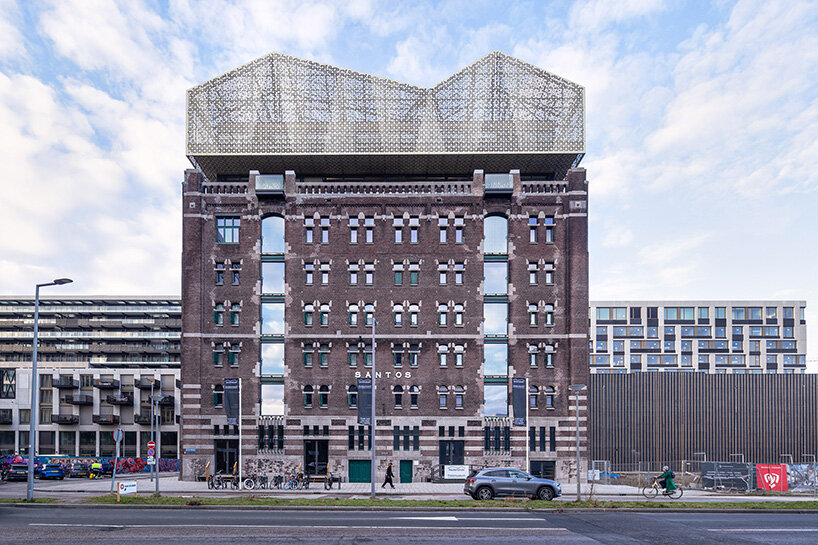
all images by Danica O. Kus
from coffee storage to cultural infrastructure
Constructed by Rotterdam architects J.P. Stok Wzn and J.J. Kanters, the Santos warehouse stands as a rare, well-preserved example of early 20th-century port architecture in the Netherlands. Listed as a national monument since 2000, it now integrates contemporary interventions, including a new atrium and a perforated aluminum ‘crown’ that accommodates offices, a restaurant, and short-stay apartments. The transformation, led by Rotterdam-based WDJArchitecten in collaboration with Hamburg studio Renner Hainke Wirth Zirn, equips the listed monument with advanced conservation facilities while retaining its industrial gravitas.
Through architectural photographer Kus’ series, the renewed museum emerges less as a spectacle of renovation and more as an infrastructure for attention. The project aligns architectural preservation with archival responsibility, situating photography within a building once dedicated to global trade. In this shift, the Santos warehouse becomes a place housing more than 6.5 million photographic objects, where the material history of the city converges with the evolving language of photography.
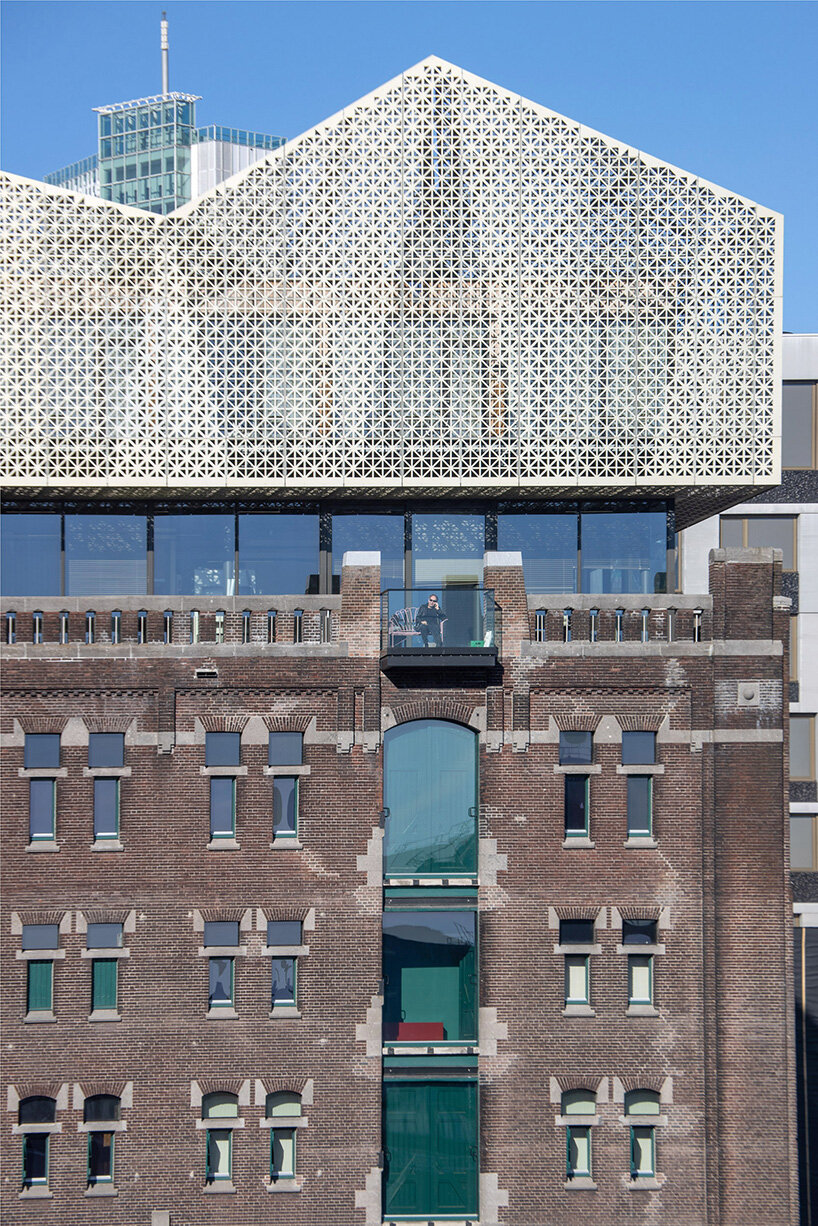
the perforated aluminum ‘crown’ rises above the historic brick facade
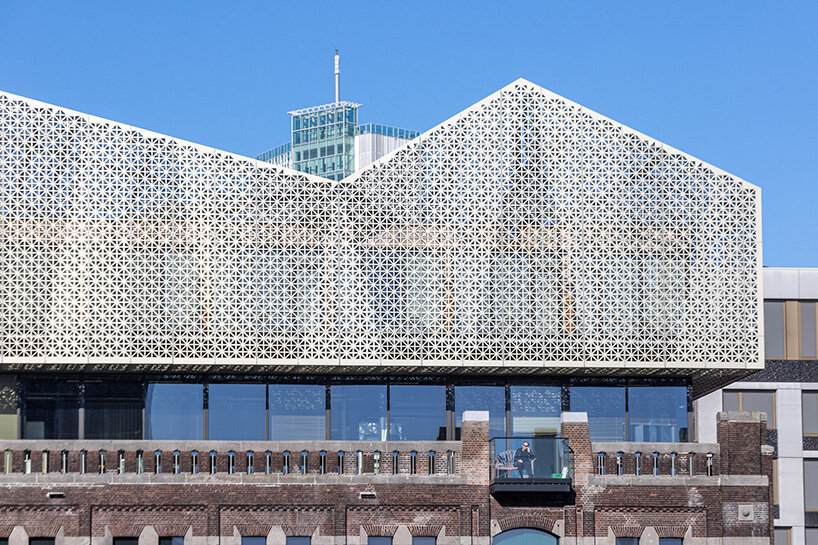
contemporary rooftop extension contrasts with the early 20th-century masonry below
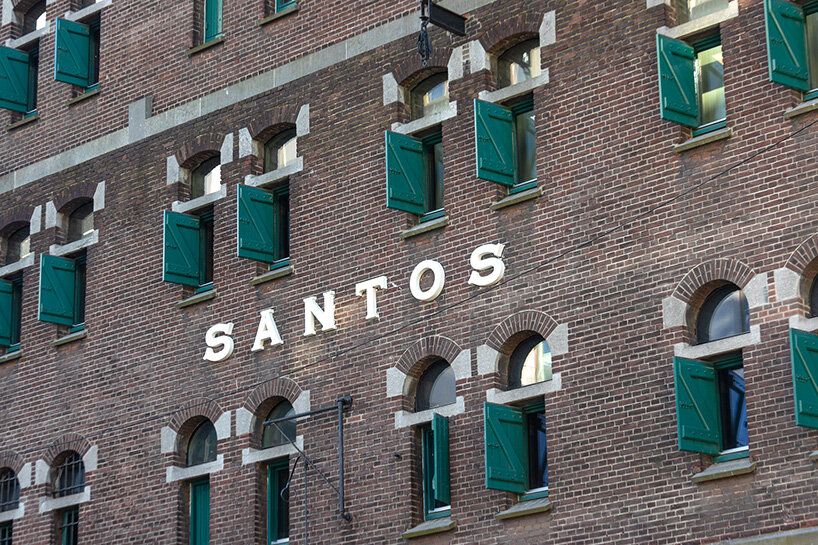
original brickwork and green shutters preserve the building’s warehouse identity