
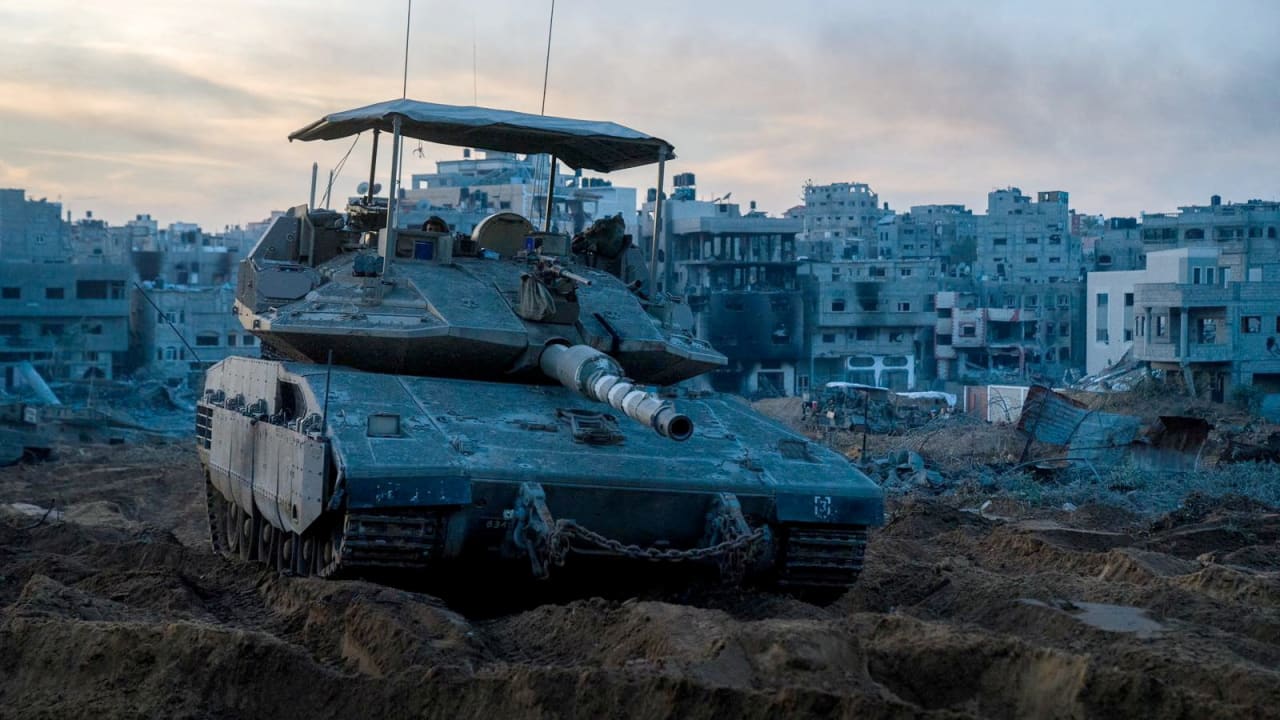
The IDF on Tuesday announced that it is reestablishing Tank Division 38 as a sign of the ongoing rise of IDF Chief of Staff Lt.-Gen. Eyal Zamir’s new post-October 7 army.
One of the main lessons that Zamir and some other top military officials drew from Hamas’s invasion and the war in general was the need for more tanks and a more offensive mindset against adversaries on the border.
In March 2025, Zamir announced that the Northern Corps, which included large forces of reservists who could be called up to support the mandatory service of Northern Command in an emergency, would be closed.
In place of the Northern Corps, IDF forces would be transferred and absorbed into other alignments.
One of the major shifts is reestablishing Tank Division 38, which was a large part of Israel’s victories in the 1956 and 1967 wars, but was eventually absorbed into other wars as the IDF shrank its investment in tank warfare in favor of a greater focus on the air force and various forms of hi-tech warfare.

According to the IDF, the process of rebuilding the division began in July 2025, including the collection of weapons, supplies, and lists of potential soldiers and officers.
IDF Brig. Gen. Sharon Altit, who became the Chief of Staff of the Training and Instruction Command in mid-2024, will be the commander of training for Division 38 in peacetime and become its operational commander in wartime.
Lessons learned from last war
Besides the general shift of Zamir toward returning the importance of tank warfare to the IDF, both on defense and offense, establishing this new separate division is also a lesson from the 2023-2025 Middle East War, in which sometimes one division commander had to manage seven to eight brigades in place of the more standard four to five brigades.
The IDF has concluded that this situation led to suboptimal resource use and that a better decision was to establish a new division for the excess brigades, with a different commander who could devote his full focus to those brigades.
The new division will start small, with only around 1,200 reservists (standard divisions can easily number around 5,000 soldiers), ages 25-27 on average, but could grow as necessary.
Training, including the division’s new commanders, is already underway, with the full division-wide drill scheduled for October 2026 and the division expected to participate in IDF-wide drills in 2027.
The division will work with Brigade 460, part of the Central Command, and potentially with Brigade 7, part of the Northern Command, which means it will be trained for a multifront battle.
Another lesson of the recent war was that brigades and divisions must sometimes be ready to shift quickly from one front to another, including adapting to different adversaries’ capabilities and topography.
The tanks used will primarily be Merkava 4s, which are better than the Merkava 2 and 3 types used by some other units, though not as advanced as the Merkava 4-Barak type.