
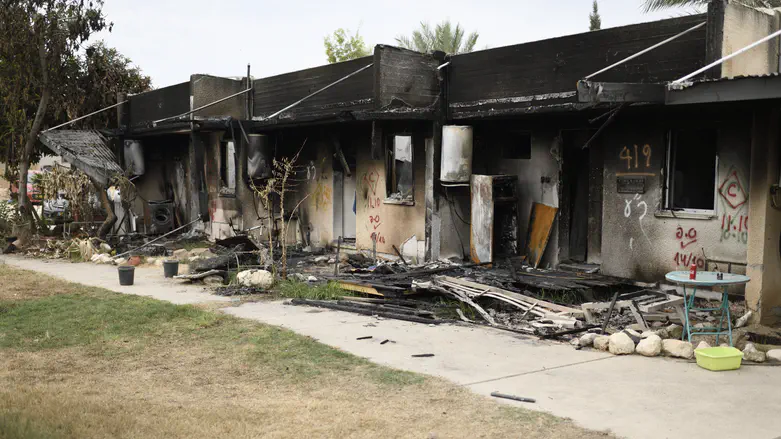
This afternoon (Tuesday), the State Comptroller published an audit report analyzing the actions of the Resilience Directorate and government ministries between January 2024 and August 2025. The report examines the rehabilitation processes in the city of Sderot and the regional councils of Eshkol, Hof Ashkelon, Sdot Negev, and Sha’ar HaNegev.
According to the findings, the five-year strategic plan for the region’s rehabilitation was significantly updated only in October 2025, a delay of about 16 months from the original target.
The audit reveals that the reduction in the development budget (from 5 billion NIS to 3.5 billion NIS) was made without defining updated and transparent priorities, making it difficult for local authorities to plan their steps. Additionally, the comprehensive rehabilitation law was only approved in April 2025, a long time after work on the ground had begun.
Crisis in Education
The education sector, budgeted at 1.7 billion NIS, is at the center of the audit. It was found that the Ministry of Education and the Resilience Directorate did not involve the Eshkol Regional Council in planning educational institutions.
A striking figure reveals that differential aid for students is insufficient: while a student in the Gaza Envelope learning within the area is entitled to an effective package of thousands of shekels, a student from the region studying in a combined institution outside the area received only 13 times less funding (approximately 442 NIS compared to about 5,866 NIS).
Additionally, as of June 2025, evacuated communities have not received full funding for operating early childhood programs (from birth to age 6).
Severe Shortage of Human Resources
The report warns of the “cannibalization” of professional staff. The high incentives given to workers within the Gaza Envelope led to the abandonment of teaching and welfare staff from neighboring authorities such as Netivot and Ofakim.
Internally, the staffing rate of social workers in the Eshkol and Sha’ar HaNegev councils stood at only about 60% at the beginning of 2025, which severely harms the ability to provide psychological and social support to the affected individuals.
Environmental Rehabilitation and Public Trust
The audit notes that the rehabilitation of open spaces (such as the Be’er Sheva Forest) was neglected for long months due to the absence of a coordinating entity.
The comptroller concludes that the gaps in execution and the delays in decision-making deepen the damage to public trust in the system, a feeling that began already on the night of October 7th due to what residents describe as “abandonment.”