
Israel’s Arab community is suffering from a severe shortage of psychologists and mental health experts, threatening the population’s ability to deal with the trauma created by more than two years of war and chronic exposure to violence, two experts told The Jerusalem Post on Monday.
Nazareth Hospital EMMS director Professor Fahad Hakim and Najla Asmar, a seasoned clinical psychologist who founded the Ma’an mental health center, warned The Post about the devastating impact the long wait times, personnel shortage, and consistent exposure to violence could cause for Israeli-Arabs.
“Mental health is a major problem in the country since the 7th of October, but we know that before October 7th, we had a major problem with mental health everywhere in the country,” Hakim shared, noting that Arab society had already experienced a shortage of professionals before the war created new trauma.
A state comptroller report published last year found that 54% of Arab society reported experiencing symptoms of post-traumatic stress, compared with 32% of Jewish Israelis. Additionally, 49% reported symptoms associated with depression, versus 30% of Jewish Israelis, and 32% reported symptoms of anxiety, compared with 19% in Jewish society.
The majority (90%) of those who needed care didn’t receive it, Asmar said. “We can understand, we can understand this crisis. It wasn’t surprising, because it is built on multiple factors, political isolation, persistent poverty, rising violence in the Arab towns, repeated exposure to war-related trauma, and the growing sense of elimination and a severe lack of accessible mental health services,” she said.
Hakim had a realization in 2017 on how bad the situation had gotten, he explained. The Nazareth psychological department had only eight beds at the time, despite a formal Health Ministry requirement that the center have 260. Hakim said he engaged a company to conduct research to understand the community’s true needs, and was quickly informed that there would be no shortage of patients but an exceptional shortage of staff.
Despite the apparent need for mental health services, the professionals shared that only 1.4% of clinical psychologists and 1.9% of psychiatrists are Arab. “So, almost 2% that give treatment for 20% of the population, and that’s a huge vacancy,” Hakim said.
With the help of the health ministry and several non-profit organizations, including the Jewish Federation of New York, Hakim and Asmar opened a larger department in the center of the city, emphasizing that it shouldn’t be hidden away in a quiet corner, as if it were something shameful.
Asmar shared that the stigma surrounding seeking access to mental health support in Arab society had quickly declined since the pandemic, but the resources remain absent.
Creating more concern, Hakim shared, is knowing that the mean age of psychiatrists is 55, meaning they will retire in the coming years. Coupled with the shortage of Arab students specializing in psychology and psychiatry, Hakim said it stood to reason that the resource shortage would only worsen.
“We had COVID… and we have the problems around, we live in Israel, we live in the Middle East, we live with the problems of all the world… we have war…” creating trauma, Hakim shared, “But we actually have extra from the violence that is happening around us, too.”
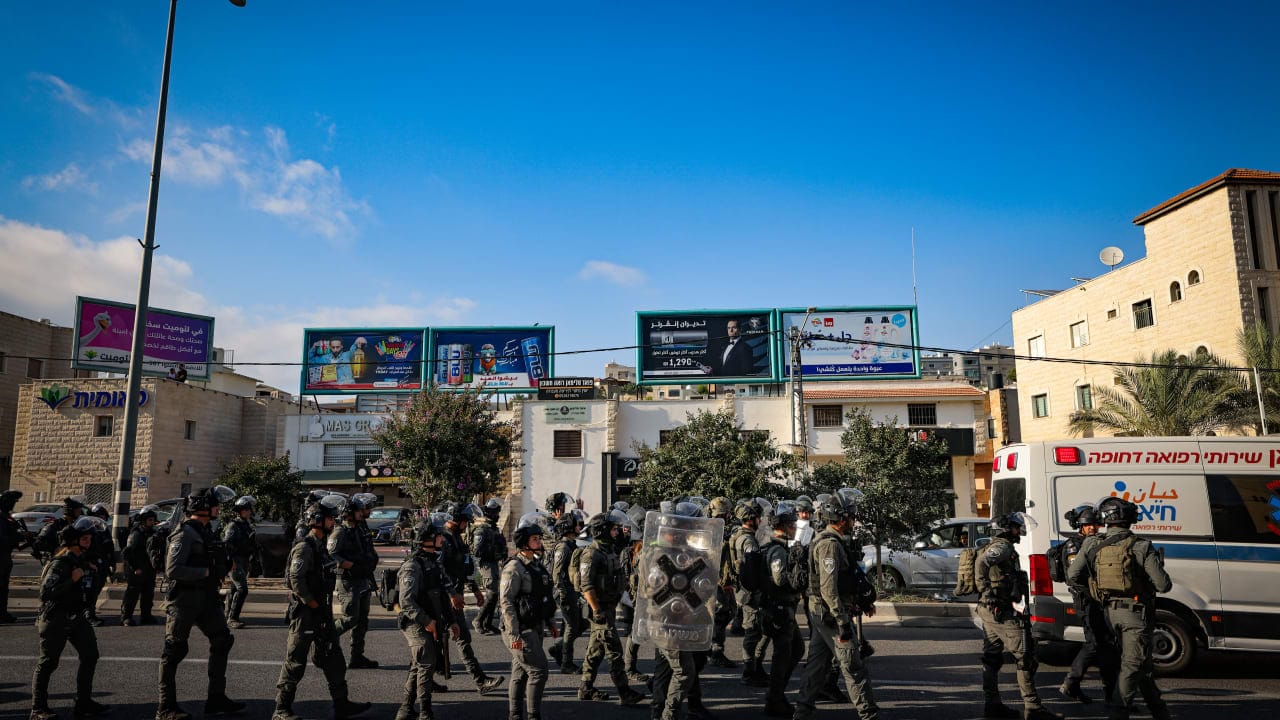
In 2024, the murder rate in Arab society was 14 times higher than in Jewish society, and last year was the deadliest yet, with 252 Arab-Israelis having lost their lives in crime-related killings, according to the Abraham Initiatives organization.
Despite the apparent need and demand, the current supply means those seeking urgent services can expect to wait up to three years. “Just imagine you have a child that is trying to commit suicide, or an elderly [person] who’s trying to do so, and when you try to book a psychiatrist or psychologist, you say, ‘Tell him, okay, let’s meet in three years,’” Hakim described.
Asmar shared that it was also important that medical professionals had cultural and linguistic awareness to ensure effective treatment.

Data presented last week by the Center for Economic Policy of Arab Society Quality at the annual conference showed that 40 percent of Arab men and 47 percent of Arab women have Hebrew skills at an intermediate level or below, suggesting an apparent need for Arabic-speaking professionals.
“Out of 158 localities, only 28 have a mental health clinic and fewer than 18% of the Arab towns have services within the town and… even in other localities, you will not have your therapy in your language,” she shared. “And the mother language, it is the emotional language. It’s very important to have therapy in your own language from professionals who really understand your language, understand your culture, understand the context that you live in, and this is really a very big lack that we have.”
Arab society is also far less individualistic than Jewish society, Asmar explained. While an Israeli Jew is considered an adult at 18, Israeli-Arabs live as more of a collective, so family-oriented therapy is often necessary.
Arab-Israelis are also in the unique position of feeling their two identities at war, Asmar explained. Many were devastated by the October 7 attacks and the missiles that followed, but also felt that same loss at the Arab civilian casualties in Gaza. “They are in a conflict between these two identities, which also makes the distress more acute,” she continued.
Lack of infrastructure promotes the cycle of trauma
A lack of infrastructure also meant Israeli-Arabs were hit hard during the war. The Israeli Democracy Institute reported in 2024 that 29% of schools in the Arab state education system have either highly inadequate protective spaces or none at all, while the same is true in 12% of Jewish education facilities. Many Arab municipalities also lack public shelters, the report noted, despite often being located near Israel’s northern and southern borders with neighboring hostile entities.
“Sometimes it’s not just a missile that needs to fall on a town to show the extent [of danger], but again being in this kind of frightening situation that you don’t know where to go and what to do, that shows the extent of what’s happening around us,” Hakim added. “We’re not all in a safe place… We’re a hospital that gets 400 to 500 gunshot wounds a year…So, when you have a 13-year-old or a 14-year-old that is shot at school, the 40 kids in his classroom [also] need treatment.”
Continuing to explain the cycle of trauma, Hakim added, “We can tell you that the Arab society is more vulnerable to trauma. It’s more vulnerable to trauma sometimes because, they’re not that resilient in catching the trauma, and one trauma like this will be held for a long time… if you don’t treat the trauma today as in acute care, you will find it in higher numbers in the future.”
Asmar and her team of more than 40 professionals attempted to travel to impacted communities during the war, trying to fill the widening gap among those who need emergency mental health intervention and those who received it. Following the devastating Hezbollah attack on Majdal Shams, which saw 12 Druze children and wounded dozens more, it became apparent that she needed to switch to remote services to ensure the safety of her team. Many of the families affected by the rocket continue to receive online therapy at the Ma’an center.
The Ma’an center arranged weekly Zoom sessions to help caregivers learn how to cope with ongoing trauma. The Jewish Federation of New York also helped fund Asmar’s children’s book, which was designed to help children understand and cope with the trauma they experienced. The book is now being translated into English and Hebrew to help protect more children.

“I would say underneath everything that we do, there is really an understanding of the society, what they need to be together, to feel that you are not alone, to feel that you are, that the silencing, that frightening, that you are not alone, and that you can have a discussion of the topics that really bother you, or you feel with it very much isolated and alone,” Asmar continued.
She also helped found the Jewish-Arab Psychotherapy School to help alleviate the isolation and better prepare Jewish-Israeli professionals to aid Arab clients.
“It’s a partnership, a real partnership, between the Arab society and the Jewish one, between Markez Ma’ana in Nazareth Hospital and Winnicott Center in Tel Aviv and Tachanatha Amakeem Center in Ain Kharod,” she explained. “Together, we decided to take a courageous step, which is not just to have a regular psychotherapeutic school, but to have a psychotherapeutic school that is a context aware. We have half students Arab and half students Jewish. Half of the lecturers are Arabs, and half are Jews, and they learn psychotherapy, and they learn how to look at the context that we live in. And this is really very courageous because we started it during the war.”
Hakim continued, “When the 7th of October was here, it was easy to open the gaps into society, especially in Israel itself. And we decided, on the contrary, to find a way to bridge these gaps, and put mental health or psychology in the middle…We’re not a working facility. It’s a leadership facility that looks at itself as a beacon of hope, a beacon of resilience, and a beacon of love and care for the whole society.”