
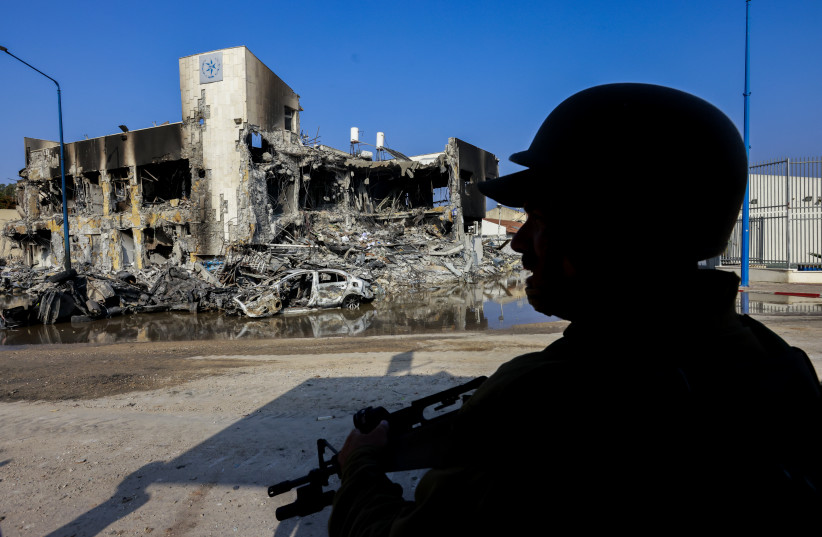
When Hamas fired some 3,700 rockets, and its invasion force of around 5,600 men penetrated Israel’s border at 119 different spots to take over a couple of dozen villages at 6:29 a.m. on October 7, Israel’s top officials went into shock.
While many of those same officials made a number of bold decisions over the course of the next two years, including against Iran, Hezbollah, and the Syrian Assad regime – and historians will need to weigh their accomplishments against their failures – all were drawn into the failure on October 7.
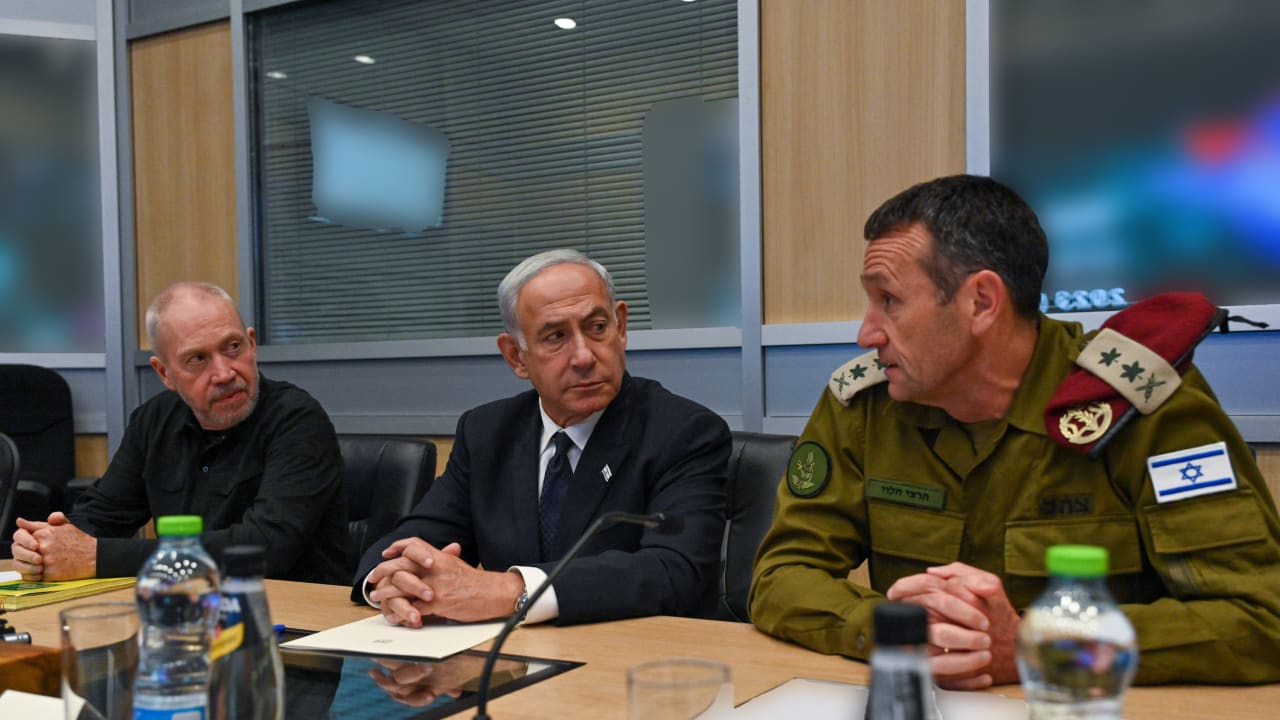
With Prime Minister Benjamin Netanyahu and others publicizing selective aspects of what happened that morning, we can now exclusively reveal the puzzle of the interactions of three of the country’s central characters at the time: Netanyahu, Defense Minister Yoav Gallant, and IDF Chief of Staff Lt.-Gen. Herzi Halevi.
The most important new takeaway is that the three did not speak until nearly four hours into the war, by which point hundreds of Israeli hostages had already been taken, and hundreds of Israelis had been killed. Why they did not speak earlier is part of the story that follows and likely part of a basic dysfunction that went beyond politics, which no one wants to address.
Also, we will give a response of sorts from Amit Saar, the former IDF intelligence analysis chief from 2021 to April 2024, who died of cancer on January 1, 2026, and whom Netanyahu attacked overnight for “rebelling” against him, though when Saar died, the prime minister gave him high compliments.

Classified video footage of the IDF high command “pit,” which we viewed, showed that on October 7, not a single general was in the room. The midlevel officer in charge and his deputies were yelling at each other as reports of invasions flooded in. They had no overall defense plan.
Even a full hour into Hamas’s invasion, at 7:30 a.m., the IDF high command only knew about approximately 40 percent of the penetrations into Israel from Gaza.
As of 10:00 a.m., hundreds of Israelis were already dead or kidnapped, and yet the IDF high command was still only aware of some 60 percent of border penetrations.
The Israeli military’s top commanders did not really start to manage the nation’s defense until about 1:00 p.m, which was also around the time Netanyahu’s first video to the public came out.
By that time, Hamas and Islamic Jihad had taken the overwhelming majority of the hostages, and most Israeli victims at places near the Gaza border, like Kfar Aza, Nir Oz, Beeri, and the Nova Music Festival, had already been murdered.
None of the top three officials made live public appearances in the early days, with IDF Chief Spokesman Brig. Gen. Daniel Hagari is the only one to do so.
Gallant is the only top official who can say that even his staff did not receive any warning prior to the 6:29 a.m invasion.
Halevi knew most of the top three, though even he had a very incomplete picture. Between 2:00 a.m. and 3:00 a.m., Halevi’s bureau chief woke him up to give him initial updates about a possible Hamas border threat.
He left his bedroom for his home study and wrote a few notes to enhance his level of alertness. He wrote to himself, “We cannot just convince ourselves that this is nothing.”
But he and the entire intelligence and defense apparatus were convinced that at most, Hamas was planning one small penetration into one village to try to take a few hostages.
Only months into the war would IDF intelligence inform Halevi that it had intercepted Hamas’s “Walls of Jericho” mass-invasion plan more than a year before, since mid-level officials had dismissed it as a fantasy.
What might Halevi have done differently had he known about the plan?
Maybe something more, but maybe nothing, given that all of Israel was convinced that Hamas was deterred.
For such a strategically low-grade threat, Halevi ordered only additional air force drones into the sky, more intelligence collection, and updates within the military.
There were additional consultations between the IDF and the Shin Bet over a number of hours, including after 4:00 a.m. At 5:15 a.m., Shin Bet Chief Ronen Bar finally ordered his staff to update Netanyahu.
But with no sense of imminent emergency, his Shin Bet staff only carried out his order an hour later, at 6:13 a.m., sixteen minutes before Hamas initiated its invasion.
During those 16 minutes, Netanyahu’s personal military secretary, Maj. Gen. Avi Gil chose not to wake the prime minister, believing, along with the entire apparatus, that no large-scale threat was imminent.
Netanyahu consistently leaves out this fact when he discusses the timeline, trying to portray the defense establishment as intentionally leaving him in the dark.
At 6:29 a.m., Netanyahu and Halevi were awoken by their staff because of the onset of the war. Gallant was notified by his daughter that war had broken out just as he was in the middle of early morning outdoor exercises.
Shortly after, Netanyahu, Gallant, and Halevi all traveled from their homes to Israeli military headquarters in Tel Aviv, arriving somewhere in the eight o’clock hour.
The defense minister and the IDF chief spoke on the phone during the drive to Tel Aviv.
Neither of them called Netanyahu, and the prime minister did not call them.
Netanyahu did receive updates from Gil, his military secretary, who was in touch with senior IDF officials.
The prime minister’s first orders either to Gil or to Gil’s military staff were to seal Israel’s northern and southern borders, to ward off a possible assault by Hezbollah in Lebanon, and to prevent the Hamas invaders from escaping back across the Gaza border.
“It’s clearly not another ‘round’” of conflict, Netanyahu told colleagues in real time, not the typical Gaza skirmish. “It’s going to be a long war.”
Netanyahu, Gallant spoke for first time hours after Hamas’s invasion
But we can now reveal for the first time that Netanyahu, Gallant, and Halevi did not speak until almost four hours into the war.
Rather, they were all at military headquarters, a couple of hundred meters from each other, for around two hours before speaking.
So Netanyahu’s orders did not necessarily get to the top when he issued them, and some of them, like closing off the southern border, were initiated by the air force around 10:00 a.m, near the same time Netanyahu finally gave the instructions to Halevi directly.
We can also disclose that the two spoke for the first time since the invasion at a meeting that began between 9:55 a.m. and 10:15 a.m. While Netanyahu has said 9:55 a.m., Halevi has said 10:15 a.m.
Netanyahu came to the IDF underground situation room for the meeting.
All of the officials present expressed that they were stunned at what Hamas had accomplished.
Several Israeli security officials at headquarters appeared “white as ghosts.”
The three leaders also still felt like they were in the dark about the scope of the unfolding disaster. Netanyahu and Halevi debated whether a limited or full call-up of the reserves was warranted, before the prime minister decided on the maximum.
One reason it took so long for them to speak is that Netanyahu waited until his chief of staff, Tzachi Braverman, arrived at military headquarters to assist with the Halevi meeting.
Braverman, unfortunately, got pinned down in his house with rocket siren alerts.
Still, why did the country’s three most important national security figures avoid speaking for so long during the crisis?
Why didn’t the prime minister want immediate updates directly from the army chief and defense minister, so that he could best lead the country? Why didn’t Gallant and Halevi reach out to the prime minister, if Netanyahu did not call, to ensure they were on the same page?
Sure, these top officials sometimes speak to each other through staff, but in such a crucial moment? There is no good answer. Clearly, all of the nation’s top officials were not only stunned but racing to keep pace with the evolving picture of Hama’s invasion, minute by minute.
The IDF’s Gaza Division had collapsed after Hamas besieged its headquarters and its commander, Brigadier General Avi Rosenfeld.
Rosenfeld failed to convey the full extent of the assault, and along with a general system overload from the sheer number of disparate Hamas invasions, this meant that the military underestimated the catastrophe in these first hours.
All that said, when Netanyahu and Halevi did finally meet, the prime minister did not come away with a substantially different understanding of events on the ground. This was before 1:00 p.m., when the fog of the calamitous situation started to clear.
In that sense, even if the three leaders had spoken by phone hours earlier on the way to Tel Aviv headquarters between 7:00 and 8:00 a.m., maybe nothing major would have changed.
We will never know.
Israel’s top three officials had complete breakdown of trust
But it seems clear from their relations up to that point and afterward that one of the reasons they did not speak was a complete breakdown of trust, which inhibited professional communications even on critical national security issues.
In March and July 2023, Gallant had publicly broken with Netanyahu over the judicial overhaul, leading to the prime minister’s public firing of the defense minister, before retracting his firing within days due to massive protests.
Halevi did not publicly criticize Netanyahu over the judicial reform as much as Gallant, but he also did not crack down as hard as Netanyahu wanted him to on IDF officers and soldiers who threatened to refuse their reserve duty callups if the prime minister pushed his changes through.
When Halevi sent IDF Intelligence Chief Maj, Gen. Aharon Haliva to brief Netanyahu and top government officials at the Knesset in July 2023 on the eve of a major judicial overhaul vote, they boycotted him.
This is also where Haliva’s top deputy, Saar, enters the picture.
Leading up to October 7, 2023, the IDF intelligence analysis chief had sent four letters to Netanyahu warning that Hamas viewed the internal chaos in Israel over the judicial reform as leaving Israel more vulnerable to attack.
Saar’s latest letter to Netanyahu on the issue was received by the prime minister in July 2023, and another letter was on the way to the prime minister on the eve of the war.
When Saar died of cancer in January, Netanyahu issued a detailed message praising him for his smarts, independent thinking, and more.
As Israel nears election season, Netanyahu has decided to ignore his own prior statements complimenting Saar and to throw him under the bus. Saar, a dead man, cannot respond.

Yonah met Saar in some closed Hebrew media briefings.
He was extraordinarily confident about Israel’s future and about how deeply Israeli intelligence had penetrated adversaries threatening it.
In that sense, he did have some of the same arrogance that all Israelis had toward Hamas leading up to October 7.
However, he was very concerned about Iran and Hezbollah, and he was a critical part of the apparatus that brought major successes against those more dangerous enemies later in the war.
He was a brilliant analyst with exhaustive data at his fingertips on nearly any topic you could imagine.
Despite some generic Israeli arrogance regarding Hamas, as a human being, he actually carried himself more modestly than your typical Israeli general.
There was nothing about him that would qualify him as a “rebel.”
Like many top IDF officials, he wanted to support the government’s military policies as part of his role as an officer in uniform, but he also saw it as his role to issue unpleasant and inconvenient warnings about the status of the military, if that status was real.
Like everyone else, Saar had no idea Hamas would invade, so he certainly did not send his four letters to Netanyahu to set the prime minister up for the 2026 election issues.
Politicians and historians will debate endlessly who was responsible for weakening the military in the eyes of Hamas during the judicial overhaul debate, but the fact is that it was weakened. This was information Saar had a duty to provide to Netanyahu.
Those not singularly devoted to one or another political party have said that it has always been and remains unfair to place the blame for October 7 on any one branch of Israel’s political or defense establishments. Everyone was responsible in one way or another.
But what this story discloses is that the personal enmity between the top three officials over the judicial overhaul and related issues inhibited their ability to communicate in the early, crucial hours of October 7. It also discloses why Netanyahu is now on the attack, even against the deceased Saar, and why the political fireworks, on all sides, won’t be ending anytime soon.
Elliot Kaufman is a Wall Street Journal Editorial Board member and editorial writer.