
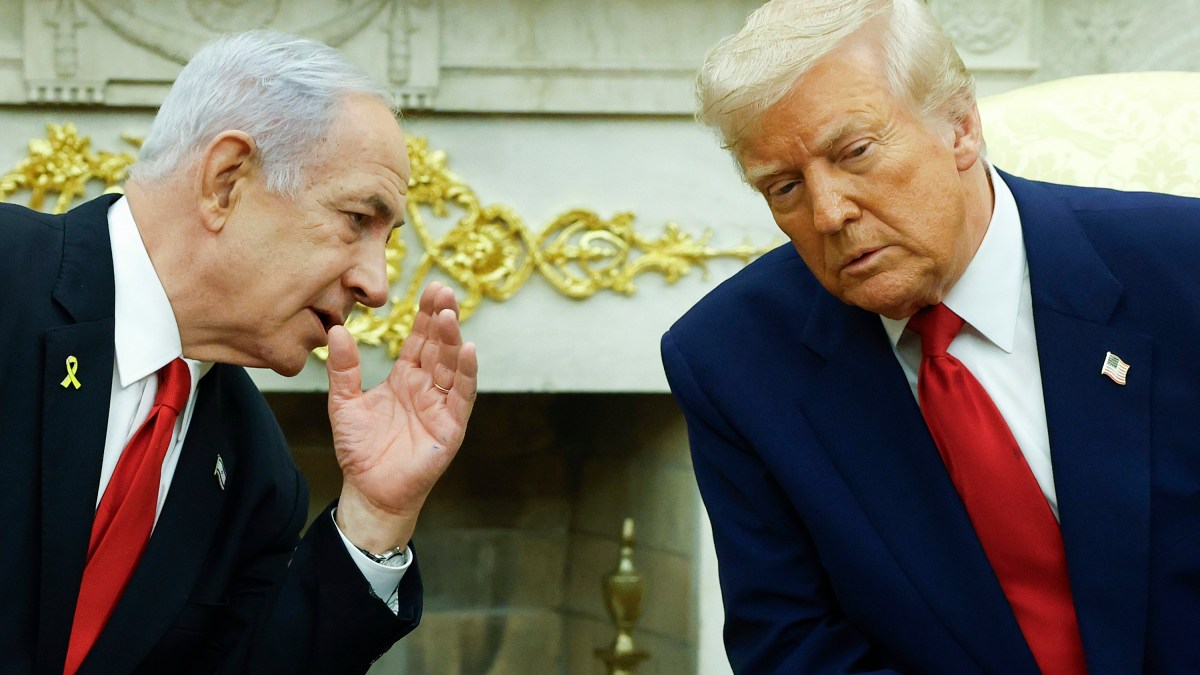
President Trump said he was considering sending a second aircraft-carrier group to apply pressure on Iran to commit to a nuclear deal as Israel’s prime minister, Binyamin Netanyahu, flew in for White House talks on Wednesday.
Trump said Iran “wants to make a deal very badly” after describing “very good talks” with the Islamic Republic last week, and raising alarm bells in Israel after Tehran’s top negotiator said its ballistic missiles were not part of the discussion.
Netanyahu asked for a visit that was due on February 18 to be brought forward to impress upon Trump that any deal must curb Iran’s missiles as well as its nuclear ambitions and regional reach through its militant proxy groups.
Trump continued to mix threats with optimism on Tuesday as he kept Iran — and Israel — guessing on his readiness to use the American firepower being assembled in the Middle East.
“We have an armada that is heading there and another one might be going,” Trump told Axios, adding that he was “thinking” about sending another aircraft-carrier strike group.
“Either we will make a deal or we will have to do something very tough like last time,” Trump said. He added that he expected a second round of US-Iran talks to take place next week.
Trump said Iran “wants to make a deal very badly” unlike in June before the US bombed its nuclear-enrichment facilities. “Last time they didn’t believe I would do it, they overplayed their hand,” Trump said. This time talks were “very different” and “we can make a great deal with Iran”.
Trump said he did not think Netanyahu was nervous about US-Iran negotiations. “He also wants a deal. He wants a good deal.”
Before boarding his flight, Netanyahu said he would “present to the president our approach around our principles on the negotiations”, adding that this was important not only for Israel, but for every country around the world “that wants peace and security”.
Trump has assembled a large US fleet within striking distance of Iran but had softened his tone in recent days, leading Iranian anti-regime campaigners to feel this was an occasion when the acronym Taco — “Trump Always Chickens Out” — applied.
Originally coined to describe Trump’s retreat from high trade tariffs last year, his threat of dire consequences for Iran’s leadership for killing opponents has not materialised, and the momentum of January’s street protests seemed lost.
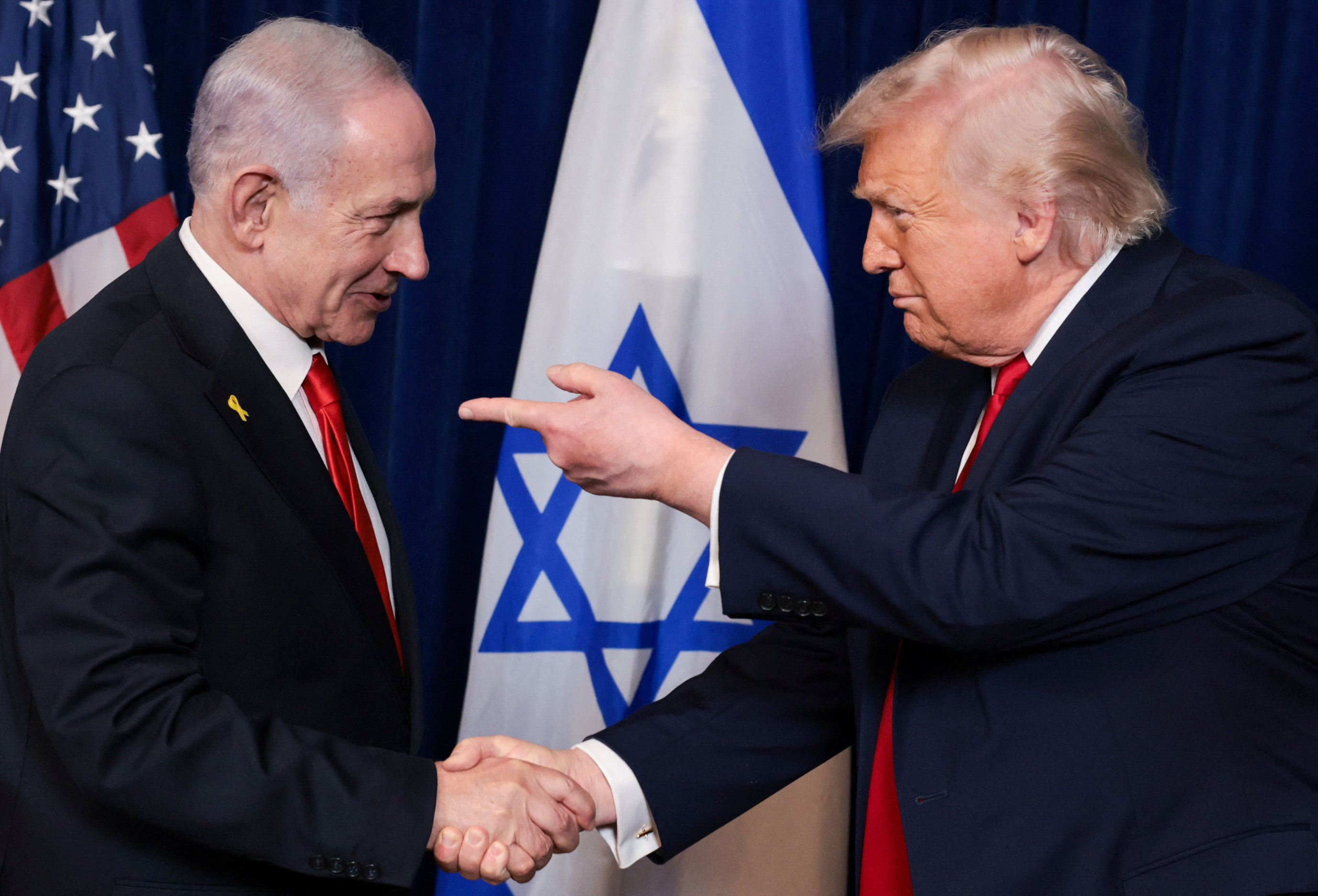
The expedited meeting demonstrates Trump’s responsiveness to Netanyahu
REUTERS/JONATHAN ERNST
Trump remains unpredictable and may not have made up his mind how to act, although US officials have been briefing that he is not convinced about the merits of another attack on Iran, despite posting in mid-January that “HELP IS ON ITS WAY” for protesters on the streets.
“The prime minister believes that all negotiations must include limiting the ballistic missiles and ending support for the Iranian axis,” Netanyahu’s office said on Saturday, referring to Tehran’s support for militant groups including Hezbollah and Hamas.
• Iran and the US: this is geopolitical poker at its most dangerous
The expedited meeting demonstrates Trump’s responsiveness to Netanyahu, whom he bolstered with the US bombing of Iran’s nuclear enrichment facilities last June. Recent satellite footage shows that the entrances to the country’s largest underground research site, at Isfahan, have been buried in soil, apparently as a precaution against another attack.
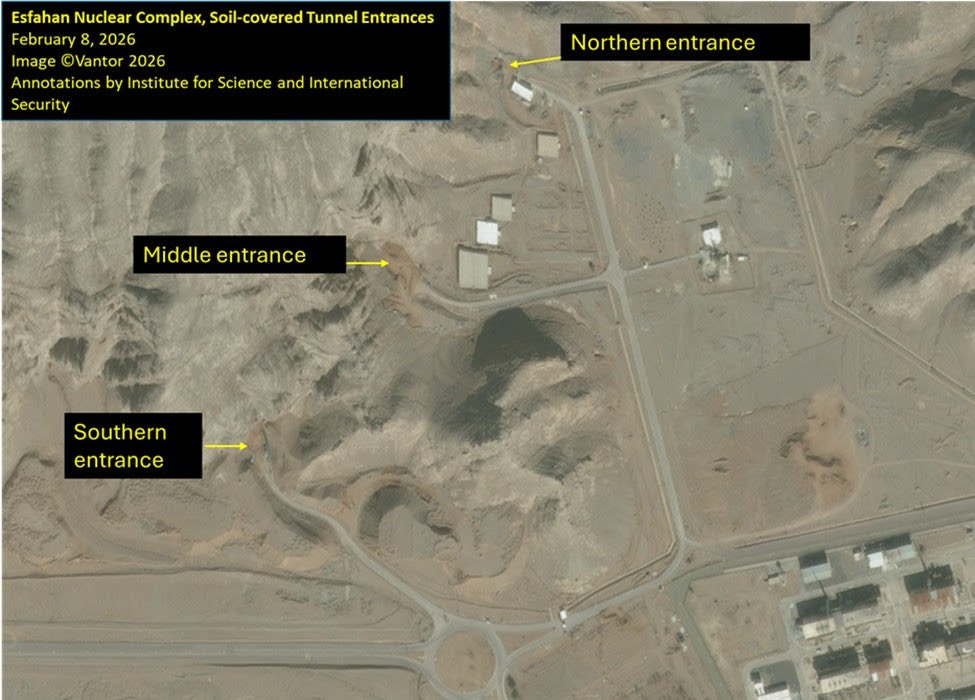
A satellite image of the site at Isfahan
The US president also assisted directly with an appeal to President Herzog of Israel to issue a pardon to the prime minister for long-standing corruption charges over which Netanyahu is still regularly appearing in court. Trump’s backing for clemency led Netanyahu to apply formally for a pardon in November but Israeli law first requires proof or admission of guilt, and the prime minister has steadfastly denied all charges.
Nonetheless, the Israeli president is considering the pardon request by using his authority to commute the charges. Herzog believes the trial has had a “very negative” impact on the judicial system and the public at large and is thought to be seeking a solution to end the crisis.
Every visit to Washington is an opportunity for Netanyahu to show his personal chemistry with Trump but behind the scenes, a conflict over the US Board of Peace is complicating relations.
Israel is unhappy about Trump’s inclusion of Qatar and Turkey on the Gaza executive board as a reward for their help in wider geopolitical moves, including the new regime in Syria and talks with Russia. This position gives Qatar and Turkey a more hands-on role in redeveloping the ruined Gaza Strip than the Israeli government wanted, meaning that the Washington visit is as much about trying to gain more control over the Gaza process as influencing US talks with Iran.
• UK sends jets to Cyprus as fears grow of US attack on Iran
The urgency to push Israel’s interests increased when Trump announced that the first meeting of his Board of Peace would take place on February 19. Netanyahu needs to repair a slight caused by his refusal, reported by Axios, to allow Herzog to attend the inaugural session of the board in Davos last month.
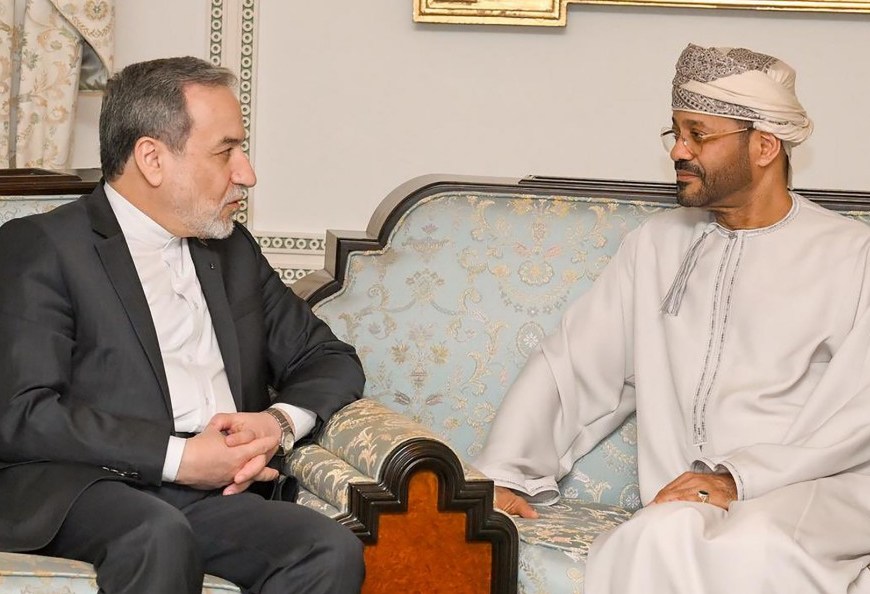
Iran’s foreign minister, Abbas Araghchi, left, meeting his Omani counterpart last week
OMANI MINISTRY OF FOREIGN AFFAIRS/UPI/SHUTTERSTOCK
Another potential dividing line between the two allies is Israel’s annexation of the West Bank, which Netanyahu’s coalition government is moving towards despite Trump’s opposition. On Sunday the Israeli cabinet approved reforms which make it easier for Jewish settlers to buy land and undercut the Palestinian Authority in parts of the West Bank that it administers. This is seen by some observers to undermine Palestinian aspirations to statehood, which are recognised in Trump’s peace plan.
Netanyahu, 76, is still a front-runner for this year’s Israeli parliamentary elections, although they will take place in the same month as the anniversary of the October 7, 2023, attacks, over which the prime minister has so far tried to avoid opening himself to scrutiny. Netanyahu has refused to initiate a state commission of inquiry into the security failures of the day and while most army and intelligence officials have since resigned, the prime minister has doubled down.
This week Netanyahu submitted a document to the state comptroller that was seen to shift blame for Hamas attacks on to political rivals and security chiefs, including potential election rivals. The prime minister is also facing scrutiny over security leaks in his inner circle.
However he is presently only rivalled in the polls by Naftali Bennett, 53, the former prime minister and leader of the New Right party, and both men would probably need to agree a coalition to form a government.
The most pressing reason for Wednesday’s talks with Trump remains Iran, especially after its foreign minister, Abbas Araghchi, said that only the nuclear issue was discussed with US envoys Steve Witkoff and Jared Kushner in Oman last Friday. “We do not discuss any other issues with the Americans,” he said.
Besides calling these talks “very good”, Trump said on Air Force One on Friday that “we’re going to meet again early next week”.
On Saturday Araghchi told Al Jazeera that the “missile issue” and other defence matters were “in no way negotiable, neither now nor at any time in the future”.
He warned that Iranian reprisals for a US attack would be localised. “If the US attacks us, it is evident that we don’t have the ability and access to attack US territory and therefore have to retaliate against US bases in the region. Unfortunately, US bases are spread all over the region,” he said.
Araghchi also used the usual Iranian formulation that nuclear enrichment for scientific purposes was its “inalienable right”.
Iran sought to portray Israel as a “destructive influence” before the talks.
“Our negotiating party is America. It is up to America to decide to act independently of the pressures and destructive influences that are detrimental to the region,” Esmaeil Baqaei, an Iranian foreign ministry spokesman, said in a weekly press briefing.
“The Zionist regime has repeatedly, as a saboteur, shown that it opposes any diplomatic process in our region that leads to peace,” he added.
Trump had previously threatened Tehran over the crackdown on anti-government protests last month in which at least 6,964 protesters were killed, according to monitors. The Iranian regime also made more than 51,000 arrests, and this week arrested key reformist figures close to the president, in an apparent move to stifle criticism.
Much like the Iranian opposition movement, Netanyahu is wondering exactly where these talks are heading.