
Aren’t we over Lucian Freud? Isn’t he due the well-documented dip in reputation that follows a few years after an artist’s death before rediscovery a decade hence? Haven’t we had enough of the Freud industry? The biographies (in two volumes), the volumes of letters, the memoirs by sitters, daughters and toadies?
Those were my thoughts on the way to Lucian Freud: Drawing into Painting at the National Portrait Gallery. One room into the show and, damn it, the old seducer had done it again. It was the thistles. Three Scotch thistles, barbed, beautiful, sinister in their strangeness, picked and drawn on the Isles of Scilly and practically prickling off the paper.
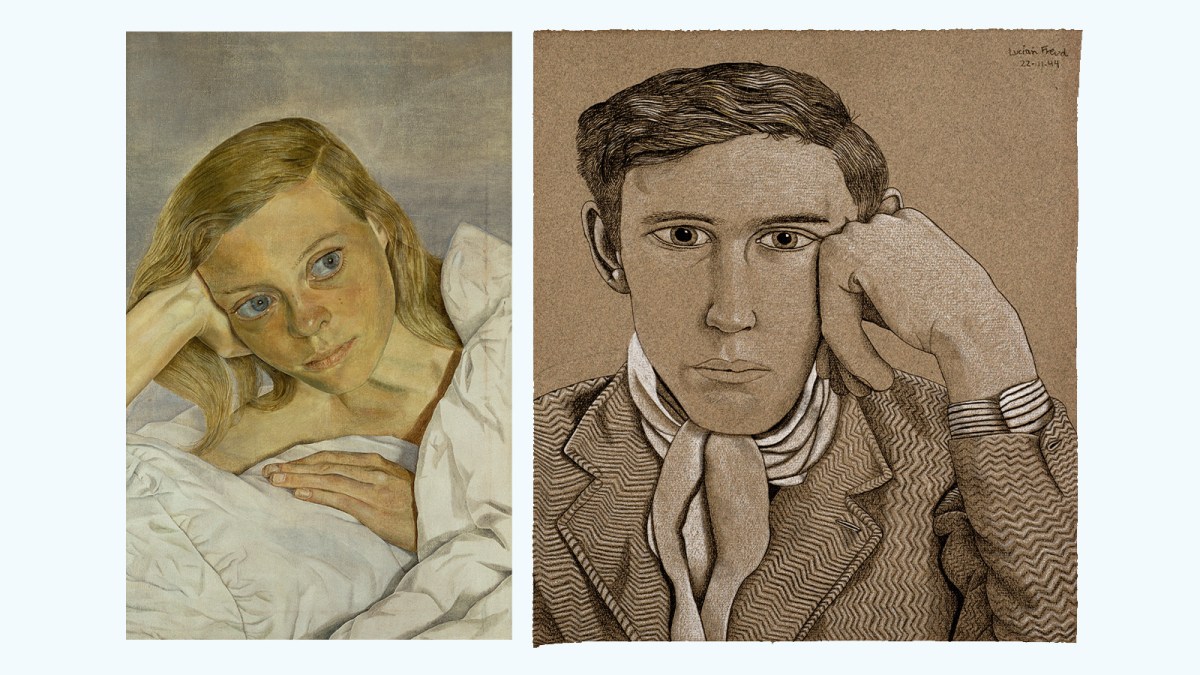
The early drawings on display, made by Freud in the 1940s and early 1950s, are astonishing: precision without fussiness, a stark certainty of line, very little revision or agitation, in contrast to the obsessively worked paintings of his later career.
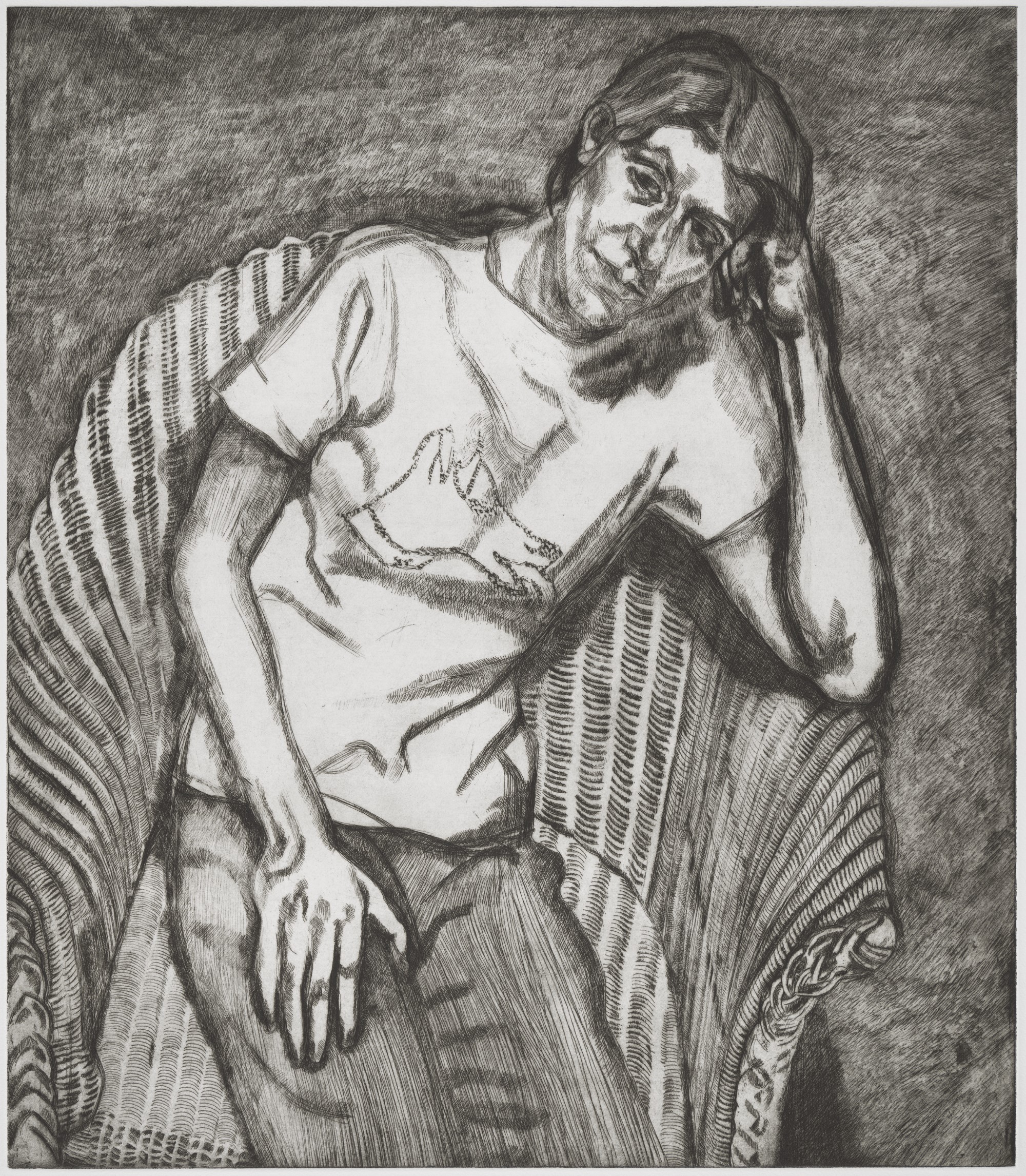
Bella in her Pluto T-Shirt (1995)
© THE LUCIAN FREUD ARCHIVE. 2025/BRIDGEMAN IMAGES. PHOTO © NATIONAL PORTRAIT GALLERY, LONDON
Years ago I read in a beauty column that professional make-up artists separate each eyelash with a pin before applying mascara. I’ve never had the patience to try. Freud gives his early sitters the pin treatment. Every lash, every flyaway strand of fringe, every curl and tuft of beard is seen and set down. Looking at the brittle iron-filing hairs on the neck of Freud’s Dead Monkey (c 1944), the hairs on the back of mine stood up.
Freud reckoned that as a young artist he made 200 drawings to every painting. Later, painting took precedence, but drawing was always there: a way of working out, noticing, getting nearer than near. It was, in his words, a means of “concentration, a question of focus”. The exhibition follows Freud the draughtsman from a wall of childhood drawings — tempting to see intimations of his later interest in spikes and spines in a crayoned bird of paradise — through his youthful portraits of sitters with scalpel outlines and Cycladic eyes, to his later fleshy, pitiless examination of the human form. To add to Kenneth Clark’s famous formulation, there’s naked, there’s nude — and then there’s Freud.
• Lucian Freud: the wild child who became one of our greatest artists
I incline to Freud in his lean years: the crepuscular portraits of Kitty Garman, the spare particularity of his Peter Watson and John Craxton (Portrait of a Young Man, 1944), the glassy stillness of his Daffodils and Celery. It’s a very Freud still life: cramped and claustrophobic in its cropping.

David Hockney (2002)
© THE LUCIAN FREUD ARCHIVE. 2025/BRIDGEMAN IMAGES. PHOTO © NATIONAL PORTRAIT GALLERY, LONDON
The portrait of Deborah Devonshire (1956-57) seems to mark a turning point. The clarity and concision of a portrait such as Girl in Bed (1952), painted just a few years before, are gone. The duchess’s face is hummocky, worn (she wasn’t yet 40 and still a beauty), done and undone and gone over again. From here Freud’s paintings have the feel of being labours: of observation, if not always of love. Freud: the ponderous, pendulous years.
• Read more art reviews, guides and interviews
There are magnificent works in the final rooms — an etching of Leigh Bowery with a face like a junket pudding; a double portrait of a man and a whippet, the dog’s underbelly blue and translucent; the sloping Head of Ali with its crisscrossed etcher’s scars — but also a lack of lightness. In all the second-guessing, the layering, the sittings that went on for weeks and months, one misses the earlier tension and elan. Still, if you think you’ve had your fill of Freud, this spellbinding show will win you over again.
★★★★☆
From Feb 12 to May 4 at the National Portrait Gallery, London, npg.org.uk