
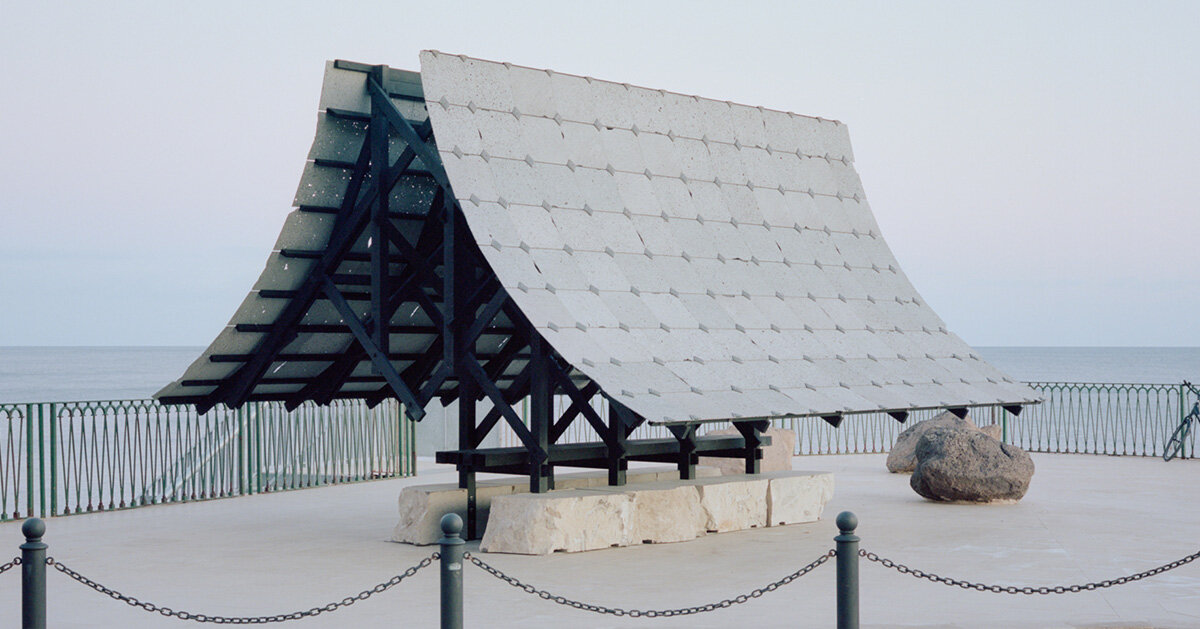
leopold banchini shifts focus from necropolis to dwelling
In the valley of Pantalica, Italy, where more than 4,000 rock-cut tombs line the cliffs above the Anapo River, architect Leopold Banchini introduces Asympta, a temporary micro-architecture that shifts attention away from the necropolis and toward the unknown architecture of the living.
Installed in Ortigia in 2025 and traveling to Pantalica in 2026 for the COSMO festival, the structure reflects on the prehistoric civilization embedded within the Syracusa–Pantalica UNESCO World Heritage landscape, proposing a speculative shelter rooted in place rather than in archaeological reconstruction.
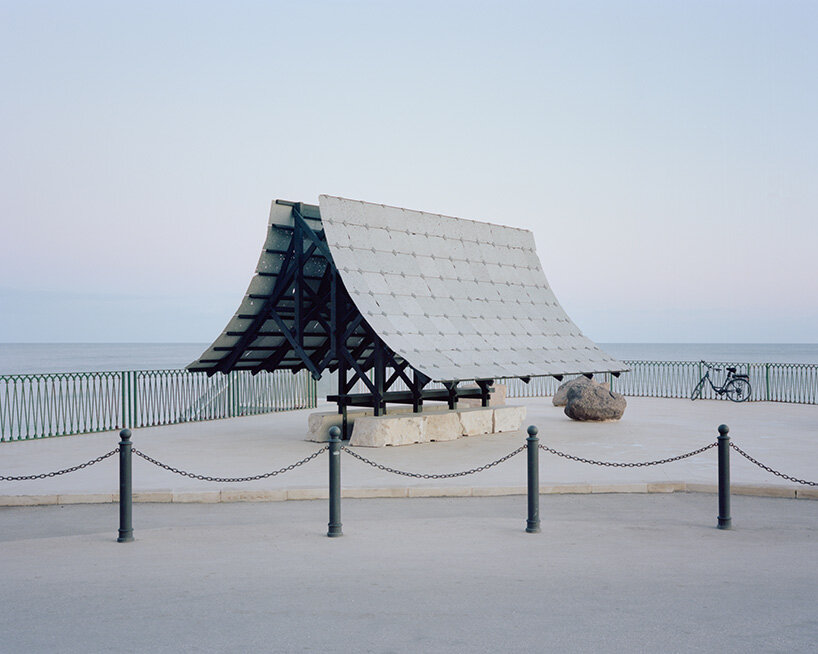
The structure is assembled from materials sourced within the region, including lava stone from Mount Etna, local wood sealed by fire, Pietra Pece limestone, bronze, and sheep wool felt. These elements are treated as tectonic components that situate the installation within eastern Sicily’s geological and craft traditions and define a shaded space intended for gathering, pause, and reflection. The choice of fire-sealed wood and volcanic stone reinforces the project’s dialogue with elemental forces, combustion, sedimentation, and extraction, processes that have shaped both the land and its cultures.
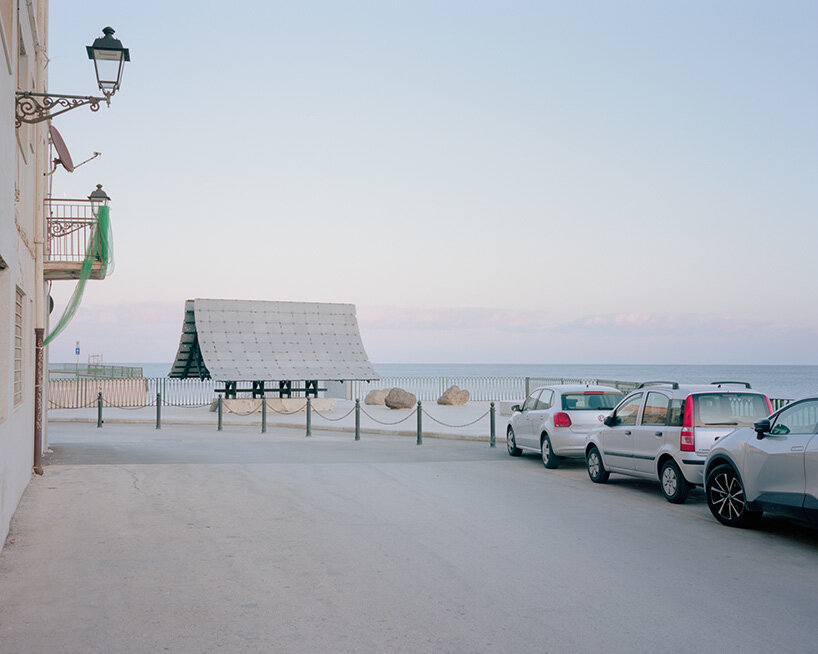
all images by Simone Bossi
Asympta: speculating beyond the necropolis in pantalica, italy
While Pantalica’s funerary landscape is monumental and extensively documented, little is known about how its inhabitants once built their homes. The scarcity of domestic remains suggests lightweight construction techniques and the use of local organic materials, long since disappeared. Geneva-based Leopold Banchini Architects approaches the site through conjecture, imagining how architectures and cosmologies might have emerged from the specific topography, climate, and material resources of the valley.
The project distances itself from archaeological authority and fixed historical timelines, and it stages a fictional yet materially grounded hypothesis. The temporary installation echoes the provisional quality of early domestic structures, positioning architecture as an adaptive framework shaped by landscape, necessity, and shared use.
the structure is assembled from materials sourced within the region
from origin myth to site-specific shelter
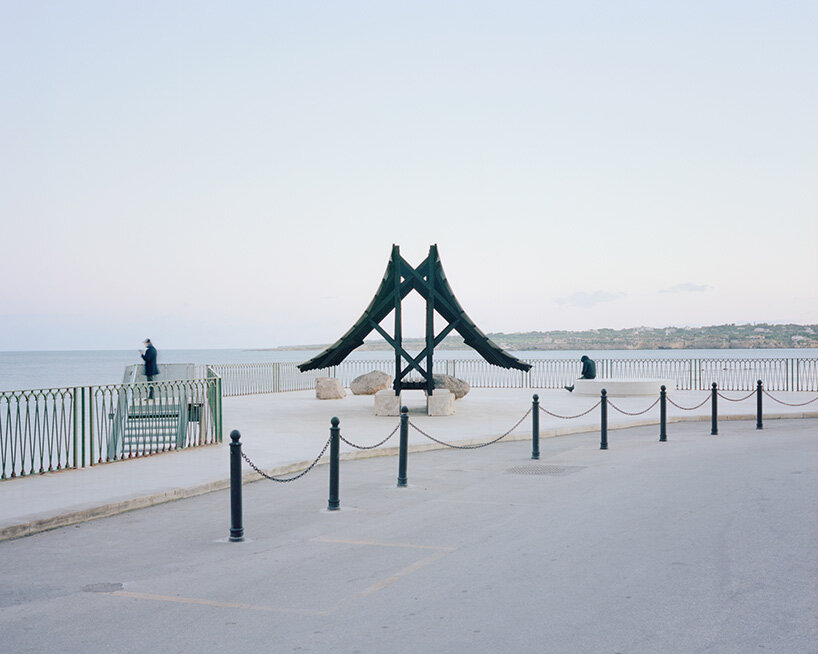
Asympta’s open structure subtly recalls the conical mass of Etna and the excavated voids of nearby latomie, ancient stone quarries carved into rock, two dominant presences in the surrounding territory. In doing so, the project reconsiders Marc-Antoine Laugier’s Primitive Hut. Instead of framing architecture as a single, universal origin, Asympta suggests that building begins with the specificities of place.
As a temporary intervention, the installation acknowledges the ephemerality that may have characterized early domestic construction. Its lightness contrasts with the enduring stone tombs across the valley, underscoring how architecture of the living often leaves fewer traces than that of the dead.
Within the context of the COSMO festival, Asympta functions as both shelter and proposition. It invites visitors to inhabit a speculative scenario, one in which architecture emerges not from stylistic lineage but from the negotiation between landscape, material, and collective imagination.
Asympta shifts attention away from the necropolis
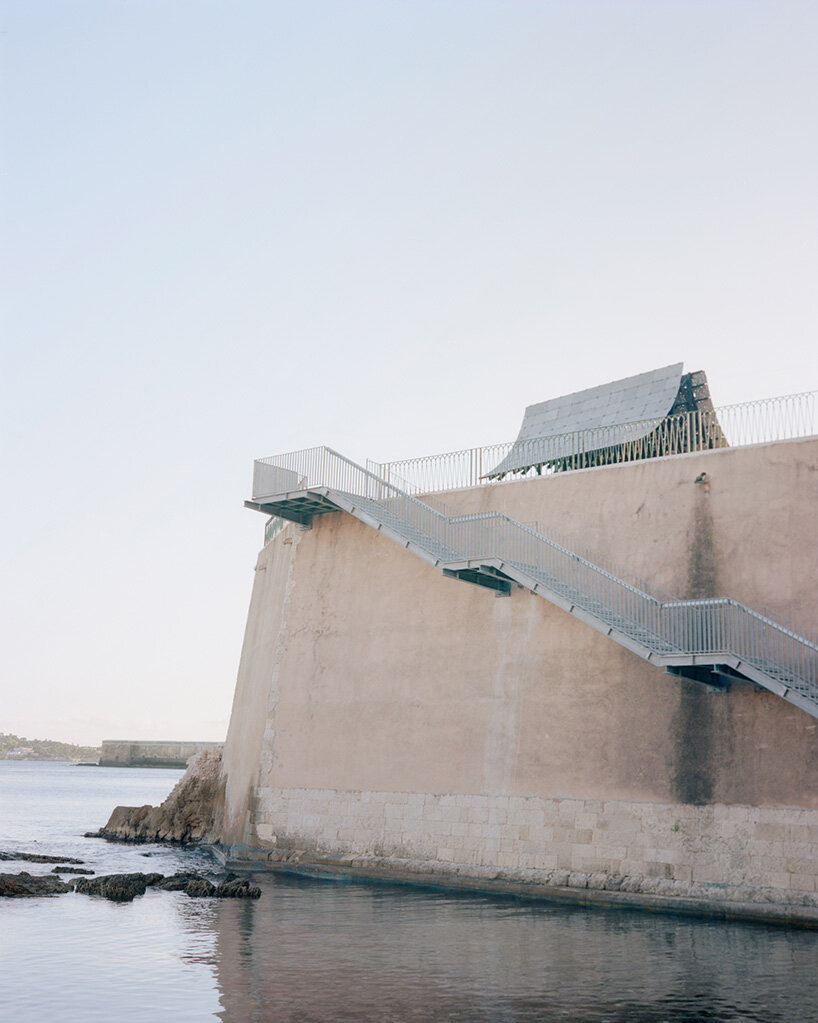
a temporary micro-architecture
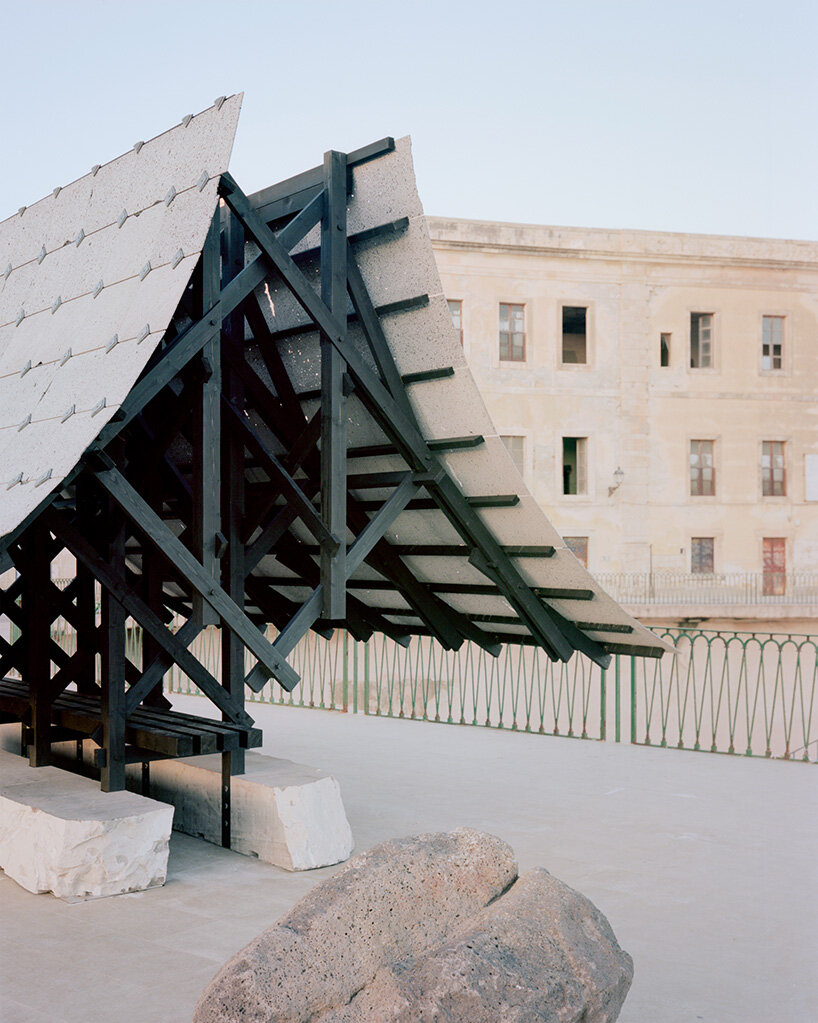
lava stone, local wood, limestone, bronze, and sheep wool felt shape the structure