
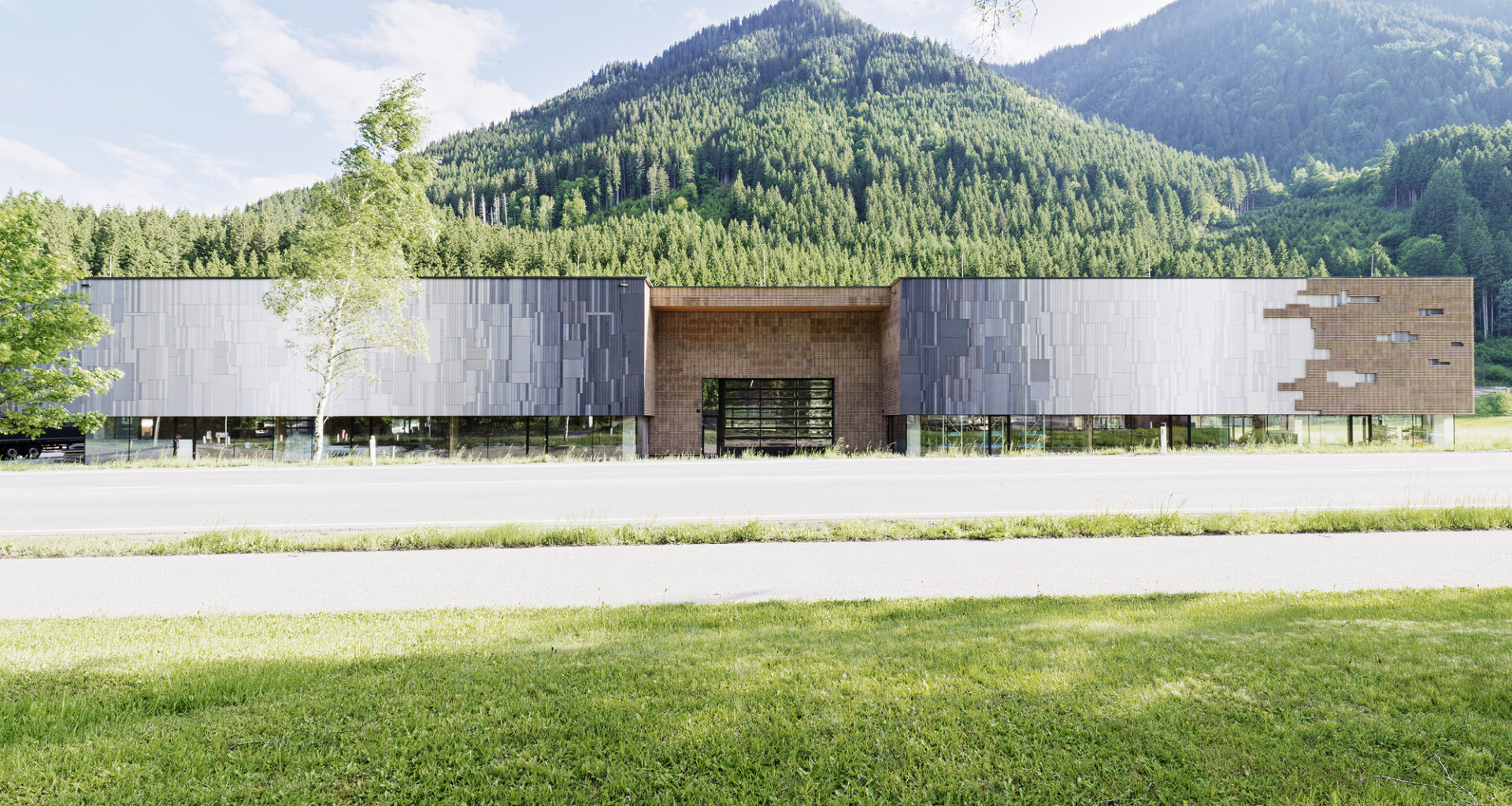
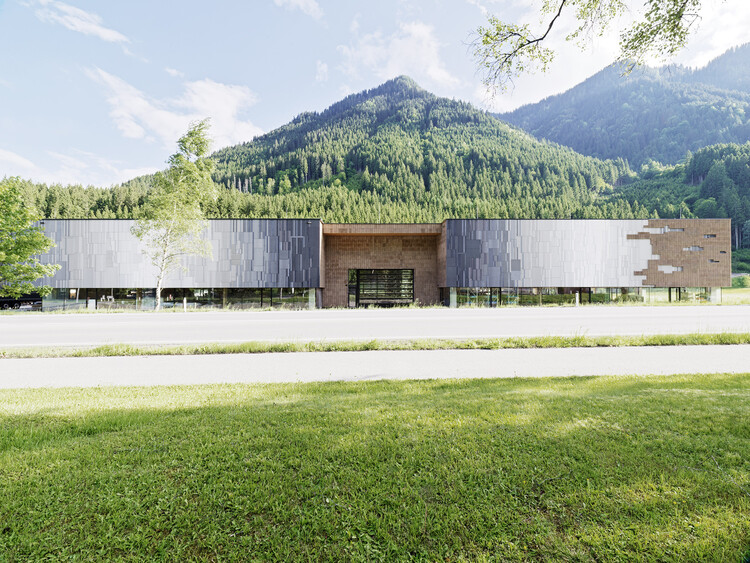
 Rieder Headquarters Expansion in Maishofen, Austria. Image © Ditz Fejer
Share
Or
https://www.archdaily.com/1038457/designing-with-what-exists-rieders-hq-expansion-turns-residual-materials-into-facade-design
What if industrial leftovers weren’t waste, but the start of architectural design? At Rieder’s headquarters in Maishofen, Austria, over 1,300 cubic meters of timber, 180 ceiling elements, and hundreds of upcycled glassfiber-reinforced concrete fragments come together in a building shaped as much by reuse as by planning. The new production hall, designed by Kessler² Architecture, treats material leftovers as a design resource. Developed as part of a long-term investment in sustainable manufacturing, the timber-concrete hybrid building introduces a facade technique that inverts conventional architectural workflows: instead of designing first and producing components afterward, the building envelope is generated from the material remnants already available on site establishing a new language for industrial architecture
The project expands Rieder’s production capacity while reinforcing its role as a testing ground for material research and construction methods. For a company that has spent nearly two decades developing glassfiber-reinforced concrete (GRC) facade systems, the new hall serves both as operational infrastructure and an example of integrating material efficiency, digital workflows, and spatial quality.
 Rieder Headquarters Expansion in Maishofen, Austria. Image © Ditz FejerA Timber-Concrete Hybrid for Industrial Production
The hall was designed with employee comfort and operational efficiency in mind. Natural light, air quality, and spatial comfort were prioritized from the outset. As CEO Wolfgang Rieder explains:
The overall architectural concept supports a modern working environment. With the completion of the second timber-hybrid hall, we were able to create numerous new jobs and strengthen the region as a business location.
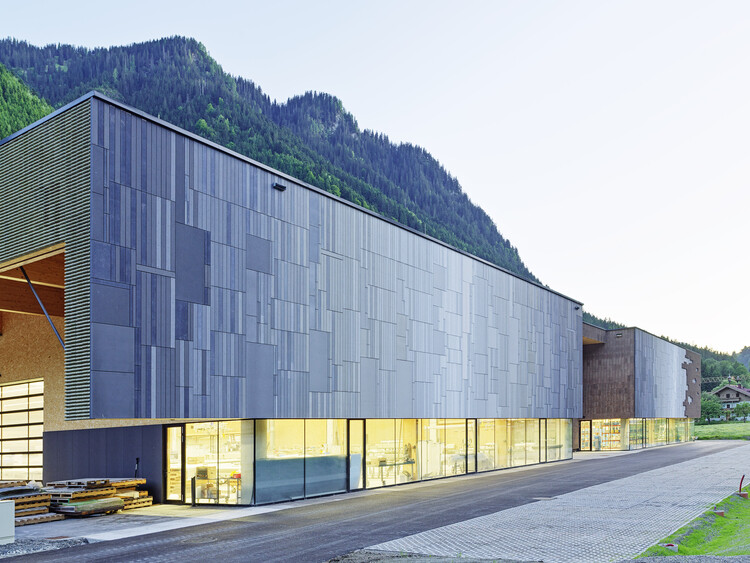
Complementing two existing production buildings, the hall is built as a timber-concrete hybrid. More than 1,300 cubic meters of wood were used alongside concrete to maximize structural robustness and fire protection, allowing each material to be deployed where it performs best. Inside, 180 geometrically shaped wooden pyramids form the ceiling, directing zenithal light deep into the production space, reducing glare, and minimizing reliance on artificial lighting. An integrated air humidification system further improves indoor air quality by regulating moisture levels and reducing dust exposure, supporting a healthier environment for employees. Even some discarded acoustic absorbers from previous production were reused as exterior cladding, reducing waste and giving materials a second life. Together, these elements create a production environment that prioritizes efficiency, sustainability, and employee well-being.
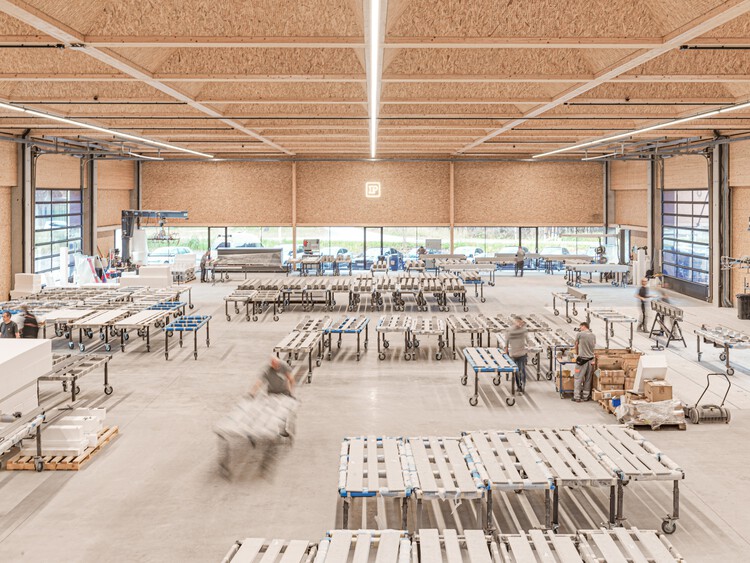 Production hall interior featuring geometrically shaped timber ceiling elements at Rieder’s headquarters. Image © Ditz FejerScrapcrete: Designing a Facade from Residual Material
The most distinctive architectural feature of the new hall lies on its exterior. Parts of the building envelope are clad in Scrapcrete, an experimental facade system developed by Rieder in collaboration with design studio Certain Measures. The system rethinks conventional workflows: production offcuts are not treated as waste, but as the primary input for the facade design.
Typically, leftover pieces are downcycled or discarded. With Scrapcrete, they become the starting point. The system uses a digital process to record, measure, and catalogue residual fragments from the production of GRC facade elements. These non-uniform pieces are stored in a digital inventory and analyzed using generative design tools. From this dataset, project-specific facade configurations are developed, allowing irregular fragments to be assembled into coherent architectural surfaces.
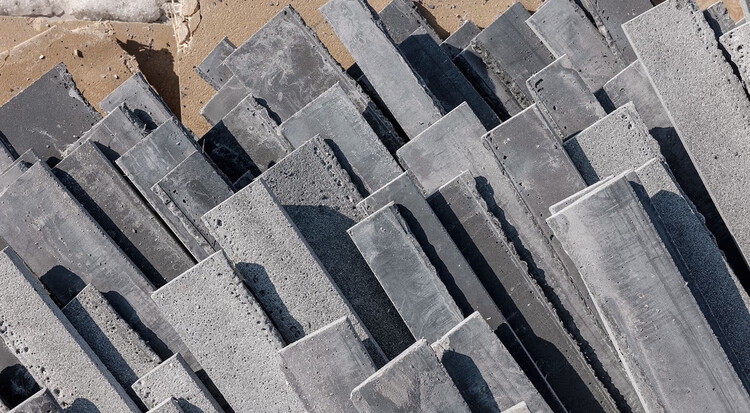 GRC production offcuts reused in the facade at Rieder’s headquarters. Image © Florian Voggeneder
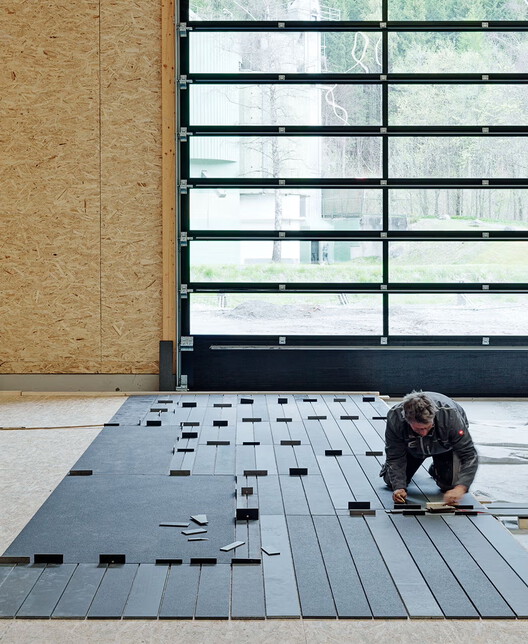 Scrapcrete facade system composed of reused GRC offcuts at Rieder’s headquarters. Image © Ditz Fejer
At the Maishofen headquarters, more than 500 m² of facade surface were realized using this method. The facade’s mosaic-like appearance highlights differences in size, proportion, and texture, emphasizing recombination as a design principle. It operates simultaneously as a functional envelope, a material archive, and a contemporary expression of reuse.
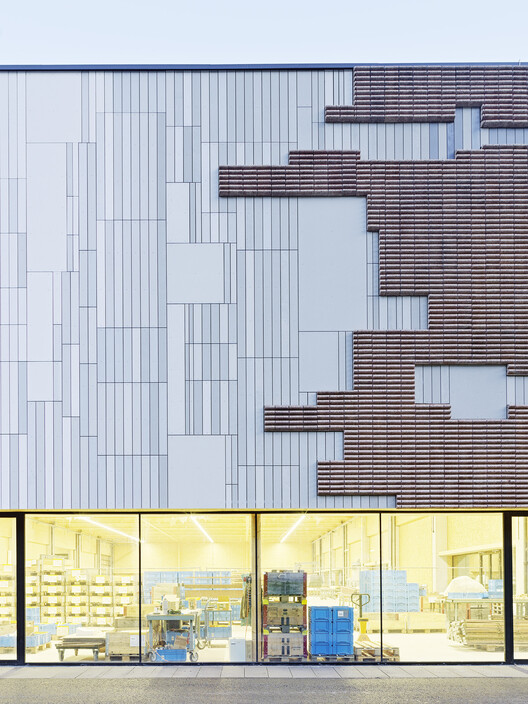 Rieder Headquarters Expansion in Maishofen, Austria. Image © Ditz Fejer
Applied at full scale for the first time at Rieder’s headquarters, Scrapcrete demonstrates how circular design principles can shape architecture from the very start of the design process. By turning residual materials into both functional and aesthetic building components, the project reduces waste, conserves resources, and creates a distinctive architectural language. Scrapcrete establishes a new model for industrial construction: one in which material efficiency, digital tools, and design innovation converge to produce buildings that are simultaneously operational, sustainable, and visually expressive. The new hall shows that production offcuts are not just leftovers; they are design material. In doing so, it points toward a future in which industrial architecture is resource-conscious, environmentally responsible, and creatively ambitious.