
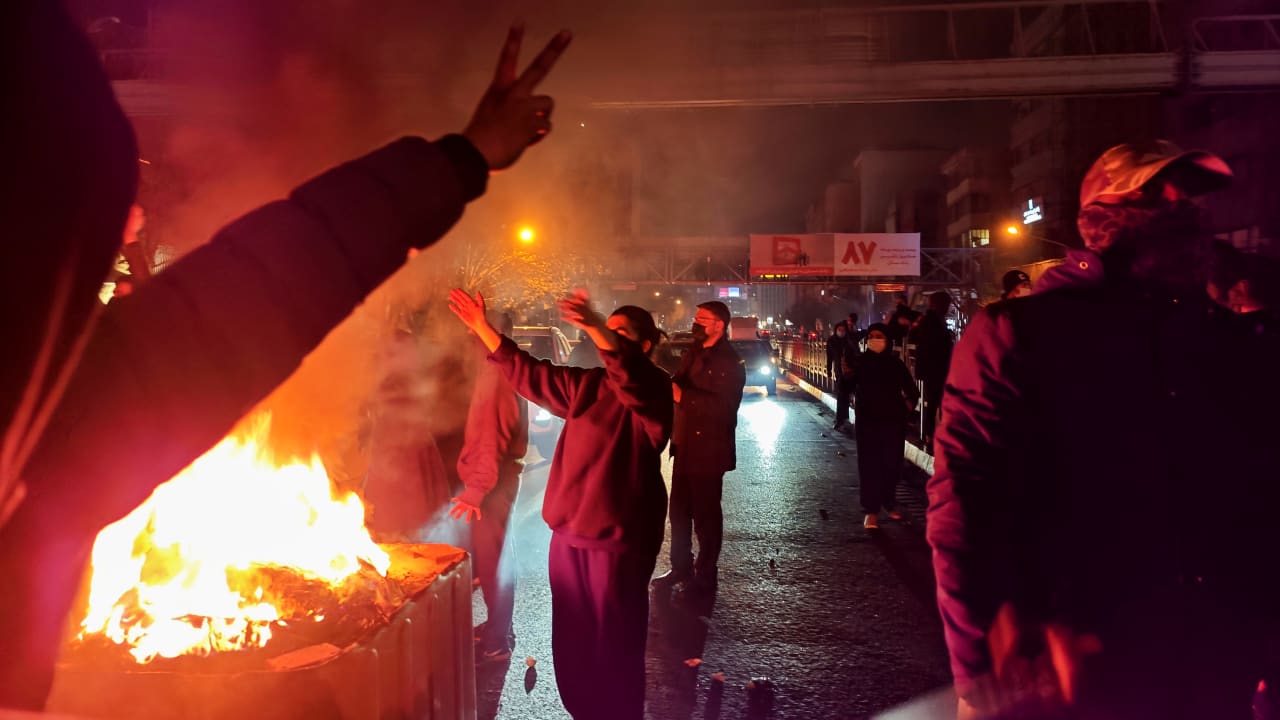
The Islamic regime has carried out extrajudicial killings of injured protesters inside hospitals and arrested countless medical personnel suspected of treating those wounded by Tehran, an Iranian doctor told The Jerusalem Post on Tuesday.
Medical facilities and schools have been used by regime forces to locate, identify, and arrest individuals who joined the protests demonstrating against the country’s worsening economic crisis, said Dr. R, a member of the Aida Health Alliance whose name is being withheld for security reasons.
In the hospitals, many of those who were being treated for injuries were found lying in their treatment beds, still attached to machines, with bullet holes in their heads, Dr. R said, accusing the regime of murdering those wounded and lying about the circumstances surrounding the casualty.
“If the patient already had the shot in the head [when they arrived at the hospital], nobody would put the tube or catheter in because they’re already dead….,” they explained. “So it means they went into the hospital and they killed them on the treatment bed.”
Dr. R shared photographs showing bodies in black bags with bullet wounds to the head, surrounded by fresh blood and still connected to medical tubes and catheters.

The Post has not been able to independently verify the authenticity of the images, though they are consistent with accounts published by multiple Iranian human rights organizations, including Iran Human Rights (IHRNGO), and dissident channels.
Hospitals used as instruments of repression, killing
Mahmood Amiry-Moghaddam, IHRNGO Director, published, “The testimonies of doctors show that the Islamic Republic has trampled even the most basic human and medical principles and has systematically used hospitals as instruments of repression and killing. The deliberate shutdown of ventilators, the prevention of treatment for the injured, and the arrest of patients from hospital beds constitute crimes against humanity and demonstrate the complete collapse of any ethical or legal standards in this government.”
He added, “When states use hospitals as tools of repression, this is not merely a human rights crisis but a global public-health crisis. We call on the World Health Organisation to examine reports concerning the conversion of hospitals into instruments of repression, the denial of medical care to patients, and the obstruction of medical staff from carrying out their professional duties. Such investigation is essential to protect lives now and to ensure accountability and justice in the future.”
The Islamic regime’s violations of medical facilities and its suppression of protesters have become so severe that uninvolved civilians have died as collateral damage, Dr. R warned. On January 8, when the regime cut off internet access and severely restricted landlines as part of a communications blackout, people facing medical emergencies were unable to call for help, Dr. R said.
“Some people, the old people having heart attacks and the women going into labor, they couldn’t call the ambulance to come and just help them,” Dr. R said. “Some people [were] dead like just that… because of not having access to call paramedics.”
The same communications shutdown that has cost an unknown number of lives has also hindered the international community from grasping the full scale of the atrocities, which the UN’s Office of the High Commissioner for Human Rights warned has been the deadliest crackdown by the regime since the 1979 Islamic revolution.
At least 24,000 people were detained as of January 24, according to the office, including children, journalists, and human rights defenders.
Beyond preventing civilians from reaching emergency services, Dr. R alleged that the regime evacuated several hospitals in the early days of the protests so that IRGC forces could receive priority treatment, putting existing patients’ health and lives at risk.
Medical professionals themselves have not been spared, Dr. R added. “Many doctors have been arrested, tortured, and some have even been sentenced to death because [they were] helping injured people,” they said, noting that physicians have a moral and professional obligation to treat all wounded individuals under the Hippocratic oath.
“They’re still tracing the doctors. They’re still trying to convict them for helping the enemy’s country, or [accusing them of] espionage,” Dr. R continued, later adding that medical students have not been spared from the brutality.
After their hospital shifts, where they are expected to report any injuries suspected of being linked to protests, medical staff are followed home by regime forces to see whether they make house calls to demonstrators, they said.
These practices have forced even those with life-threatening injuries to remain at home without medical care.
Recounting one incident, they described a teenage boy who was shot in the genitals during a protest. His father, a widowed physician who knew it was unsafe to take his son to a hospital, attempted to treat him at home, but the boy ultimately died of his wounds.
The danger faced by medical facilities and personnel in Iran led to the creation of the Aida Health Alliance. The group was formed during the 2022 “Women, Life, Freedom” protests, which erupted following the regime’s killing of Mahsa Amini. It takes its name from Aida Rostami, a physician abducted and murdered by the regime’s security forces for treating protesters during the demonstrations.
The alliance was established to advocate for, educate, and support injured and traumatized individuals. This nonpartisan organization focuses on ensuring that human rights are respected in Iran by providing education and mental health consultations during times of crisis.
While many members of the Aida Health Alliance, including Dr. R, are based in the Iranian diaspora, the group’s ability to support the injured has also been severely affected over the past month. Many of its doctors were forced to flee the country after the 2022 protests, and Dr. R said several of its physicians have been arrested in recent weeks.
“You cannot believe how many patients we receive every single day that are at home. They didn’t go to any doctors. They didn’t even have a chance to go and get the X-ray to just address those bullets… Sometimes we just see that the bullet is [still] inside, [and] is infected,” Dr. R shared.
“We cannot do anything except giving [the instruction to] go and take the antibiotics, educate them how to control the bleeding or provide them free mental health advice,” Dr. R shared, “but even for the first two weeks after that massive massacre, they (the regime) were [watching] every single pharmacy they could to see who was coming to get the tetanus shot and antibiotics…”
Citing an Iran International report, based on documentation seen by the editorial board, that 36,500 people were killed from just January 8-9, Dr. R said they imagined the figure was much higher in reality and the impact would likely be felt for years to come.
Everyone in the country is mourning at least three people they knew, Dr. R said, sharing that they were already aware that there had been cases of suicide. In one incident described by Dr. R, parents had committed suicide after learning their young children had been killed while demonstrating.
For many, Dr. R said, the trauma is worsened by not knowing the fate of their loved ones. The physician said they were shown at least one mass grave where unknown individuals were buried without identification.
The sheer number of unorganized body bags, “piled up on each other to the point that you cannot move your feet to just walk away,” makes it even harder for families to uncover the truth.