
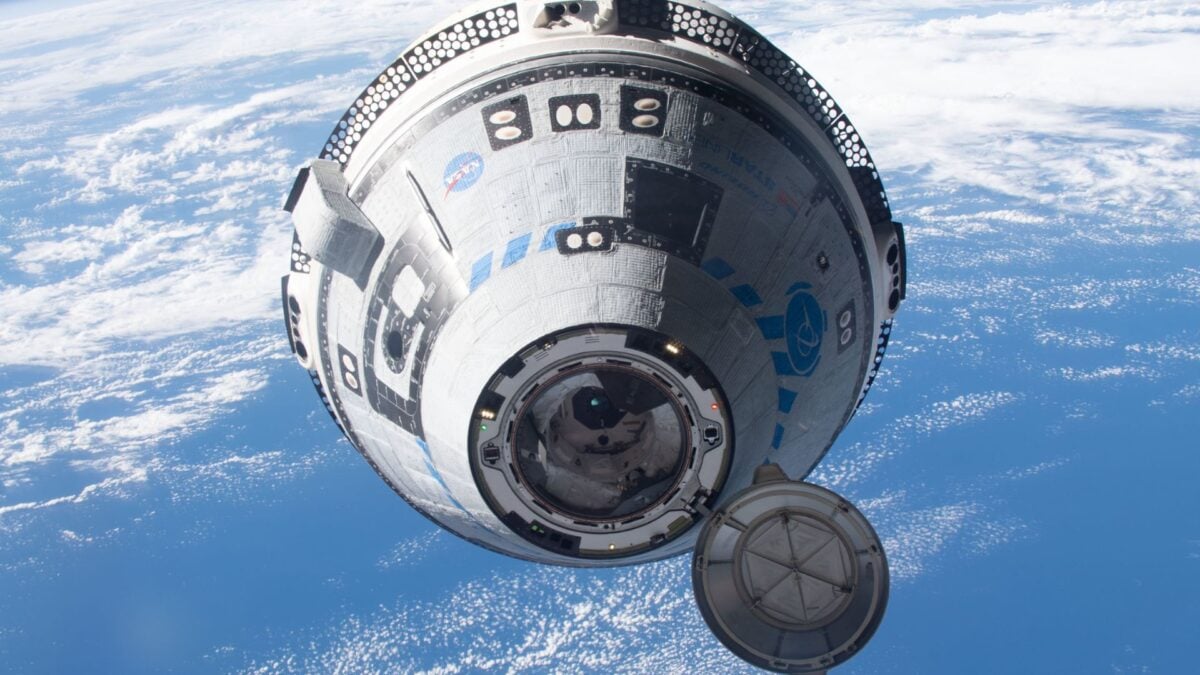
Starliner’s first crewed test flight didn’t exactly go as planned. NASA and Boeing are still troubleshooting the technical issues that left astronauts Sunita Williams and Barry Wilmore stuck on the International Space Station for nine months, and yet there’s a chance the infamous spacecraft might fly another ISS crew later this year.
Because Starliner failed to achieve full operational certification for crewed flights, NASA modified its contract with Boeing in November. The spacecraft’s next mission—Starliner-1—was originally going to be its first operational crewed flight, but now it will carry only cargo to the ISS. If Starliner passes that test, it will then fly up to three crew rotations.
Starliner-1 is currently slated to launch no earlier than April. Depending on its timing and success, the ISS crew that replaces Crew-12 may fly aboard the Starliner-2 mission, according to Steve Stich, NASA’s commercial crew manager.
“We want to work through and get through Starliner-1 into the summer timeframe and then see where we’re at,” Stich said during a Monday briefing for NASA’s Crew-12 mission. “So we have some time to decide.”
Crew-12 is scheduled to launch on Friday following multiple weather-related delays. The team of four astronauts will fly to the ISS aboard a SpaceX Crew Dragon spacecraft and spend eight months inside the orbital laboratory before the next rotation—either Crew-13 or Starliner-2—relieves them in the fall.
“We have crews in training for both missions,” Stich said.
Still working out the kinks
Starliner faced technical issues before, during, and after the June 2024 flight that carried Williams and Wilmore to the ISS. The biggest problems were helium leaks and thruster malfunctions, which engineers have been working to address since the spacecraft returned uncrewed in September 2024 (its astronauts came home months later aboard a Crew Dragon).
Stich said teams have made “great progress” toward fixing the helium leaks by replacing seals with a version that’s more resistant to nitrogen tetroxide vapor—a highly corrosive liquid oxidizer used in the spacecraft’s propellant system.
Engineers are also hot-firing thrusters on the crew module of the Starliner-1 spacecraft and analyzing data from testing the thrusters that malfunctioned during the last Starliner mission. They’re even building a model to predict thruster behavior, according to Stich.
“When we get through that and get to a point where we’re comfortable predicting thruster performance, then we’ll move forward and look toward a launch date,” he said. “But again, we have a lot of data to go work through to get ready to go fly.”
A crewed Starliner mission in 2026? Really?
While this progress is encouraging, it’s entirely likely that Starliner won’t be ready to fly by April, let alone ready to carry astronauts by the fall.
NASA engineers still have to analyze months of test data and validate fixes before committing to a Starliner-1 launch date. And even if the mission hits its April launch target, achieving crewed flight certification is a whole other issue. Starliner-1 will have to meet rigorous safety and performance standards if the next ISS crew is going to fly aboard Starliner-2.
Given the spacecraft’s complex systems, its troubled history, and that Starliner‑1 will be the first test of recent repairs, it’s hard to imagine the mission will go perfectly. All eyes will be on this flight to see if Boeing can finally deliver.