
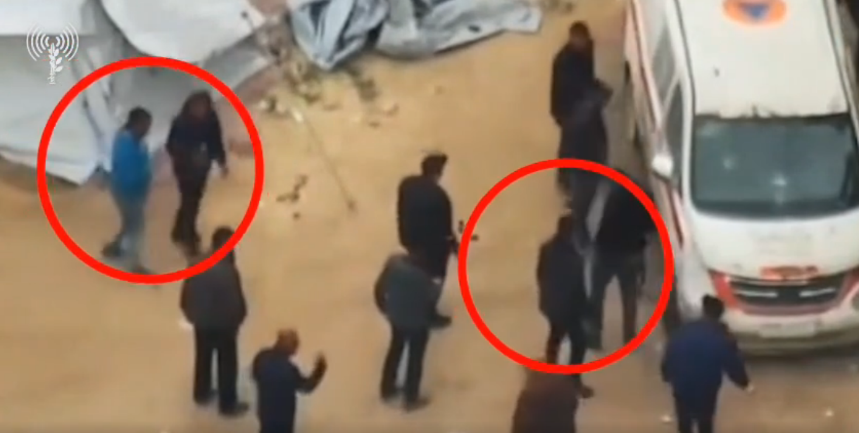
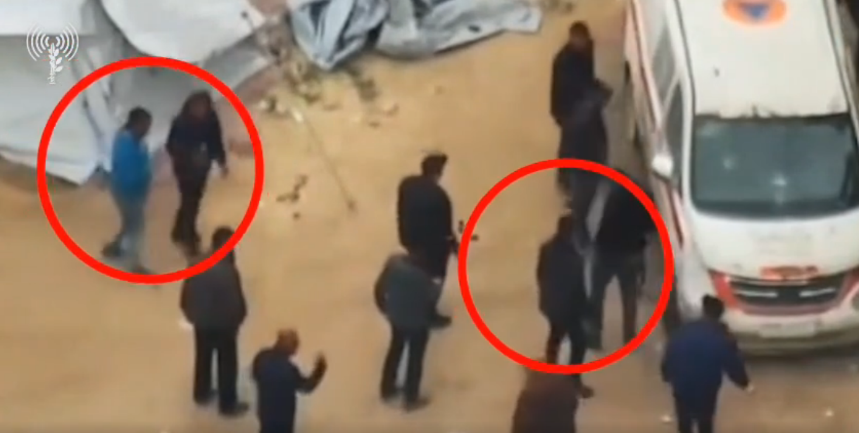
 Hamas terrorist operatives using an ambulance (COGAT Facebook page, February 6, 2026)
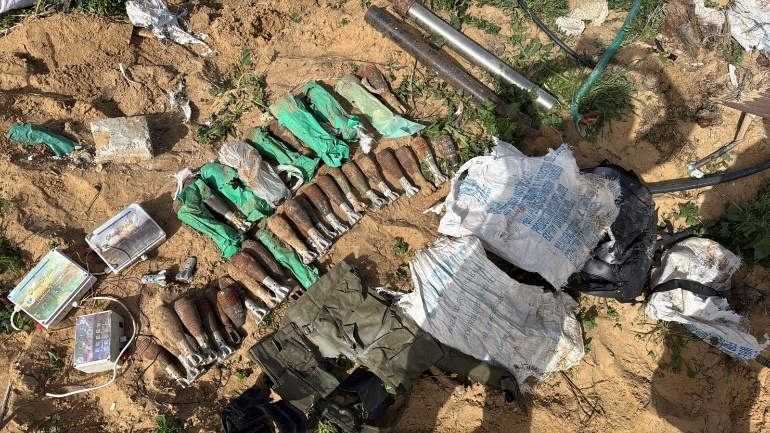 Mortar shells and rockets found in UNRWA sacks (IDF spokesperson, February 3, 2026)
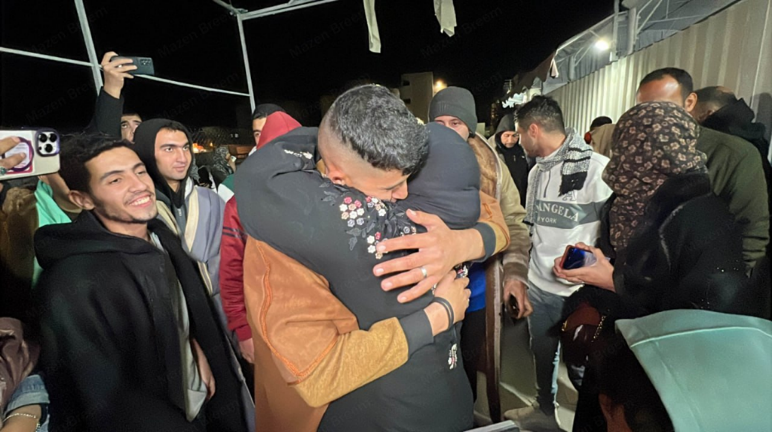 Gazans returning to the Strip through the Rafah Crossing (al-Risalah, February 6, 2026).
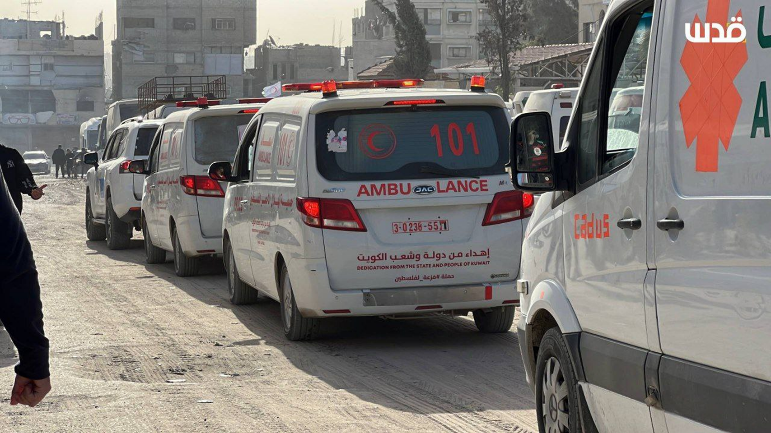 Ambulances transporting patients to the Rafah Crossing ahead of departure for treatment in Egypt (Quds Agency, February 8, 2026)
The IDF continued its activity within the Yellow Line in the Gaza Strip, locating and destroying terrorist facilities and weapons, some of which were concealed in UNRWA sacks, and eliminating terrorists who attempted to attack the forces. In response to ceasefire violations, during which an IDF officer was seriously wounded, terrorist targets in the Strip were attacked and terrorist commanders and operatives were eliminated, including the commander of the North Gaza Brigade of the Palestinian Islamic Jihad (PIJ) and terrorists who participated in the October 7, 2023 attack and massacre.
The Rafah Crossing was reopened in both directions for civilians and patients.
The spokesperson for the Hamas military wing threatened Gazans collaborating with Israel, while Hamas continued to exercise civilian and security governance in areas under its control, as the entry of members of the Palestinian technocratic committee into the Strip has been delayed.
Hamas leader “abroad” Khaled Mashal rejected the demand to disarm the “resistance” and reiterated the proposal for a hudna (extended ceasefire) of five to ten years. A PIJ spokesman also opposed disarming the organization and accused the United States of enabling Israel to continue “violating” the ceasefire agreement.
Pro-Palestinian activists announced their intention to launch a flotilla of 100 vessels at the end of March 2026 to “break the siege” of the Gaza Strip.
The Palestinian Authority ministry of education denied claims it had made substantial changes to the curriculum dealing with the core of the Palestinian narrative, rather claiming was adapting the education system to UNESCO standards as part of reforms.
The IDF
IDF forces continued activity within the Yellow Line (the area under IDF control) in the Gaza Strip, located weapons, some of which were concealed in UNRWA humanitarian aid sacks, destroyed terrorist facilities above and below ground and eliminated terrorists who approached the line or attempted to cross it to attack the forces. In the northern Gaza Strip, terrorist operatives shot at IDF forces in two separate incidents, and in one a reserve officer was seriously wounded. In Rafah, four terrorists who emerged from a tunnel and shot at IDF soldiers were eliminated. In response to violations of the ceasefire agreement, the IDF attacked Hamas terrorist facilities and eliminated senior operatives of Hamas and the Palestinian Islamic Jihad (PIJ), including the commander of the PIJ’s North Gaza Brigade and terrorists who participated in the October 7, 2023 attack and massacre (IDF spokesperson, February 10, 2026).
Mortar shells and rockets found in UNRWA sacks (IDF spokesperson, February 3, 2026)
Reportedly, satellite images showed that the IDF had established a new base with military vehicles and field facilities for soldiers in open areas in Khan Yunis, near the Yellow Line (aljazeera.net, February 6, 2026). It was also claimed that Israel had begun extensive engineering works south of the city of Deir al-Balah in the central Gaza Strip. The army informed commercial transport companies to close the Kissufim Crossing, which was reopened last year, and to divert traffic to the Kerem Shalom Crossing in the southern Gaza Strip until completion of the engineering works (Quds Press, February 6, 2026).
Hamas’ Exploitation of Humanitarian Facilities for Terrorist Purposes[2]
The Israeli Coordinator of Government Activities in the Territories (COGAT) exposed UAV footage of area within the Yellow Line which showed Hamas terrorist operatives using ambulances to transfer operatives and weapons from a hospital building to a school (COGAT Arabic Facebook page, February 6, 2026).
Hamas terrorist operatives using an ambulance (COGAT Facebook page, February 6, 2026)
Opening the Rafah Crossing
On February 2, 2026, the Rafah Crossing was reopened in both directions after a long period during which it had been closed. Gazans who crossed through the terminal reported that the inspection process on the Egyptian side lasted for several hours and included stringent checks, and that after exiting the Crossing entry was permitted only subject to strict restrictions, including a ban on bringing in food, cleaning materials and perfumes. According to reports, the passage to the Israeli barrier was unaccompanied by international organizations, and some passengers were detained, interrogated and [allegedly] threatened (Facebook page of journalist Mazen al-Barim, February 5, 2026).
One returning Gazan claimed that she and three other women had been beaten, humiliated and required to undergo searches by members of the “Abu Shabab gang” (the Popular Forces militia) at the checkpoint in the Morag region (Telegram channel of Nuseirat News, February 3, 2026). However, the militia leader, Ghassan al-Dahini, published videos in which his militia members could be seen caring for the transport and security of returning Gazans and giving them food, and passengers said they had received excellent treatment from militia members (Ghassan al-Dahini’s Facebook page, February 4-5, 2026).
The transfer of patients to Egyptian territory through the Rafah Crossing also began. The Palestinian Red Crescent Society reported that on February 4, 2026, it had evacuated 15 patients and 31 travelling companions to Egypt in coordination with the World Health Organization and other international agencies. The organization’s spokesman, Raed al-Nams, said the patients had been evacuated for urgent medical treatment outside the Strip (Anadolu Agency, February 5, 2026). The director of the Medical Relief Society in the Gaza Strip, Bassam Zaqout, said so far activity at the Rafah Crossing had indicated that the number of those leaving was far smaller than agreed. He claimed passengers were forced to wait until the evening hours to know whether Israel would allow them to leave, and the daily number currently stood at about 15 to 25 patients and wounded. He added that all patients and wounded first arrived at hospitals in El Arish, and from there were transferred to hospitals in Egypt (Shehab Agency, February 5, 2026).
Right: Gazans returning to the Strip through the Rafah Crossing (al-Risalah, February 6, 2026). Left: Ambulances transporting patients to the Rafah Crossing ahead of departure for treatment in Egypt (Quds Agency, February 8, 2026)
The chairman of the Gaza Strip Administration Committee, Ali Shaath, toured the Egyptian side of the Rafah Crossing and examined the logistical preparations carried out by Egypt to facilitate the passage of Palestinians and allow the entry of humanitarian aid into the Strip. He said there was a significant improvement in logistical activity at the Crossing, adding that the Palestinian people were grateful to the Egyptian president and government (al-Qahira al-Ekhbariya, February 9, 2026).
The Situation in the Gaza Strip
The director of the Shifa Medical Center in Gaza, Muhammad Abu Salmiya, said thousands of Palestinians were still defined as missing. He claimed about 10,000 missing persons were under the rubble, and another 5,000 were missing and their fate was unknown (Quds Press, February 6, 2026). Zaher al-Wahidi, head of the health information unit of the Hamas ministry of health in Gaza, said the ministry had launched an online portal for reports of missing persons from families, and so far more than 3,000 reports had been received. Al-Wahidi said the ministry of health estimated about 9,500 bodies were under the rubble, and since the start of the ceasefire on October 10, 2025, only about 700 had been recovered. He said the ministry was working with the Red Cross, the ministries of social development and religious endowments, the National Committee for Missing Persons and the Palestinian Center for Human Rights to ensure documentation of every case and to inform Gazans as soon as information became available regarding the fate of their missing family members (al-Ayyam, February 8, 2026).
According to Gazans, the black market is fully operative even after most products and goods have become available in the markets. According to a report, the black market has recently focused on fuels and cooking gas, despite its price dropping from 600 shekels per kilogram (about $195) to about 50 shekels (about $16). A Gazan selling cooking gas on the black market said there was an enormous demand for his product since the quantities residents received were meager and stood at about eight kilograms every three months (al-Ayyam, February 7, 2026).
Security Governance
Abu Obeida, spokesman for the Hamas military wing, condemned residents who he claimed collaborated with the “occupation.” He said such “elements” operated only in areas under IDF control and under the protection of its tanks, and that “their treachery” was not courage but “a desperate attempt to prove themselves.” He warned that their punishment would be death and that even “the enemy” would not be able to protect them (Telegram channel of Abu Obeida, February 9, 2026).
Websites and social media channels affiliated with Hamas reported “successes” in the “struggle” against militias supported by Israel. Hamas security forces reportedly arrested an operative in the militia of Shuki Abu Nasira during a raid in the al-Nasr neighborhood in western Gaza City. Reportedly, cooperation with a “respected” Fatah activist was the key to capturing the operative (Palestinian Press Network, February 4, 2026; Amsak Amil Telegram channel, February 4, 2026). It was also reported that Riyad al-Shaqra, a prominent operative in the militia of Hussam al-Astal, was killed when “resistance operatives” ambushed militia members in the Khan Yunis district (Amsak Amil Telegram channel, February 7-8, 2026).
The Popular Forces militia in eastern Rafah under the command of Ghassan al-Dahini published names of Hamas operatives wanted by it for various crimes, including theft of funds from citizens, affiliation with Hamas, fundraising on its behalf and incitement (Ghassan al-Dahini’s Facebook page, February 2, 2026; Facebook page of the Mechanism to Combat Terrorism, February 5, 2026).
According to reports, operating under heavy fire, a force from Hamas’ Sahm Unit raided the homes of the al-Assar family in Khan Yunis, near a UNRWA clinic. Local residents were angered and in despair over what they described as violence by the Sahm Unit and called Hamas operatives “criminals,” “a gang,” “a mafia” and “spies.” They were also critical of the silence of the technocratic committee which is supposed to manage the Strip, complaining about its silence, and the sense that Hamas was returning and becoming stronger, and there was no effective factor restraining its conduct (Amin Abd’s Facebook page, February 4, 2026).
Al Jazeera aired a program prepared by investigative journalist Tamer al-Masahal, which dealt with the assassination of an officer in the Hamas internal security forces, Ahmed Zamzam, who was shot dead in December 2025 in the al-Maghazi refugee camp by “collaborators with Israel.” The investigation was based on interrogations and the confession of one of those involved in the assassination, Mahmoud al-Zein Abu Jaba (Hassanin), who was later executed. The program shows the alleged collaborator who killed Zamzam moving with a silenced pistol and filming equipment, backed by Israeli drones while speaking in real time with his Israeli “handler.” The Zamzam’s killing is also shown, followed by the arrest of the perpetrator (Al Jazeera, February 7, 2026; Telegram channel of Sahm Unit 103, February 6, 2026).
The Fatah movement in the northern Gaza Strip strongly condemned Hamas-issued summonses for interrogations of Fatah activists, after Hamas security forces summoned two activists to a “meeting” at internal security forces in Qasr al-Hakem (the Governor’s Palace) (Facebook page of Ouda Channel, February 8, 2026).
Civilian Governance
The Hamas ministry of social development announced the distribution of a cash grant of 500 shekels (about $160), part of the second phase of the We Are Your Support operation. Reportedly, the money is for families of Gazans who were detained during the war in the Gaza Strip and registered with international organizations. The money will be given to the prisoner’s wife or to each of his wives, if they are alive and in the Gaza Strip, or to his parents if they are alive and in the Gaza Strip. If the prisoner is unmarried, the money will be given to his parents, if they are alive and in the Gaza Strip. The ministry reported it had distributed more than 9.6 million shekels (about $3.1 million) to 19,306 widows of “shaheeds.” Funding for the payment came from money the committee to combat economic crimes confiscated since the ceasefire agreement went into effect, from merchants who had exploited Gazans’ needs during the war (Facebook page of the Hamas ministry of social development, February 8, 2026).
The Hamas ministry of the interior announced it had resumed issuing identity cards in all districts of the Strip (Telegram channel of the Hamas ministry of the interior and national security in the Strip, February 6, 2026).
The Hamas ministry of national economy announced that its consumer protection teams, in cooperation with the supply control investigation department, had closed nine currency exchange businesses in the Gaza City, Central Gaza Strip and Khan Yunis districts after they refused to accept banknotes. Reportedly, dozens of shop owners signed a commitment to comply with the demand and continue trading in banknotes (Facebook page of the ministry of national economy, February 4, 2026).
International Activity to Break the “Siege”
The organizers of the Global Sumud Flotilla[3] said they planned to gather a large flotilla which would attempt to breach the “siege” of the Gaza Strip and include about 100 vessels and 1,000 medical personnel from various countries. They held a press conference at the Nelson Mandela Foundation in Johannesburg, where they said that the first vessel was scheduled to depart on March 29, 2026, the day before Land Day, from several countries in the Mediterranean Sea, including Spain, Italy and Tunisia. They also plan to launch two land convoys, the Perseverance Convoy 2 from Algeria via Tunisia, Libya and Egypt to Rafah, and another which will depart from the Far East and pass through Russia, Iran, Pakistan and other countries. Mandela’s grandson called at the event to mobilize broad international support for the initiative, representing it as an action for “justice and human dignity” (Facebook page of the Global Sumud Flotilla and Shehab Agency, February 5, 2026).
At the 17th Al Jazeera Forum in Doha, chairman of Hamas “abroad,” Khaled Mashal, claimed that talk of disarming the “resistance”[4] was an attempt to turn the Palestinians into “easy prey” for Israel, which he said had all types of international weapons, adding that Israel wanted to take Palestinian weapons and give them to militias in the Gaza Strip. He said Hamas had proposed a hudna (ceasefire) of five to ten years, during which weapons would not be used or displayed. He also said that the “resistance” would continue as long as the “occupation” continued, claimed there was a “Zionist threat” to the existence of an Arab Islamic nation and Arabs and Muslims had to act together to persistently pursue and hound Israel to “establish its status as a pariah entity and a burden on security, stability and international interests” (Telegram channel of Hamas in Judea and Samaria, February 8, 2026).
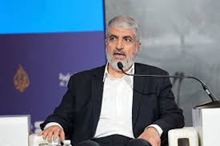
Mashal at the Al Jazeera Forum (Al Jazeera, February 8, 2026)
PIJ spokesman Muhammad al-Hajj Musa claimed that the Israeli government was using escalation against the Palestinians and force for political survival in preparation for the Knesset elections. He claimed Israel kept the fronts in a state of turmoil because its only vision was “occupation and expansion,” it was aware of its failure to achieve its objectives in the Gaza Strip and south Lebanon, and was using “killing as deterrence.” He said mediation contacts were continuing, especially with Egypt, which he said was aware of what was happening, but stated that the main problem was the American position, which backed Israel and allowed it to continue its actions. Al-Hajj Musa added that Israel’s refusal to allow the entry of members of the technocratic committee for managing Gaza into the Strip, as well as the [alleged] difficulties it caused at the Rafah Crossing and its demand to dismantle the “resistance” forces,[5] were part of obstacles whose objective was to shape the second stage. Referring to the issue of disarmament, he claimed that “the weapons of the resistance guarantee the protection of the Palestinians,” and the PIJ refused to hand over its weapons or accept dictates, as any discussion on the issue was an internal Palestinian matter (al-Araby al-Jadeed, February 7, 2026). On another occasion, he accused Israel of failing to implement the agreement, and said the PIJ provided the mediators with periodic reports of the ongoing “violations.” He said the options before the “resistance” would remain “open” as long as the “occupation” did not cease its “violations,” and the PIJ would not stand idly by (Filastin al-Yawm channel, February 7, 2026).
The Technocratic Committee for Managing the Gaza Strip
A “Palestinian source” said that weeks ago, the Hamas leadership, together with other “factions,”[6] had told the Egyptian and American mediators of their objection to the appointment of Sami Nasman, who had been appointed security chief of the committee for managing the Gaza Strip. According to the “source,” the mediators said they would replace him as soon as possible (Quds Press, February 3, 2026).
“Knowledgeable sources” denied reports that the chairman of the Palestinian National Committee for managing the Gaza Strip and committee members would return to the Gaza Strip within a few days. According to the “sources,” the general situation in the Strip did not encourage the committee’s return and did not allow it to do it job, which focuses on easing civilian suffering and providing tangible aid services, at least in the initial stage. They noted that the committee’s current presence in Egypt was vital to facilitate communication and activity, and to conduct additional discussions and steps with various groups and individuals to ensure the committee’s success once it returned to the Strip. They said they were concerned that the committee would not be able to operate optimally due to the enormous restrictions and difficulties it faced as a result of the security situation, continued Israeli control over most of the Gaza Strip and the non-opening of the various crossings to allow the entry of aid. The “sources” also noted internal committee dissatisfaction because a circular issued by Hamas to employees currently working in government offices and departments in the Strip did not mention mechanisms compatible with the committee’s work in the next stage (al-Ayyam, February 6, 2026).
Political analyst Wissam Afifa[7] wrote an op-ed piece in which he said that the technocratic committee had not yet begun its work not only due to obstacles imposed by Israel, but also because of internal behind-the-scenes tensions related to the source of its political authority within the so-called American “Peace Council.” Instead of handling government portfolios as a single package, an approach of “selective management” was being considered, under which some portfolios would be transferred and dealt with while others would be neglected, the most important of which were sensitive issues such as the public sector employees’ file and economic rights. According to Afifa, such an approach was incompatible with the idea of a technocratic committee which was supposed to operate according to an overall institutional concept and through clear channels of communication with the existing official bodies in the Strip, rather than through a partial or selective approach. It was further claimed that Egypt had prepared for a comprehensive, simultaneous transfer of portfolios to prevent chaos, and therefore tension with Cairo was increasing, as it viewed fragmentation and selectivity as threats to the stability of the next stage. Thus, basic ambiguity remains regarding the committee’s authorities, who makes decisions in practice and where the fund for its operating budget is located (alresala.net, February 5, 2026).
Palestinian Authority (PA) Involvement in the Gaza Strip
Reportedly, 25 officers and soldiers from the “presidential guard” and the Palestinian police, headed by Brigadier General Ali Abu Ali, arrived in the city of El Arish in Egypt in preparation for operating the Rafah Crossing under PA supervision (Rafah.crossing Facebook page, February 5, 2026). It was further reported that the number of PA personnel present at the Rafah Crossing exceeded 70, including operatives from the “presidential” guard, general intelligence, the preventive security forces, the police and the national security forces (X account of journalist Abdelhamid Abdelatty, February 5, 2026).
Counterterrorism Activities
IDF forces continued counterterrorism activities throughout Judea and Samaria, detaining dozens of wanted individuals and suspects in terrorist activity, including Hamas and PIJ operatives involved in manufacturing explosive devices and trafficking in weapons. A Palestinian who threw rocks in Jericho was eliminated and various weapons were seized. The forces also demolished the home of the terrorist who killed an Israeli civilian at the Gush Etzion Junction. Along the Jordanian border, the forces prevented a UAV from smuggling in 12 pistols (IDF spokesperson, February 10-3, 2026).
The chairman of the PA, Mahmoud Abbas, met with King Abdullah II of Jordan to discuss developments in the Palestinian territories, regional and international issues and strengthening bilateral cooperation. They condemned Israeli measures which, they claimed, were intended to enlarge “annexation” in Judea and Samaria, expand Israeli settlements and “damage” Hebron and the Cave of the Patriarchs, and warned of their implications for regional stability, especially ahead of the month of Ramadan and in light of the sensitivity of the holy sites. Abbas urged the United States to renew affirmation of its commitment to halting “displacement and annexation,” and called to convene the Arab League, the Organization of Islamic Cooperation and the UN Security Council to mobilize international pressure and advance the principle of “one state, one law and one legitimate weapon,” while demanding that Hamas hand over its weapons (Wafa, February 9, 2026).
As part of a reform dictated to the PA under international pressure to stop payments to prisoners held in Israel, the PA reportedly began implementing a secret decision made several months ago, according to which there would be dismissals and salary cuts for released prisoners employed in the security forces, public institutions and PA ministries (Telegram channel of Nablus Jabal al-Nar, February 4, 2026).
“Sources in educational and national circles” in Judea and Samaria claimed that far-reaching changes were being made to the PA school curriculum following economic and political pressures from the European Union and other international groups. According to the claims, the updates relate to the core of the Palestinian narrative, including the removal of references to events and concepts such as Deir Yassin, the nakba, the refugees and the “resistance,” alongside new subjects in history, religion and politics which are perceived as aligned with an Israeli-Western conception of the conflict. Critics further claimed that the new content emphasized the role of Jews in regional history while significantly reducing discussion of “Palestine” prior to 1948, and that key figures were also removed (Facebook page of the Palestinian Press Network, February 5, 2026). In response, the PA ministry of education and higher education said that what was being circulated on social media regarding the Palestinian curriculum mainly concerned examples and evidence of changes that the “occupation” had carried out in the curriculum of schools in Jerusalem, as part of a policy to Judaize the city. It was further alleged that “media actors funded from abroad” deliberately attempted to conflate Palestine’s commitments to adapt the education system to UNESCO standards with the fabrication of examples which did not exist in the Palestinian curriculum (Facebook page of the PA ministry of education and higher education, February 7, 2026).
The Palestinian Security Forces
The commander of the Palestinian police, Major General Alam al-Saqqa, met with the senior leadership of the police liaison administration, and told them that monitoring attacks by Israeli settlers on Palestinian civilians and their property was a top priority. He said cases had to be handled seriously and responsibly, and legal files had be prepared to ensure the protection of the rights of those harmed and enable them to submit complaints to the relevant authorities in accordance with legal procedures (Facebook page of the Palestinian police, February 3, 2026).
Reportedly, the PA security forces detonated an explosive device in the town of Tammun in Tubas (Telegram channel of QudsN, February 3, 2026).
The mother of two PIJ terrorist operatives from the Jenin refugee camp who were eliminated by Israel in 2021 and 2024 claimed that the PA security forces had detained her remaining son while he was on his way to work. She added that during the incident, the son and his father had been violently assaulted (Telegram channel Filastin al-Aqsa, February 4, 2026).
Reportedly, a special force of the PA security forces “abducted” the released prisoner Muhammad Hassan from his home in the Nur Shams camp in Tulkarm, a day after he was released from prison in Israel (al-Shahed website, February 6, 2026).
[1] Click https://www.terrorism-info.org.il/en to subscribe and receive the ITIC’s daily updates as well as its other publications.
[2] sing civilian facilities, such as schools and hospitals, for military purposes is characteristic of the terrorist organizations operating in the Gaza Strip, especially Hamas. See the August 2024 ITIC report, The terrorist organizations in the Gaza Strip exploit the civilian infrastructure for terrorist activities
[3] See the September 2025 ITIC report, The Global Sumud (“Perseverance”) Flotilla in the Service of Hamas
[4] Hamas and the other Palestinian terrorist organizations operating in the Gaza Strip.
[5] Terrorist organizations.
[6] Terrorist organizations.
[7] Hamas media individual, formerly director of the al-Aqsa communications network and before that the editor-in-chief of the Hamas magazine, al-Risalah.
Related Articles