
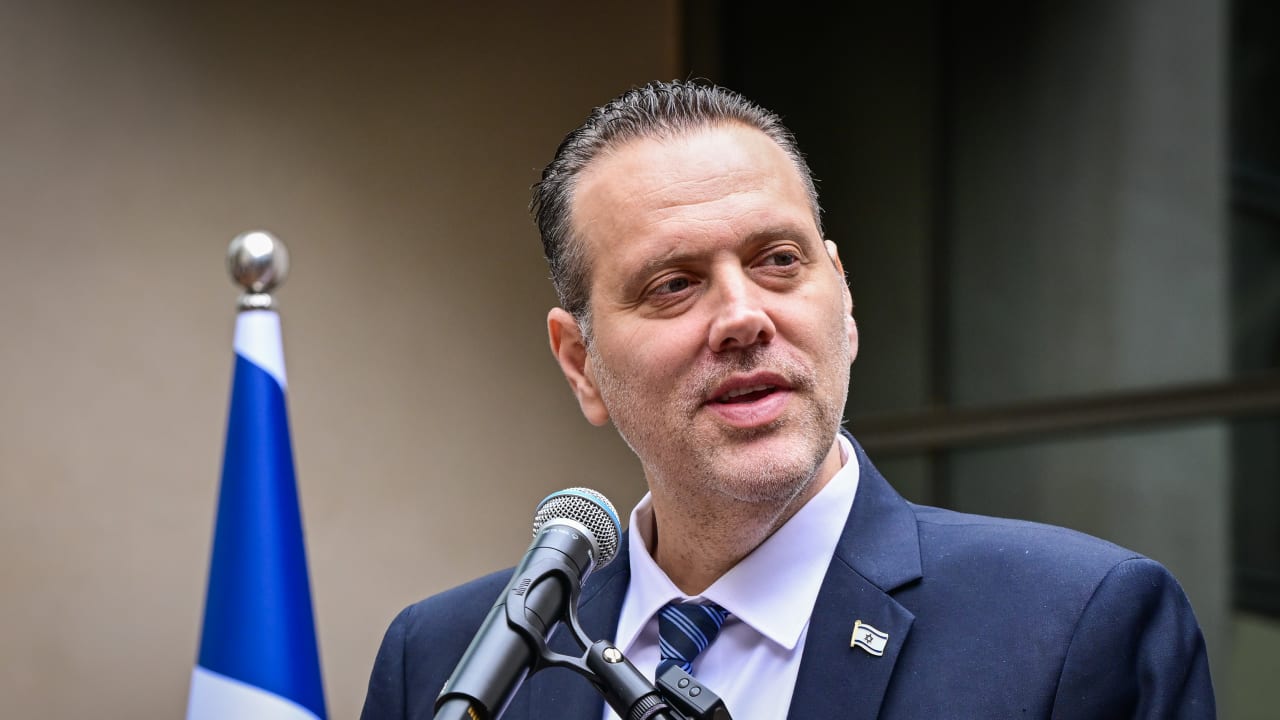
Culture and Sports Minister Miki Zohar (Likud) on Thursday supported the government’s push to remove the word “massacre” from the title of a bill establishing a national day of commemoration for the October 7 Hamas attacks, claiming that the term reflects “victimhood.”
The Prime Minister’s Office (PMO) presented its position to remove the word “massacre” from the title of the bill on Wednesday, sparking outrage from bereaved family members in the Knesset committee advancing the legislation. The word has currently been removed from the bill’s title, though the matter is expected to be reexamined.
“The State of Israel is a strong country. The days when it was possible to massacre the State of Israel no longer exist,” Zohar said in a Thursday KAN Reshet Bet interview.
“It is possible to kill in the State of Israel, unfortunately; it is possible to harm Israeli citizens; it is possible to murder Israeli citizens, unfortunately, and with God’s help we will do everything so that such things do not happen. But to massacre the people of Israel is no longer possible,” he added.
When asked further about the word massacre reflecting victimhood, Zohar said, “We are a strong country, and we know how to stand firm.”

The culture and sport minister also claimed the October 7 Hamas attacks were the result of “complacency, which is no longer our portion, and good that it isn’t.”
He added that Israel “was very surprised and unprepared” for the attacks, but strength was revealed later because “all enemies are gone.”
Defending not using the word massacre in the commemorative bill’s title, Zohar said: “We have no negative intention in removing the word ‘massacre.’ We do not want to blur the narrative.”
“We simply want to place Israel in a position of strength, in a firm position, one that does not bow its head.”
“I think this is acceptable in our view, of course. In my view, this is a matter of creating the right public atmosphere, also in terms of consciousness, both domestically and internationally,” he added.
The October Council, which represents bereaved families of the attacks, slammed Zohar’s remarks.
“Someone who did not lose their child on October 7 can go on air and say there was no massacre. Someone who was not kidnapped and held in Hamas’s dark tunnels for 500 days can go on air and say there was no massacre. Someone who did not see with their own eyes Hamas terrorists raping and murdering while hiding in bushes with a bullet in their leg can go on air and say there was no massacre,” the group said.
“We do not have that privilege,” it added, calling for a state commission of inquiry to investigate government failings on the day of the attacks.
The political echelon has repeatedly blocked a state inquiry into the events surrounding October 7, despite polls showing strong public support for such an investigation.
Hila Abir, the sister of Lotan Abir, who was murdered at the Supernova music festival, said that Zohar is “probably more antisemitic than Holocaust deniers. There was a massacre here, there was a disaster,” she said on 103FM.
Abir had been on the Knesset panel on Wednesday, where the bill was discussed, and a PMO representative spoke on the reasoning behind removing the word “massacre.”
“Where is the death of our brothers and our children? You are erasing it,” she had told the panel. “It doesn’t make sense for the Prime Minister’s Office to manage the event while it prevents investigation into the attacks,” Abir added.
Following the backlash, the PMO issued a clarification on Wednesday stating that the word “massacre” appears throughout the proposed bill. It added that the bill’s purpose is to commemorate the events of October 7 “in their full severity and scope.”
The Knesset plenum passed the commemorative bill in its first reading in January. The legislation proposes establishing a national day of remembrance for the attacks, designating the 24th of Tishrei on the Hebrew calendar as the official day of commemoration.
There have been other instances in which the government has altered official terminology surrounding the war.
In October, the government voted in favor of Netanyahu’s proposal to change the official name of the Israel-Hamas War from Operation Swords of Iron to the War of Revival.
This decision also sparked controversy, with critics saying that framing the war as a “revival” was a way for the government to evade responsibility for the failures on October 7.