
Key Insights
The US Food & Drug Administration refused to review Moderna’s mRNA flu vaccine this week.
Regulators had already shaken up the industry by requiring new safety warnings and don’t appear to be on track to choose strains for next year’s vaccines.
Public health experts are concerned about the future for US flu vaccines.
A month after the US Department of Health and Human services removed six routine childhood vaccines from its official list of recommendations, the pushback against vaccines in US policy has come to seasonal influenza vaccines.
The US Food and Drug Administration made headlines this week by refusing to review an application to market an mRNA-based flu shot. But before that, the agency had already moved to add safety warnings to conventional flu shots on evidence that experts called dubious and the agency appears set to change the regulatory process for next year’s flu shots.
“I don’t like to use the term chaos, but it seems apropos at this point,” says Robert Hopkins, a vaccinologist at the University of Arkansas for Medical Sciences and medical director of the nonprofit National Foundation for Infectious Disease. He says that he is concerned about how vaccine manufacturers will respond.
“Are they going to allocate as many resources to vaccine development for the US market as they have in the past?”
FDA refuses to review mRNA-based flu shot
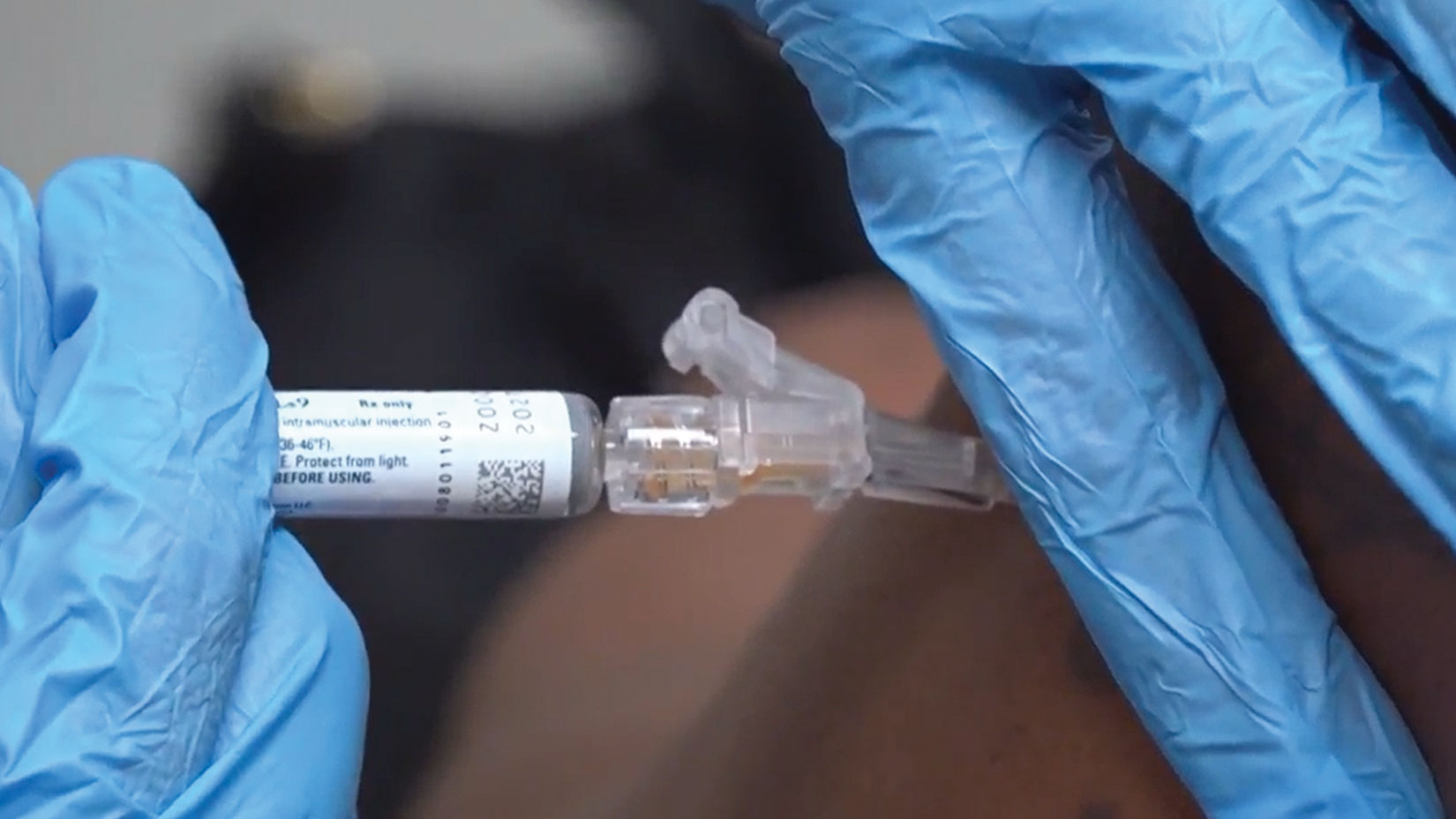
On Feb. 10, pharmaceutical company Moderna announced that the FDA Center for Biologics Evaluation and Research (CBER) had refused to review its application to market an investigational mRNA-based flu vaccine. Without approval from the agency, the investigational vaccine cannot be sold in the US.
STAT News reported that Vinay Prasad, director of the CBER, decided not to review the drug application over the objection of agency staff. In a letter sent to Moderna announcing the decision (PDF), Prasad criticized the design of a clinical trial testing the vaccine candidate. Yet Moderna says the letter is inconsistent with previous written communications that the firm received from CBER about study design and endpoints.
How does the FDA approve new vaccines?
The US Food and Drug Administration’s Center for Biologics Evaluation and Research regulates vaccines, blood products and cell and gene therapies. The FDA is involved from the start of human testing through to marketing of new medicines.
1
Preliminary meetings between sponsor and FDA
2
Investigational new drug application
🕑
30 days to regulatory decision
3
Clinical trials
🕑
5–10 years
4
Informal preapplication discussions between sponsor and FDA
5
New drug application (NDA)
Small molecule drugs
Antibodies and peptides
Synthetic nucleotides
Biologics license application (BLA)
Vaccines
Blood products
Cell and gene therapies
6
Drug approval (or rejection)
🕑
6–10 months to regulatory decision
Credit: Shea Murphy/C&EN
Source: US Food and Drug Administration; C&EN reporting
Drug approval is the culmination of a years-long regulatory process, and historically the agency has worked closely with companies to define the sort of evidence that would demonstrate a drug or vaccine is safe and effective. But in the past year, FDA has become more unpredictable.
“It’s very unusual for FDA to refuse to review a phase 3 trial they were involved in planning for,” says Hopkins.
In a statement as part of the release, Moderna CEO Stéphane Bancel said, “This decision by CBER, which did not identify any safety or efficacy concerns with our product, does not further our shared goal of enhancing America’s leadership in developing innovative medicines.”
The US has also specifically pulled back from supporting mRNA as a platform, despite the fast development of effective of mRNA Covid vaccines during the pandemic. Although BARDA did invest $19.5 million to fund a mRNA pan-flu vaccine last year, the agency cancelled grants for mRNA vaccine development totaling around $500 million. US Department of Health and Human Services Secretary Robert F. Kennedy, Jr said at the time that mRNA vaccines “fail to protect effectively against upper respiratory infections like COVID and flu.” But the clinical trial at issue in the FDA’s refusal to review, wherein Moderna compared its mRNA flu vaccine candidate to currently licensed vaccines, showed that the mRNA shot was more effective.
The Moderna flu vaccine candidate has been accepted for review in the EU, Canada, and Australia.
Planning for the future
While the 2025/26 flu season is still underway in the Northern Hemisphere, now is also the time that health agencies and manufacturers start looking ahead to the next season. In past years, the FDA’s Vaccines and Related Biological Products Advisory Committee (VRBPAC) has met in February or March to forecast and select strains to vaccinate against in the following flu season.
Last year, the agency canceled a planned VRBPAC meeting. The move prompted concerns among experts about whether manufacturers would have adequate time to make the year’s shots. After a meeting closed to the public, FDA later announced recommended strains in March. In a Mar. 14 press release following the news, Sanofi wrote that it “had already begun its annual production of vaccines” against influenza, and that the strains selected by the FDA matched what Sanofi was already producing because they had also been chosen weeks earlier by the World Health Organization (WHO). WHO is set to make this year’s announcement on Feb. 26. The Department of Health and Human Services did not reply to an email query on whether VRBPAC would meet this year.
Strain selection is important for making effective vaccines, because the strains of flu in widest circulation change from year to year—and without FDA guidance, the regulatory status of new vaccines could be unclear. “Historically, strain selection was part of the approval process,” Hopkins says.
In addition, last spring, HHS announced that vaccines would need additional clinical testing for updated compositions, and the FDA required Novavax to conduct a new postmarket trial of its peptide vaccine against COVID-19 because the vaccine had been updated.
One knock-on effect of rejecting the mRNA shot, Hopkins says, is that the shot can be adapted and manufactured more quickly than existing flu vaccines. For example, he says, this has been the second severe flu season in a row in the US. This year’s most prevalent strain is H3N2 subclade K, which emerged last June in Europe. By that time, the manufacturing process for the 2025-6 season was already well underway. “If we had potentially had mRNA flu vaccines available, we might have been able to revise the vaccines against this strain to prevent severe disease,” Hopkins says.
Relabeling flu shots to highlight febrile seizures
In January, CBER sent letters to the manufacturers of five flu vaccines, requiring that they add a more prominent safety warning about febrile seizure, a rare side effect of vaccination and a frequent talking point for antivaccine activists.
But experts tell C&EN that the scientific evidence does not justify the labeling change and is instead just the latest attack on vaccinations in the US. “I think it’s just their constant assault on the vaccine program in this country,” says Paul A. Offit, a vaccinologist at the Children’s Hospital of Philadelphia. “It’s just a constant erosion.”
The vaccines in questions are all flu vaccines approved for use in children. According to the American Academy of Pediatrics, febrile seizures—fits caused by high fever—after vaccination are extremely rare, but they have been much discussed recently, including at meetings of the US Centers for Disease Control and Prevention’s vaccine advisory committee.
“Remember flu also can cause fever. Flu also can cause febrile seizures,” Offit says. And, unlike flu vaccines, flu can be deadly. As of Jan. 31, 60 children have died from the flu this season in the US, according to the CDC.
The regulators’ letters cite two observational studies. One of these studies uses surveillance data from commercial insurance companies for the 2023–4 flu season and shows that a child’s risk of febrile seizure was slightly higher within the first day after receiving a flu vaccine than in the period from 1 week to 2 months later (Vaccine 2025, DOI: 10.1016/j.vaccine.2025.127614).
According to Kaitlyn Rivard, a clinical pharmacy specialist in pediatric infectious disease who spoke on behalf of the Society of Infectious Disease Pharmacists, surveillance studies from many past flu seasons have not shown a statistically significant risk of febrile seizure. The published study shows that for every million doses of vaccine given, about 21 additional seizures occurred. By comparison, Rivard notes that about 5% of children hospitalized for influenza will have febrile seizures (a rate of 50,000 for every million) (J Pediatr. 2021, DOI: 10.1016/j.jpeds.2021.06.075).
Given the relative risks involved, “it is hard to understand why the RFK Jr. FDA believes that this study warrants a label change,” Offit writes in a follow-up email to C&EN after reviewing the study.
The other study, which concerns the side effects of the 2024–5 flu vaccine, is not publicly available. The FDA did not respond on the record to questions from C&EN, including those asking where a person might find the data.
Still, Rivard says that taking regulatory action based on statistically significant results in 2 consecutive years reflects a commitment to transparency about vaccine safety. “It is important to acknowledge, even if the risk [of seizures] is minimal, that it does exist,” she says. “But it is equally important to acknowledge the risks of flu itself.”
Near-identical letters went to the makers of all five vaccines approved for pediatric use in the US: CSL Seqirus, which manufactures Afluria; GlaxoSmithKline (GSK), which makes FluLaval and Fluarix; MedImmune, an AstraZeneca subsidiary, which makes FluMist; and Sanofi, which makes Fluzone. The agency gave the manufacturers until Feb. 8 to respond. C&EN reached out to all four companies before that deadline and received written statements from GSK and Sanofi.
In a long statement confirming that the company was seeking “alignment and next steps” with the FDA, a Sanofi spokesperson also writes, “Among the billions of . . . doses administered to-date, febrile seizures have occurred in a limited subset of patients and have been addressed promptly by Sanofi and regulators.”
GSK’s spokesperson writes that the company was reviewing the FDA request, adding, “Our top priority is patient safety. We are committed to monitoring and ensuring the safety of all our products, including our seasonal influenza vaccines, and we are confident in their safety and efficacy profile.”

Laurel Oldach is a senior editor and life sciences reporter at C&EN.
Chemical & Engineering News
ISSN 0009-2347
Copyright ©
2026 American Chemical Society