
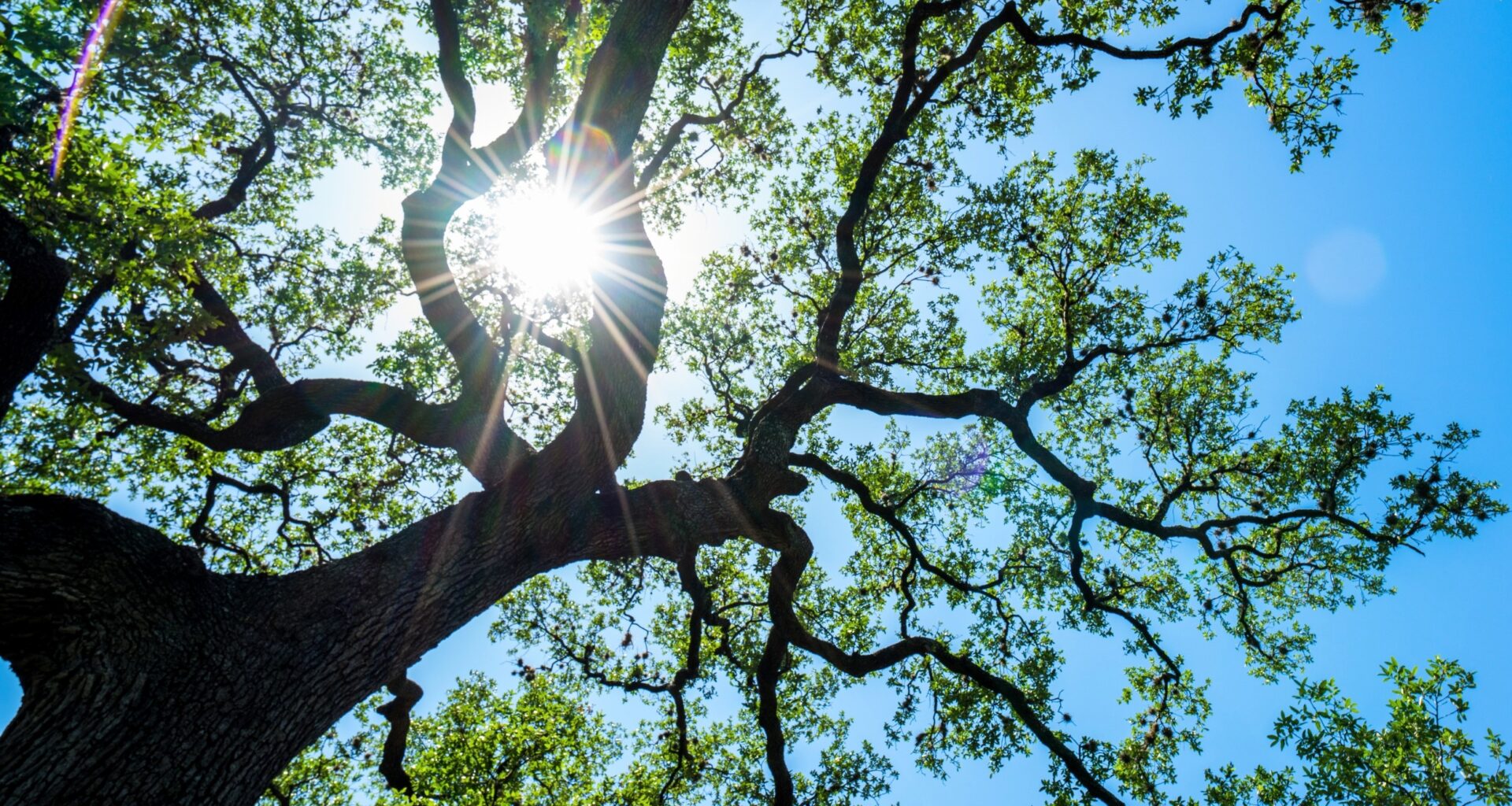
Oak trees can live for hundreds of years, yet climate change brings drought, poor soil, and disease at a much faster pace. Scientists now believe that tiny microbes living on and inside oak trees may help protect them from such stress.
A recent forest study focused on sessile oak, Quercus petraea. The results show that microbial communities linked with leaves, stems, and roots remain surprisingly stable, even under serious environmental pressure.
Microbes living in oak trees

Every oak supports millions of bacteria and fungi. Each plant part hosts a unique group. Leaves, inner bark, and root plus surrounding soil each carry distinct microbial communities.
In leaves, most bacteria belong to a group called Proteobacteria. Stems contain a mix of Proteobacteria and Actinobacteriota. Roots show a different pattern. Actinobacteriota dominate in root zones.
Fungi also vary by tissue. Leaves and stems mainly contain Ascomycota. Root zones contain more Basidiomycota. Many fungi in root zones form ectomycorrhizal partnerships, which help trees absorb nutrients and water from soil.
Certain bacterial families may play key roles. Beijerinckiaceae appear often in leaves and stems. Members of that group can fix nitrogen, which may support leaf growth and metabolism.
In root areas, Acidothermaceae thrive in acidic soil and help break down organic material. Oak roots often grow in acidic conditions, so such microbes may improve nutrient cycling.
Trees tested under stress
Researchers studied 144 oak trees growing in a woodland in Norfolk, UK. Each tree was about 35 to 40 years old. Scientists created stressful conditions in three ways.
Rain shelters reduced soil moisture to simulate drought. Ringbarking disrupted nutrient transport by removing a narrow strip of bark. Bacteria and beetle larvae linked with acute oak decline were added to some trees.
Soil moisture probes confirmed strong drought effects. In some periods, soil water dropped by more than half under rain shelters. Stem humidity also decreased, showing real physiological stress.
Despite such physical changes, microbial communities remained mostly steady.
Why stability matters
Older trees often show stable microbiomes. Long living plants may build strong partnerships over time. Research shows that microbial diversity did not shift much after drought or ringbarking.
Even trees showing early symptoms of acute oak decline did not display major microbiome disruption in healthy tissue.
“As environmental stressors are increasing, one of the key adaptations that trees have is their microbiome,” said study senior author James McDonald of the University of Birmingham.
“If we can get a more mechanistic understanding of how host-microbe interactions help trees navigate and tolerate drought, it might open up the opportunity to improve tolerance, for example by inoculating trees with beneficial microbes.”
“Climate change is happening really quite rapidly, but trees are long-lived, sessile organisms that take a long time to adapt to changes, and many of our trees are not well equipped,” added Sandra Denman of Forest Research, Forestry Commission UK.
Drought changes root microbes
Although most microbial groups stayed stable, long drought caused subtle root changes. After extended rain exclusion, Actinobacteriota increased in root areas.
Actinobacteriota often appear in dry soils. Members of that group possess thick cell walls and can form spores. Such traits help survival under harsh conditions. Research in crops links that group with drought tolerance.
Other bacterial groups, including Acidobacteriota, also increased in root zones during drought. Some members produce sticky substances that help soil hold water and stay attached to roots.
At the genus level, drought enriched bacteria such as Nocardia, Actinomycetospora, Acidothermus, and Acidocella.
Many show plant growth promoting traits. Some break down nutrients. Others produce hormones like indole 3 acetic acid, which supports root growth.
Fungi respond to drought
Fungal partners also shifted. Penicillium and Aureobasidium increased in drought affected roots. Both groups include species known for supporting plant growth.
“Even as the trees were showing physiological changes and the soil was becoming a lot drier, their microbiome remained quite stable,” said study first author Usman Hussain of Bangor University and the University of the West of England (UWE).
“This highlights a potential role for oak-associated microbial communities in maintaining forest ecosystem stability.”
Oak stem microbes under stress
Stem microbes reacted more than leaves. Under drought or ringbarking, certain fungal genera linked with decay or disease increased. At same time, some beneficial endophytes decreased.
Such patterns suggest that prolonged stress may weaken internal defenses in woody tissue. Even so, overall microbial structure did not collapse.
Semi-mature oak trees host complex, tissue specific microbial networks that resist major disruption. Long exposure to drought produced small but meaningful changes, especially in root zones.
Future research will explore molecular signals that guide recruitment of helpful microbes. Scientists also plan to compare trees of different ages and locations.
Forests store carbon and support biodiversity. Stable microbial partners may help oak trees survive climate stress and continue playing vital roles in ecosystems for decades to come.
The study is published in the journal Cell Host & Microbe.
—–
Like what you read? Subscribe to our newsletter for engaging articles, exclusive content, and the latest updates.
Check us out on EarthSnap, a free app brought to you by Eric Ralls and Earth.com.
—–