
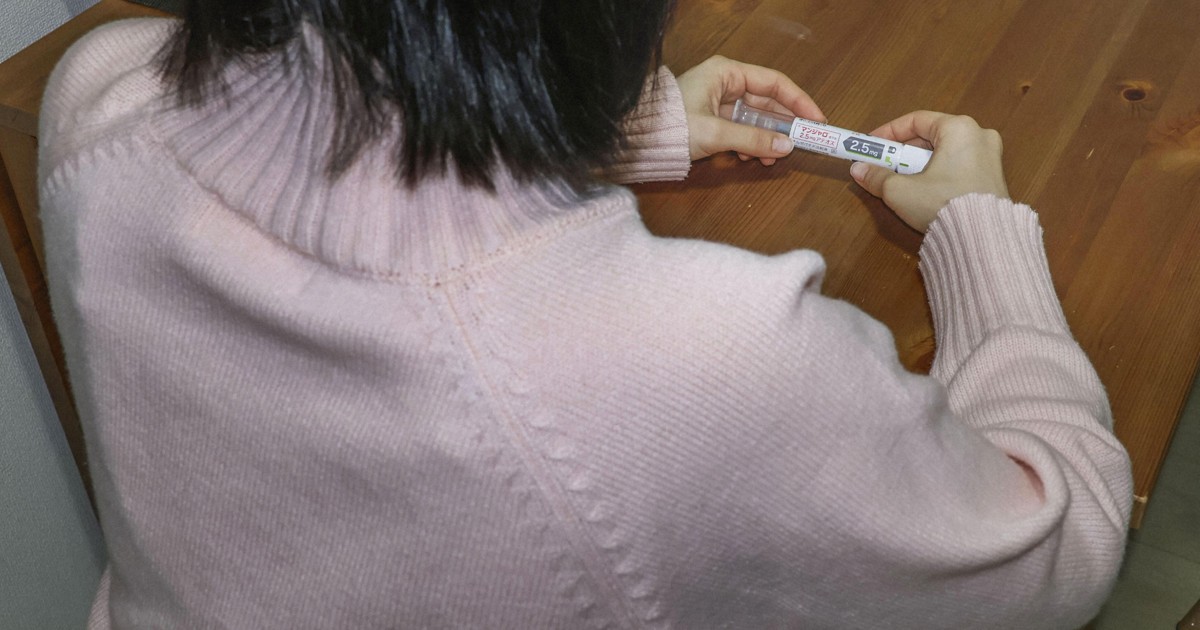
A woman holds a Mounjaro injection pen during an interview in Tokyo on Oct. 25, 2025. (Kyodo)
OSAKA (Kyodo) — A type 2 diabetes drug approved by Japan’s health ministry is being taken by young people seeking rapid weight loss, a growing trend fueled by social media promotion that has doctors warning of serious health risks associated with off-label use.
Many users purchase the medication online after minimal consultation, and some report severe side effects, prompting experts to raise concerns about the broader influence of appearance-focused values spreading through digital platforms and media.
A woman in her 20s working at a cabaret club in Osaka said she first learned about the drug being sold under the brand name Mounjaro after seeing an influencer describe her own weight loss on TikTok.
Curious and eager to slim down further, she visited the website of a clinic offering the medication and completed a phone consultation.
The drug was shipped directly to her. After taking it, she weighed 42 kilograms at a height of 160 centimeters, placing her below a body mass index of 18.5 and categorizing her as underweight.
Still, she said, the pressure of her job shaped her choices. “I feel I have to stay as slim as possible because my job puts a lot of focus on appearance.”
A 35-year-old office worker also began using the drug after deciding she wanted to lose weight before her wedding. She said she was influenced by a nurse at a beauty clinic who posted on social media that she had successfully slimmed down using the same medication.
Encouraged by the post, the woman visited the clinic in person and received a prescription. Professor Keiko Kishimoto, who specializes in social pharmacology at Showa Medical University and studies the appropriate use of pharmaceuticals, said the growing reliance on online and phone-based consultations limits clinicians’ ability to accurately assess patients’ health conditions.
“When the interaction is only by phone or online, there’s a limited amount of information a doctor can glean about the patient’s condition,” she said.
“It is not consistent with medical ethics for professionals to promote medicines for non-medical purposes through advertising or discount campaigns.”
Another woman, 22, who also works in a cabaret club, said she experienced frightening symptoms after her first injection and decided to stop immediately.
“It was so uncomfortable that once was enough,” she said. “People shouldn’t take it casually.”
She reported nausea, a slight fever and feelings of depression that persisted for about three days. Her appetite fell sharply, and she said there were days when she could only eat half a block of tofu.
Kishimoto said people who use the drug for non-approved purposes should be aware that they may not qualify for support under the Relief Services for Adverse Health Effects system, which is intended for patients who suffer side effects while taking medications for legitimate medical treatment.
Pharmaceutical companies have also issued reminders that the drug’s safety and effectiveness remain unconfirmed outside diabetes therapy.
Experts say the rising misuse reflects a wider belief that equates thinness with beauty.
A 2024 survey by the health ministry found that one in five to six women in their twenties are underweight.
The Japan Society for the Study of Obesity has proposed establishing a new syndrome to describe health problems linked to being underweight and malnourished, warning that social media and fashion magazines may be driving young women to pursue increasingly restrictive diets.
Yoshifumi Tamura, executive director of the My Well Body Council, which promotes acceptance of varied body types, said young people need to be aware that images on social media and in mainstream media are often edited or selective.
“Online and media content can be distorted, and people need to understand that it doesn’t always reflect reality,” he said.
“This is already being taught in schools in the U.S. and Europe, and Japan also needs classes at the compulsory education level to help students understand their own body image and appreciate a range of body shapes.”
(By Akira Kunugi)