
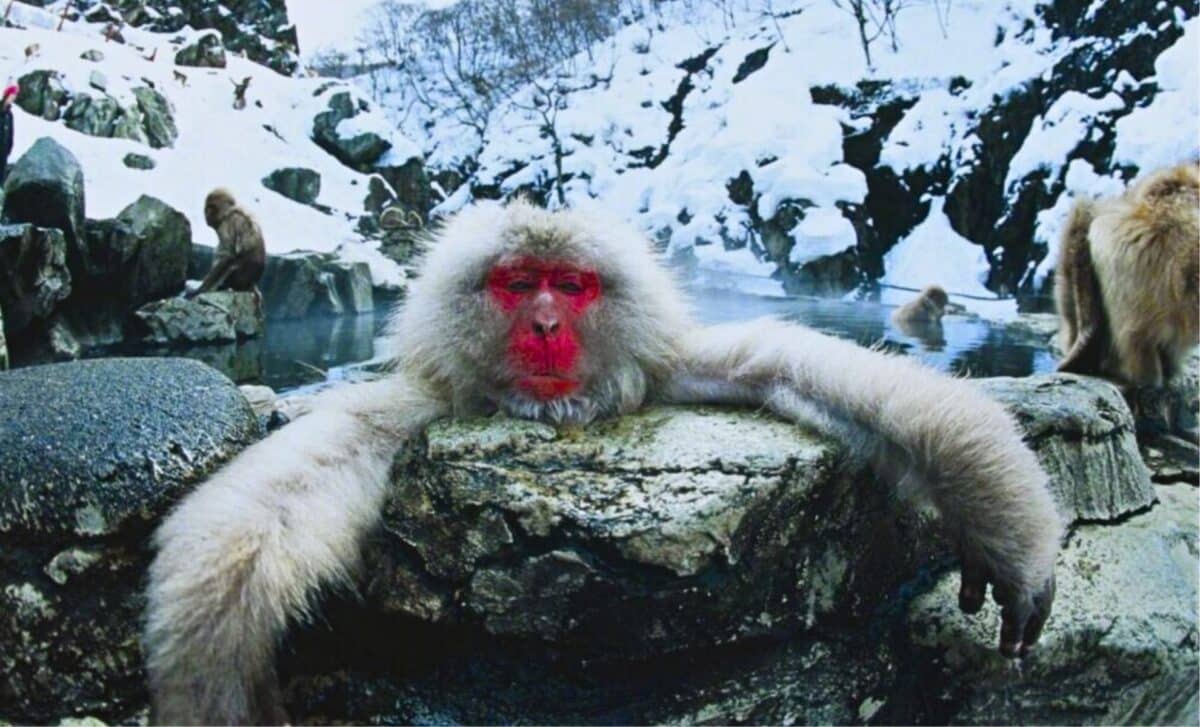
For decades, the sight of Japanese macaques soaking in steaming pools in the mountains of Nagano has symbolized resilience in extreme winter conditions. Falling snow, volcanic steam rising, red-faced primates sitting shoulder to shoulder in mineral waters: it’s a familiar image. Such behavior has long been considered a strategy for thermoregulation and stress reduction. However, new research suggests that the consequences go beyond warmth.
A peer‑reviewed study in the journal Primates has found that habitual hot spring bathing is associated with measurable differences in parasite distribution and gut microbiome composition in Japanese macaques, also known as snow monkeys. The findings add a biological dimension to what has traditionally been treated as a behavioral curiosity.
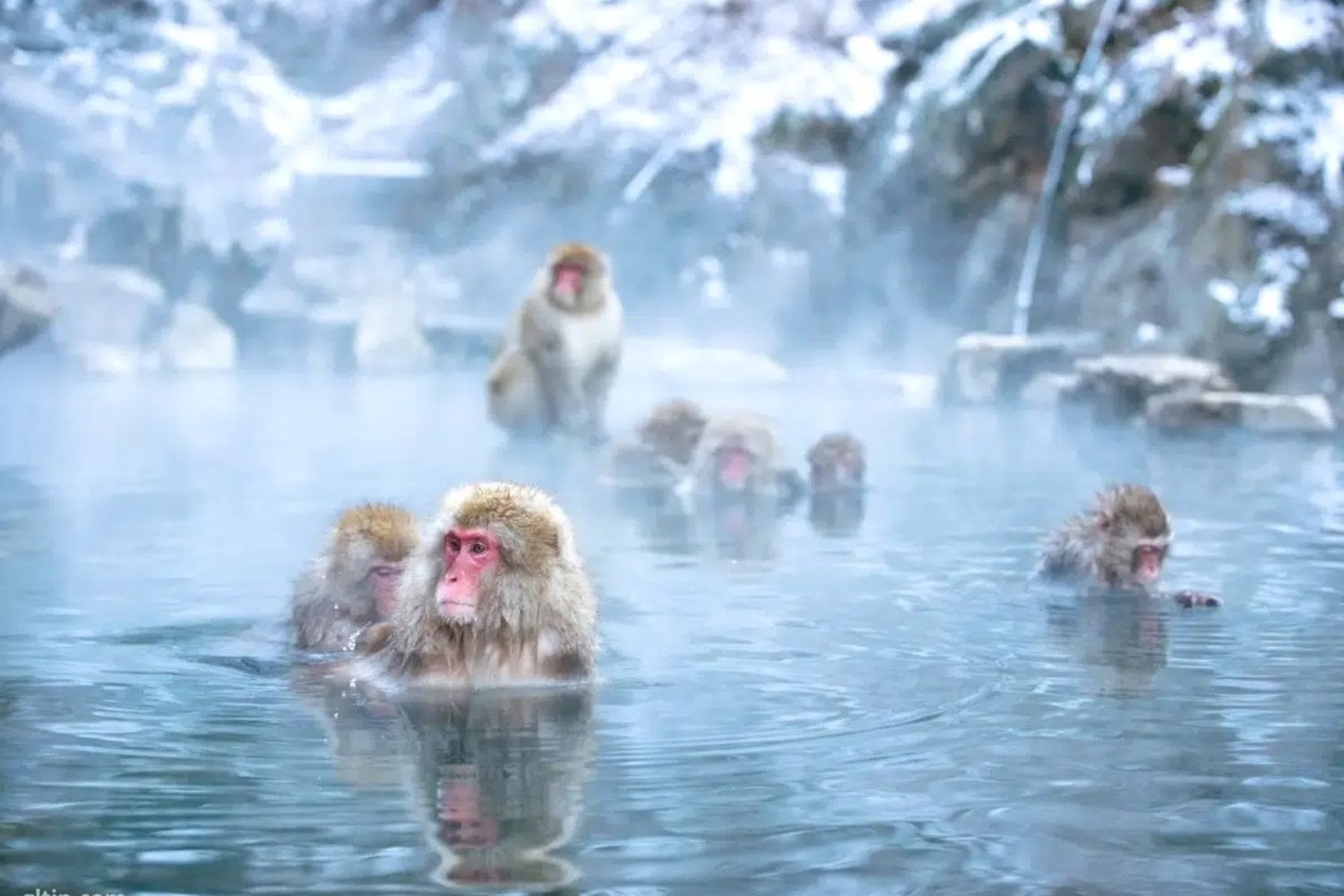 Researchers examined parasites and gut microbes, revealing that hot spring use shifts both lice patterns and bacterial composition, even without affecting health. © GLTJP
The research does not claim dramatic health effects. It identifies subtle but statistically significant biological shifts linked to a culturally transmitted habit. That distinction matters in a field increasingly focused on how behavior shapes host–microbiota dynamics in wild animals.
Evidence from Two Winters of Field Research
The study, available via Springer’s publication of Primates, examined 16 adult female Japanese macaques (Macaca fuscata) living in Jigokudani Snow Monkey Park between December 2019 and March 2021. Nine were classified as habitual hot spring bathers. Seven did not regularly use the springs.
Researchers evaluated three biological domains: ectoparasites, gastrointestinal parasites, and gut microbiota. Fecal samples were collected non‑invasively, and lice distribution was assessed through behavioral observations and grooming data.
The authors report that overall lice loads did not differ significantly between groups. However, “the lice distribution over the body was altered in bathers.” This indicates that immersion in thermal water may affect where lice persist on the host, even if it does not eliminate infestation.
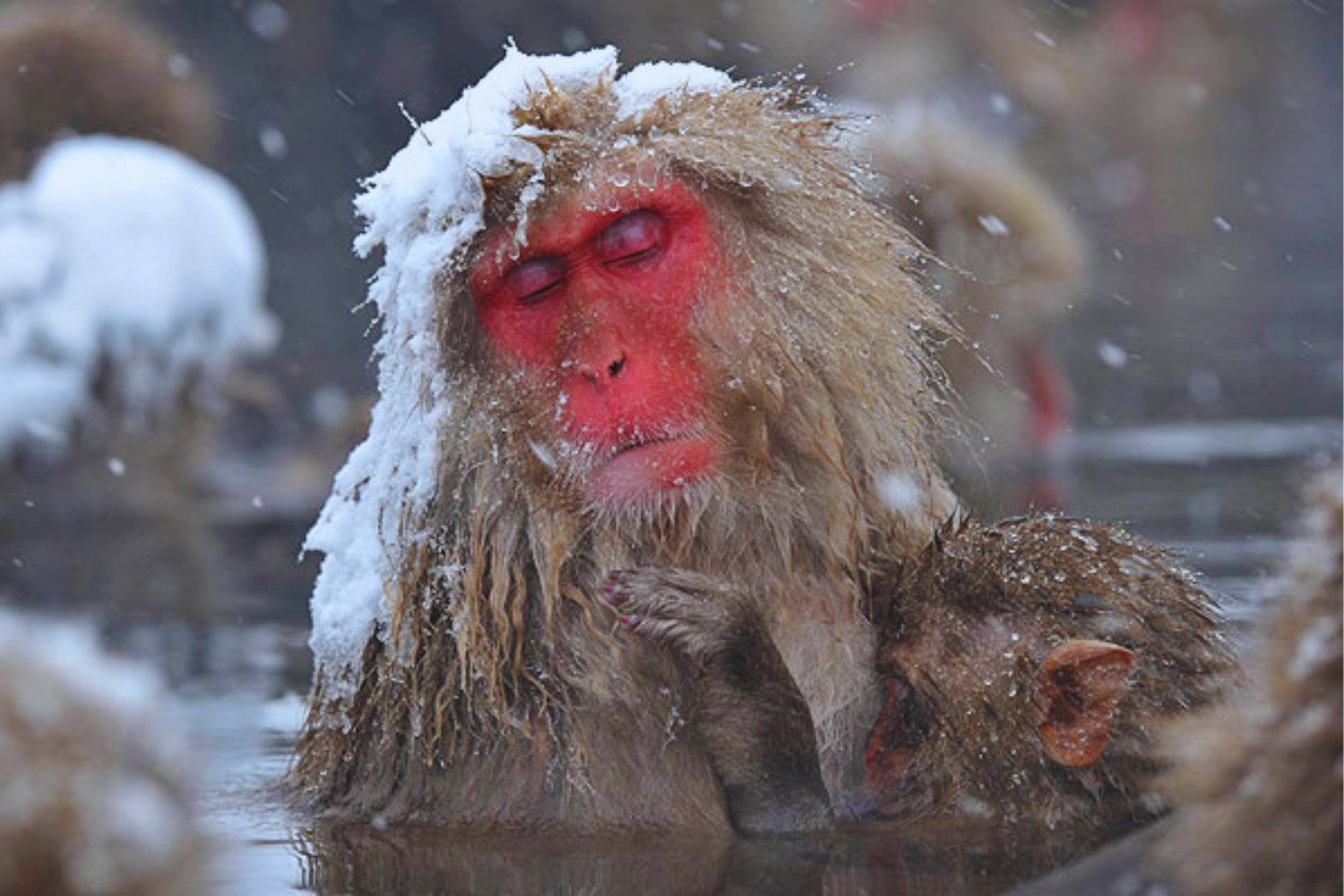 The bathers didn’t carry fewer parasites, but lice were distributed differently on their bodies. © GLTJP
For internal parasites, multiple helminths and protozoa were detected in both groups. The paper states there were “no significant differences in parasite prevalence and abundance between bathers and non-bathers.” Shared bathing water did not appear to increase infection risk in this setting.
Microbiome analysis, conducted using 16S rRNA gene sequencing, revealed a more nuanced pattern. Overall diversity indices remained similar. Yet four bacterial genera, including Oscillospira and Ruminococcus, were significantly more abundant in non‑bathing individuals. The authors write, “Our results suggest that HSBB may influence host–(micro)organism relationships.”
These findings are consistent with broader reporting summarized by Gizmodo coverage of the study, which highlighted the potential biological ripple effects of long‑term hot spring use.
A Rare Case of Cultural Transmission With Measurable Biological Effects
Hot spring bathing among Japanese macaques is not a universal species trait. The behavior originated in the 1960s in Jigokudani, when a young female entered a man‑made bath. The practice spread through cultural transmission, primarily among females and juveniles, and remains geographically restricted.
This makes the population an unusual natural experiment. Genetic background and environment are largely shared within the troop. The key variable is a socially learned thermal behavior.
The study frames the findings within the concept of the holobiont, which treats an organism and its associated microbes as a functional ecological unit. When bathing alters skin temperature, moisture, and exposure to mineral water, it may shift microbial habitats on and within the host.
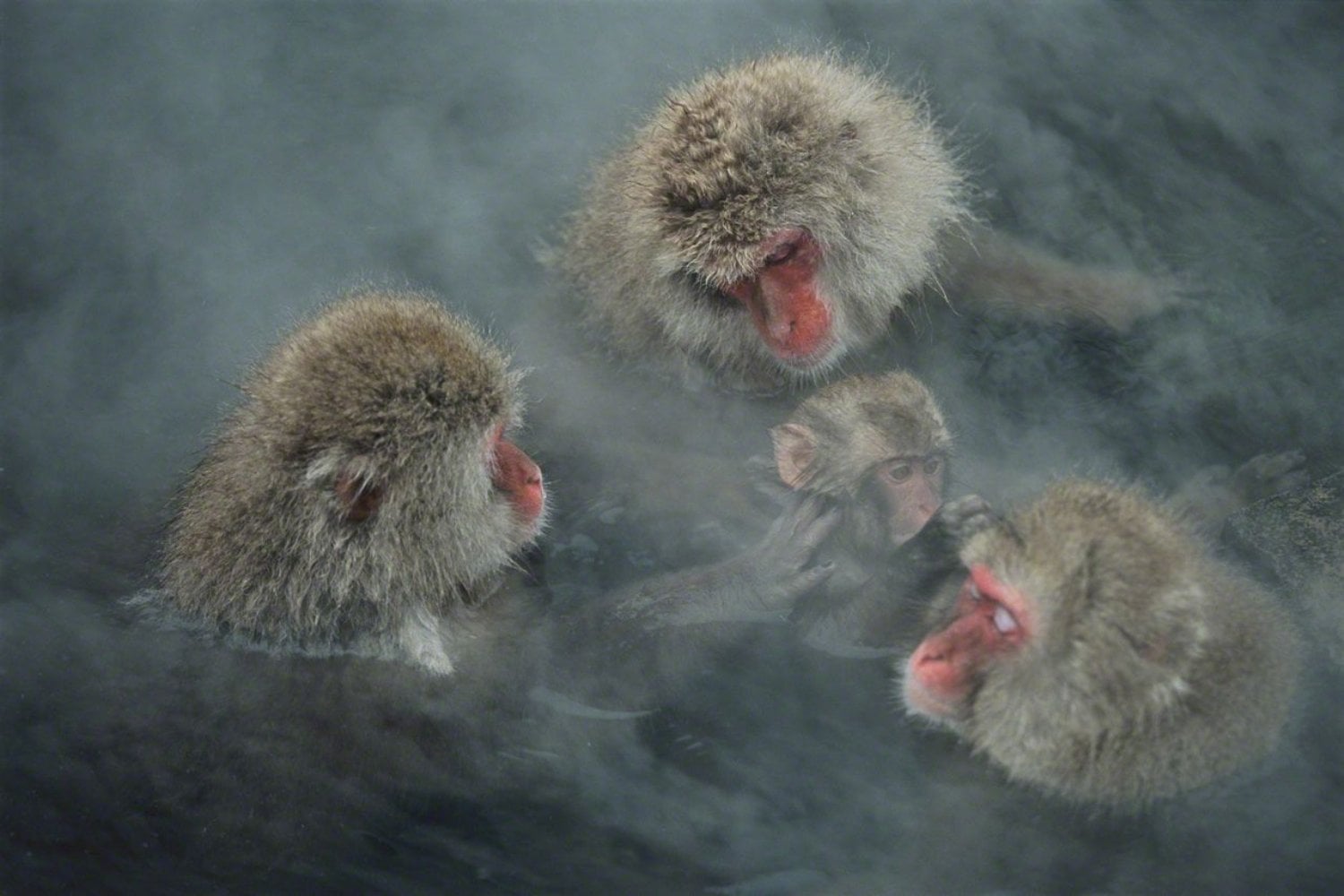 Hot spring use is not instinctive, it’s learned and passed between monkeys. © Kobayashi Hideki.
The authors note that “the variations observed in the lice distribution and gut microbial taxa could be caused by HSBB.” The wording reflects caution. The study establishes correlation rather than mechanistic causation.
Still, the documentation of microbiome variation linked to a culturally transmitted behavior in a wild primate population is rare. Most microbiome research remains laboratory‑based or focused on humans and domestic animals.
Methods and Constraints
Field researchers relied on direct observation to quantify bathing duration and frequency. Fecal samples were collected immediately after defecation to preserve microbial integrity. DNA extraction targeted the V3–V4 region of the 16S rRNA gene, a standard marker in microbial ecology.
Statistical comparisons used alpha and beta diversity metrics alongside relative abundance analysis. Sample size was modest. The study involved only one troop in a semi‑managed park environment, where human infrastructure provides the hot springs.
The authors acknowledge these constraints. The paper does not evaluate immune function, metabolic outcomes, or long‑term fitness effects. Functional genomic analysis of microbial shifts was outside the scope of the project.
No direct health benefits or harms were demonstrated. The observed differences were compositional, not clinical.