
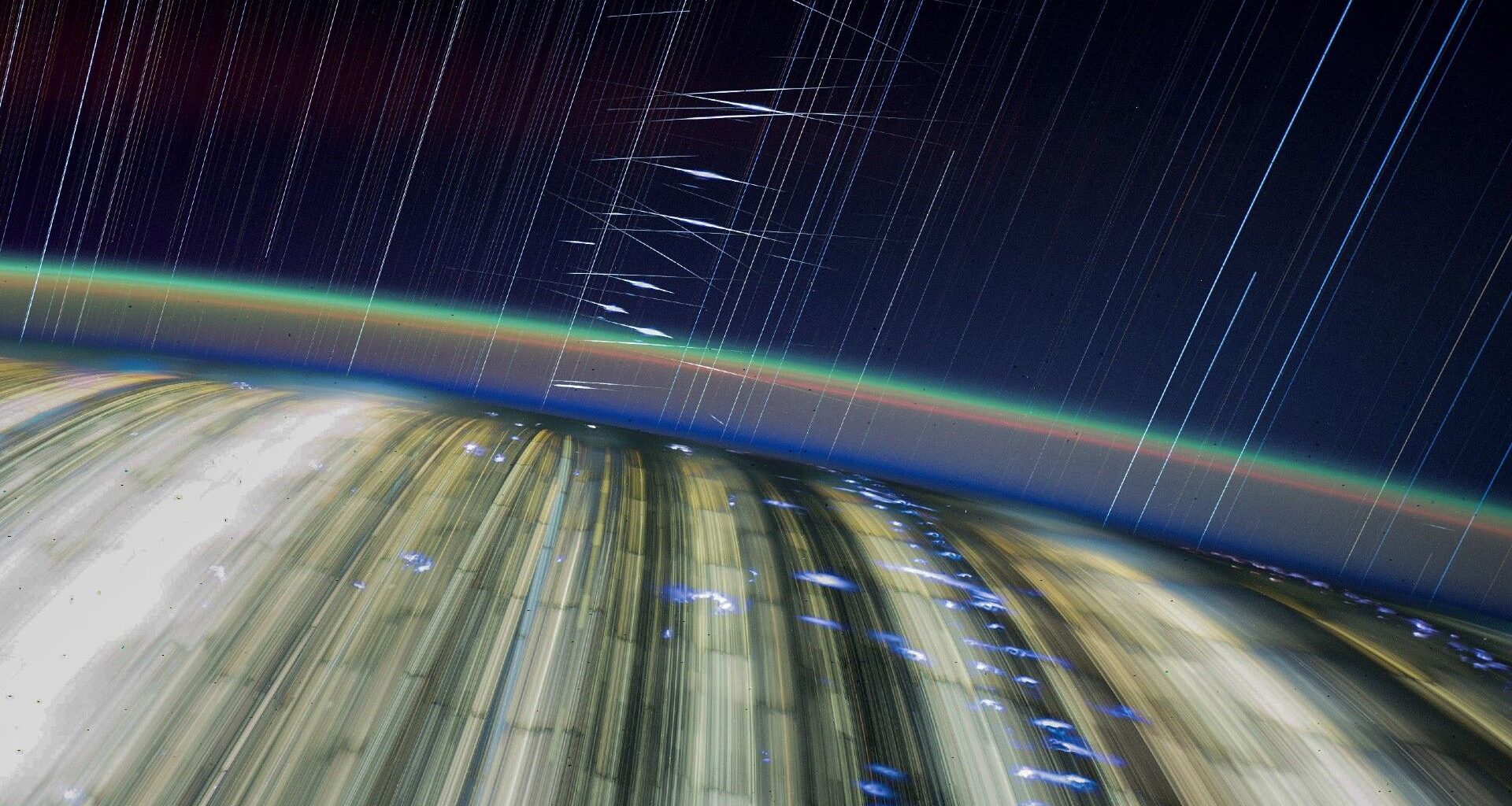
As more and more satellite megaconstellations continue to be launched into Earth orbit, some researchers are beginning to calculate the chances that people on the surface could be struck by the incoming remnants of these spacecraft reentering the atmosphere.
A new study by a team of Canadian researchers looks into eleven different megaconstellations and what would happen during their fiery reentry into Earth’s atmosphere. What are the charred, declarative results? They find that there’s a 40% collective risk of on-ground casualties if satellites do not burn up entirely.
You may like
“Minimum lethal amount”
In the study, the research team asked: “what happens if the minimum lethal amount of debris from each satellite does not burn up and reaches the ground intact?”
It turns out that materials used in satellites with lower melting points, such as aluminum, are more likely to demise entirely. But other spacecraft-making materials such as stainless steel, beryllium, titanium, tungsten, and silicon carbide are less likely to do so. These are commonly employed in fuel tanks and reaction wheels.
When satellites nose-dive into Earth’s atmosphere, the Canadian team observes, aerodynamic forces cause them to break up. The intense heat of re-entry ablates their materials into fine particles. “However, many satellites, particularly large ones, do not burn up entirely,” they explain. “Risky uncontrolled reentries of space objects should be the exception, rather than the norm.”
Surviving debris
While spacecraft builders may strive for their satellites to demise entirely, Wright and fellow researchers add that there is considerable uncertainty in the degree to which total ablation can be achieved. And if a satellite does not burn up entirely, it creates a casualty risk.
“Many existing standards and guidelines only consider individual satellites, and don’t consider the cumulative effect of launching and reentering thousands at once,” said Wright.
Unless satellite operators purposely direct their satellites to reenter over a specific location on Earth in a “controlled re-entry” manner, that fall from space will be uncontrolled and surviving debris will be spread out over an area centered on a random location along the satellite’s orbit.
Those satellite leftovers create a casualty risk to people on the ground and in aircraft in flight, as well as other problems, be they infrastructure damage and airspace closures.
You may like
Key question and recommendations
Wright and colleagues ask a key question in their analysis: Do we need so many satellites?
“It is possible to design constellations made up of fewer, higher capacity, higher quality satellites with longer operational lives. This, in turn, would reduce the risk to people on the ground and any damage to the atmosphere,” they report.
As for what-next suggestions, the Canadian team offers a set of considerations.
Due to the large collective risks created by single megaconstellations, and the even larger cumulative risks from all constellations, they recommend:
“states and their national regulators should require independent verification of claims of full ‘demisability’evaluate collective casualty risks from entire constellationspursue a smooth transition to a fair, equitable, and globally applicable controlled reentry regime”
The study “Satellite megaconstellations and collective casualty risks” was published Feb. 6 in the journal Space Policy.