
Drug-resistant infections are becoming harder to treat, but testing new medicines in animals is often slow and expensive.
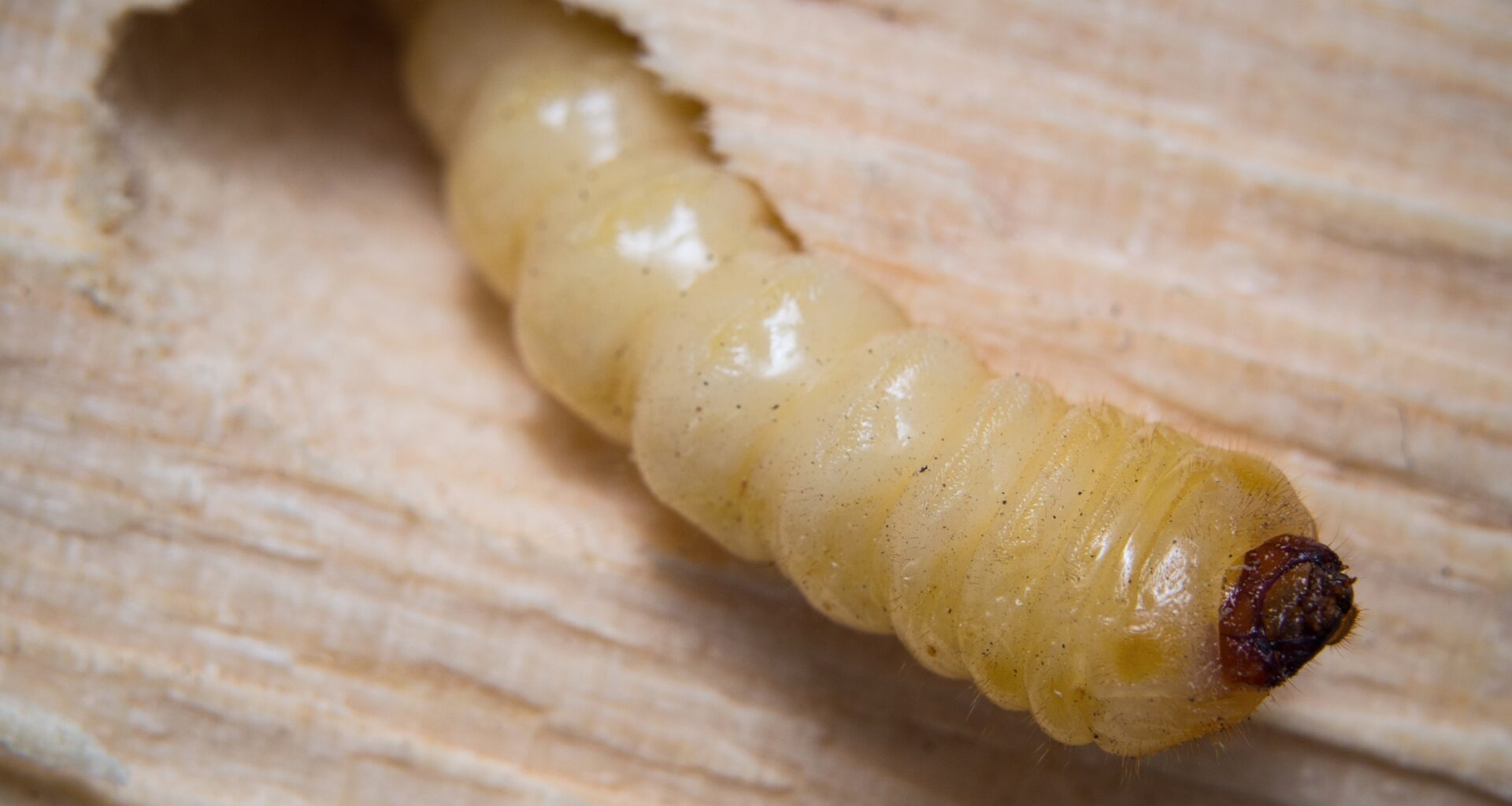
Scientists have now taken a major step forward by creating the first genetically modified wax moths – tiny larvae whose genes can be added, removed, and passed on to future generations.

This breakthrough turns a cheap, fast-growing insect into a practical living test system. It allows researchers to study , track how treatments work inside the body, and screen potential drugs much faster before moving to larger animals.
What the moths do
Under laboratory blue light, the altered larvae revealed bright green and red signals in living tissues that normally show no such patterns.
Working with wax moth embryos, Dr. James Pearce at the University of Exeter demonstrated that these glowing traits could be built into the genome and inherited by offspring.
Across successive broods, the same fluorescent markers reappeared in consistent locations, confirming that the changes were stable rather than temporary effects.
That stability establishes wax moths as a controllable whole-animal system, setting the stage for using them to probe infection and treatment responses in ways not previously possible.
Why wax moths are a good fit
Hospitals are increasingly dealing with infections that no longer respond to common medicines, a growing threat known as antimicrobial resistance.
When germs survive treatment, infections can continue spreading while available drugs lose their effectiveness, creating an urgent need for faster ways to test new therapies.
Wax moth larvae offer a surprising advantage. They can be raised at 98.6°F (37°C), the same temperature as the human body. This allows many human disease-causing microbes to grow and behave much as they do in people.
For years, however, scientists could not fully take advantage of this model because the insects lacked the genetic tools needed to control and track experiments – until now.
Precision editing in larvae
Researchers at the University of Exeter developed techniques to add and remove genes in wax moth embryos, overcoming this limitation.
Using CRISPR-Cas9 – a gene-editing system that cuts DNA at precise locations – the team successfully switched off a green fluorescent gene, demonstrating that targeted editing works in the species.
The embryos remain open to genetic injection for roughly six hours before developing natural cellular barriers that prevent DNA from reaching future reproductive cells.
By inserting additional DNA sequences carrying fluorescent genes, the scientists enabled the larvae to produce glowing markers inside living tissues. These markers make genetic changes easy to see and track.
Glowing larvae track infections
Bright fluorescence gave researchers a simple way to see exactly where an inserted gene turned on. When the engineered gene produced a fluorescent protein, affected cells glowed, revealing tissue patterns without the need to cut the animal open.
By linking these glowing signals to immune activity, scientists could eventually turn larvae into living biosensors that change color as infections develop.
This approach could offer a way to track disease in real time, although such systems will still require careful calibration.
These visible signals also make wax moth larvae useful for faster drug screening. Researchers often need a whole organism to determine whether an antibiotic reaches infected tissues and helps the host survive. The larvae provide this testing step at low cost.
When exposed to common hospital germs, infected larvae quickly show signs of illness, allowing scientists to compare treatments and identify which ones work best.
Engineered lines with clearer fluorescent readouts could further sharpen these early tests, helping weed out weak drug candidates before mammal studies begin.
An alternative to rodent testing
In the United Kingdom alone, infection-biology research uses roughly 100,000 mice each year. Replacing even 10 percent of those studies with wax moth larvae could spare more than 10,000 animals annually, offering a practical step toward reducing mammalian testing.
Because British Home Office guidance classifies protected laboratory animals as vertebrates and cephalopods, insect larvae also avoid many of the licensing requirements that slow early-stage research.
“Engineered wax moths offer exactly that: a practical alternative that reduces mammalian use and accelerates knowledge discovery,” said Dr. Pearce.
To help laboratories adopt the approach quickly, the Exeter team has made its protocols openly available. These guidelines outline clear methods for rearing larvae, injecting embryos, and screening fluorescent markers so results remain comparable across research sites.
The Galleria mellonella Research Centre has already supported more than 20 groups worldwide with training, moth supplies, and shared data resources.
Wider access should speed adoption, but laboratories must maintain consistent standards for diet, temperature, and microbial dosing to ensure reliable results.
Where moths fall short
Even with their new genetic tools, wax moth larvae cannot fully replicate how infections behave in people.
Unlike humans and mice, insects rely only on rapid first-line immune defenses and do not produce antibodies, which play a major role in long-term protection.
Larvae also handle medicines differently, meaning a treatment that appears effective in a moth may not work the same way in the human body.
For that reason, researchers use wax moths mainly for early testing to narrow down promising options, then confirm the best candidates later in studies with vertebrate animals.
Larvae built to sense infection
The Exeter team next plans to build larvae whose glow changes with infection status or antibiotic exposure.
By linking fluorescent signals directly to immune genes, researchers could see when larvae begin fighting microbes – even before visible illness appears.
Improvements in injection timing and DNA design should also raise survival rates, allowing more laboratories to create custom lines tailored to their own pathogens.
“The ability to insert, delete or modify genes opens huge potential, from understanding innate immunity to developing real-time biosensors for infection,” said Dr. Pearce.
These advances position engineered wax moths as a controllable research model that bridges the gap between Petri-dish experiments and rodent studies. Their impact could grow even further if laboratories begin sharing standardized protocols and best-practice guidelines.
The study is published in the journal Lab Animal.
—–
Like what you read? Subscribe to our newsletter for engaging articles, exclusive content, and the latest updates.
Check us out on EarthSnap, a free app brought to you by Eric Ralls and Earth.com.
—–