
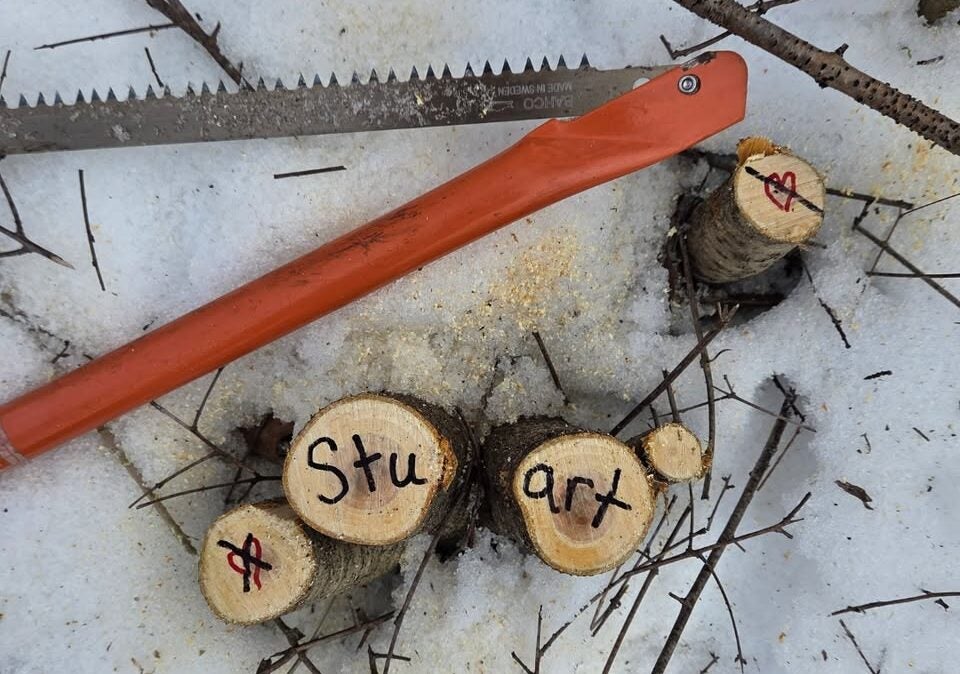
A southern Wisconsin environmental nonprofit is cutting off toxic exes and sawing down invasive buckthorn trees this Valentine’s Day.
For the price of $5, the Waukesha County Land Conservancy will chop down a buckthorn tree, write the name of your nemesis on the stump and spray it with herbicide so it never grows back. The “quirky” fundraiser is a therapeutic solution to one of Wisconsin’s environmental nuisances.
“Is your ex still a thorn in your side? This Valentine’s Day, turn heartbreak into habitat restoration! An ex. An ex-boss. A past co-worker. A former friend. You know the one,” the conservancy wrote in announcing the fundraiser on social media.
News with a little more humanity
WPR’s “Wisconsin Today” newsletter keeps you connected to the state you love without feeling overwhelmed. No paywall. No agenda. No corporate filter.
“Because just like buckthorn (and, let’s be honest, some exes) if you don’t deal with it properly, it tends to come back.”
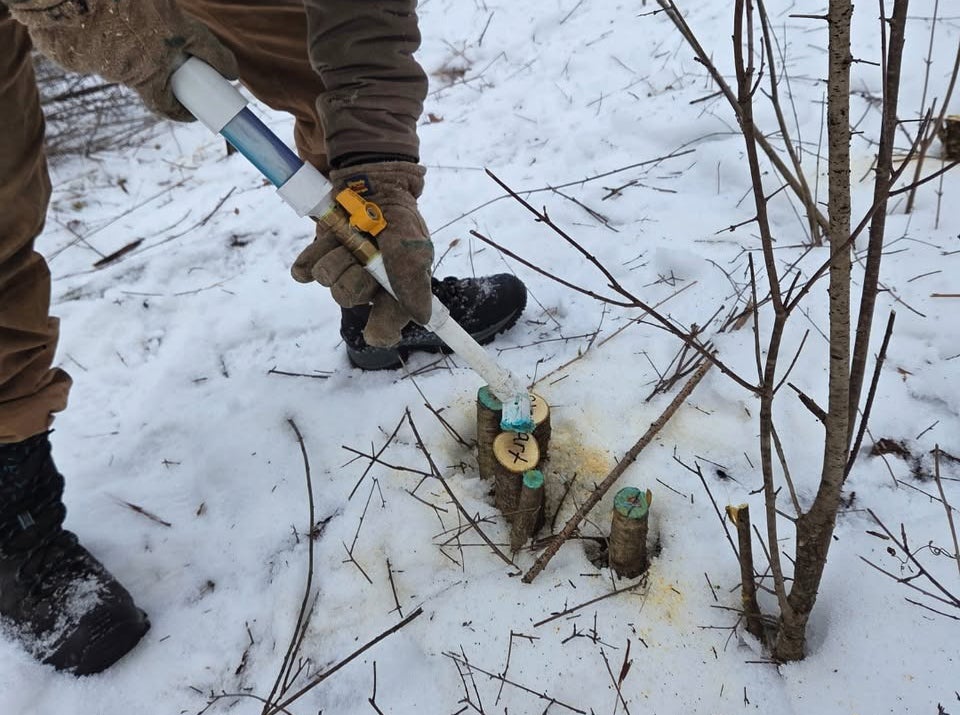 Volunteer treats invasive buckthorn tree stump with poison. Source: Waukesha County Land Conservancy
Saturday morning around 20 volunteers will work to raze 7 acres filled with thousands of thorny buckthorn, some 30 feet tall, at the Eagle Center Prairie State Natural Area.
The nonprofit land trust protects and cares for “environmentally significant” land in southern Wisconsin. Part of that includes working with volunteers to clear buckthorn. The quickly spreading shrub or small tree is known to block sunlight from reaching smaller native plants, killing them. It harms the environment, economy and human health — like some exes.
Helen Holtz is the conservancy’s land management director. She says she thought of the fundraiser idea on a whim last week.
“I literally came up with it the night before, and I quickly made it and posted it the next day,” Holtz said.
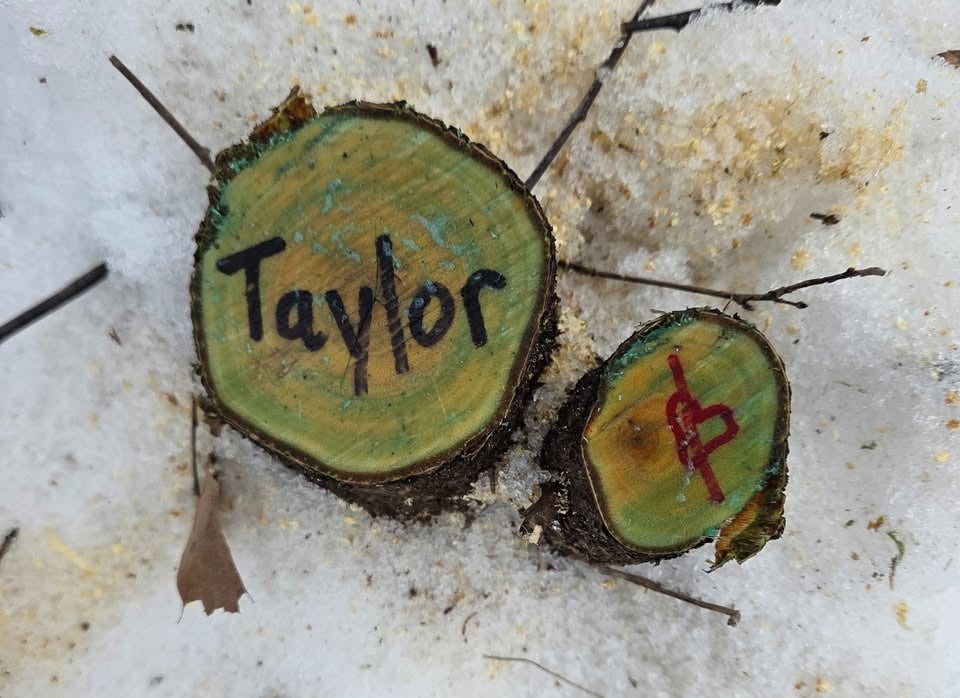 A chopped buckthorn tree stump is treated with poison, so it does not grow back. Source: Waukesha County Land Conservancy
She says people in Waukesha County have “quite the vendetta” against their exes. So far, more than 60 people have signed on.
“I just thought the more people who get involved, who start learning about invasive species and their local ecosystems, the better,” Holtz said.
Aaron Feggestad is a board member for the land conservancy and avid volunteer. He’s also an ecologist. He said buckthorn can grow “very densely” and create a “thicket.”
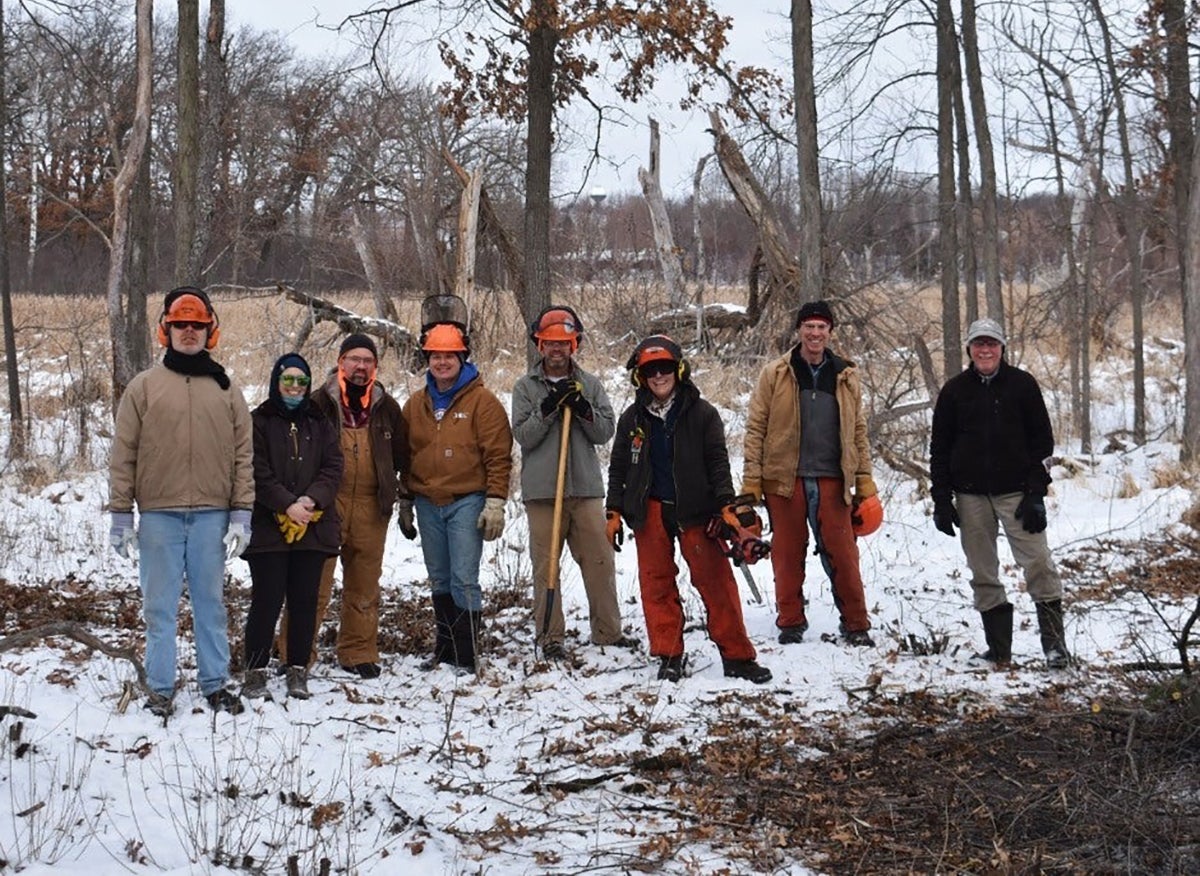 A team of volunteers works to clear invasive buckthorn trees. Source: Waukesha County Land Conservancy
The species of buckthorn in southern Wisconsin is called common buckthorn or European buckthorn. That’s because Europeans introduced it to North America in the 1800s.
“It was introduced as an ornamental plant,” Feggestad said. “It was planted in hedgerows and residential areas, and then later on, it was planted for wildlife habitat and for windbreaks, and it quickly spread from those areas where it was originally planted.”
The seeds and berries from the tree spread quickly. It’s now found across most of the U.S. — east of the Rocky Mountains and north of Tennessee — and in eastern Canada.
Feggestad said it’s “very at home” on southern Wisconsin’s high pH soil and wetlands similar to northern Europe.
He will join other volunteers working on the project.
Meanwhile the conservancy is urging people to join their tongue-in-cheek fundraiser.
“Your donation supports invasive species removal, native habitat restoration, and the long-term protection of land and water for generations to come.
A little closure for you.
A fresh start for our local ecosystems.
And one less thorn in everyone’s side.”
Wisconsin Public Radio, © Copyright 2026, Board of Regents of the University of Wisconsin System and Wisconsin Educational Communications Board.