
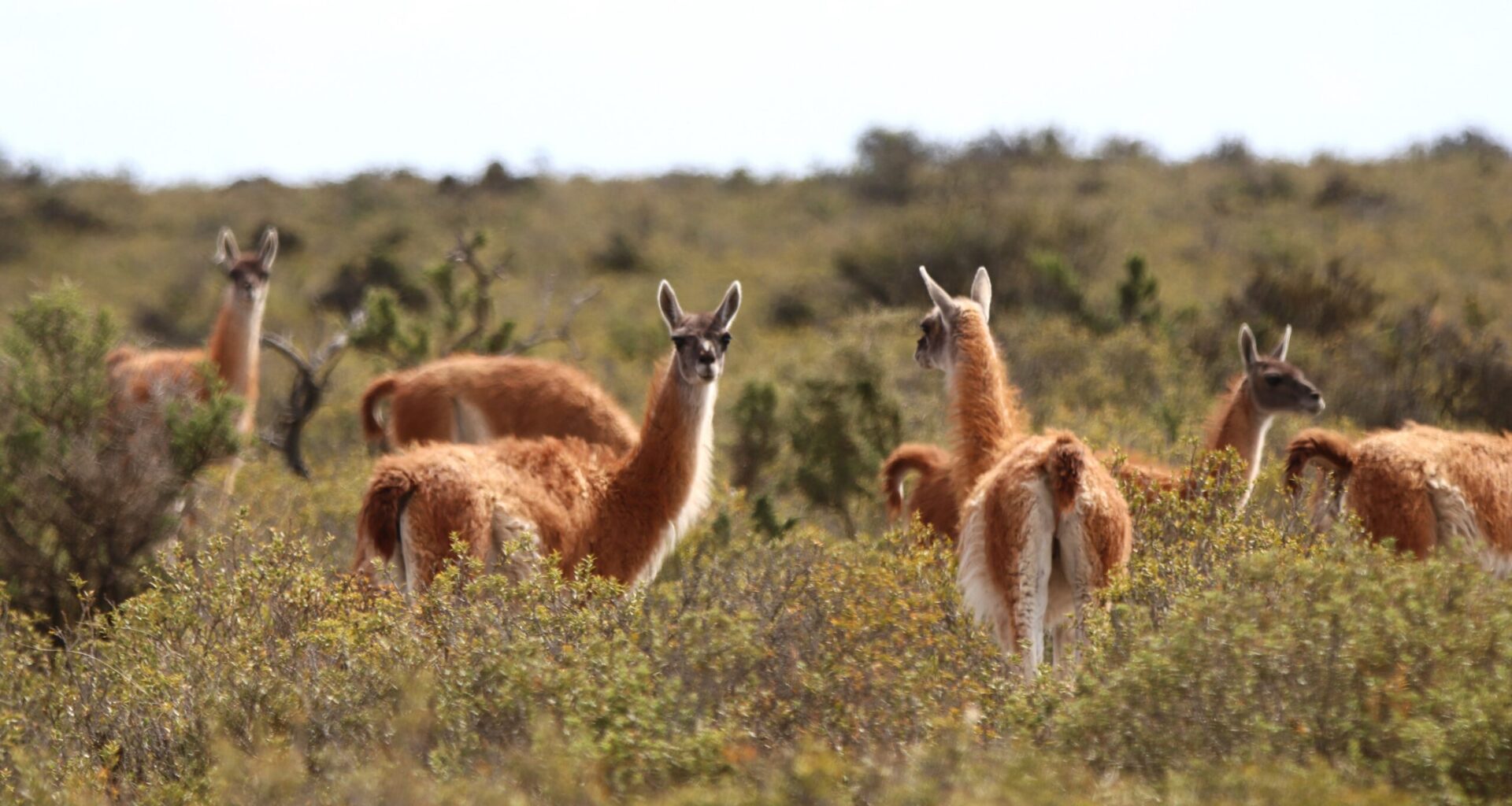
Five guanacos have been translocated from Patagonia to Argentina’s Dry Chaco as part of a reintroduction program.Rewilding supporters say the animals will help bring the local population back from the brink of extinction as well as help recover a threatened ecosystem.However, some scientists in Argentina argue that moving animals like this is unethical, can spread disease and lead to genome extinction.But as conservation budgets are slashed in Argentina, others argue that preserving biodiversity requires more collaboration between the public and private sectors.
See All Key Ideas
After a 3,200-kilometer (2,000-mile) journey from Patagonia National Park to El Impenetrable National Park and a year spent adapting to their new environment, five guanacos, South America’s largest camelids, have been released into the wild.
The guanacos (Lama guanicoe) are being reintroduced to boost the regional population across the Dry Chaco ecosystem in El Impenetrable and are meant to play an important role in helping the park’s grasslands recover after decades of overgrazing by cattle.
But although Rewilding Argentina, the wildlife conservation NGO that led the effort, labels this initiative a success, some Argentinian academics argue that translocations like these risk mixing guanaco populations with different genetic makeup and could be more harmful than good.
The guanaco’s population is estimated at around 1.5-2.2 million across the continent’s southern and western grasslands. Between 81 to 86% of guanacos are found in Argentina, 14- 18% in Chile, while a small relict population inhabits northern Peru. However, the last recorded sighting of a guanaco in Argentina’s Chaco province was in 1913; hunting and the loss of grasslands to livestock farming have led to the species’ local extinction, with only fragmented populations surviving on the border between Paraguay and Bolivia.
The translocation of three females, a male and a juvenile guanaco was completed by Rewilding Argentina in coordination with Argentina’s National Parks Administration and the provinces of Chaco and Santa Cruz. The animals came from Patagonia, which, according to research, is home to around 90% of the guanacos in Argentina.
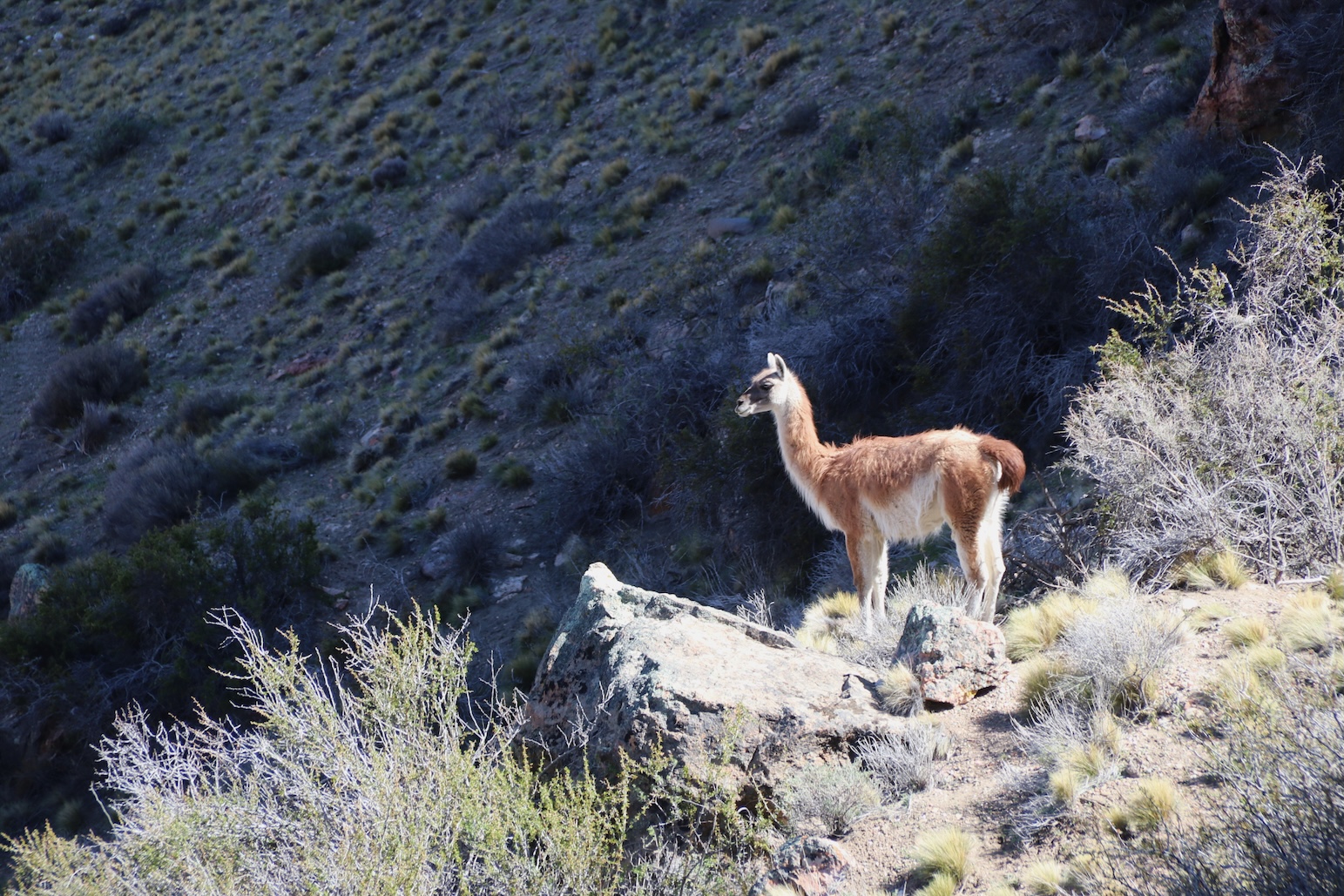 The guanaco (Lama guanicoe) is South America’s largest camelid. Image by Mark Hillsdon.
The transfer involved several new techniques, including covering the holding pens in black material, which, according to Rewilding Argentina, has a calming effect on the guanacos. The pens were also installed on descending slopes, just after the highest point of the herding route, so that when the animals first encountered the corrals, they were unable to avoid them. Once at El Impenetrable, the guanacos were placed in prerelease pens to adapt to their new environment.
According to Sebastián Di Martino, director of conservation for Rewilding Argentina, the release involves a family group to “respect the social structure of the animals that we bring from Patagonia.” Another 20 guanacos are currently acclimatizing in the park, and future releases will depend on the survival rates of the first animals set free in El Impenetrable.
Like most herbivores, guanacos play an important role in improving the soil with their dung, while their grazing helps control scrubland, opening up the land and allowing for a greater diversity of plants. This grazing also prevents dry, dead material from accumulating and providing tinder for wildfires. “In the absence of guanacos, the ecosystems of El Impenetrable have been severely degraded,” Di Martino explains.
They are also important prey for predators such as pumas (Felis concolor) and jaguars (Panthera onca), which are also being reintroduced to the region.
Local Indigenous communities have also supported the guanacos’ return, Di Martino says, as they will boost nature tourism and wildlife watching and with that, employment.
Academics question translocations
Not everyone has welcomed the move, and the recent translocation has reignited a dispute from 2023, when several academics issued an open letter arguing that scientific evidence didn’t support the movement of guanacos in Argentina.
At the time, the issue of contention was the relocation of 45 guanacos over 1,500 km (930 mi), from southern Patagonia to the Pampas region, a project that was a forerunner of the current initiative.
The experts said there wasn’t enough scientific evidence to justify the translocation. They also warned that if the two populations interbred, the genetic makeup of the smaller population could be overwhelmed by the genes of the introduced Patagonian guanacos and potentially lost forever, a process known as genetic swamping.
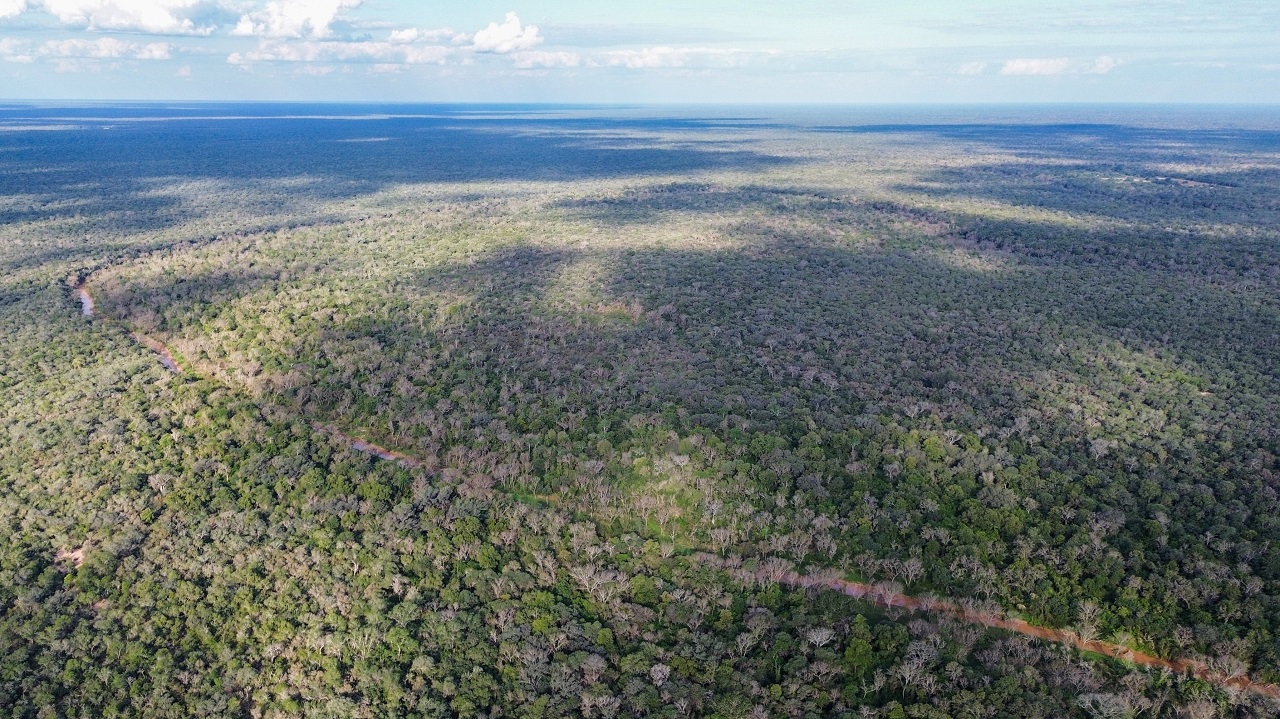 El Impenetrable National Park is located in Argentina’s northern Gran Chaco region, a biome of forests, grasslands, and wetlands. Image © Sebastián Navajas/Rewilding Argentina Foundation.
Ulises Balza, an assistant professor at the National University of Tierra del Fuego, was one of the authors of the 2023 letter. In an email to Mongabay he wrote, “As with any management intervention, the issue is one of carefully weighing potential benefits against potential costs.”
While he doesn’t oppose the idea in itself, he explained, he was concerned at the absence of a transparent and comprehensive assessment. “Without such an assessment, there is not only a risk of unintended impacts on ecosystems, but also a missed opportunity to learn from the experience and improve future interventions,” he wrote.
Balza pointed to research on the impact that infectious diseases can have on translocations, such as in efforts to move the Mojave Desert tortoise (Gopherus agassizii) and, more recently, efforts to translocate koalas in New South Wales to boost the local population that ended in the deaths of seven of the 13 animals.
He also questioned whether the guanaco should be considered a priority species for conservation, given its numbers in other areas of Argentina, and whether efforts should be put into more pressing conservation needs in the Chaco region.
“If conservation actions are to be guided by science, such an intervention would struggle to withstand rigorous scientific scrutiny,” he wrote. He also expressed worry that wealthy private international organizations, rather than local or regional foundations, can carry out large-scale interventions that support their own agenda, with limited regulatory oversight; at the same time, according to him, “publicly funded science, including the expertise of numerous guanaco specialists, is not engaged in these processes.”
To respond to these criticisms, Di Martino wrote to Mongabay, saying that aside from Rewilding Argentina’s own expertise in guanaco research and management, the project was developed in collaboration with external experts, including the biologist Fabián Tittarelli, former subsecretary of environment of La Pampa province in Argentina, and Malena Candino, an Argentinean researcher at the University of Wisconsin-Madison, who is studying the guanacos’ populations in Patagonia.
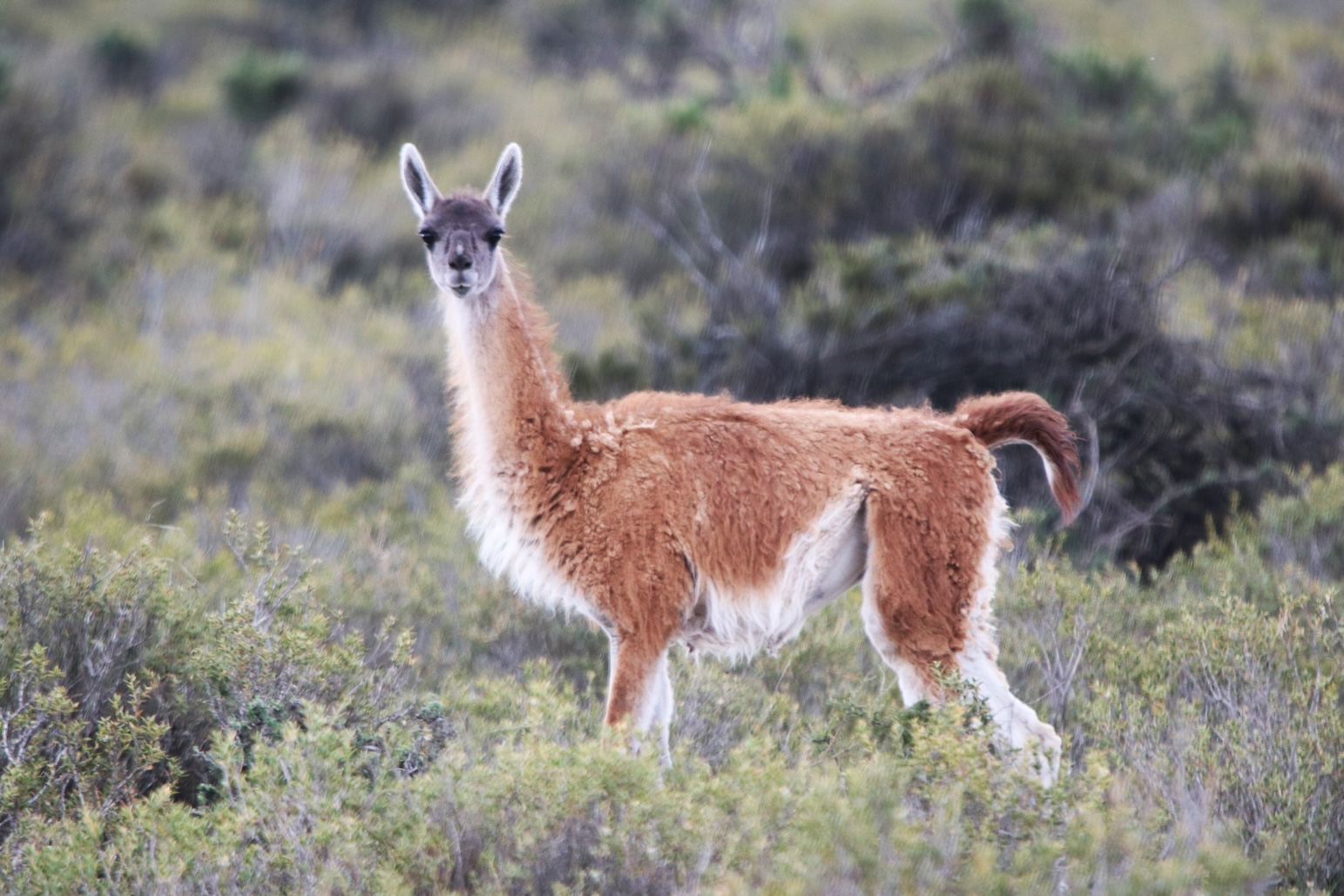 Guanacos are being reintroduced in El Impenetrable National Park to help the park’s grasslands recover after decades of overgrazing by cattle. Image by Mark Hillsdon.
Referring to genetics, he wrote that scientific studies had analyzed subpopulations of guanaco in different regions and that “there will be no genetic swamping because we are using guanacos from the same species, the same subspecies and the most genetically related with the guanacos of the Dry Chaco of Bolivia and Paraguay.”
Filippo Marino is a researcher at the Institute of Applied Ecology in Rome and deputy chair of the IUCN Human-Wildlife Interactions Working Group. He has previously written about the lack of clear criteria around translocations; the most recent IUCN guidelines on how they should be carried out was published in 2013.
The IUCN lists four types of conservation translocations, he told Mongabay during a phone call. They include reintroduction and population reinforcement, focused on restoring populations within their indigenous range, such as the European bison (Bison bonasus) in Poland. The others are assisted colonization and ecological replacement, and they involve the movement and release of an organism outside its indigenous range. A key example, he suggested, is moving kākāpō (Strigops habroptila), a species of flightless parrot in New Zealand, to predator-free islands.
It can be a controversial topic, he said, and any translocation “needs to be science-based [and] backed up by robust evidence.” It also needs to include a feasibility assessment and consider all its potential impacts, from the ecological and the biological to the sociopolitical, he added.
The issue is further complicated by significant cuts to Argentina’s environmental budgets under the administration of President Javier Milei, a drop in real terms of almost 69% in 2025 compared with 2023, according to the NGO FARN.
As a result, “most scientists in Argentina are currently struggling simply to maintain their positions,” Balza said. As public science systems collapse, scientific activity is increasingly portrayed as a burden on public resources rather than as a public good.
“In this context, it becomes difficult to sustain the kind of open and necessary debate about how public and private sectors can work together in a constructive and transparent way.”
But overcoming these difficulties is vital, added Marino, who suggested that the public and private sectors need to stop working in isolation and align their strategies for nature conservation at a national and regional level. “[There’s] a lot of potential synergy.”
Banner image: Guanacos in Patagonia National Park in Argentina. Image by Mark Hillsdon.
Citations:
Travaini, A., Zapata, S. C., Bustamante, J., Pedrana, J., Zanón, J. I., & Rodríguez, A. (2015). Guanaco abundance and monitoring in southern Patagonia: Distance sampling reveals substantially greater numbers than previously reported. Zoological Studies, 54(1). doi:10.1186/s40555-014-0097-0
Aiello, C. M., Nussear, K. E., Walde, A. D., Esque, T. C., Emblidge, P. G., Sah, P., … Hudson, P. J. (2014). Disease dynamics during wildlife translocations: Disruptions to the host population and potential consequences for transmission in desert tortoise contact networks. Animal Conservation, 17(S1), 27-39. doi:10.1111/acv.12147
Balza, U., Baldi, R., Rodríguez‐Planes, L., Ojeda, R., & Schiavini, A. (2023). Scientific evidence does not support the translocation of guanacos in Argentina. Conservation Science and Practice, 5(11). doi:10.1111/csp2.13031
Marin, J. C., González, B. A., Poulin, E., Casey, C. S., & Johnson, W. E. (2012). The influence of the aridAndean high plateau on the phylogeography and population genetics of guanaco (Lama guanicoe) inSouthAmerica. Molecular Ecology, 22(2), 463-482. doi:10.1111/mec.12111
Marino, F., McDonald, R. A., Crowley, S. L., & Hodgson, D. J. (2024). Rethinking the evaluation of animal translocations. Biological Conservation, 292, 110523. doi:10.1016/j.biocon.2024.110523
FEEDBACK: Use this form to send a message to the author of this post. If you want to post a public comment, you can do that at the bottom of the
page.
