
For decades, U.S.-Iran relations have followed a wearying script: escalation, partial diplomacy, collapse, and recrimination. The cycle has repeated so often that it has come to feel structural rather than contingent. Now, with indirect negotiations quietly resuming in Oman amid the wreckage of last year’s Operation Midnight Hammer—a wave of U.S.-backed Israeli strikes on Iran’s nuclear facilities at Natanz, Fordow, and Arak—Washington faces another hinge moment.
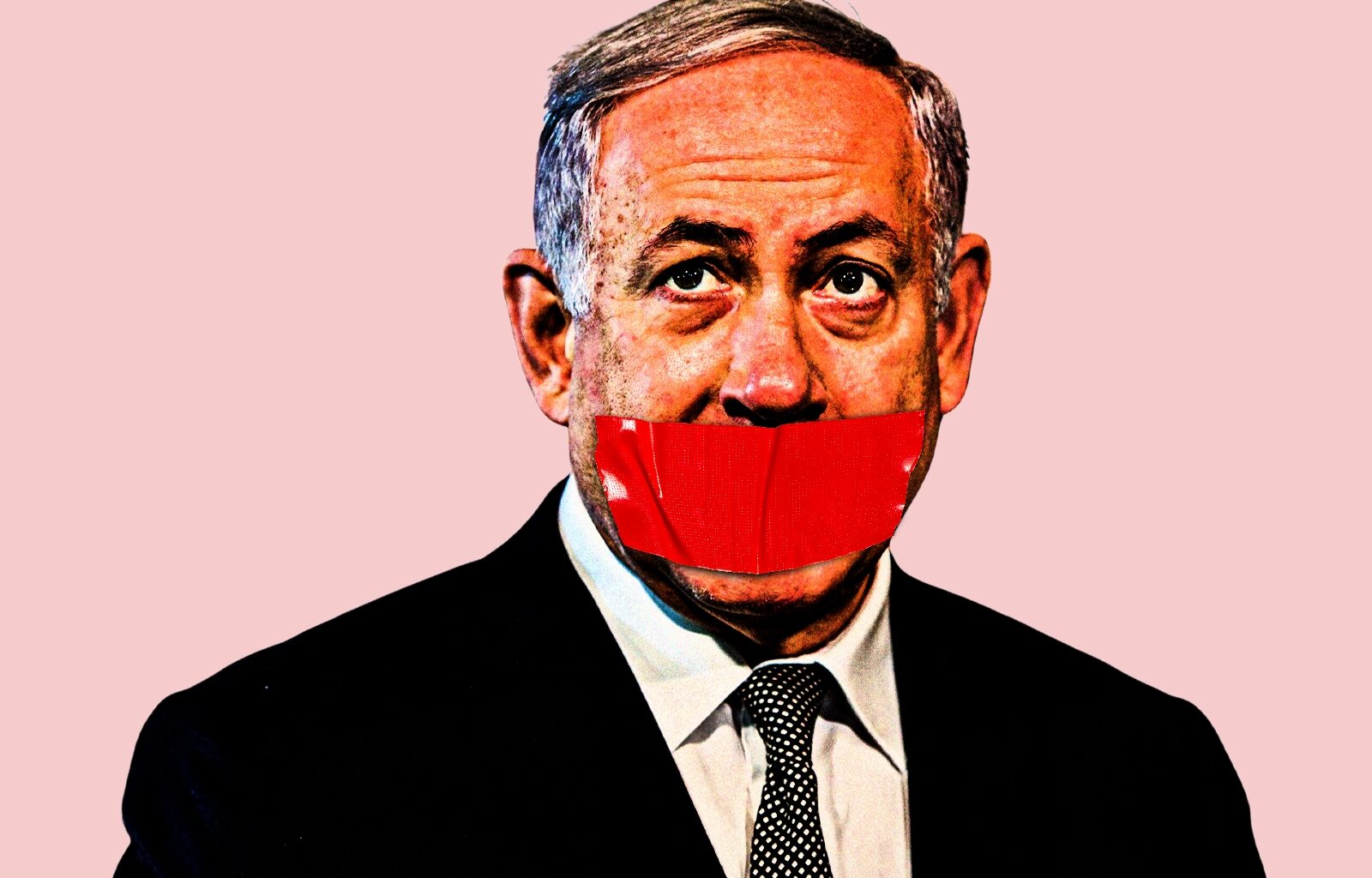
The Trump administration has signaled a pragmatic readiness to pursue a narrowly tailored agreement focused squarely on Iran’s nuclear program: verifiable caps on enrichment, intrusive inspections, and calibrated sanctions relief. Yet Israeli Prime Minister Benjamin Netanyahu, arriving in Washington again this week, is pressing for a sweeping ultimatum that would extend far beyond uranium to encompass Iran’s ballistic missiles, its regional proxy network, and even its domestic political conduct—demands Tehran has long rejected as violations of sovereignty.
The United States should resist that pressure. A focused, nuclear-centered agreement is not an exercise in naiveté; it is a strategic necessity rooted in American interests. The core objective is straightforward: prevent Iran from acquiring a nuclear weapon. Everything else—regional rivalries, proxy wars, ideological hostility—belongs to a different negotiating track, if it belongs in negotiations at all. Expanding the scope now would risk collapsing talks that are, however tenuously, back on life support. A narrower deal would secure measurable nonproliferation gains while sparing the United States another open-ended Middle Eastern entanglement and allowing it to redirect diplomatic and military capital toward higher-order priorities, including competition with China in the Indo-Pacific.
The nuclear file remains the most plausible avenue for progress because it is the most urgent and the most technically defined. Before the 2015 Joint Comprehensive Plan of Action, Iran operated roughly 19,000 centrifuges and possessed enough low-enriched uranium that, if further processed, could have produced material for a single bomb. The JCPOA imposed strict limits: enrichment capped at 3.67%, only 5,060 first-generation IR-1 centrifuges allowed to spin, and a regime of International Atomic Energy Agency monitoring that included continuous surveillance and snap inspections. Iran complied until 2019. After the United States withdrew from the agreement and reinstated sweeping sanctions under the banner of “maximum pressure,” Tehran began incrementally breaching those limits, leveraging its nuclear advances in response.
Today’s landscape is more volatile. The 2025 strikes inflicted substantial damage on underground facilities and reportedly pushed Iran’s enrichment program back by at least a year, stretching its breakout timeline from weeks to several months. But the danger has not disappeared. Iran retains significant stockpiles enriched to 60% purity—just a short technical leap from weapons-grade. Iranian officials, including Foreign Minister Abbas Araghchi, have reportedly indicated a willingness to roll enrichment back to 20% or lower and to restore full IAEA access, including to sites damaged in the strikes, in exchange for phased sanctions relief and the unfreezing of assets abroad. These terms fall short of the original JCPOA’s rigor, yet they would still provide enforceable guardrails. With satellite monitoring and on-the-ground inspections, Washington could meaningfully extend breakout time and regain visibility into a program that has drifted into opacity.
By contrast, insisting that nuclear talks also resolve Iran’s missile program or dismantle its regional alliances would almost certainly torpedo diplomacy. Iran’s ballistic missiles—from short-range systems like the Fateh-110 to medium-range platforms such as the Shahab-3—form a central pillar of its deterrent doctrine, especially after high-profile assassinations, including that of Qassem Soleimani in 2020, and subsequent Israeli strikes. Tehran views these capabilities not as bargaining chips but as existential insurance. The same logic applies to its network of allied militias and political movements, long framed domestically as an “Axis of Resistance.” However destabilizing these relationships may be, they are embedded in Iran’s security worldview. Forcing their immediate dismantlement as a precondition for nuclear restraint would likely stiffen Iranian resistance and accelerate covert nuclear work, raising the risk of renewed Israeli or U.S. military action and a multi-front escalation.
Netanyahu’s maximalism is understandable from Jerusalem’s vantage point. Iranian missiles can reach Tel Aviv. Hezbollah’s arsenal in Lebanon and the Houthis’ capabilities in Yemen have, at various moments, posed direct threats. Israel’s security doctrine favors preemption over patience. But the United States must calculate differently. America’s geographic remove does not eliminate risk, yet it does alter it. An unending confrontation with Iran drains diplomatic bandwidth, destabilizes energy markets through periodic crises in the Strait of Hormuz, and increases the odds of U.S. forces being pulled into clashes in Iraq, Syria, or the Persian Gulf. These are not abstractions; they echo the costly commitments of the past two decades.
Domestic politics in Israel further complicate the picture. Netanyahu, navigating corruption trials and managing a coalition reliant on ultranationalist partners, benefits politically from projecting uncompromising resolve against Iran. His return to Washington during delicate talks recalls his 2015 address to Congress opposing the JCPOA, an extraordinary intervention in U.S. policymaking. Past episodes offer caution. The collapse of the nuclear deal and the embrace of maximum pressure did not halt Iran’s nuclear advances; they accelerated them. Military strikes may degrade infrastructure, but they rarely eliminate knowledge or resolve.
The regional environment, moreover, has shifted in ways that make a nuclear deal more achievable—and more urgent. In the early 2020s, Iran’s strategy of “forward defense,” projecting power through partners from Yemen to Lebanon, gave it formidable reach. But the conflicts of 2024 and 2025 reshaped that landscape. Israel’s campaigns in Gaza and southern Lebanon severely weakened Hamas and Hezbollah. Hamas’s leadership was decimated, including the killing of Yahya Sinwar in late 2024, and much of its military infrastructure was dismantled during the Rafah offensive and subsequent operations. A fragile ceasefire persists, yet the organization’s capacity is a shadow of its former self.
Hezbollah endured similar blows. The assassination of Hassan Nasrallah in September 2024 and sustained Israeli strikes on command centers in Beirut’s Dahiyeh suburb and weapons depots in the Bekaa Valley degraded its operational cohesion. Rocket fire that once threatened to overwhelm Israel’s defenses dwindled to sporadic attacks. A U.S.- and France-brokered ceasefire required a partial withdrawal north of the Litani River, even if disarmament deadlines slipped. Compounding these setbacks was the collapse of Bashar al-Assad’s regime in Syria, which disrupted key supply corridors for Iranian arms transfers. The so-called Axis of Resistance remains, but in diminished form.
Inside Iran, pressure has mounted. The nationwide protests that erupted on December 28, 2025, initially sparked by a plunging rial and inflation exceeding 40%, spread rapidly across more than 200 cities. Economic grievances fused with demands for systemic political change, evoking memories of the 2022 Mahsa Amini protests but on a broader scale. The state’s response was severe: live fire in some regions, mass arrests, and an Internet blackout imposed in early January. Human rights groups report thousands of casualties. Although the demonstrations were largely suppressed, unrest simmers. Strikes in oil fields and universities point to deep fragility. In this context, sanctions relief is not a luxury for Tehran; it is a stabilizing imperative.
Arab states have recalibrated as well. Once among the most vocal advocates of confronting Iran, Gulf monarchies such as Saudi Arabia, the United Arab Emirates, and Qatar have grown wary of escalation. Ahead of the 2025 strikes, they engaged in urgent diplomacy to warn against a widening conflict that could imperil shipping lanes, spike oil prices, and invite retaliatory attacks on their own territory. For these governments, de-escalation is now a strategic preference. Oman and Qatar have facilitated backchannel contacts, and even critics of Tehran see value in reducing nuclear risk as a foundation for broader regional stability.
The benefits of a nuclear agreement would be concrete. Restored caps on enrichment and stockpiles, combined with renewed IAEA access—including to sensitive sites such as Parchin—would lengthen Iran’s breakout timeline and provide early warning of violations. Limited sanctions relief could stabilize global energy markets by restoring Iranian exports, easing price volatility that affects consumers worldwide. In the longer term, structured economic engagement could create incentives for moderation, even if transformation remains distant.
None of this requires abandoning Israel or minimizing its concerns. The U.S.-Israel relationship remains central, anchored by substantial military aid and deep intelligence cooperation. But alliance does not mean automatic alignment on every tactical question. American strategy must reflect American priorities. President Trump, who has shown a willingness to defy orthodoxies in pursuit of negotiated outcomes, has an opportunity to secure a pragmatic agreement that constrains the most dangerous element of Iran’s posture without igniting a broader war.
Iran approaches these talks weakened—its economy strained, its regional network battered, its domestic legitimacy contested. That asymmetry creates leverage. The United States should use it wisely. A focused nuclear deal would not resolve every grievance between Washington and Tehran, nor would it dissolve the ideological chasm separating them. It would, however, cap the most immediate threat and reduce the likelihood that the next crisis in the Middle East is nuclear in nature. Netanyahu will continue to press his case in Washington. The United States can listen respectfully—and then proceed in accordance with its own interests.
If you’re interested in writing for International Policy Digest – please send us an email via submissions@intpolicydigest.org