
Photo: Courtesy of Tiffany & Co.
In 1837, Charles Lewis Tiffany and John B. Young opened Tiffany & Co. in New York as what was then referred to as an emporium, selling imported household goods like umbrellas, soap, silverware, fragrances, and gloves. It would be a decade before the store offered its first timepiece, also imported. It would be yet another 20 years before it would debut a marvel: its first in-house watch, the Tiffany Timer, which is currently celebrating its 200th anniversary.
This was all explained to me this week on the 11th floor of the Tiffany Landmark flagship, on Fifth Avenue at 57th Street, where I passed a Basquiat on the way to the elevators. Upstairs, I was shown to the tastefully appointed private salons, which typically host spendy VIPs (a tip for the one percenters who shop there: It serves the best damn iced coffee I’ve ever had the honor of tasting). Here, I began to realize that tracing the history of watches is a bit like bingeing a few seasons of The Gilded Age — it feels like escapism but also packs in a social-studies lesson. Take those first Tiffany chronographs: They were made almost exclusively for men and lived mostly in their pockets; watches on your wrist wouldn’t come along for many more decades. Meanwhile, it was thought unbecoming for a woman of that era to concern themselves with matters of time, though she likely needed to if she wanted to properly run a household. In the late 1800s, however, ladies did start to carry timepieces designed more as decoration, such as chatelaine watches that hung from the waist or timekeepers styled as pendants or necklaces. (But none nearly as large as Flavor Flav’s.)
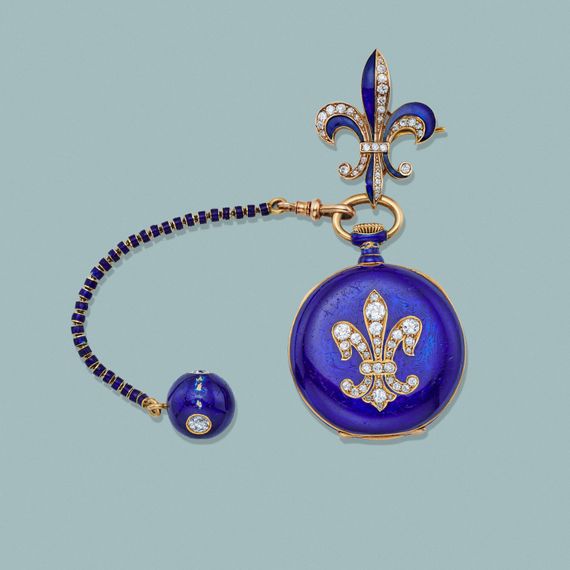
A gold-and-enamel lapel watch from 1887.
Photo: Courtesy of Tiffany & Co.
Today, Tiffany employs seven archivists to study and record the brand’s deep history, stalking auction houses for antique pieces to complement the collection. They are also a resource for inspiring future designs. On display were dainty bejeweled and enameled watches, some first shown at the 1878 World’s Fair in Paris, all delicately etched with fine carvings. They were used to inspire this year’s offerings.
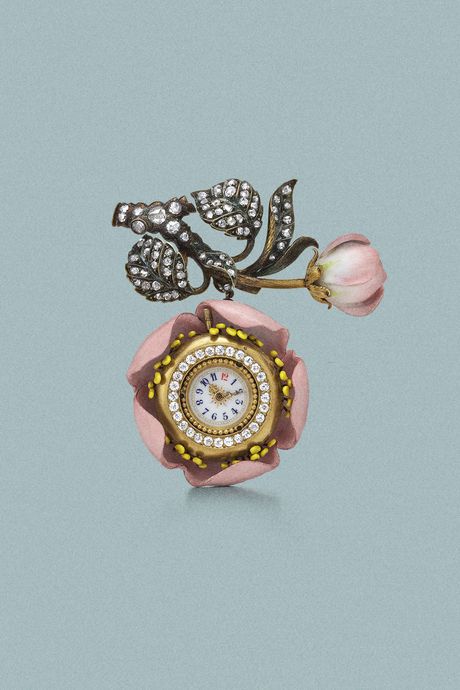
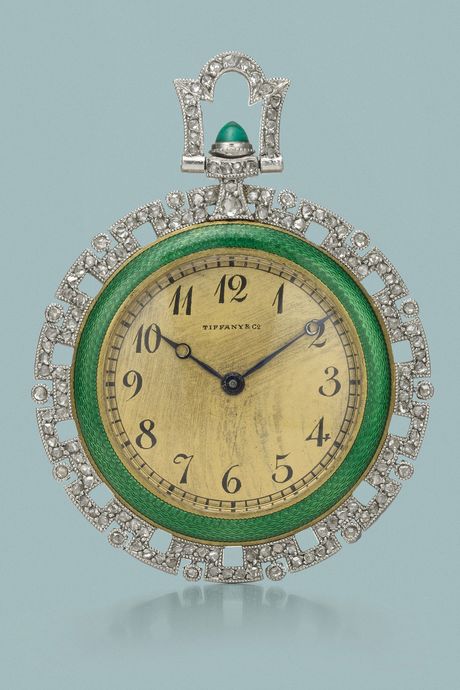
From left: A watch from 1898. Photo: Courtesy of Tiffany & Co.A watch from 1915. Photo: Courtesy of Tiffany & Co.
From top: A watch from 1898. Photo: Courtesy of Tiffany & Co.A watch from 1915. Photo: Courtesy of Tiffany & Co.
Which brought me to the main event — a walk-through of the brand’s 2026 timepiece releases. Watches, of course, are no longer mere keepers of time but a whole outlandish industry tied up with ideas of status and power, now fed by festivals, trade shows, and their very own influencers ready to analyze each piece down to every last lume dot. What will they see this year? While Paloma Picasso’s and Elsa Peretti’s curvy, demure, and sensual creations for Tiffany are infamous in design circles, this year the company tapped the more florid work of Jean Schlumberger, creator of the Bird on a Rock design.
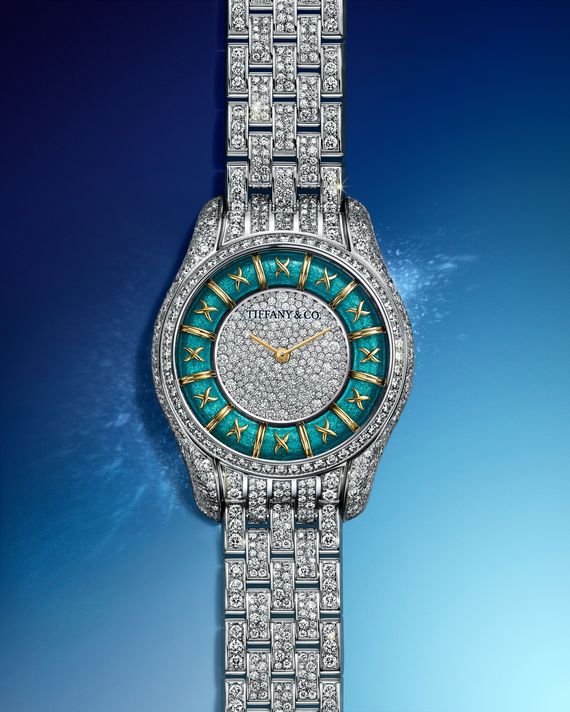
Photo: Courtesy of Tiffany & Co.
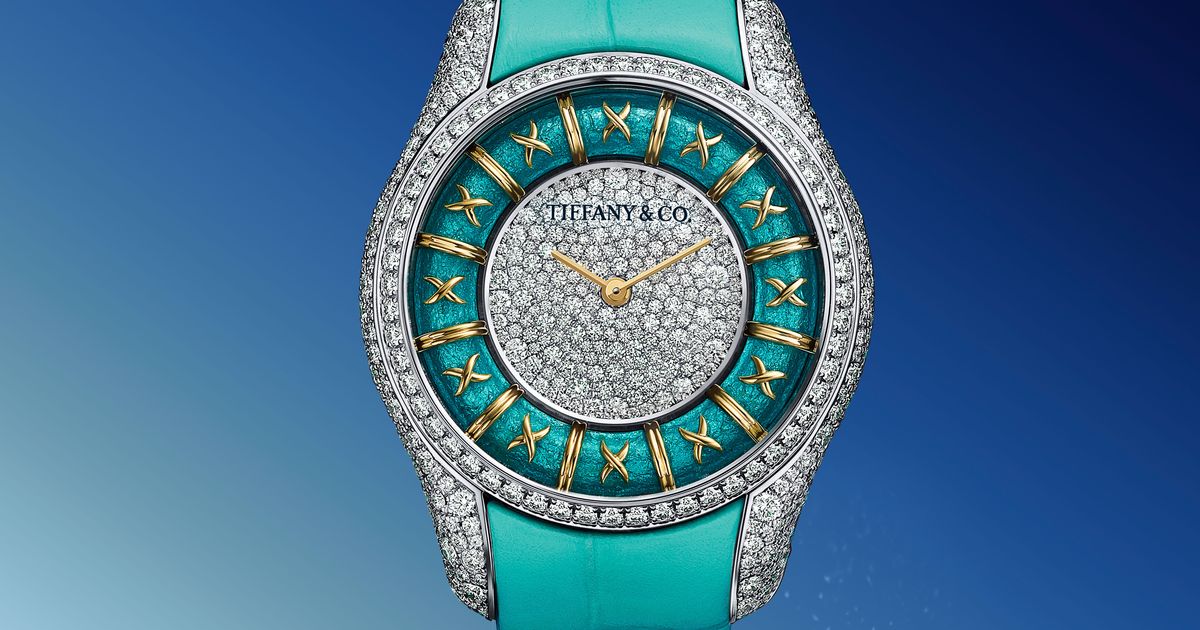
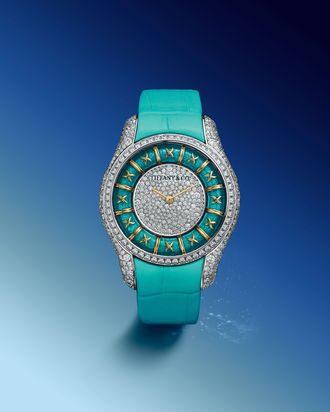
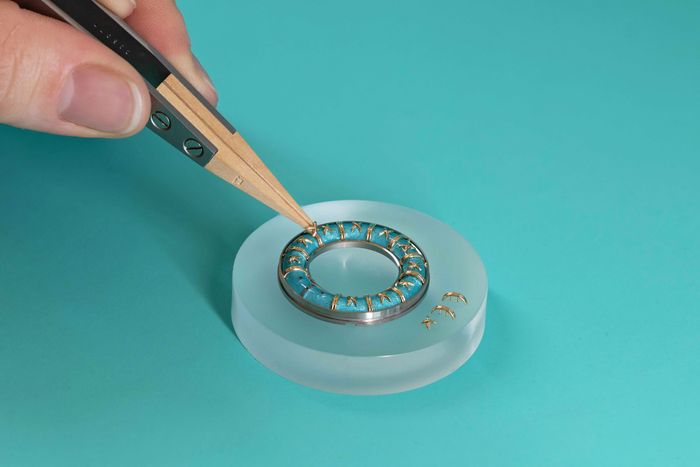
In addition to Schlumberger, enamel is the big story here, expressed in the release of three wristwatch variations all featuring a glittering diamond dial enclosed in a revolving ring of enamel in Tiffany blue or white inspired by Schlumberger’s Croisillon bangle. The blue version is crafted through the painstaking process of paillonné, in which layers of enamel are applied to thin sheets of silver, then fired multiple times to achieve a pleasing cylindrical shape (like a fab doughnut) and luster. One member of the workshop was on hand to show me the silver sheet — so delicate it would just fly away if it caught a breeze — and the mortar and pestle used to grind glassy blue stones into a liquid until it becomes a sandy substance. As she so poetically put it, you know it’s ready to be applied when the crystals sing. Along the outer circle is another Schlumbergian touch: 12 delicate 18-karat gold “cross-stitches,” a signature motif of the designer, a reference to his family’s history in textiles, and a symbol of the bonds in one’s life. For that reason, it’s also a popular wedding-ring design.
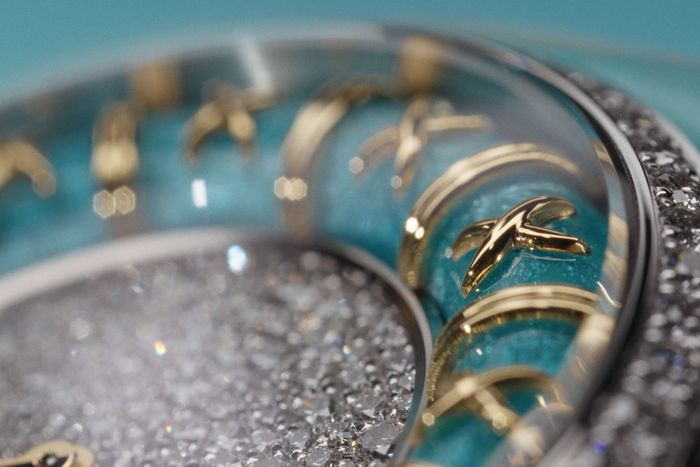
From left: Photo: Courtesy of Tiffany & Co.Photo: Courtesy of Tiffany & Co.
From top: Photo: Courtesy of Tiffany & Co.Photo: Courtesy of Tiffany & Co.
Despite the watches’ obvious opulence — one model with a diamond-encrusted strap easily costs more than most homes in the U.S. — the spinning outer band not only imparts a sense of freewheeling dynamism but also whimsy, a Schlumberger hallmark. I was shown other models inspired by his work, including one with the Bird on a Rock placed lovingly on a watch face (the rock, it should be said, is a fat ol’ diamond). Quiet luxury these watches are not.
Stay in touch.
Get the Cut newsletter delivered daily
Vox Media, LLC Terms and Privacy Notice