
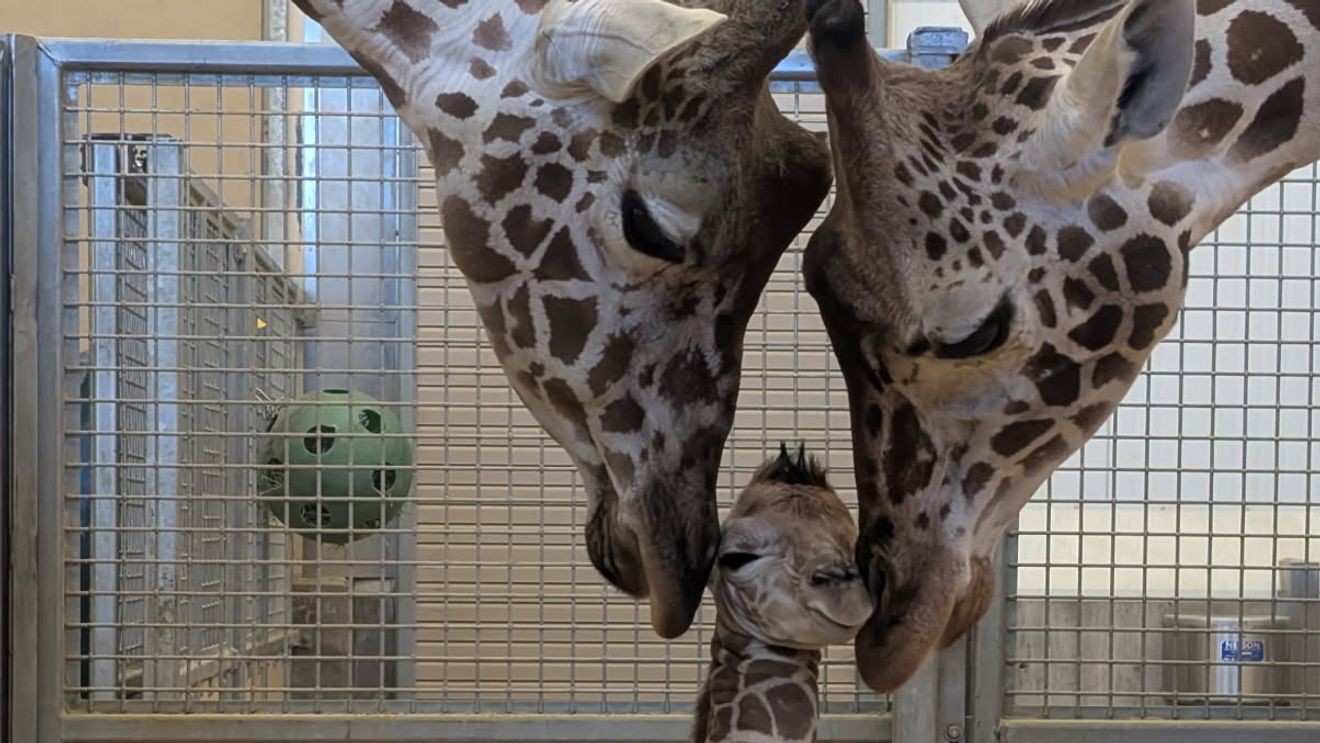
SALT LAKE CITY (KUTV) — Giraffe populations in the wild are declining. It’s a crisis some conservationists call a “silent extinction.”
But here in Utah, Hal, a newborn giraffe at Utah’s Hogle Zoo, offers some hope.
Like many newborns, Hal is still trying to figure out his brand-new world. His days are simple fill with standing, nursing, exploring and staying close to mom.
Hal’s story, however, is much taller than just one baby giraffe.
MORE | Eye On Utah
Melissa Dacumos, the associate director of animal care at Hogle Zoo, has dedicated her career to caring for giraffes. She has been trying to protect their future.
“Their numbers are really dwindling in the wild,” Dacumos said. “We actually have several subspecies that are critically endangered, and two species that are endangered.”
That’s why births like Hal’s matter. Hal is the second giraffe born at Utah’s Hogle Zoo in just one year. His birth comes as part of a carefully coordinated breeding effort between zoos worldwide.
“So, we’re all a community,” said Dacumos, speaking on the Giraffe Species Survival Plan Management Group. “We all want what’s best for giraffes.”
Now, Hal is part of that crucial breed program. One day, just like his dad, Ja, who came to Utah from the Memphis Zoo as part of the breeding program, Hal may leave Utah to help another zoo.
“The babies that are born here may stay here, or they may actually go and help populate other zoos as well,” explained Dacumos.
It’s all part of a plan – one designed to protect giraffes for generations to come. Dacumos said conservationists are leaning into a robust breeding herd as one of the ways to help keep a sustainable population within human care.
But conservation doesn’t start with science. It often starts with something much simpler.
Dacumos said it starts with maybe seeing a giraffe in person, which for her happened decades ago. She said she felt that love and inspiration to go do more in the wild.
“I just remember being so in awe of their presence and, of course, I knew then that they were beautiful,” she said.
And seeing Hal, only a few weeks into his life, it’s easy to understand why. And while he is still learning his way around, his baby steps today could help protect giraffes tomorrow.
_____