
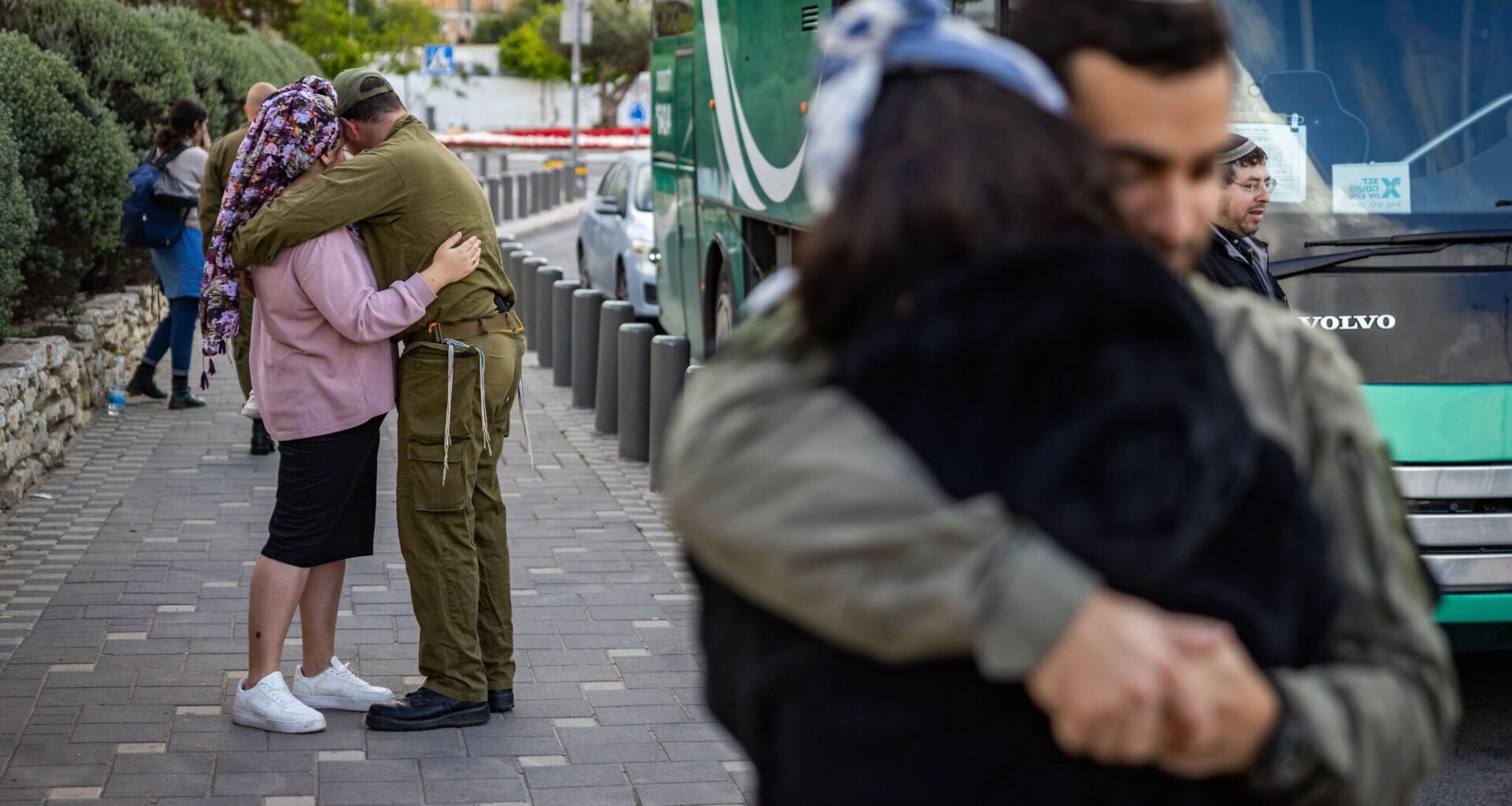
Roses and chocolates are nice — but for some Israeli couples, their love story started with a rifle and a uniform.
In a country where military service is a shared rite of passage, the Israel Defense Forces have also become an unlikely backdrop for romance, bringing together young men and women from across the country and all walks of life.
Days begin before sunrise, friendships form quickly, and life’s most formative moments often unfold under pressure. In that intense, insular world, bonds are forged fast.
The army is not designed to be a place for love. It is built on hierarchy, discipline and orders. And yet, amid the fatigue, the long nights on guard duty and the fleeting breaks from routine, some soldiers end up finding something enduring: a romantic partner.
Under army regulations, there is no blanket ban on relationships between servicemembers. However, the military’s strict hierarchical environment can be fertile ground for abusive dynamics, especially between commanders and subordinates, and there are rules intended to prevent discipline issues, sexual harassment and exploitative or improper relationships.
Get The Times of Israel’s Daily Edition
by email and never miss our top stories
By signing up, you agree to the terms
Generally, soldiers at similar ranks serving in the same unit can couple up as long as their relationship is reported to their commanders and it does not affect their functioning in the military. A relationship between a commander and a subordinate soldier is nearly always prohibited, even if it is consensual.
In honor of Valentine’s Day, The Times of Israel spoke with couples whose relationships began while they were on duty — shaped by the boundaries of military life and carried far beyond the bases where they first met.
Anchored by love
The year was 1996. Ofra Etzion, now 48, was serving as a fitness instructor on a navy base in Eilat when she met Yoav, now 50, a naval officer and — unbeknownst to her — her future husband.
But if you ask Yoav, he’d tell you he knew the moment he laid eyes on her.
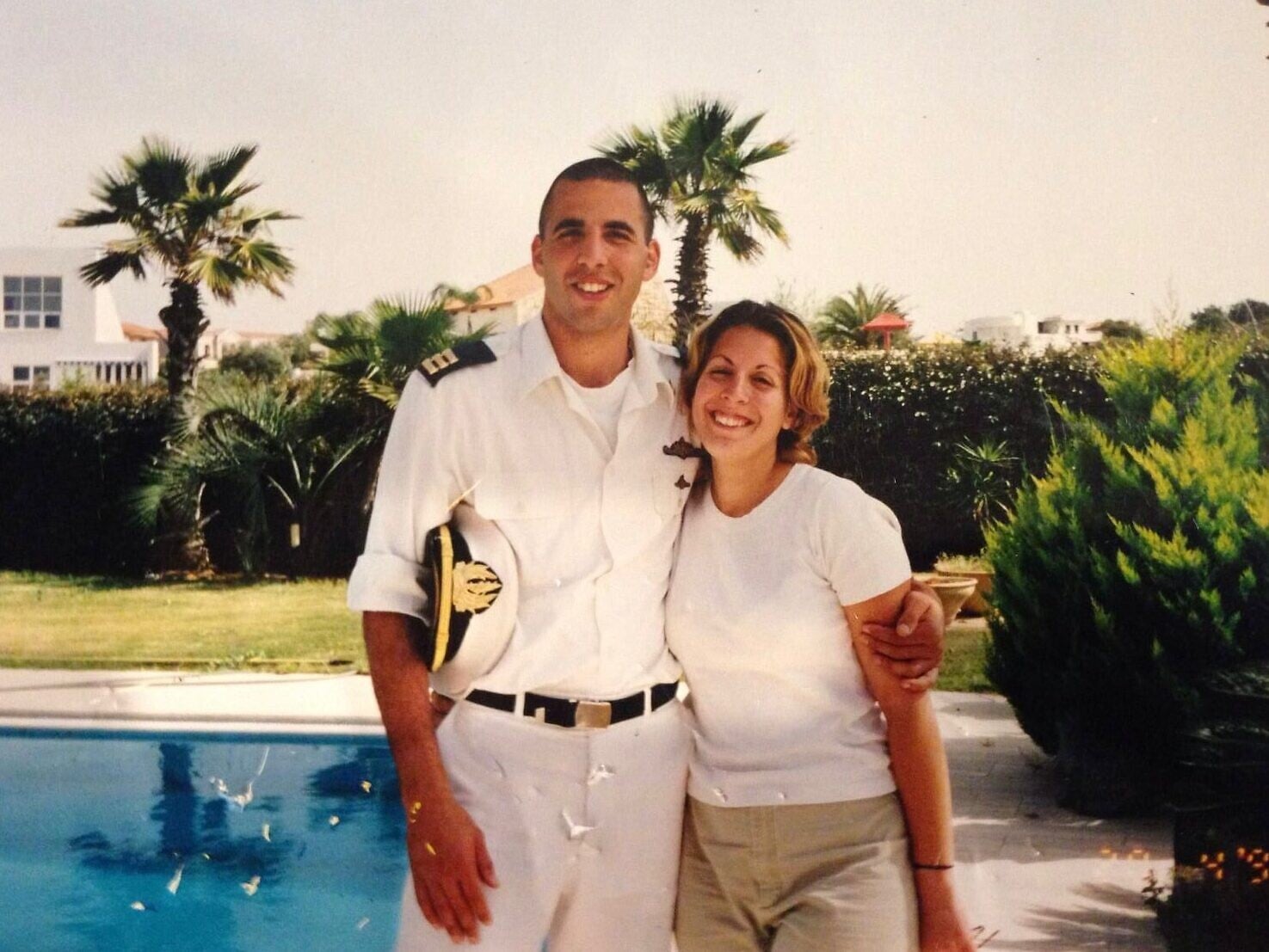
Yoav, left, and Ofra Etzion, 1998. (Courtesy)
“My ship docked in Eilat for two months,” he told The Times of Israel. One day, he went to the base headquarters, and there she was.
“I remember to this day what she wore — a white shirt that read, ‘The navy is my corps,’ and — I think — light blue tights,” he recalled, adding that “she moved something in my heart.”
After that, Yoav spent his time lingering outside the base gym, waiting for the right moment to approach the mystery woman he had already fallen for. A few days later, he finally did.
For Ofra, the fall came more slowly — a month, by her estimation. But eventually, she gave in to his charm and agreed to take a chance on a date.
“She gave me her phone number, but I didn’t remember it,” Yoav said, though today he can recite it by heart. A fellow officer nearby overheard and came to his rescue with the digits. “That’s how I managed to call her.”

Ofra, left, and Yoav Etzion, 2026. (Courtesy)
Their first date was at a small cafe on the Eilat boardwalk, the Green Onion. Yoav, trained to find his way across dark waters, spent the evening talking about the stars.
“That was his way of flirting with me,” Ofra said with a laugh. The rest, as they both say, is history.
Three years later, while traveling through the United States, Yoav proposed in Las Vegas with a ring he had bought in Florida with his brother. Ofra was so excited that she ended up leaving Yoav hanging.
“She hasn’t told me yes until today. She ran to call her mother and tell her that I proposed,” Yoav explained.
The two are now parents to three daughters — Noy, 23, Shani, 19, and Mia, 17 — and they live in Las Vegas, the very city where Yoav asked Ofra to marry him, and where Ofra ran, overwhelmed, to tell her mother. He owns an accounting firm, while she serves as the Las Vegas regional director of the Israeli American Council.
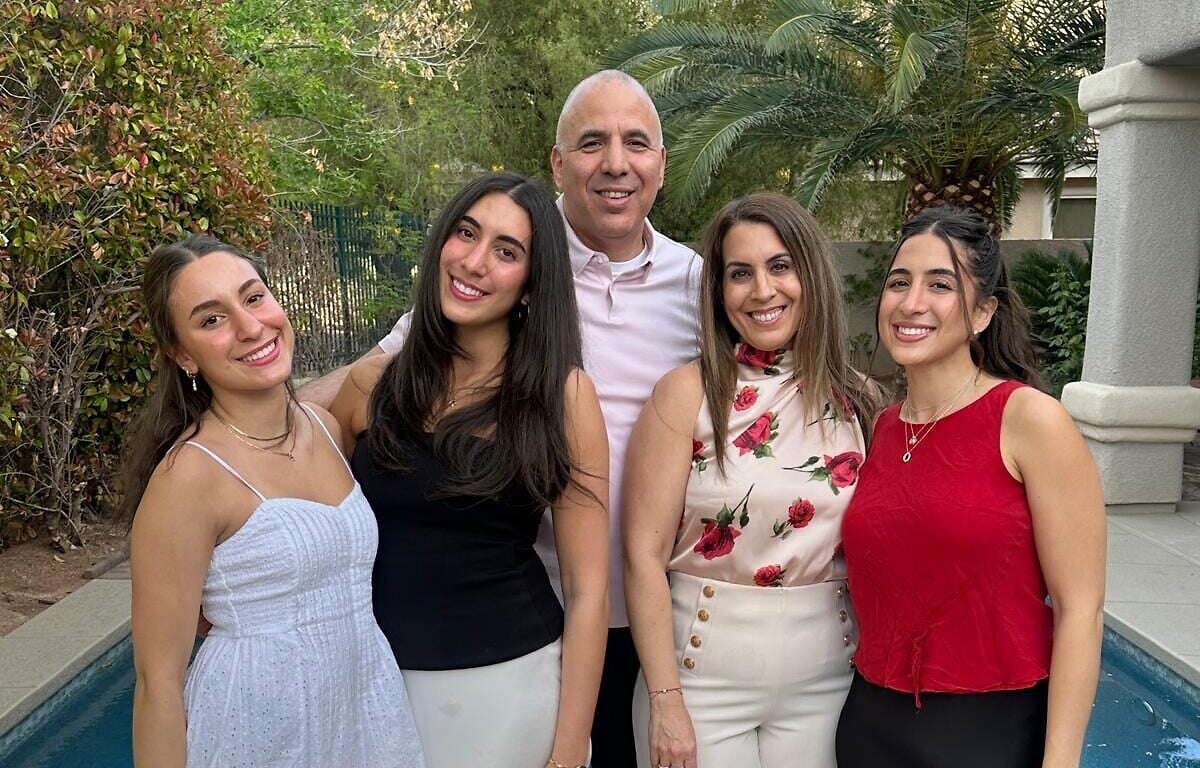
The Etzion family, 2025. (Courtesy)
Noy and Shani have both moved to Israel, while Mia, still a high school junior, plans to do the same. Noy served in the IDF and now studies at Herzliya’s Reichman University, while Shani followed her parents’ path into the navy.
“We’re very happy that they’re getting the Israeli experience,” Ofra said. She hopes it may also bring them each their own good Jewish husbands.
Love at first salute
Yarden Smolarchik, 26, took her role as an IDF commander seriously. She was disciplined, strict about orders, and deeply careful to keep clear boundaries with her soldiers.
The last thing she ever expected was to fall in love with one of them.
Hanna Smolarchik, 26, a California native who immigrated and served as a lone soldier, felt differently. The moment she saw Yarden’s curly blonde hair in 2018 at the Michve Alon base during an intensive Hebrew course for non-native speakers, she was sure she had found her future wife.

Yarden, left, and Hanna Smolarchik, 2019. (Courtesy)
Yarden wasn’t her direct commander, but Hanna made it her mission to be noticed — bypassing the chain of command to report to Yarden instead, and even writing her a letter.
Yarden mostly ignored the advances, even as she felt herself drawn to the rebellious soldier.
“Throughout the entire course, we had a sort of tension between us,” Yarden explained. “I felt like I needed to know her… I felt like I knew her soul in a past life.”
Still, Yarden didn’t even know if Hanna was attracted to women. One day, as the platoon stood at attention, she positioned herself behind Hanna to study the tattoos on her forearms.
That’s when she saw it: a small tattoo of two interlocking female symbols, the universal sign for lesbian relationships.
Even then, Yarden held back. She waited until the four-month course ended and Hanna moved on to the Caracal infantry battalion before allowing anything to unfold. And at first, it was only friendship.
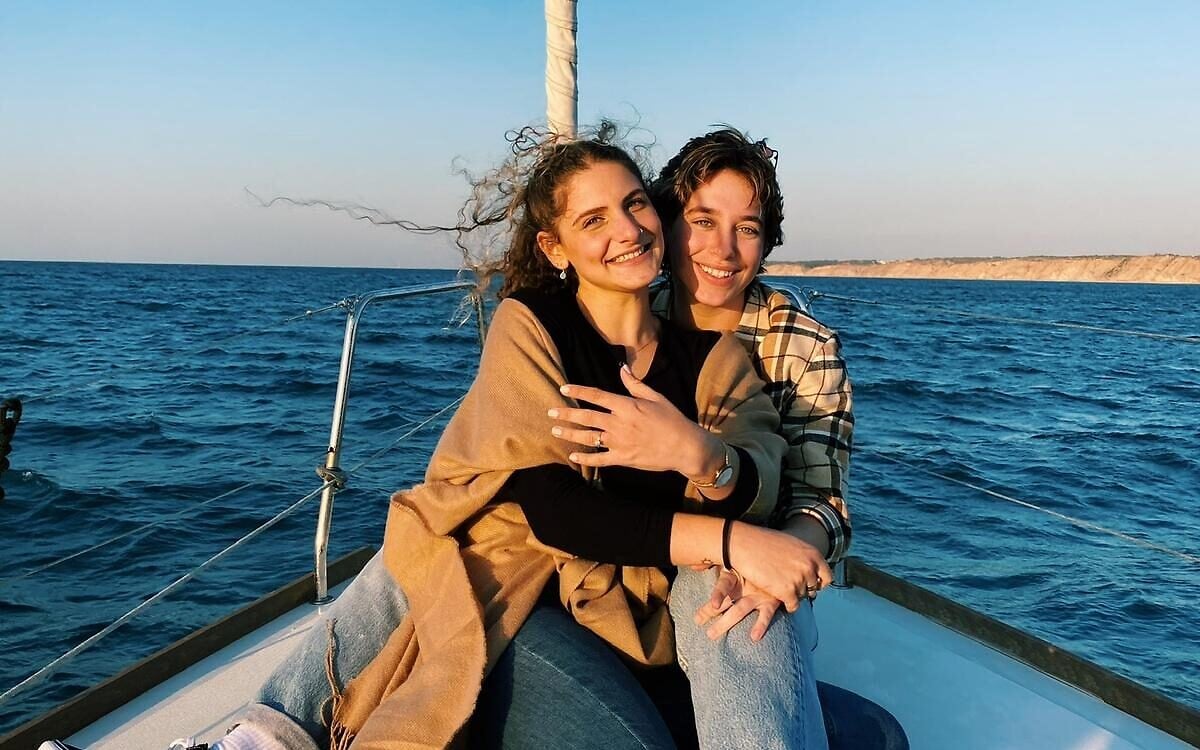
Yarden, left, and Hanna Smolarchik, 2020. (Courtesy)
Two weeks later, on a drunken night out, the restraint broke.
“She didn’t tell me she had feelings for me — she told me that she loves me,” Hanna recalled about Yarden’s inebriated confession.
But their love came with resistance, especially from Yarden’s grandfather.
“He didn’t like the idea of me being with a girl,” Yarden said. For four years, he refused to speak to either of them, only warming up to Hanna after she began nannying Yarden’s cousin, his youngest grandson.
Two years later, he even agreed to host their wedding in his own backyard.

Yarden, left, and Hanna Smolarchik, 2024. (Courtesy)
“For the wedding, we didn’t have a lot of support — we just went for it,” Hanna explained. “We just chose each other.”
Today, Hanna is a doula, a nonmedical professional who assists women through childbirth, and runs a Chinese medicine clinic, while also working as a cook and culinary social media influencer. Yarden owns her own business teaching people about numerology and spirituality, with a growing online following.
They live in central Israel’s Mazkeret Batya with three cats and a dog — and hope to soon fill their home with children, too.
Who flirted first?
For the past 35 years, Noa, 52, and Ravid Brosh, 55, have been having the same argument: who started flirting with whom when they met in an IDF tank instructors’ course.
Noa insists that her future husband made the first move. Ravid is equally certain it was her.
At the time, Noa was a newly enlisted trainee, and Ravid was a tank commander nearing the end of his service — known as one of the strictest commanders on the base. Still, Noa told The Times of Israel, he seemed to take a liking to her.
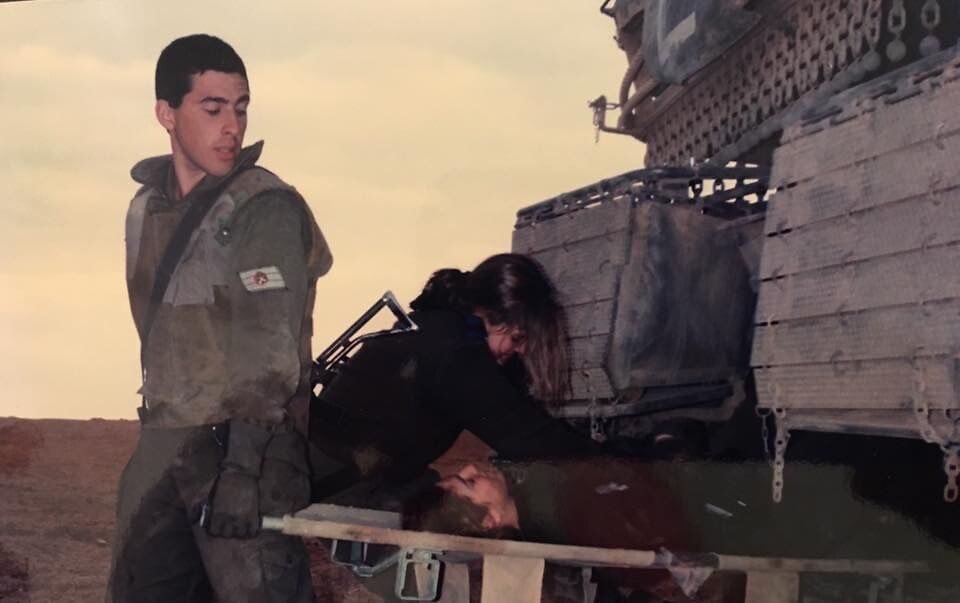
Ravid Brosh, left, carrying his future wife, Noa Brosh, on a stretcher, 1992. (Courtesy)
“We had all sorts of funny interactions throughout the course,” she recalled, despite Ravid’s tough exterior. “I think he had a soft spot for me from the beginning.”
One day, during a tank-driving test, Ravid gave Noa a score of 95 out of 100. When she protested, convinced she deserved full marks, he retorted, “Only me and God receive 100.”
The playful interactions continued during their shared months of army service — Ravid helping her pass a written exam after she broke her finger, and even carrying her on a stretcher during a simulation exercise. But they only began dating after he was discharged from the army.
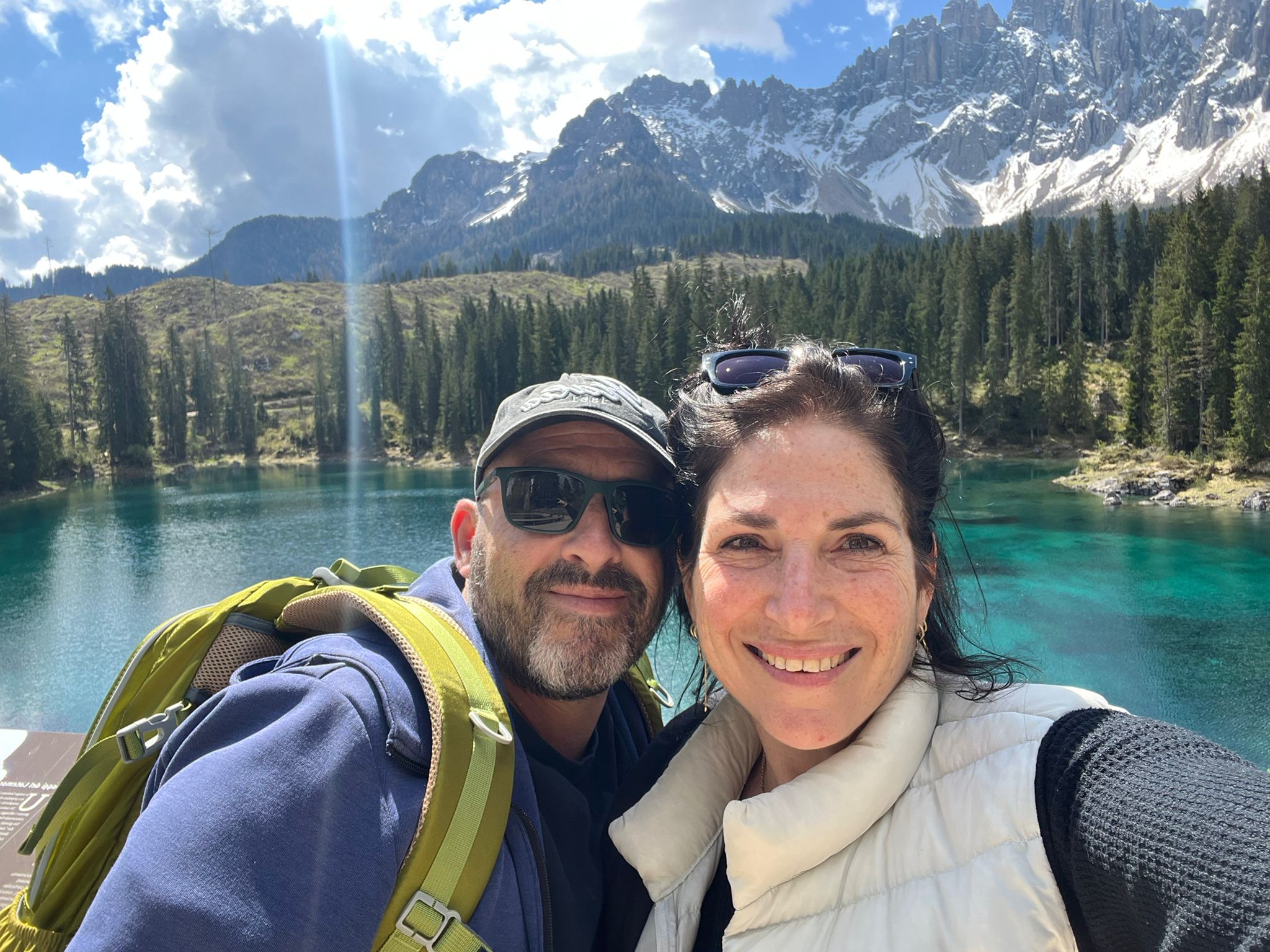
Ravid, left, and Noa Brosh, 2024. (Courtesy)
From there, everything moved quickly. They moved in together almost immediately and were married within a few years.
“When you meet at a young age, you always need to work on your relationship,” Noa said, pointing to their more than three decades of marriage as proof that the effort pays off.
The two now reside in Kibbutz Hatzor, near Ashdod. Noa works at the Branco Weiss Institute, an organization that aims to minimize societal gaps in Israel, heading its early childhood center. Ravid heads the European insurance and sales department at Rav Bariach, one of Israel’s leading door manufacturers.
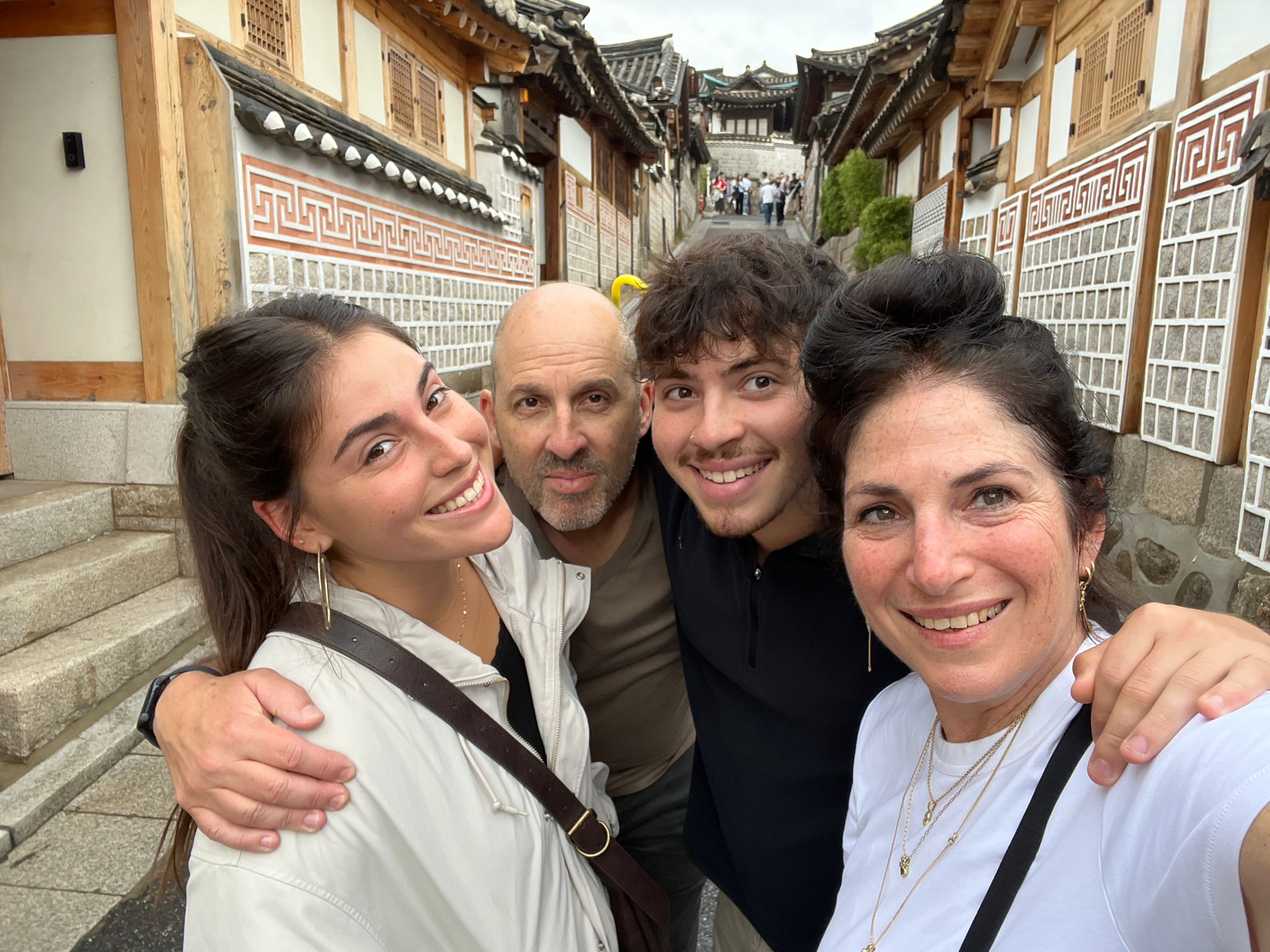
The Brosh family, 2025. (Courtesy)
They have two children: Romy, 23, who just returned from her post-army trip and plans to work to develop the Negev, and Ivri, 20, who is currently in a combat paramedics course in the IDF.
“We always joke that he was my commander in the course,” Noa said about Ravid. “But for the past 33 years, there has been a different commander in the house.”
Love on the line
“Eli” and “Maya,” both 26, who asked that their real names be withheld for fear of being doxxed, met in 2019 in the most ordinary way possible for soldiers their age: in the same friend group, passing long evenings together after training, sharing snacks and complaining about drills.
Maya, a lone soldier from Australia, had just returned to the Lions of the Valley Battalion from a paramedics course. Eli had already completed his and was preparing for the commanders’ course. At first, he was just another friend. But slowly, almost without noticing, Maya found herself developing a crush.
“I always wanted to be around him,” she recalled.
One night, after a long day of training, they sat talking with friends until the group thinned and the conversation softened. At some point, Maya rested her head on Eli’s shoulder — just for a moment, she thought. She woke sometime later, still there, with Eli as her willing pillow.
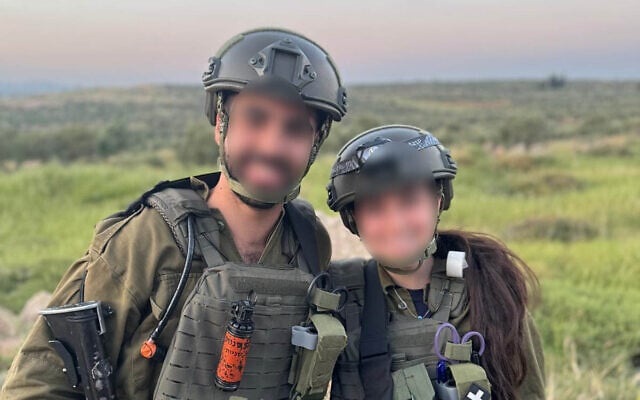
“Eli,” left, and “Maya,” 2025. (Courtesy)
Not long after, Eli left for the commanders’ course. Then COVID lockdowns shrank the world to screens and messages. For nearly two months, the two spoke only through Instagram.
When Eli finally got a weekend off, he came straight to Maya’s base. Defying pandemic restrictions, the pair slipped away to a nearby natural spring for their first date.
But army life had its own plans for them. After finishing his course, Eli was transferred to another base. Their schedules worked out in the worst possible way: when she was home, he was on duty; when he had leave, she was back in uniform.
They dated like that for 10 months — phone calls, messages and brief glimpses of each other. Eventually, exhausted by the distance, they decided to split up. That lasted two months.
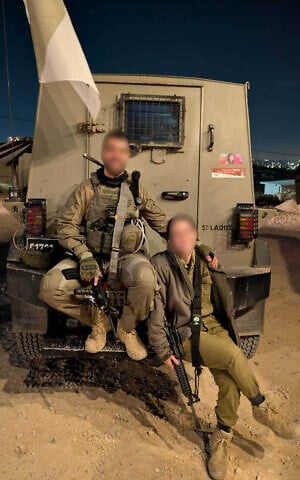
“Eli,” left, and “Maya,” 2026. (Courtesy)
When Maya was released from the army, they found their way back to each other almost immediately, as if the space between them had never really existed.
On October 7, 2023, when the nation woke to the news of the Hamas-led attacks in southern Israel, Maya and Eli were both called up for reserve duty. In the days that followed, they were assigned to search for bodies in communities along the Gaza border.
One morning, their unit began at the Black Arrow memorial. There were many bodies — too many. Later, Maya would be diagnosed with post-traumatic stress disorder.
From there, they continued to Zikim Beach. Eli was part of the first group sent forward to make sure the area was clear of terrorists. Maya watched as the team moved farther down the shore until they disappeared from sight.
Then there was an explosion in the water.
“It was really terrifying for me,” she recalled. “My heart dropped. I was ready to run to the beach straight away.”
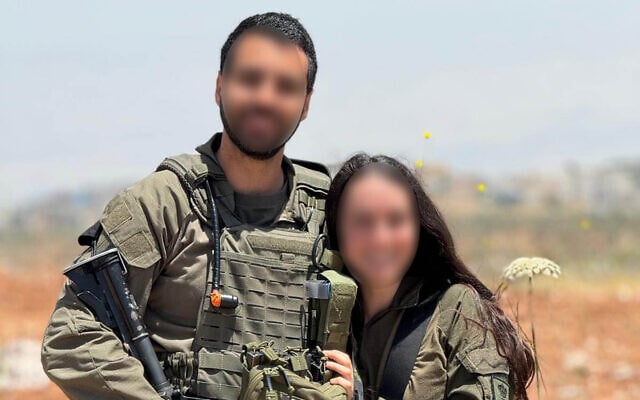
“Eli,” left, and “Maya,” 2025. (Courtesy)
For a few seconds, she couldn’t breathe. Then someone said it was the navy operating offshore. Only then did the world begin to move again.
Since that day, they have each served three reserve tours — still not on the same base, still living parallel lives in uniform. The distance hasn’t disappeared, but they’ve learned to live with it.
In a way, the pair says, the space helps. It means they don’t bring every piece of the weight from reserve duty home to each other.
Now they live together in Ramat Gan. Maya works as a lab technician and studies marine biology. Eli is a computer programmer. They are planning a shared future — carefully, quietly, stubbornly — in the space between reserve call-ups and sirens.