

In 2014, long before Game of Thrones even began its rise to global TV domination (and long before it delivered one of the most talked-about finales in history for all the wrong reasons), HBO had already gone through something very similar. For years, a certain show had been one of the network’s flagship productions, a symbol of total boldness, provocation, and a surprisingly loyal audience. It was violent, adult, politically charged, and completely aware of its own excess. For a large part of its run, it represented exactly the kind of programming HBO marketed as its signature: mature, controversial, and guaranteed to grab attention (especially considering its theme was hugely popular at the time).
What makes it interesting is that this series didn’t end because it lost popularity. It wasn’t about ratings collapsing or a sudden cancellation. It was a creative decision that, for many viewers, simply didn’t make much sense. And that’s where the biggest issue lies: when a finale doesn’t align with what a show spent years building, it becomes very hard to defend. We saw that with Game of Thrones, didn’t we?
True Blood Started Almost Perfect and Then Completely Fell Apart
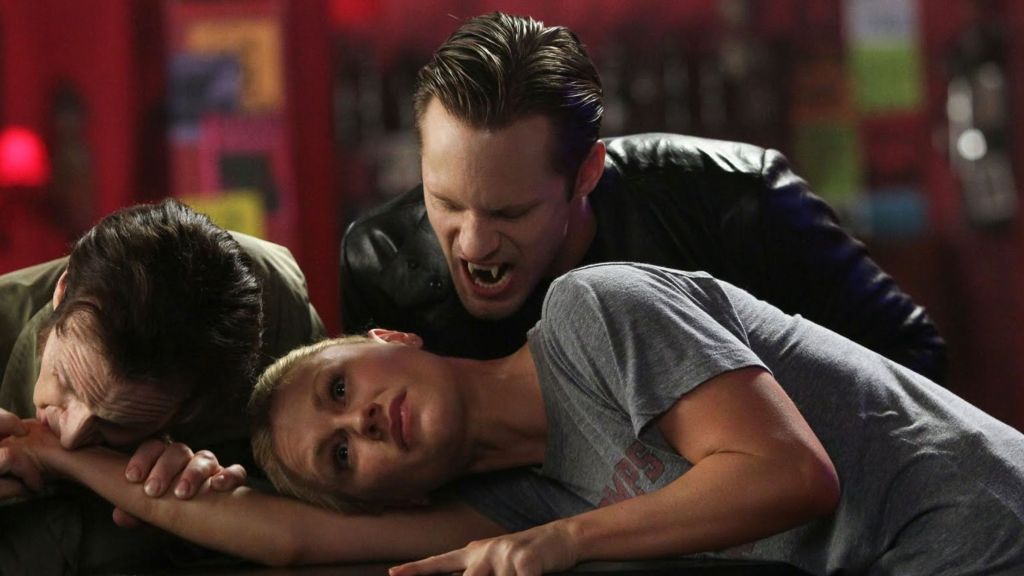 image courtesy of hbo
Between 2008 and 2014, True Blood, created by Alan Ball and based on the novels by Charlaine Harris, aired on HBO. The story took place in Bon Temps, a small Louisiana town where vampires had revealed their existence to the world after the invention of synthetic blood allowed them to survive without feeding on humans. At the center of it all was Sookie Stackhouse (Anna Paquin), a telepathic waitress who becomes romantically involved with vampire Bill Compton (Stephen Moyer) and later with the equally unforgettable Eric Northman (Alexander Skarsgård). Yes, there’s a love triangle, but interestingly, it wasn’t just romantic drama. It structured much of the show’s emotional conflict.
In its early seasons, True Blood worked because it knew how to balance excess with social commentary (arguably one of its strongest elements). The metaphor of vampires as a marginalized minority fighting for rights was direct, sometimes even obvious, but it worked. On top of that, the show blended strong sensuality, violence, and sharp humor in a way that captured an adult audience at a time when pop culture was obsessed with vampires. Overall, there was a very clear sense of identity: viewers understood what they were watching and accepted the rules of that universe because plot holes and narrative confusion weren’t issues. And Sookie stood out because she wasn’t “normal,” and the series consistently reinforced that.
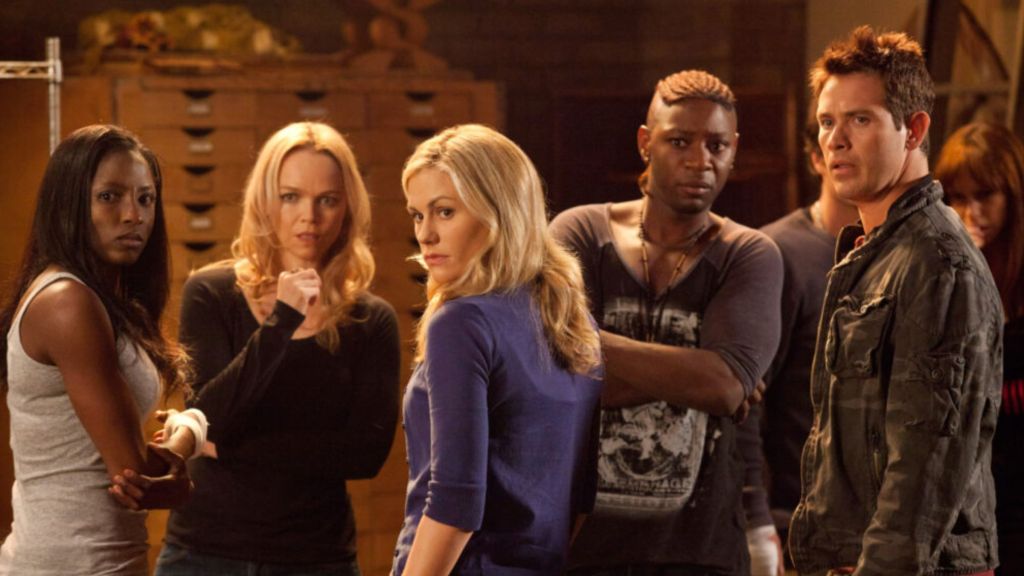 image courtesy of hbo
For a while, True Blood even became HBO’s most-watched show since The Sopranos. But gradually, things began to wear down as the narrative started to spread itself too thin. Each season seemed determined to introduce new threats, new creatures, and new subplots, but instead of strengthening the story, they often competed for screen time. So what began as a focused vampire-human conflict expanded into witches, werewolves, faeries, corrupt vampire authorities, and more. As a result, the tight focus established in Season 1 slowly faded. Characters who once had strong arcs started being used mainly to create short-term impact, and deaths that once felt organic and meaningful began to feel like strategic shock tactics designed to trigger reactions.
For much of the show’s run, ratings didn’t immediately collapse because of this. However, by Season 6, and officially in Season 7, the situation worsened significantly. The phase that should have been about tightening the narrative and preparing a powerful ending instead relied on shortcuts. Several important characters were killed off in rushed ways or even off-screen, which already suggests the priority wasn’t emotional payoff but quick resolution. Essentially, True Blood treated many of its central arcs as obstacles that needed to be cleared out so the series could wrap everything up at once. The result felt misaligned.
True Blood‘s Finale Is Still One of HBO’s Worst Endings Ever
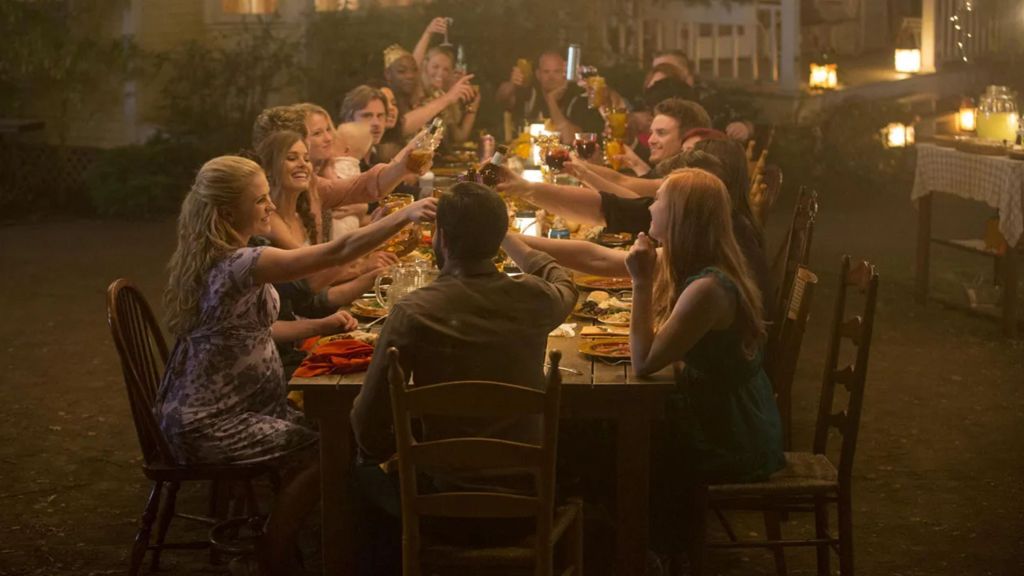 image courtesy of hbo
To some extent, the attempt to expand the universe can be forgiven, even if many fans didn’t love it. But character arcs are the backbone of long-form storytelling. They’re what make audiences emotionally invest in a show. And in that regard, the final season made mistakes that are easily comparable to Game of Thrones. Many viewers pointed out how True Blood failed to give major characters endings that honored the time spent developing them — starting with the protagonist herself.
After seven seasons exploring her supernatural identity and her intense relationships with Bill and Eric, the finale shows Sookie pregnant and married to a man whose face is never even revealed. The idea seemed to be that it didn’t matter who he was, only that she was happy. But from a character construction standpoint, that completely ignores the emotional investment built around the love triangle that had driven the series from the beginning. This wasn’t about “Team Bill” or “Team Eric” the way Twilight or The Vampire Diaries framed it. It was about narrative coherence. The show built a massive romantic conflict only to treat it as disposable in the end.
Bill, another central figure from the very first episode, also didn’t receive what many consider a satisfying conclusion. Infected with Hepatitis V, he decides he wants to die and convinces Sookie to help him. The scene was clearly written as a sacrifice, but it can just as easily be interpreted as selfish. For years, Bill was portrayed as morally ambiguous: manipulative at times and deeply in love at others, so his ending had the potential to embrace that complexity. Instead, the conflict was reduced to a final gesture that doesn’t entirely align with his long-term arc. Once again, it feels like a quick and shallow solution. The time jump showing Sookie moving on only further dilutes the emotional weight of his death.
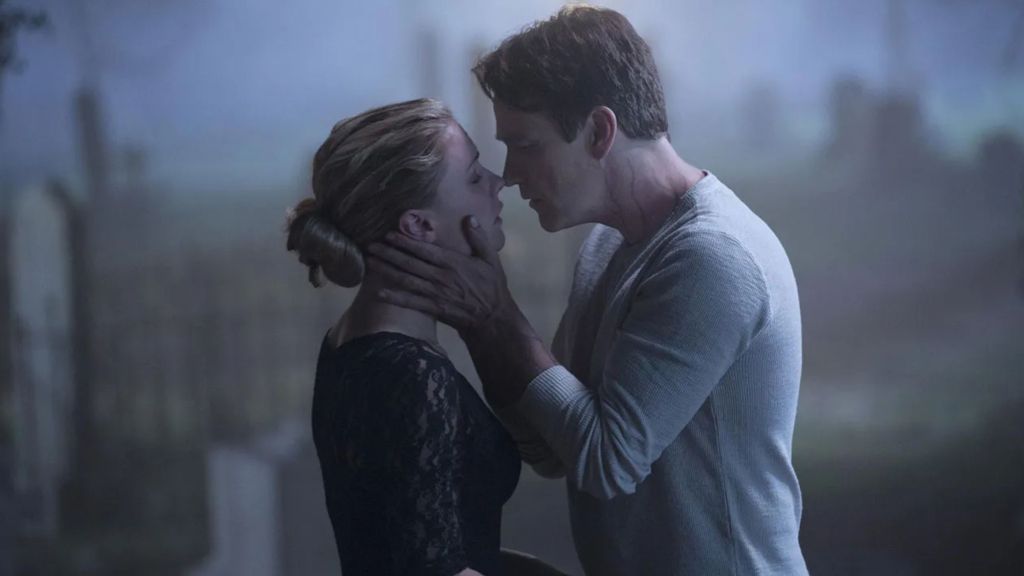 image courtesy of hbo
Other characters suffered similar fates: Warlow (Robert Kazinsky), a potentially long-term and compelling villain, was quickly eliminated; Tara’s (Rutina Wesley) death felt careless and deeply disrespectful to her journey; Alcide (Joe Manganiello) was killed in what seemed like an almost random moment by a minor character; and Jessica (Deborah Ann Woll) and Hoyt (Jim Parrack) rushed into marriage with emotional nuances barely explored.
Sure, you could argue that True Blood‘s ending was, in some way, consistent with Sookie’s desire for a normal life. But the series never treated normalcy as the ultimate goal. In fact, it was the opposite: its message revolved around embracing difference, living on the margins, and confronting discrimination. Ending the story by suggesting happiness exists outside that extraordinary world weakens the very metaphor the show was built on. None of this erases what the show achieved; after all, it also helped transform supernatural storytelling for adult TV and further solidified HBO as a network willing to take creative risks. But it also became a case study in how a finale can reshape the perception of an entire journey. When the final episode feels disconnected from the essence that made audiences care in the first place, the legacy inevitably shifts.
So did the series fail? Yes, but not because it was too bold. It failed because it pulled back at the most decisive moment. Before Game of Thrones became the ultimate example of this issue for a much larger audience, True Blood had already demonstrated that a poorly calibrated ending can overshadow an entire show. As strong as both shows were, they’re often remembered first for how they ended rather than for what they achieved, right? Hopefully, HBO has finally learned that lesson.
What did you think of True Blood‘s ending? Leave a comment below and join the conversation now in the ComicBook Forum!