
NASA’s Perseverance rover has detected electric sparks in dust storms on Mars, suggesting the planet’s atmosphere may be more electrically active than previously thought.
This is the first direct evidence of electrical discharges on the Red Planet and could reshape our understanding of the Martian climate, but also complicate future missions and the search for evidence of past life.
Dust storms have long been known to lift fine particles into Mars’s thin atmosphere, but the new findings show those particles can build up enough static charge to trigger electrical discharges.
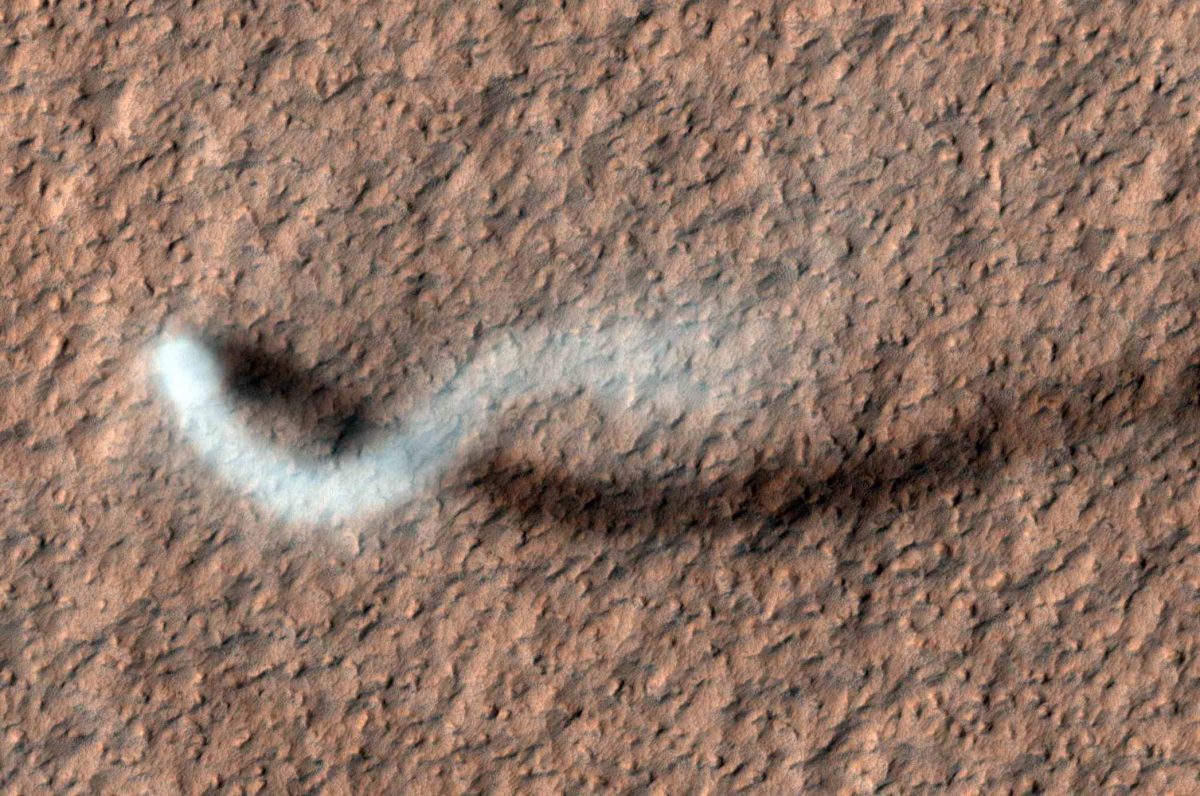
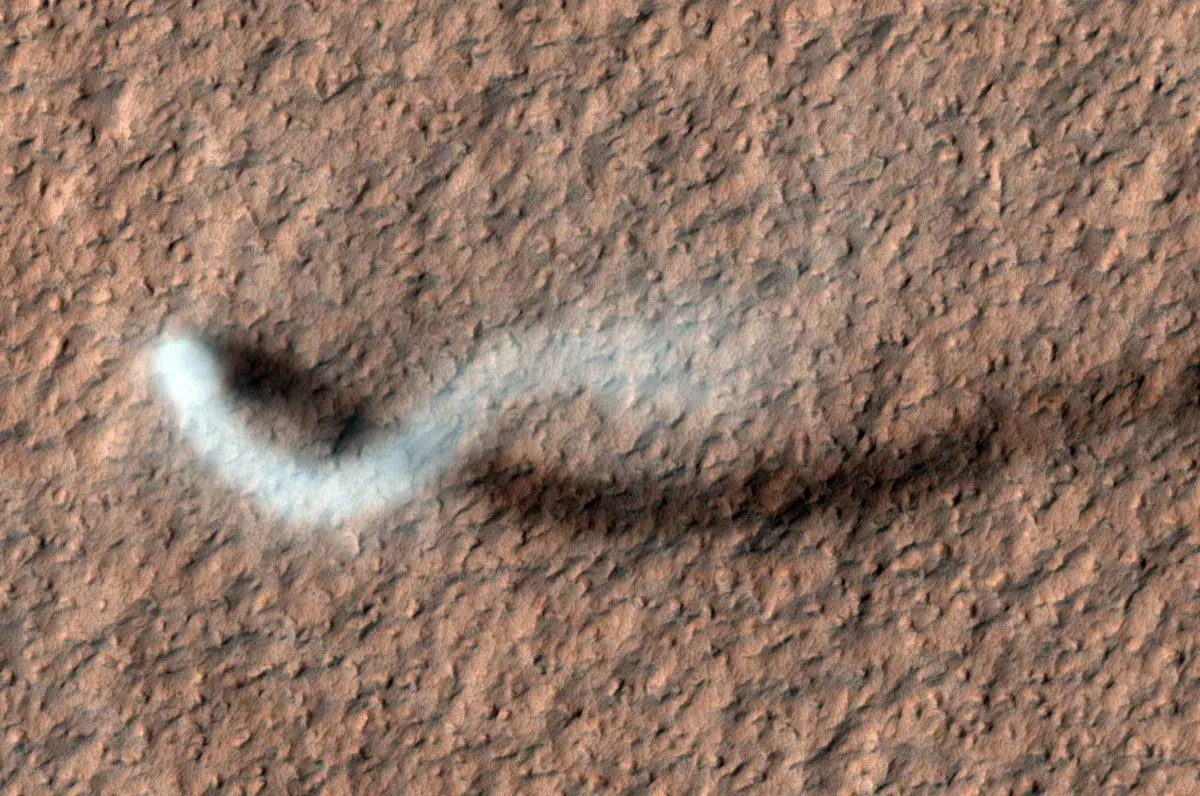 A dust devil on Mars, as seen by NASA’s Mars Reconnaissance Orbiter. Credit: NASA/JPL-Caltech/University of Arizona
On Earth, similar processes trigger lightning within dust storms or volcanic ash clouds.
The detection occurred during the monitoring of dust devils near the rim of Jezero Crater, when Perseverance’s SuperCam microphone picked up a series of sounds – brief, but clear enough to confirm electric activity.
“We got some good ones where you can clearly hear the ‘snap’ sound of the spark,” says Perseverance scientist Ralph Lorenz.
The implications are wide-ranging. For future human explorers, electrical discharges could damage sensitive equipment.
The ‘mini lightning’ may also drive chemical reactions in the thin Martian air, possibly producing oxidants such as hydrogen peroxide and perchlorates – extremely reactive substances that can dissolve organic molecules, erasing potential evidence of past life on Mars.
These same chemicals might also explain the puzzling ability of Martian methane to vanish rapidly, as they may be destroying the gas as it’s released.
Taken together, the discovery may have planet-wide consequences, adding a new layer of complexity to Mars’s environmental dynamics and hinting at previously underestimated risks for future missions.
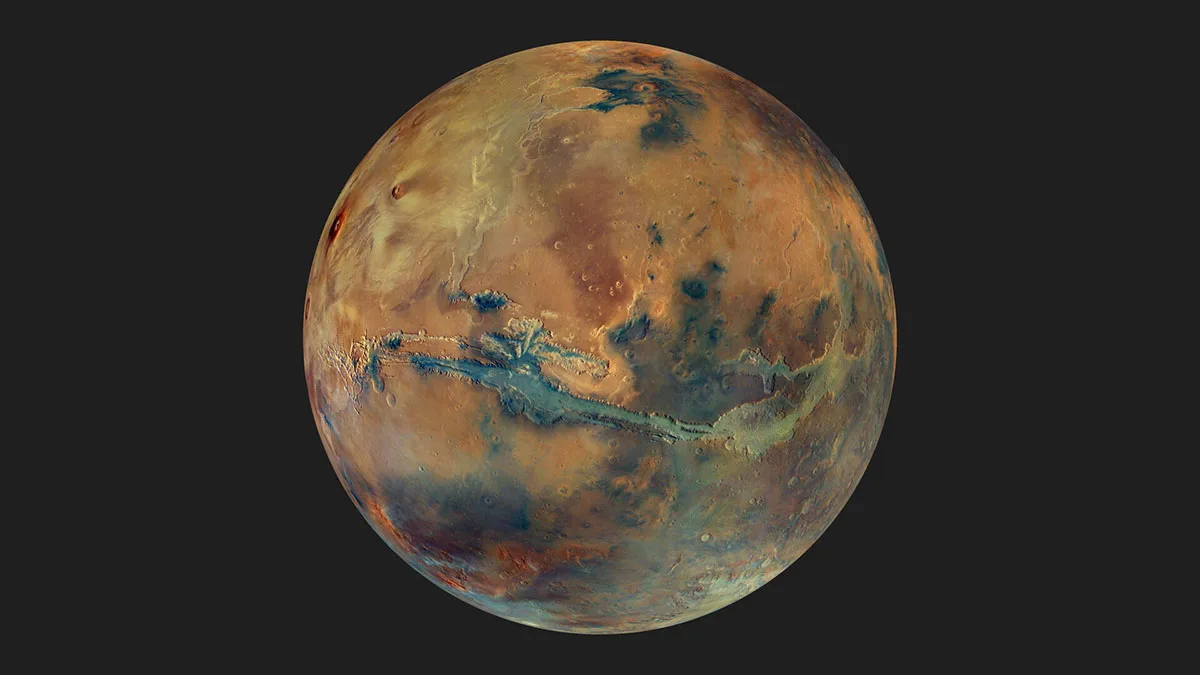 Credit: ESA/DLR/FU Berlin/G. Michael