
Captivity survivor Arbel Yehoud said that she tried to end her life several times while held by terror organizations in the Gaza Strip in an interview on Friday.
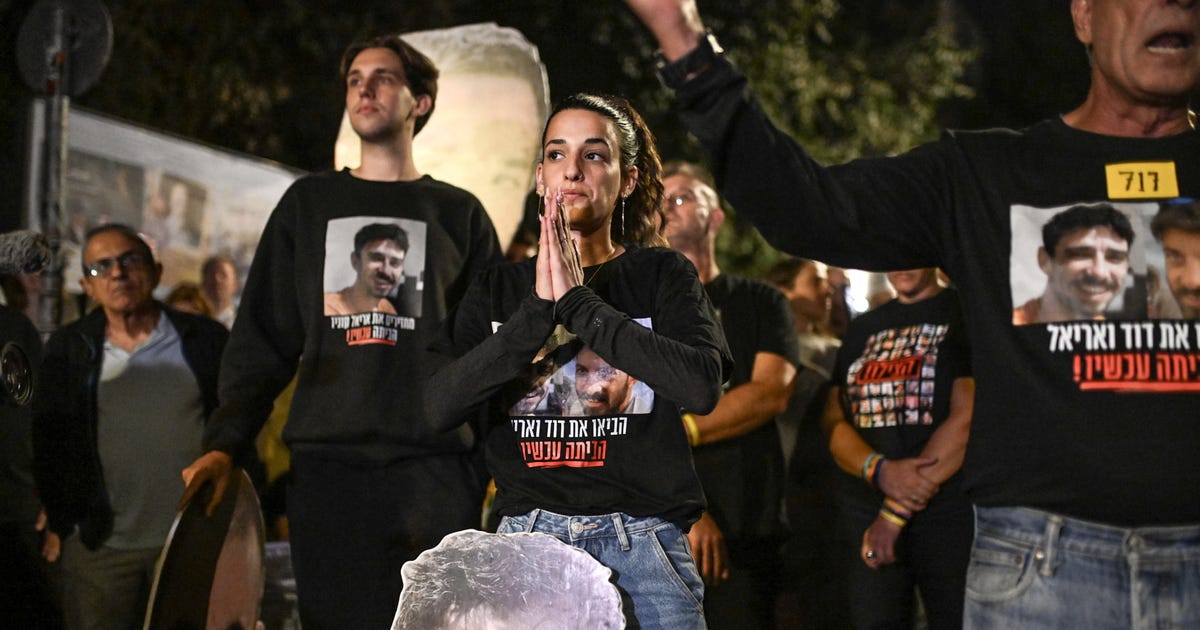
“One time, not long before my release, I saw drone footage from the so-called Hostage Square. I saw people holding signs of people I didn’t know, and suddenly I saw signs of people I did know. Ariel’s [Yehoud’s partner, who was also a hostage at the time] and mine, of people from the kibbutz. And the moment I saw that – I didn’t try to end my life. When I saw drone footage and understood that people I didn’t know were fighting for me and struggling for me, I realized I had a commitment to return to those who were fighting for me,” Yehoud recounted in an interview on Channel 12 News.
Yehoud said in the interview that she suppressed what she went through in captivity until released hostage Romi Gonen gave her testimony on Channel 12’s investigative television program Uvda in December. Gonen then testified that she had experienced four instances of sexual harassment in Hamas captivity by different men, and said that when she met other female captives, she realized she had been in the worst situation.
Haaretz Podcast‘Trump needs Netanyahu to not mess things up for him in Iran and Gaza’
play
Haaretz Podcast
‘Trump needs Netanyahu to not mess things up for him in Iran and Gaza’
Volume: 0.5
X1
total– : –time0:00
fast forward15
play
rewind15
“I identified with a lot of what she said there,” Yehoud said. “In terms of the gap she felt when she met the girls in the tunnel,” referring to Gonen’s encounter with other female hostages and her realization that her experience in captivity had been far worse than others. “But even after I saw the horrors Romi went through, the gap remains. The things I went through, I went through from beginning to end. So they are in a closed, closed suitcase,” Yehoud said.
 Close
Close
Released hostages Arbel Yehoud and Ariel Cunio reunite at a hospital in Israel in October, upon Cunio’s release. Credit: Spokesperson for the Hostages and Missing Families Forum
Released hostages Arbel Yehoud and Ariel Cunio reunite at a hospital in Israel in October, upon Cunio’s release. Credit: Spokesperson for the Hostages and Missing Families Forum
Arbel’s partner, Ariel Cunio, said that after several days in captivity during which he demanded information from Arbel, the captors offered him to write her a letter, and subsequently they exchanged notes for several months. Yehoud testified that “there were really difficult letters.” The two said that at a certain point, they were no longer allowed to write to each other.
“They told me, ‘No more letters. We will kill you and we will kill him.'”
Related Articles
“When you’re alone in captivity, you talk to yourself a billion times a day. It’s exhausting,” she said. Cunio said there were times he asked his captors to kill him. “There were times I said, ‘Come on, shoot me in the head.’ I would tell my captors, ‘Just kill me already.'”
Arbel Yehoud and Ariel Cunio were abducted from their home in Kibbutz Nir Oz. Before the abduction, they traveled in Central America, and upon their return, they began planning their wedding.
Arbel was released as part of a deal in January 2025, after 482 days in captivity. Ariel Cunio was released in a deal in October 2025, after 738 days in captivity.