
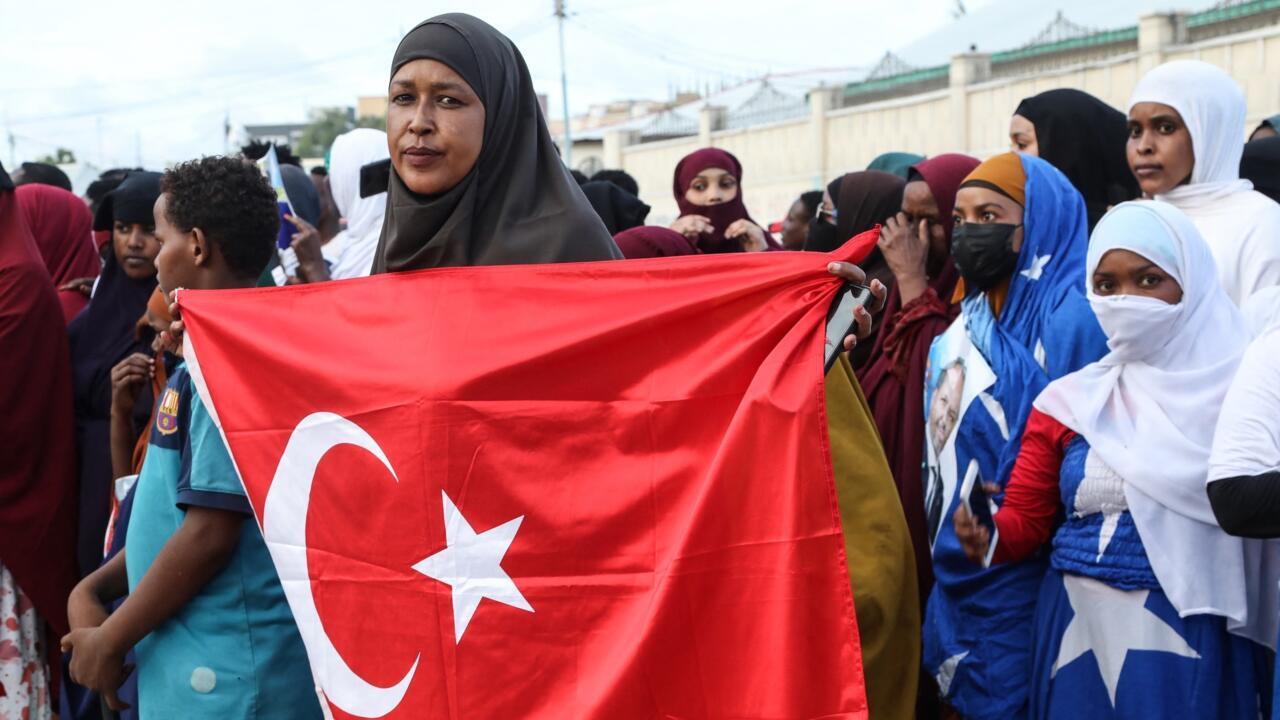
Staunchly allied with Turkey, Somalia has become a flashpoint in Turkey’s rivalry with Israel. Ankara recently deployed fighter jets to Mogadishu in the latest signal that it is determined to protect its strategic interests in the Horn of Africa after Israel recognised the breakaway region of Somaliland.
In a conspicuous display of military strength, Turkish F-16 fighter jets roared over the Somali capital, Mogadishu, in late January.
According to Turkish officials, the deployment was aimed at protecting Turkish interests and supporting Somali efforts to counter an insurgency by the radical Islamist group al-Shabaab.
It follows Israel’s recognition of Somaliland in December, which Ankara condemned as a threat to Somalia’s territorial integrity.
Turkish international relations expert Soli Ozel said the jets send a message to Israel: “Don’t mess with our interests here.”
Somalia is poised to become the latest point of tension between the countries, he predicts. “I don’t think they will fight, but they are both showing their colours. Israel’s recognition of Somaliland and the Turks sending F-16s and drones are attempts to set limits to what the other party can do,” he said.
“Could it get out of hand? I don’t know. It may.”
The risky calculations behind Israel’s recognition of Somaliland
Mutual suspicion
The episode reflects broader strains in Israeli-Turkish relations, which remain fraught over Ankara’s support of Hamas and Israel’s war in Gaza.
“It’s a new chapter in the competition between the two countries, which are now the dominant military powers in the Middle East,” said Norman Ricklefs, CEO of geopolitical consultancy Namea Group.
According to Gallia Lindenstrauss, an Israeli foreign policy specialist at the Institute for National Security Studies in Tel Aviv, Israel is not seeking to challenge the interests of Turkey or Somalia.
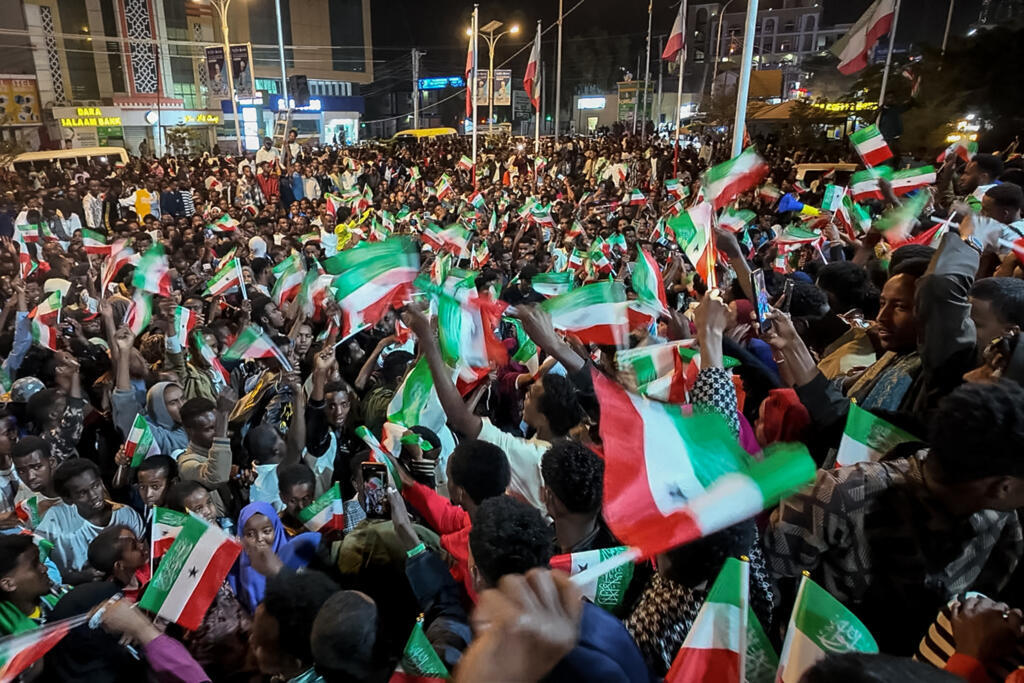
People wave flags to celebrate Israel’s official recognition of Somaliland, in Hargeisa on 26 December 2025. © AFP – FARHAN ALELI
Instead, she argues Israel’s recognition of Somaliland and its commitment to deepening cooperation are motivated by the breakaway’s state strategic location facing Yemen, where Houthi rebels launched attacks against Israeli cities last year.
“The Houthis were the last ones who were still launching missiles against Israel, from the Iranian proxies. This is the most major threat for Israel,” she said.
However, Lindenstrauss acknowledges that both sides increasingly view each other’s actions with suspicion. “What Israel sees as defence, Turkey sees as something against Ankara.”
Rival blocs
Turkey’s suspicions could grow if Israel deploys military hardware in Somaliland to counter threats from Yemen, a move an anonymous Israeli expert suggested is Israel’s aim.
Ricklefs warns Israel needs to tread carefully, given the significant investments Turkey had made in Somalia over the past 15 years. Turkey has its largest overseas military base and embassy in Somalia, while Ankara has signed agreements with Mogadishu to explore potential energy reserves, as well as a naval accord.
“Turkey is running the [Mogadishu] port, counterterrorism training, charities, NGOs, and all that kind of stuff. So it appears very important to Turkey’s regional strategic ambitions,” said Ricklefs. He noted that Somalia’s location on the Horn of Africa, with coastlines in the Gulf of Aden and Indian Ocean, makes it “key for regional influence”.
With Somalia naval deal, Turkey steers into strategic but volatile region
Lindenstrauss observed that the Turkish-Israeli rivalry over Somalia is further complicated by the emergence of two competing axes: “On the one hand, you see Greece, Cyprus, Israel, the UAE. On the other hand, you see Turkey, Saudi Arabia, Pakistan, Egypt and Qatar,” she explained.
“They are loose axes, but you do see that on many issues, these two axes think differently. And that’s also a cause of the rising tensions.”
Ricklefs noted that tensions have already spilled over into confrontation elsewhere. “We’ve already seen the pretty strong competition leading to violence in Libya, between blocs aligned with the Emirates and, on the other side, blocs aligned with Turkey in Libya,” he said.
As for whether the same could happen in Somalia, Ricklefs said he doesn’t believe the situation has yet reached that point.
“I don’t think we’re there just yet with Somaliland and Somalia,” he said. “And frankly, the only party that can play a mediating role, a conflict-reducing role, in this situation is the United States.”