
With the return of Ran Gvili, the last hostage held in Gaza, the most painful chapter of this brutal war is thankfully behind us. The Jewish people are now able to focus our resources and creativity on rebuilding our bruised hearts and minds, and forging a strong future for Israel and the world.
The violence and destruction of October 7 were horrific, but the emotional blows that followed are now surfacing and must be addressed. Traditional allies abandoned us, and many of the institutions that Jews built with our blood, sweat, and dollars turned on us everywhere. Academia, media, professional associations, and political movements on the Left and the Right began attacking Jews with shocking speed and venom.
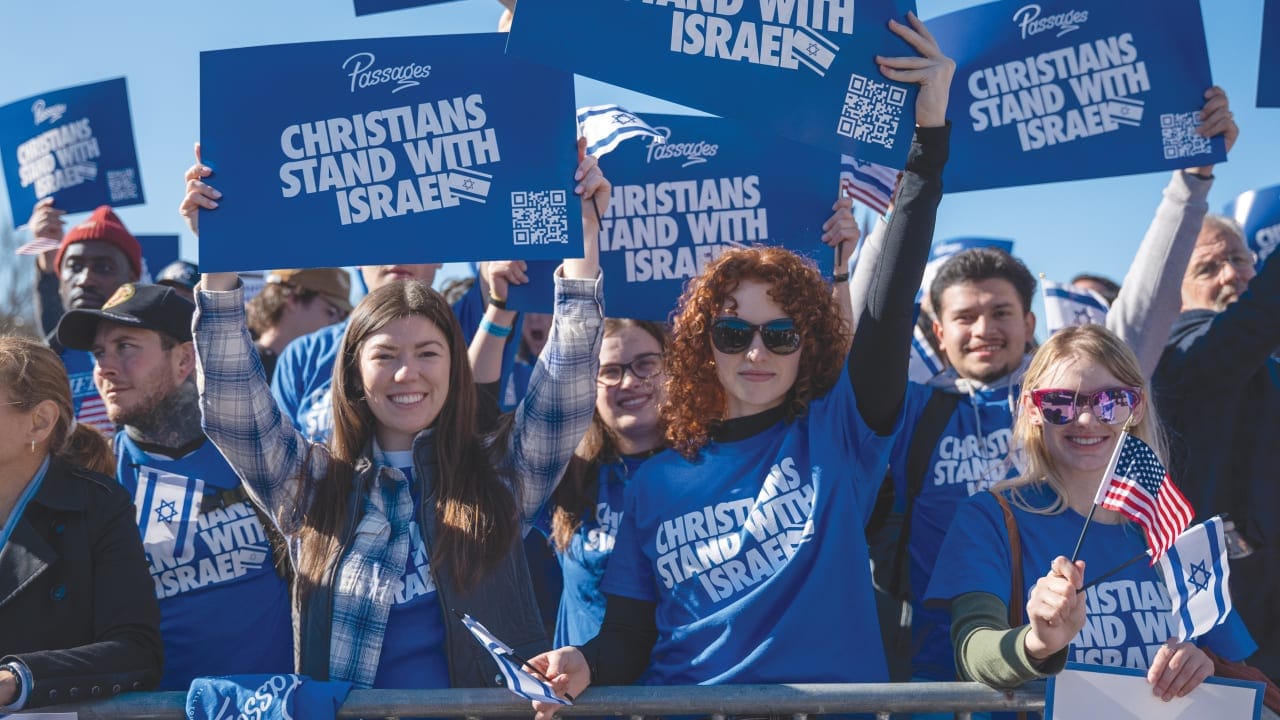
But one group stood firm: our faith-based allies. Not one serious Evangelical leader in the world flinched in the face of the new antisemitism, and many have doubled down in their friendship.
Now that the fog of war is lifting, the Jewish community owes our Christian friends our gratitude and must figure out how to nurture these relationships with renewed strength and resources. There are practical steps all of us can take right now to reach out to Christian friends, coworkers, and neighbors, to thank them and forge stronger connections.
At Israel365, the organization I started 14 years ago, we’ve developed resources specifically to help Jews engage comfortably and confidently with Christian allies. We created Bible study materials so we can discuss the sacred scripture our two communities share. And we developed Shabbat resources to make it easy for Jews to invite Christian friends over for a glimpse into our treasured Friday night meals. Our only goal is to build genuine relationships around shared values and a shared stake in Israel’s success.

Many people around the world are loudly protesting against Zionism, but many more admire Israel, are intrigued by our story, and appreciate the nation we are building in our ancestral homeland. Now is certainly not the time to turn inward in fear, but to reach outward to our non-Jewish friends and neighbors. Zionism finally has the opportunity to do what it was always meant to achieve: to become a universal movement.
This vision of Universal Zionism was implicit from the very beginning. Theodor Herzl, focused as he was on the urgent task of building Political Zionism, nevertheless understood that the ultimate goal of Zionism was bigger than just a state for Jews.
In his introduction to The Jewish State, Herzl described how, “The world will be freed by our liberty, enriched by our wealth, magnified by our greatness. And whatever we attempt there for our own benefit will redound mightily and beneficially to the good of all mankind.”
In his novel Altneuland (The Old New Land), Herzl made it even more explicit: “Once I have witnessed the redemption of the Jews, my people, I wish also to assist in the redemption of the Africans.” Israel’s recent recognition of Somaliland is a very contemporary example of Herzl’s vision playing out in front of our eyes.
Universal Zionism is our new and exciting chapter that builds on everything Political Zionism has achieved while going a step further. It recognizes that Israel’s story isn’t just about one small nation’s survival: It’s about the hope for all of humanity. When the dust settles, many of those who have turned against us will recognize that Israel has been at the forefront in the epic battle of good over evil, and their antagonism will transform into admiration. “In place of your being forsaken and hated, I will make you an everlasting pride, the joy of every generation” (Isaiah 60:15).
The State of Israel has come through this war as a military, economic, and diplomatic regional superpower, while our barbaric and backwards enemies have been miraculously defeated. We must recognize these incredible achievements and appreciate them in their unprecedented historical context.
For two thousand years, we were powerless and for a century we fought just to survive. Now, for the first time, we have the strength to realize our purpose. Through shared sacrifice and a renewed calling, it is our moment to fulfill the ancient covenant that the Torah urges: to be “a kingdom of priests and a holy nation.”
With the return of Ran Gvili and all of our brothers and sisters, the Jewish people are at a critical crossroads and have a vital choice to make. We can lick our wounds and nurse our grievances against a world that disappointed us. Or we can recognize this as the moment to forge new relationships with those who share our values and turn the page toward a new and inspiring era of Universal Zionism.
The writer is a rabbi, founder of Israel365, and author of the new book, Universal Zionism: The Movement for Israel and the Nations, available at www.Universal-Zionism.com.