
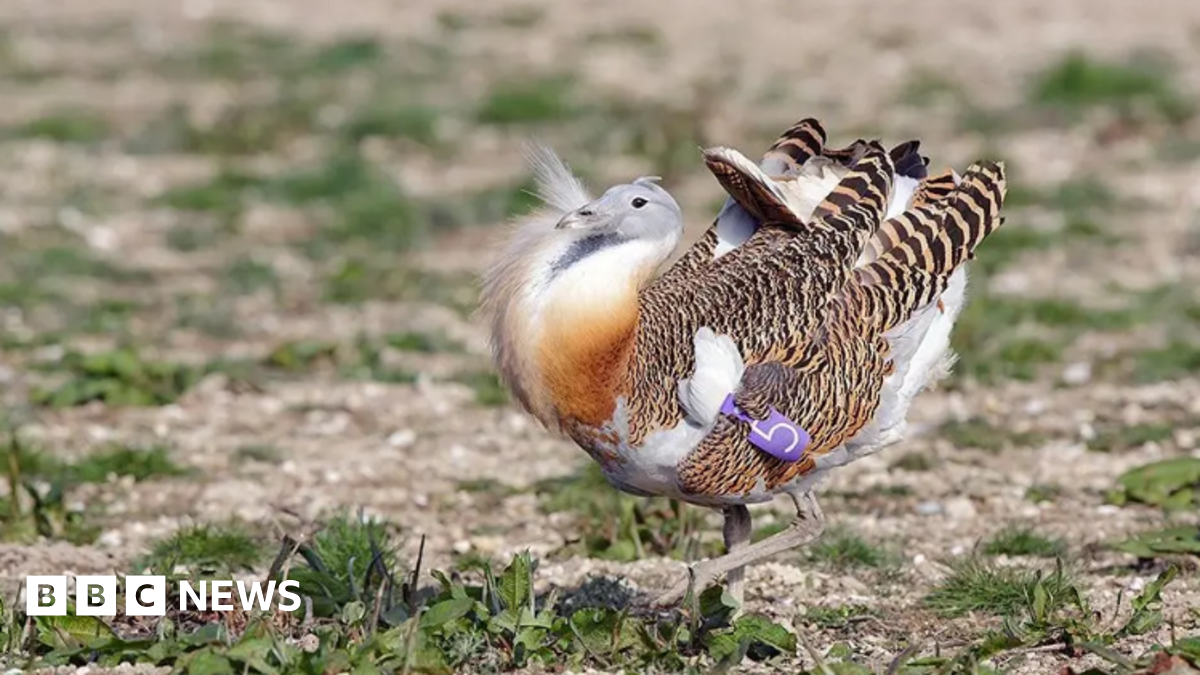
The Great Bustard was a fixture in British skies until the mid 1800s, when the species became a target for trophy hunters, and its natural habitat was destroyed by farmers.
The bird is at risk of global extinction – the only British bird to hold this status.
Since 2004, conservationists at GBG have released hundreds of Great Bustards onto Salisbury Plain and there are currently about 50 bustards established across south Wiltshire, with successful breeding every year since 2009.
Waters said Salisbury Plain was an ideal environment for the birds.
“They did well in farmlands for hundreds and hundreds of years, but it is the big, wide, open area they like – what I call big sky country,” he said.
“Also, within Wiltshire, [the bustard] has always been the symbol of the county, on our coat of arms, the main feature of the Wiltshire flag and the county badge of many organisations including girl guides and army cadets.
“So there’s a cultural restoration as well as an extra tick on the biodiversity sheet.”