
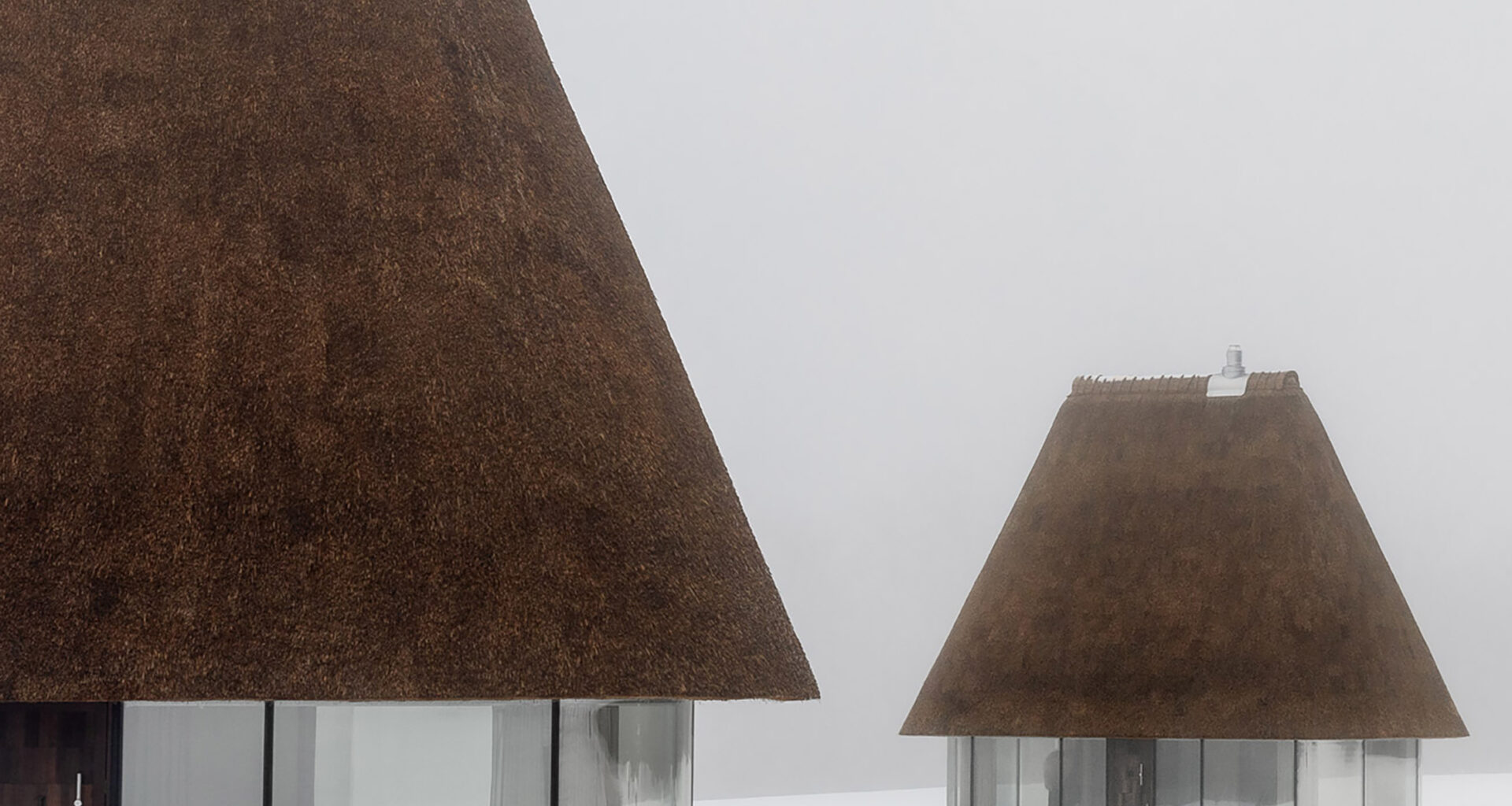
Kyiv-based architecture and design studio YOD Group looked to Ukrainian vernacular architecture when creating this cluster of guesthouses, characterised by glass walls and thatched roofs.
The trio of guesthouses – named Hata-Mazanka – are located on a private estate in central Ukraine and pay homage to Ukrainian mazanka: archetypal rural houses comprised of thatched roofs and thick, whitewashed walls.
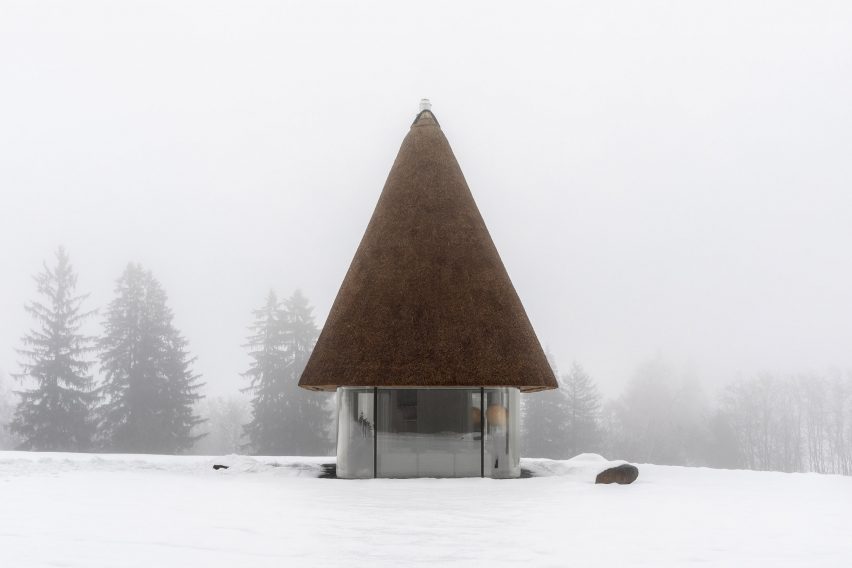 The huts have glass walls and tall thatched roofs
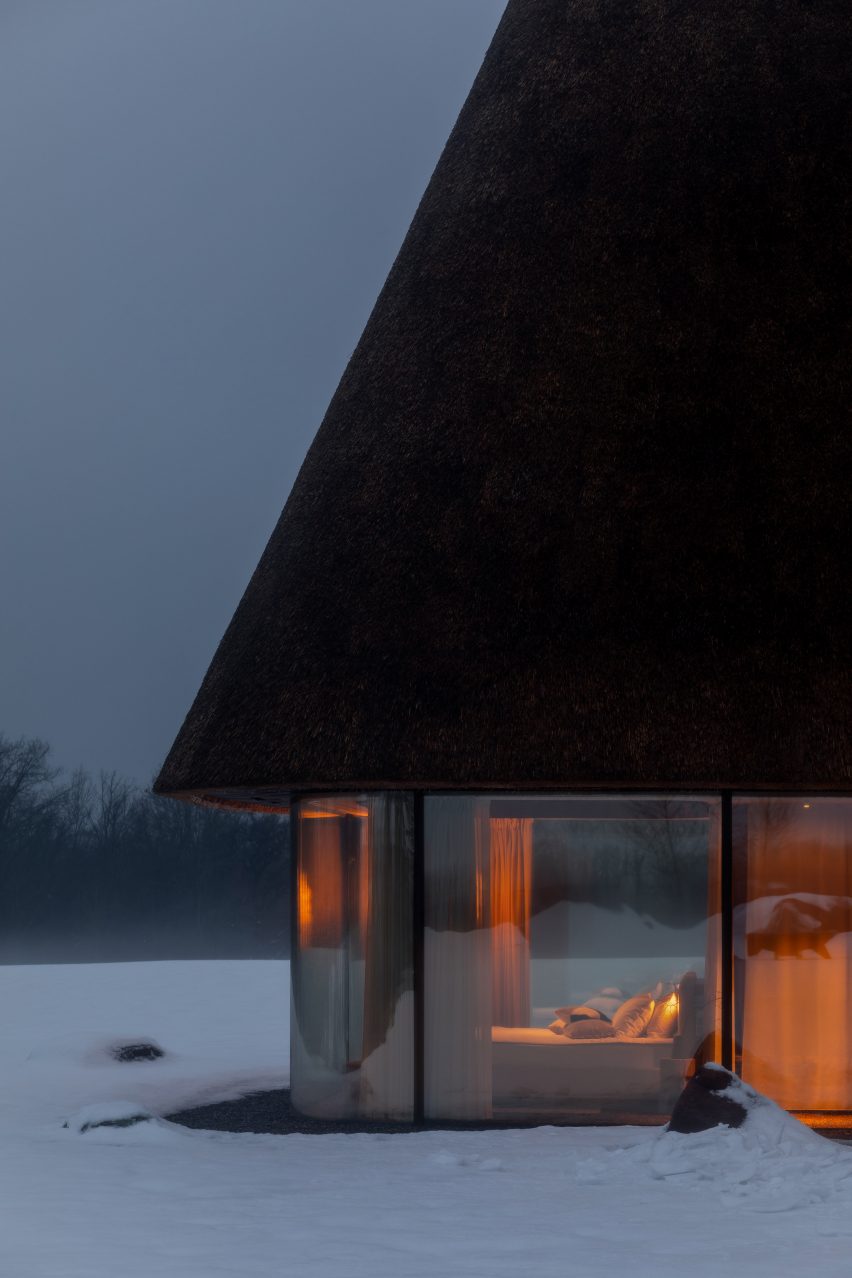
YOD Group exaggerated the height of the thatched roofs to make them the project’s primary focal point; at their tallest point, they rise to a height of 10 metres.
This scale makes their silhouettes stand out against the rural landscape, evoking the look of oversized mushrooms or the tall sheepskin hats worn as part of traditional Ukrainian dress.
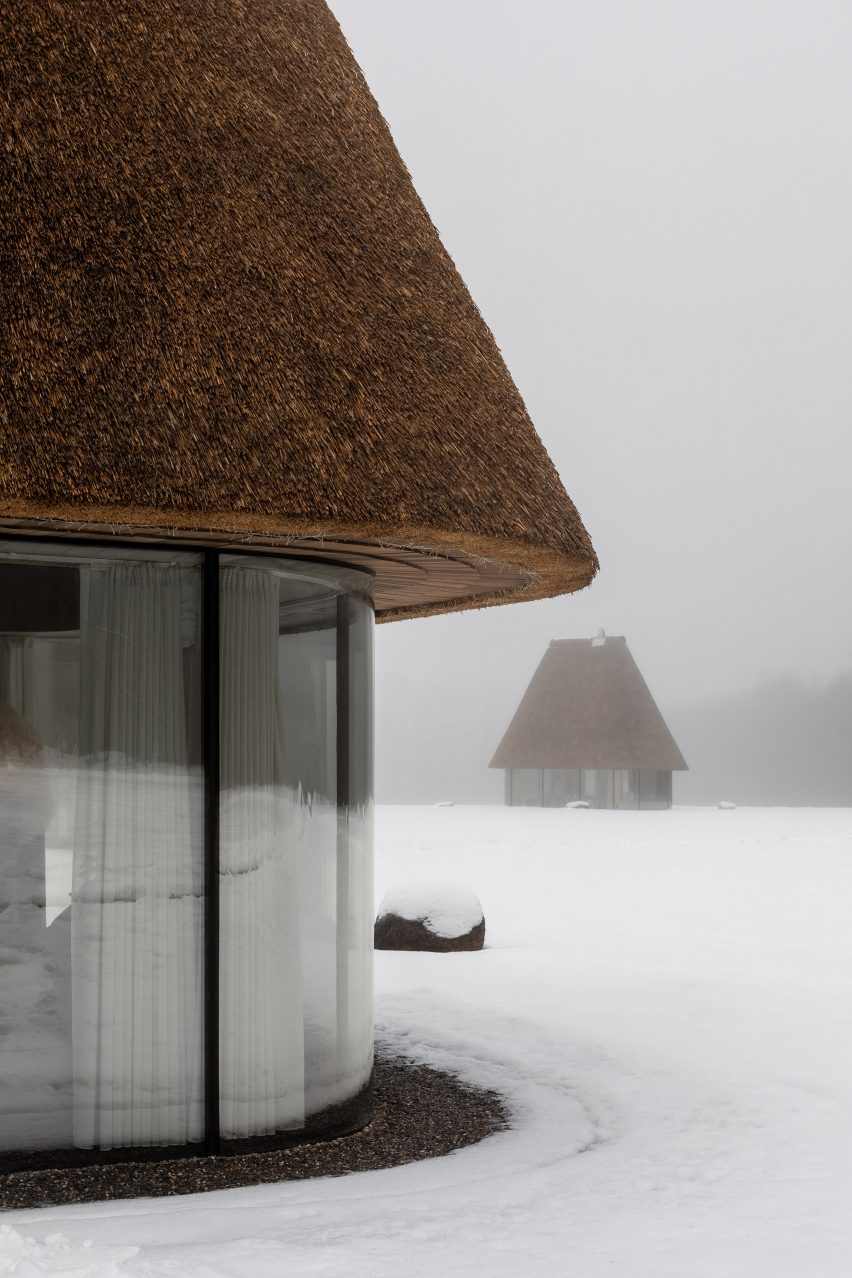 The reeds used in the thatch are grown locally
“The roof is covered with one-year-old reeds grown in the Odessa region,” YOD Group told Dezeen.
“The inner domes are decorated with wooden tiles, reminiscent of traditional roofing material widely used in the Carpathians.”
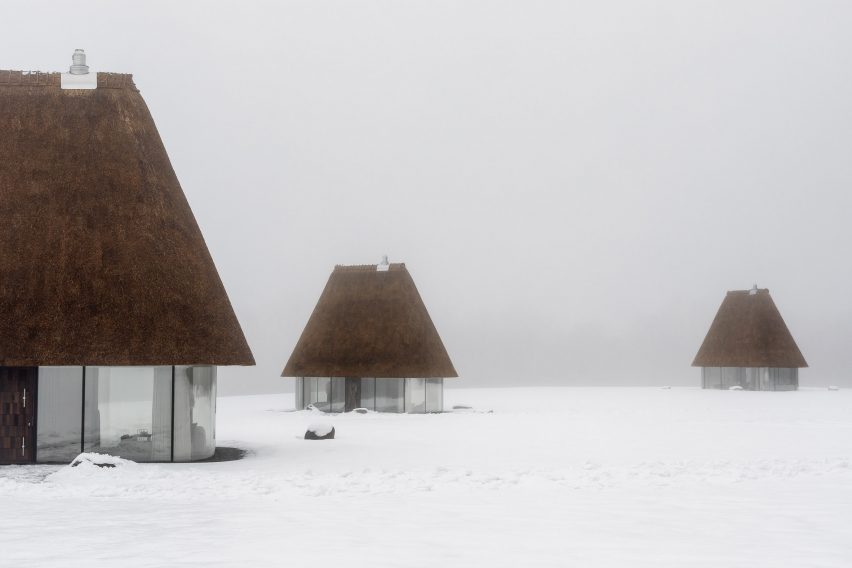 Three identical huts comprise the project
These domes sit above the living areas and bedrooms, divided by a centrally-placed concrete volume that houses the bathroom and integrates the kitchen utilities on one side.
The interiors are encircled by glass walls that curve at the corners, creating unobstructed views out to the landscape.
Fuinneamh Workshop Architects adds rammed-earth shelter to Irish park
“During the day, the fully glazed facades visually dissolve, creating the impression that the massive thatched roof is floating above the landscape,” said YOD Group.
“The uninterrupted glazing enhances the sense of immersion in nature, allowing the landscape to become an integral part of the experience.”
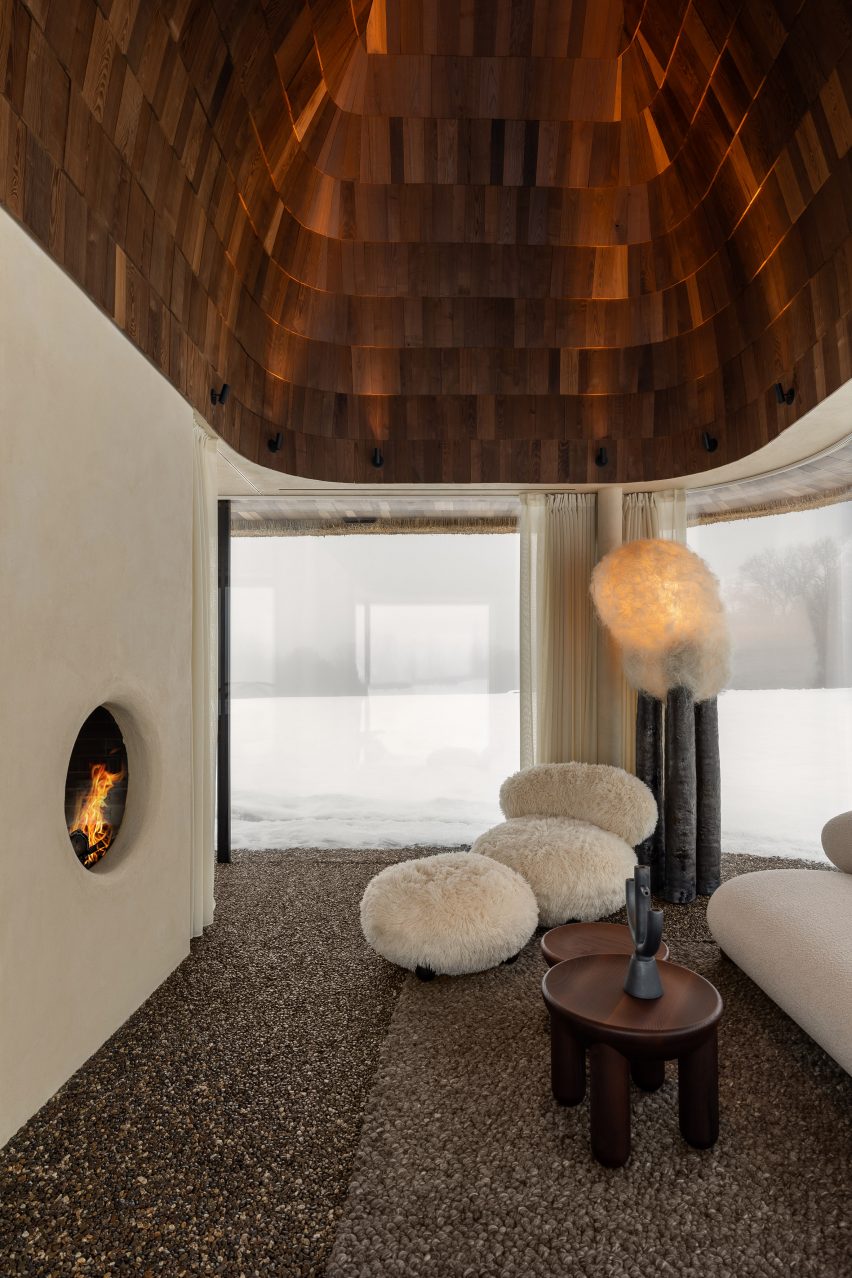 Overlapping wooden shingles line the inside of the roof
Guests can operate floor-to-ceiling curtains automatically from a control panel in the bedroom to create privacy when required.
The outside is further brought in by the floor, covered in smooth pebbles that spread out beyond the confines of the glass walls.
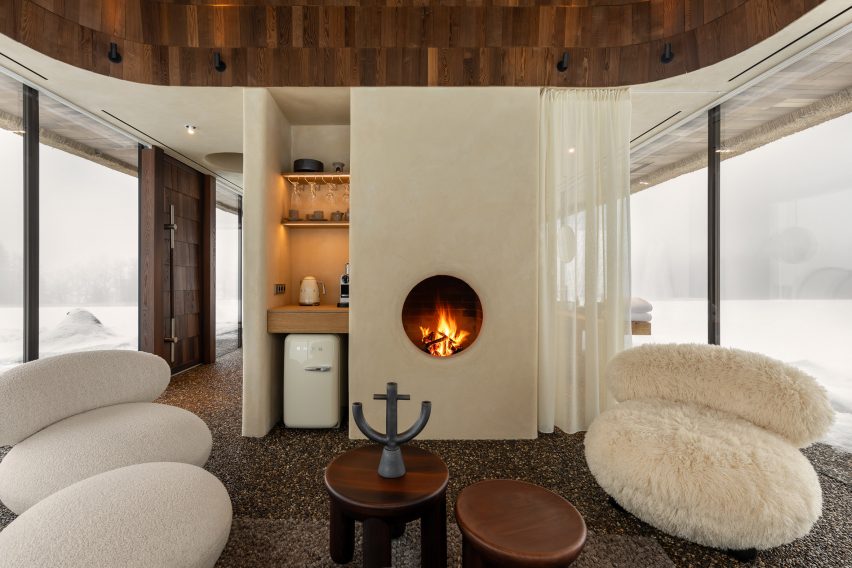 Floor-to-ceiling curtains can be used to zone the interior and provide privacy
The studio opted to use pieces by Ukrainian companies to furnish the interior, including furniture by designer Kateryna Sokolova for furniture brand Noom and black clay decor by design brand Guculiya.
These contribute to the overall neutral design scheme of the interiors, made cosy and tactile by wooden accents, fluffy seating and lighting in the living room, and an open fireplace that peeks through a round void in the wall – a reference to traditional stoves.
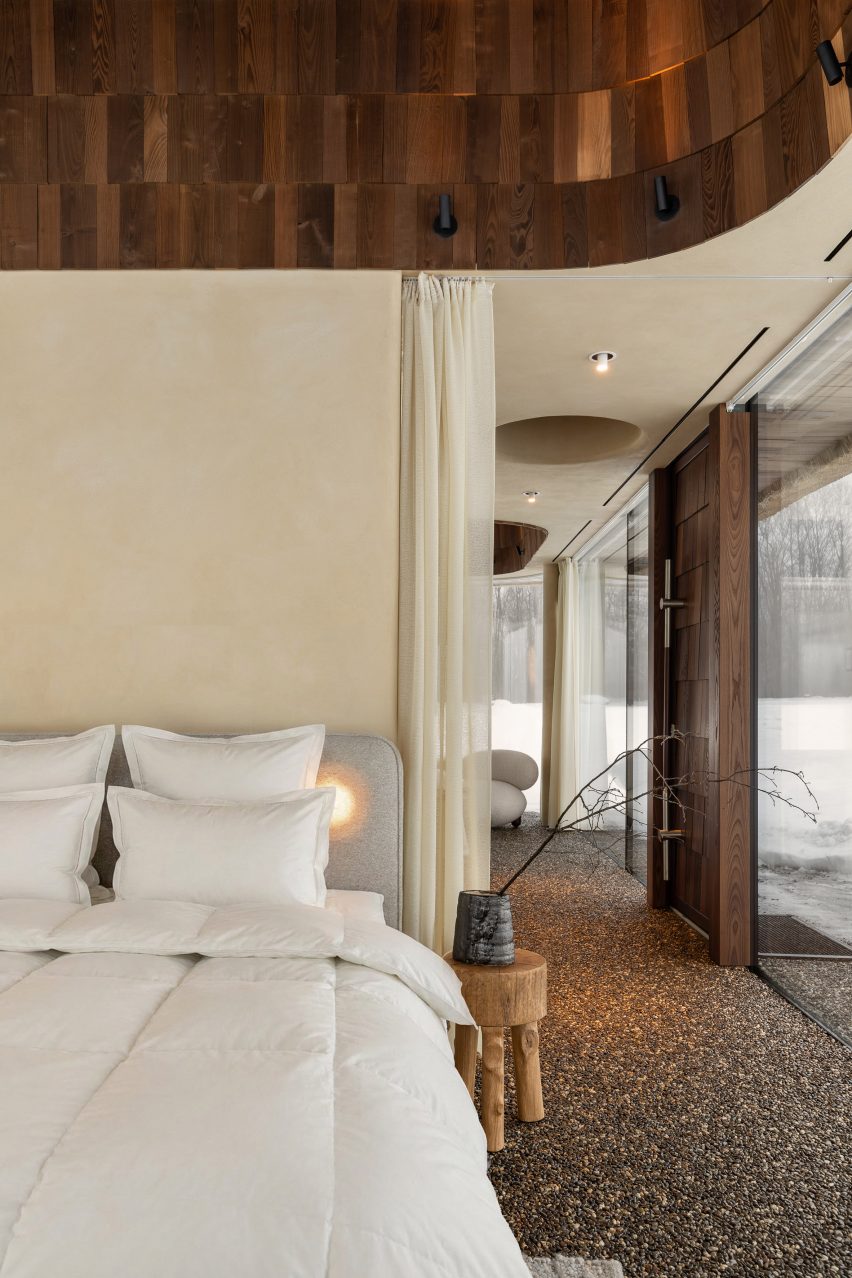 The floor is covered in smooth pebbles
“The interior follows the principles of modern eco-minimalism,” said Volodymyr Nepiyvoda, co-owner and managing partner of YOD Group.
“A restrained, natural colour palette, a rich variety of tactile surfaces, and objects by Ukrainian brands come together to create a calm, cohesive environment.”
 The huts aim to connect guests to nature
“We studied the image of the traditional Ukrainian house, distilled its core characteristics, and reinterpreted them through our own lens to create a contemporary architectural object,” Nepiyvoda continued.
Other projects by YOD Group that have been published on Dezeen include lamps made from spent ammunition shells collected during the Ukraine war and a restaurant in Bukovel zoned by mycelium curtains.
The photography is by Mykhailo Lukashuk.